The Dinosaur Look-Alikes
The first time I saw a green iguana in the wild, I thought I was staring at a creature that had walked out of prehistory. With their jagged spines, muscular tails, and stern faces, these lizards resemble a scaled-down Godzilla. Growing up in Mexico, whenever I visited the south, especially ancient sites like Chichén Itzá, I would watch in awe as these arboreal lizards lounged on ruins or disappeared into the trees. They looked like dinosaurs that had somehow survived extinction, reminding me that the world is full of living relics.
Also called the common iguana (Iguana iguana), the species is native to Central and South America but has spread across the globe thanks to the pet trade. Today, you’re as likely to see wild iguanas sunbathing in South Florida as you are in the jungles of Belize. Their adaptability is both fascinating and concerning.
Let’s dive into ten unbelievable facts about these remarkable reptiles, creatures that blur the line between ancient history and modern-day ecological challenges.
1. The Most Common Type of Iguana
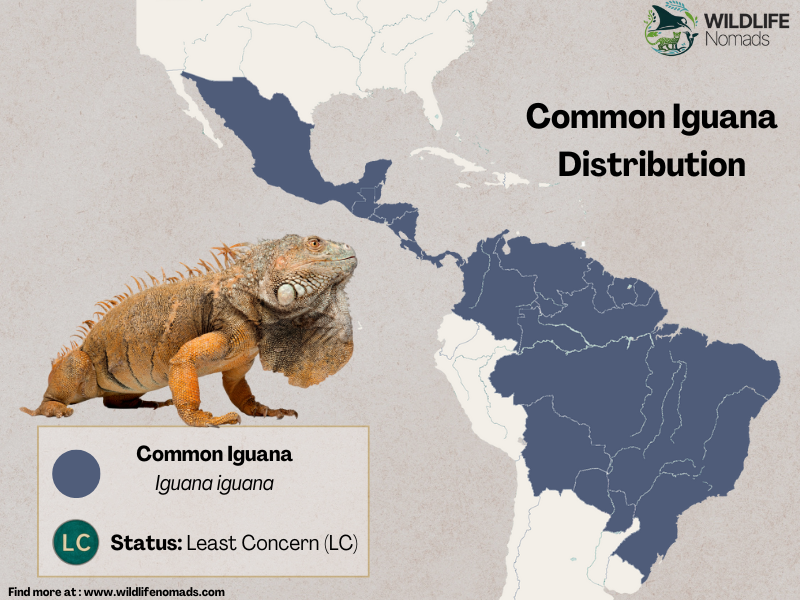
When people picture an iguana, they’re usually thinking of the common green iguana. With its native range stretching from southern Mexico through Central America to Brazil and Paraguay, this species dominates the iguana family. They’ve also colonized Caribbean islands like Puerto Rico and have established breeding populations in unexpected places like Florida and even parts of Asia.
- Scientific name: Iguana iguana
- Other names: Common iguana, American iguana
- Typical habitat: Tropical forests, riverbanks, mangroves
Their widespread success has made them both an ecological wonder and, in some regions, a serious nuisance.
2. Green Iguanas Are Arboreal Lizards
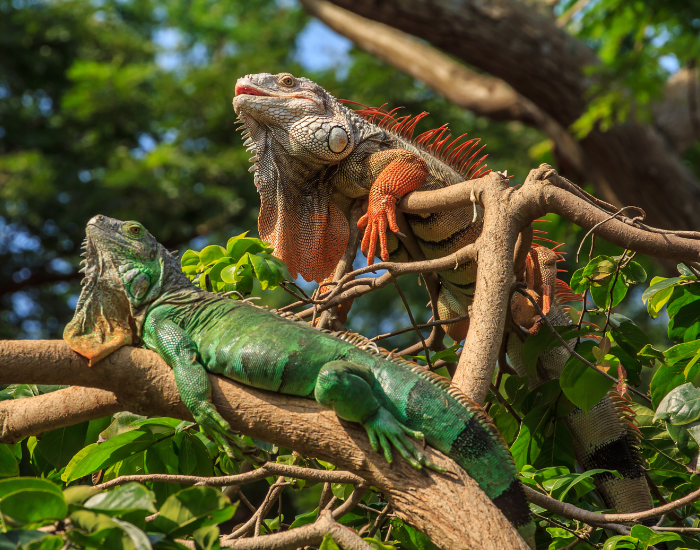
Unlike many ground-dwelling reptiles, green iguanas spend most of their time high in the trees. Their long tails help with balance, and their sharp claws allow them to grip bark as they climb. In their native range, they are most often seen basking on branches above rivers, ready to dive into the water if threatened.
This arboreal lifestyle also makes them important for seed dispersal. As they feed on fruits and leaves, they help tropical forests regenerate. It’s a reminder that even lizards can play a quiet but critical role in natural history.
3. Juvenile Iguanas Are Bright Green
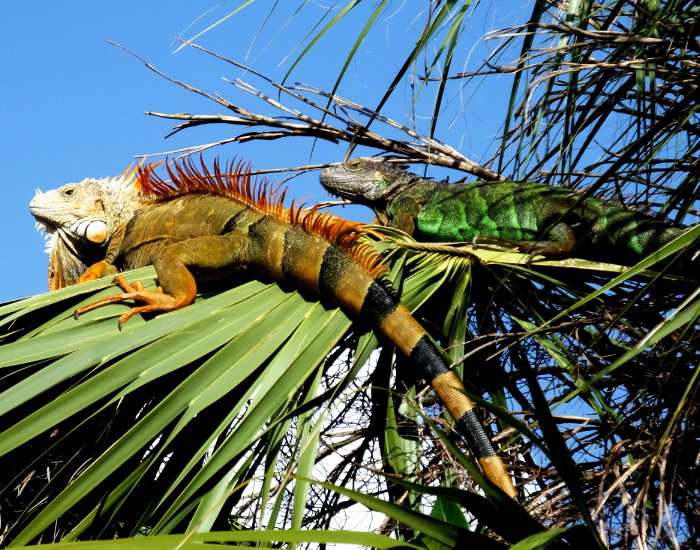
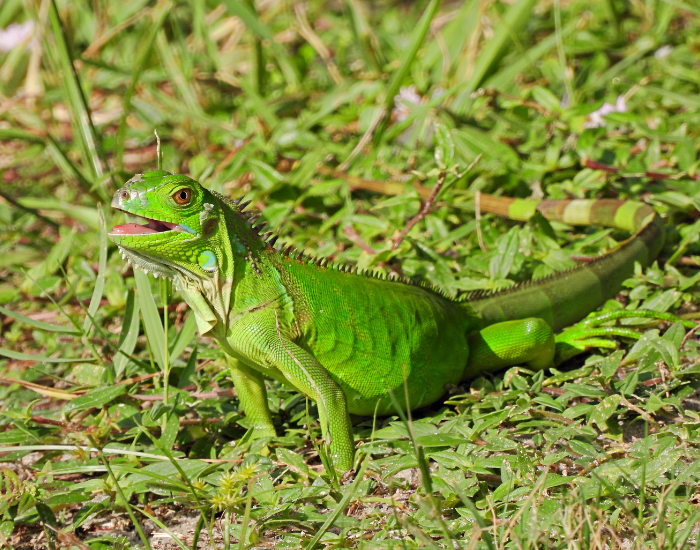
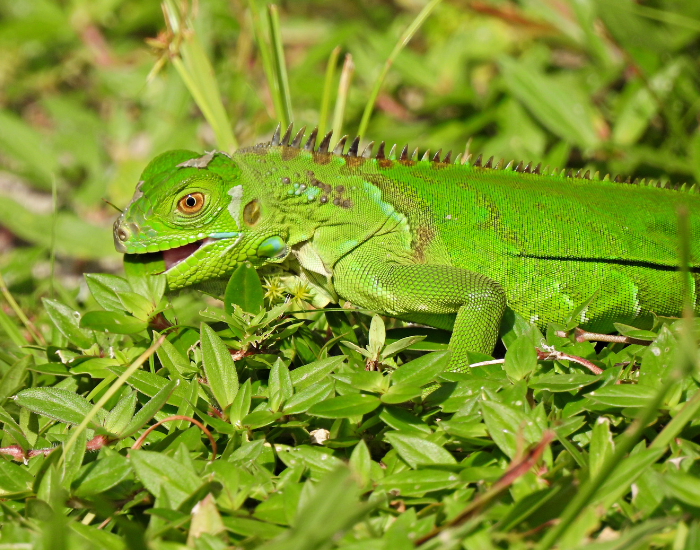
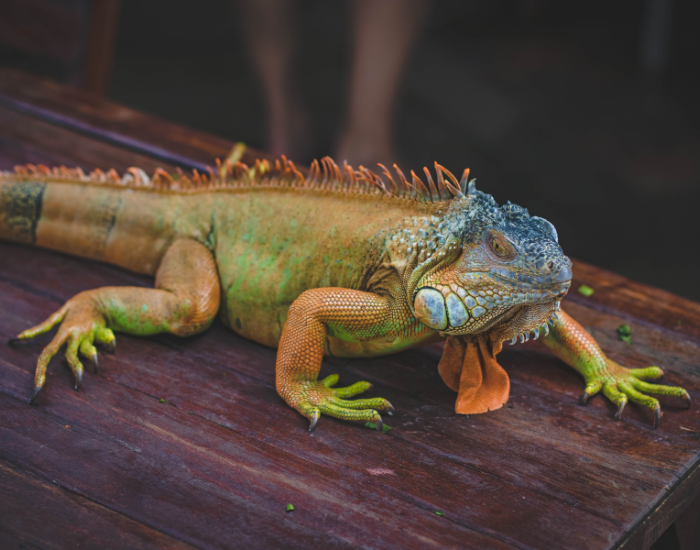
If adults look prehistoric, juvenile iguanas are almost cartoonishly vibrant. Hatchlings emerge from nesting burrows in brilliant lime green, a color that fades with age. By adulthood, iguanas may shift toward olive, gray, or even bright orange during breeding season.
This striking color change often leads to confusion. Many people ask: What’s the difference between green and orange iguanas? In reality, it’s the same species, just at different stages of life or hormonal cycles.
4. Male vs. Female Green Iguanas
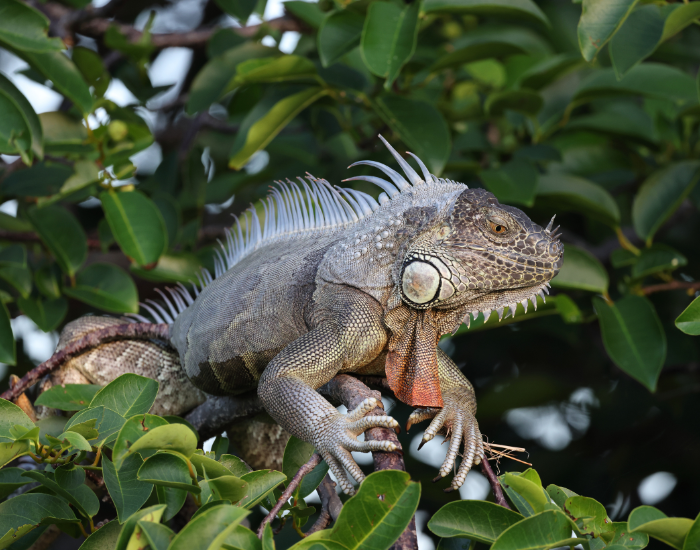
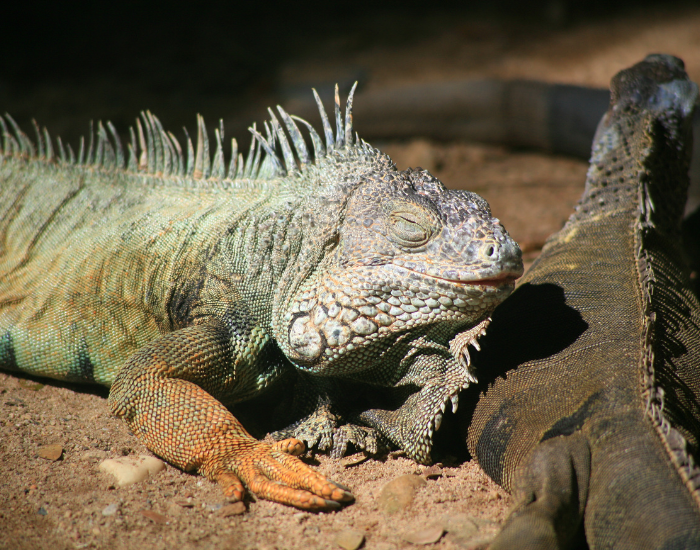
Male iguanas grow significantly larger than females, often exceeding 2 meters in length and developing massive jowls, throat fans (dewlaps), and pronounced spines. Adult males also show more dramatic color changes, turning orange to signal dominance during breeding season.
Female iguanas, on the other hand, are smaller and less flamboyant, but they play an equally impressive role in reproduction. Each year, females lay eggs, sometimes up to 70 at once, in underground nests.
These differences highlight how sexual dimorphism shapes survival strategies in reptiles.
5. South Florida Iguanas: From Pets to Pests
In their native range, iguanas are part of the ecosystem. In Florida, they’re an invasive species. The story is familiar: imported through the pet industry, released or escaped into the wild, and now thriving in the subtropical climate of South Florida.
There, iguanas in Florida cause major issues:
- Digging nesting sites that undermine seawalls, roads, and sidewalks
- Devouring garden greens and ornamental plants
- Competing with native species for food and space
- Damaging valuable plants and crops
The Florida Fish and Wildlife Conservation Commission and other agencies have recognized the need for habitat modification and control strategies. In some cases, they even encourage property owners to deter green iguanas from settling on private property year-round.
6. Big Green Iguanas Can Be Monster-Sized
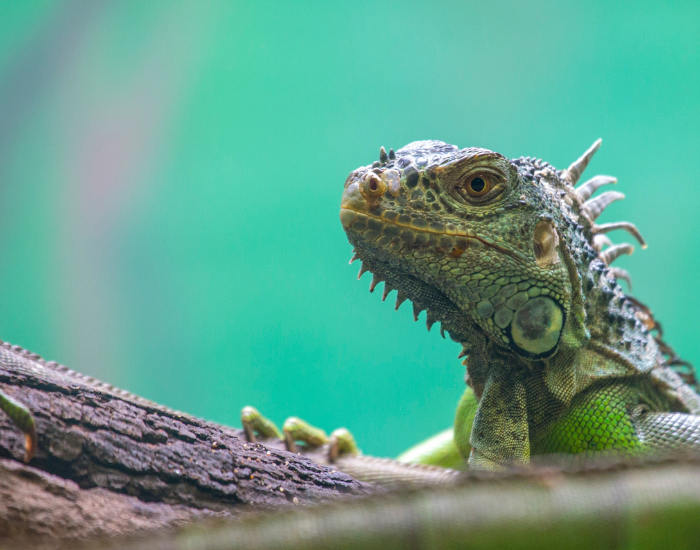
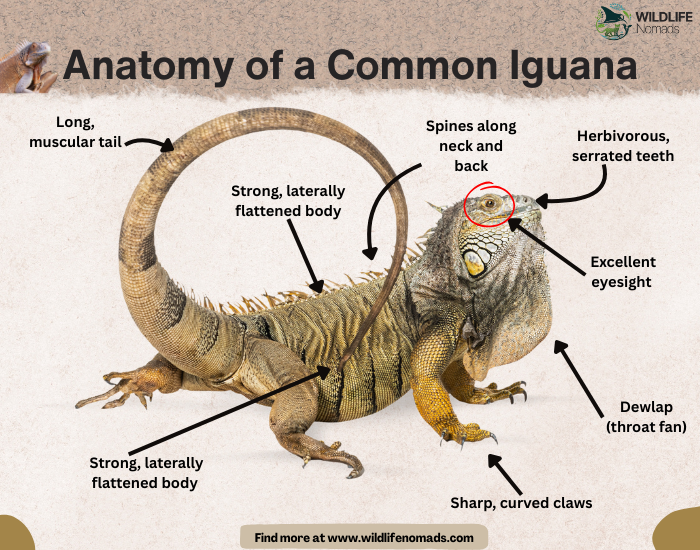
If you’ve only seen small lizards, encountering a full-size green iguana can be genuinely shocking. These are the largest members of the iguana family, capable of weighing over 20 pounds, with long, muscular tails that can equal or exceed their body length.
Their strong, laterally flattened bodies, thick limbs, and tall spines along the neck and back make them look even larger when basking. In places like Florida, it’s not unusual to spot a massive green iguana sunbathing on a canal wall, or suddenly dropping from a tree into a backyard pool.
In Central America, locals sometimes refer to especially large males as “giant iguanas.” They aren’t a separate species, just fully grown individuals showing the impressive size this species can reach.
7. Diet: Primarily Herbivorous, But Flexible
Common iguanas are primarily herbivorous, thriving on a diet of:
- Leaves and shoots
- Flowers and fruits
- Garden greens like spinach or kale (in captivity)
That said, they may occasionally eat insects, eggs, or small animals, particularly when young. In captivity, poor diets can lead to metabolic bone disease, making pet owners responsible for providing calcium-rich foods.
Their reliance on vegetation explains both their ecological importance, and their destructive reputation in Florida gardens.

8. Reproductive Biology: Eggs and Incubation
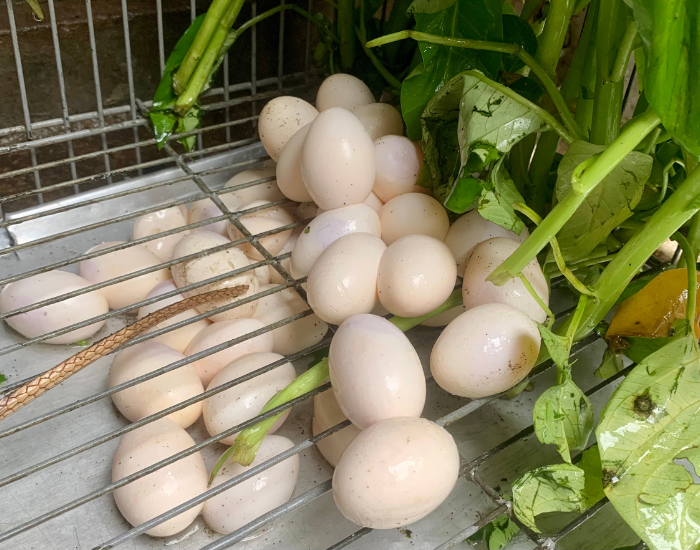
Females lay eggs once a year, often digging complex, long tunnels in sandy soil to protect their offspring. A single clutch can range from 20 to 71 eggs, which incubate for about 90 days. While many reptiles – like tortoises, Komodo Dragons and sea turtles – rely on the temperature of the nest to determine the sex of their young, green iguanas are different. Their sex is determined genetically by chromosomes, much like humans.
This high reproductive output is exactly why invasive populations explode so quickly. Even in new environments, a single established female can introduce dozens of new iguanas into the ecosystem in just one season, making them incredibly difficult to manage once they’ve gained a foothold.
9. Iguanas and Human Health
One often-overlooked fact: while iguana Florida populations aren’t poisonous, they can carry Salmonella. This makes hygiene essential for pet owners or anyone handling captive animals.
Scratches and bites from adult iguanas can also be serious, given their sharp claws and muscular jaws. For this reason, experts advise against trying to touch wild iguanas, especially in Florida, where they are unpredictable.
10. Conservation and Management
Globally, the common green iguana is listed as Least Concern on the IUCN Red List. However, local pressures, such as habitat destruction, hunting, and the pet trade, can affect local iguana populations.
Organizations like the International Reptile Conservation Foundation and regional NGOs focus on conserving iguanas in their native forests, while agencies in Florida concentrate on removal.
Methods to manage South Florida iguanas include:
- Habitat modification (removing food sources, sealing burrows)
- Reflective surfaces spraying and deterrents to discourage basking
- Professional trappers to capture captured iguanas humanely
It’s a delicate balance: conserving iguanas where they belong, while controlling them where they don’t.
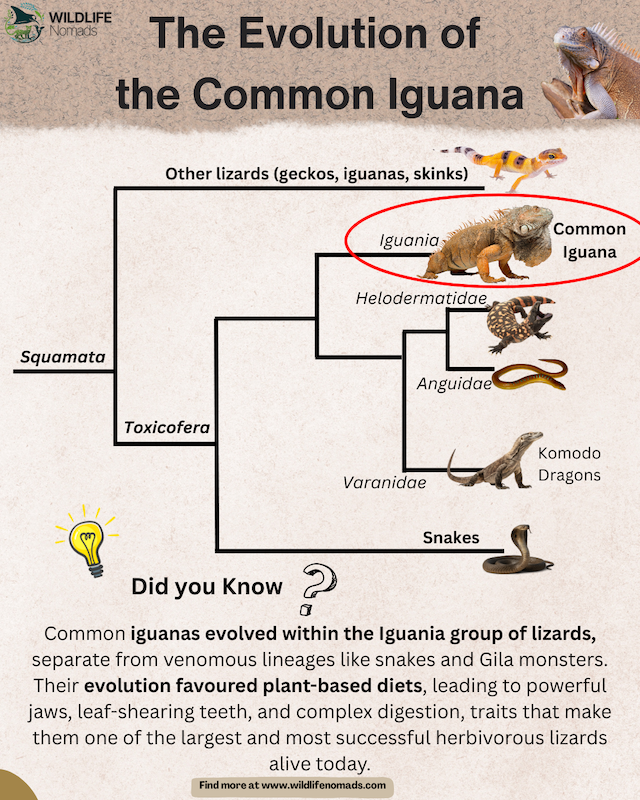
11. Evolutionary Survivors: The “Toxicofera” Connection
Common iguanas belong to a massive group of reptiles known as Toxicofera. While we once thought they were entirely distinct from venomous species like snakes, monitor lizards, modern DNA research suggests they actually share a common ancestor. In fact, green iguanas still possess primitive, vestigial venom glands. While this “venom” is extremely weak and completely harmless to humans, it is a fascinating evolutionary relic from their distant past.
Over millions of years, the iguana’s path shifted toward a highly specialized plant-based diet. This drove the development of powerful jaws, serrated teeth designed for shearing leaves, and a complex gut system for fermentation. This unique evolutionary journey allowed them to grow to “monster” sizes, filling a niche similar to browsing mammals and making them some of the most successful large-bodied herbivores on the planet today.
Extra facts for those Into Iguanas:
Young and Juvenile Green Iguanas
While adult iguanas command attention with their massive size, young iguanas and juvenile green iguanas are some of the most striking reptiles you’ll ever see. Their vivid lime color provides camouflage among leaves, but it also makes them easy targets for predators. This vulnerable stage is critical, survival rates are low, and only a fraction of hatchlings make it to adulthood.
Iguana Cousins: Mexican and Black Spiny-Tailed Iguanas
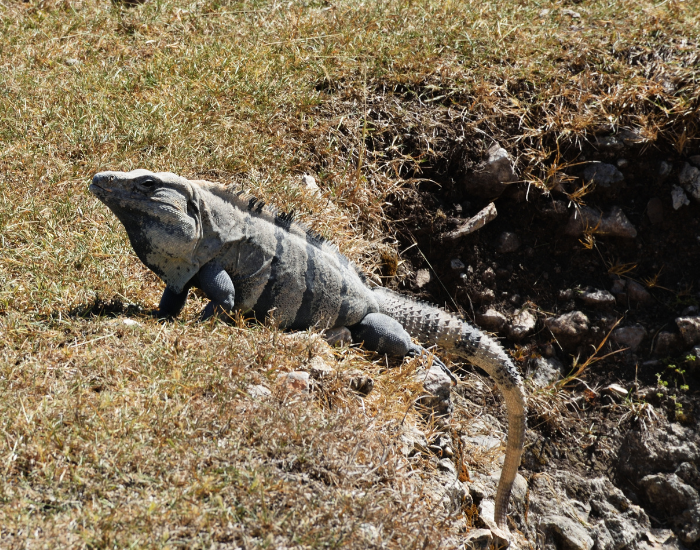
The Mexican spiny-tailed iguana and black spiny-tailed iguana are often confused with the common iguana, but they’re different species. These lizards are faster and more terrestrial, with tails armed with sharp spines they use for defense. In parts of Central America, they share habitat with American iguanas, sometimes competing for basking sites and food.
Iguanas Beyond the Americas
Though the native range of the green iguana is in Central and South America, they’ve spread widely. Populations have been documented in the eastern Caribbean islands and even the Gulf Coast of the United States. Once again, the pet industry is behind their global movement, as exotic pets often escape or are released, leading to introduced species establishing themselves in fragile ecosystems.
Nesting Behavior and Habitat Threats
In the wild, iguanas dig deep burrows for egg-laying. These burrows may collapse, contributing to property damage when nesting occurs under sidewalks, seawalls, or private gardens. At the same time, in their native range, iguanas are losing ground due to habitat destruction from deforestation and urbanization. Their resilience masks the fact that local iguana populations can still be vulnerable.

Quick FAQs About Common Iguanas
The common iguana (Iguana iguana), also known as the green iguana.
They are endangered and protected; trafficking them violates conservation laws.
No, but they can scratch, bite, and spread Salmonella.
They’re the same species; orange appears in adult males during breeding.
Not for beginners. They need huge enclosures, strict diets, and UV lighting.
Not usually, but wild iguanas may lash out if cornered.
In their native range, they inhabit forests and riversides; in Florida, they thrive in canals, backyards, and urban parks.
Do not feed them. Property owners are encouraged to remove or report them to wildlife officials.
Respecting the “Godzilla Lizards”
Whether basking on temple ruins in southern Mexico or digging burrows under sidewalks in Miami, the common iguana is a species that commands attention. Their size, prehistoric look, and resilience make them unforgettable.
But they also teach us a lesson: when humans transport animals outside their natural range, the results can be complex, sometimes destructive. Respecting iguanas means appreciating them in their native forests while acknowledging the challenges they create in Florida suburbs.
The next time you see one basking in the sun, take a moment to admire its dinosaur-like silhouette, a reminder that even in the modern world, some creatures still carry echoes of the Jurassic.