Meet The Lizards of Texas!
Texas is very well know for its intense hot wather and desert environment. Despite what some people may think, this place is home to an incredible diversity of reptile life! Specifically, I am talking about the lizards of Texas, representing some of the most fascinating and adaptable creatures in North America and the world.
I hope this brief guide helps wildlife enthusiasts, aspiring biologists and homeowners who encounter these creatures in their daily lives and that may think they are dangerous. Native species like the Texas horned lizard and fence lizards are iconic to the state, while introduced species like the Mediterranean gecko have also made Texas their permanent home. These reptiles serve vital ecological roles as both predators of insects and prey for larger animals including snakes, birds, and small mammals.

The 10 Most Notable Lizard Species in Texas
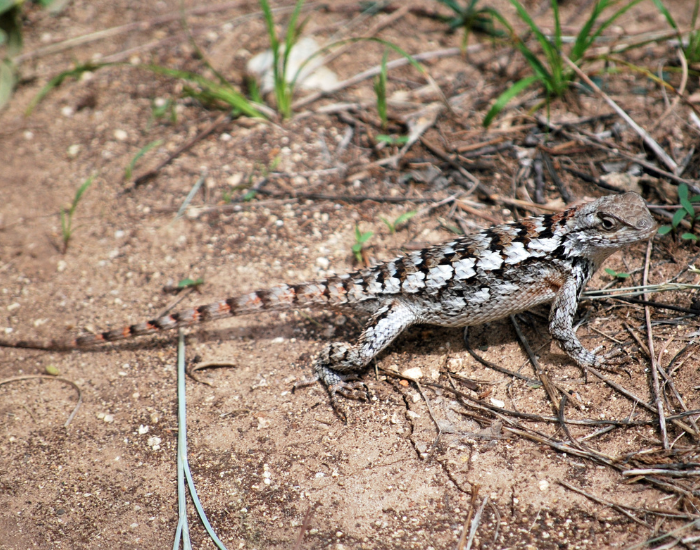
1. Texas Spiny Lizard (Sceloporus olivaceus)
The texas spiny lizard stands as one of the most easily recognizable lizards of texas, easily identified by its distinctive spiny scales and impressive climbing abilities. These medium to large lizards can reach lengths of 8-11 inches, making them among the big texas lizards that residents commonly encounter. Males typically display vibrant blue patches on their throats and bellies, while females exhibit more subdued brown and gray coloration with intricate patterns.
Texas spiny lizards prefer habitats with abundant trees and rocky areas, particularly favoring mesquite trees and oak groves throughout central and southern Texas. Their sharp claws make them excellent climbers, and they’re often spotted basking on tree bark during warm afternoons. These lizards primarily feed on insects, spiders, and occasionally small fruits, playing a crucial role in controlling pest populations.
2. Green Anole (Anolis carolinensis)
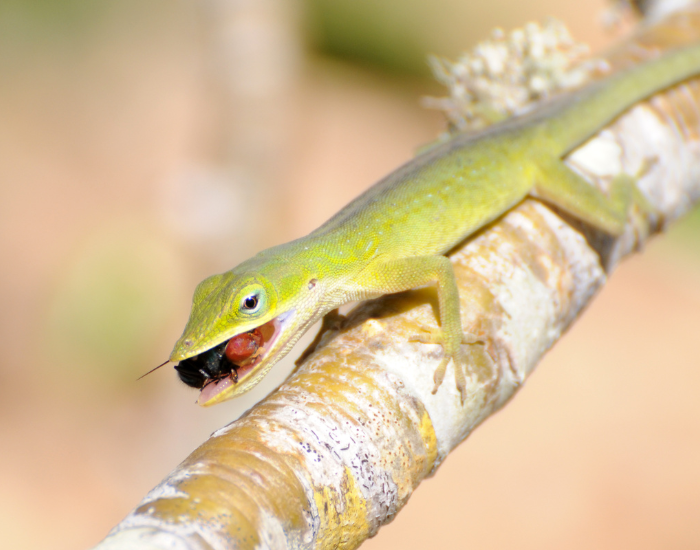
The green anole represents one of the cutest kinds of lizards in texas, famous for its remarkable color-changing abilities. These small to medium-sized lizards can shift from bright green to brown depending on temperature (remember these lizard are cold blooded animals), mood, and environmental conditions. Males are easily recognized by their bright red dewlaps, which they extend during territorial displays and courtship rituals.
Green anoles inhabit wooded areas throughout eastern and central Texas, where they spend most of their time in trees and shrubs. They prefer areas with dense vegetation and are commonly found around residential areas with mature landscaping. Their diet consists primarily of insects, spiders, and other small arthropods, making them valuable allies in natural pest control.
3. Texas Horned Lizard (Phrynosoma cornutum)
The Texas horned lizard, affectionately known as the “horny toad,” is perhaps the most iconic of all lizards of west texas. This unique species is immediately recognizable by its flattened body covered in horn-like projections and spiny scales. Unfortunately, this beloved reptile has experienced significant population declines due to habitat loss and the decline of its primary food source, harvester ants.
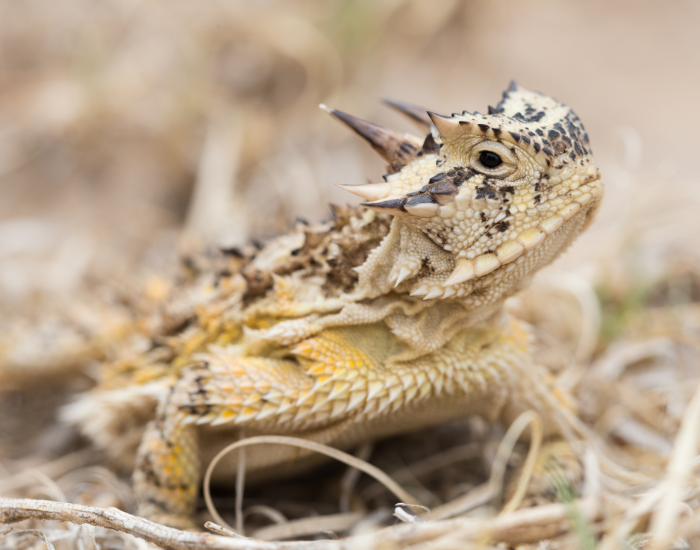
Texas horned lizards inhabit arid and semi-arid regions, particularly in western and central Texas. They prefer areas with sandy or loose soil where they can easily burrow and camouflage themselves. These lizards have several defensive adaptations, including the ability to squirt blood from their eyes when threatened, though this behavior is rarely observed in the wild. Find a video about this weird defensive mechanism:
4. Eastern Collared Lizard (Crotaphytus collaris)
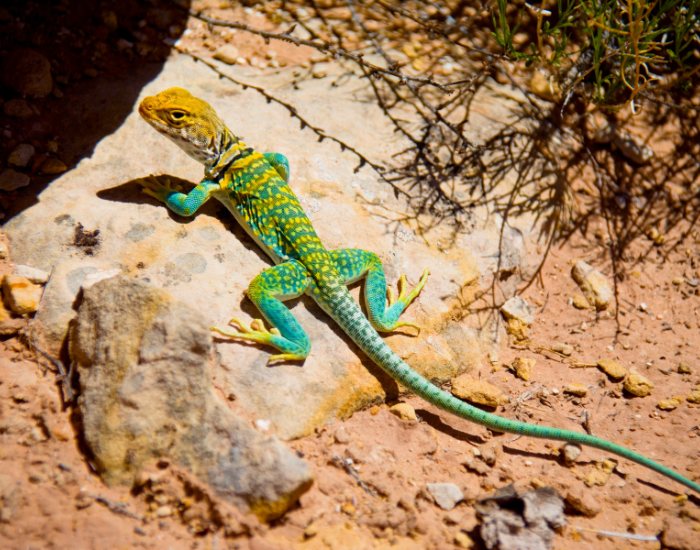
The eastern collared lizard ranks among the big texas lizards, with adults reaching lengths of 8-14 inches. These impressive reptiles are distinguished by their prominent black collar markings and their ability to run on their hind legs when pursuing prey or escaping predators. Males display vibrant blue and green coloration during breeding season, while females typically exhibit more muted tones.
These lizards prefer rocky habitats and are commonly found in the Hill Country and eastern regions of Texas. They’re excellent hunters, capable of taking down relatively large prey including other lizards, insects, and even small snakes. Their powerful jaws and aggressive nature make them formidable predators in their ecosystem.
5. Mediterranean Gecko (Hemidactylus turcicus)
Yes, I know, this is an introduced species, but nowdays the Mediterranean gecko represents one of the most successful introduced lizard species in texas. These small, nocturnal lizards have become increasingly common in urban and suburban areas throughout the state. They’re easily identified by their pale, translucent skin covered in small bumps and their distinctive toe pads that allow them to climb smooth surfaces.
Mediterranean geckos are particularly abundant around outdoor lights, where they hunt insects attracted to the illumination. Their presence in residential areas is generally beneficial, as they consume large quantities of mosquitoes, moths, and other pest insects. These geckos are also known for their distinctive chirping calls, which are commonly heard during warm summer nights.

6. Six-lined Racerunner (Aspidoscelis sexlineata)
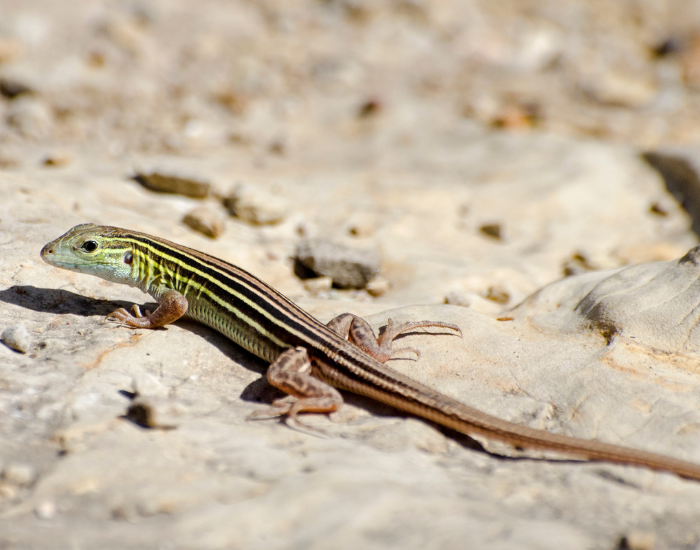
The six-lined racerunner is one of the fastest ones in Texas, capable of reaching speeds up to 18 miles per hour. These slender lizards are easily identified by the six distinct yellow or white stripes running down their backs and sides. They prefer open, sandy areas and are commonly found in grasslands, prairies, and disturbed habitats throughout much of Texas.
Six-lined racerunners are active foragers, constantly moving in search of insects, spiders, and other small prey. Their incredible speed helps them both catch prey and escape predators. These lizards are particularly active during the hottest parts of the day when many other reptiles seek shade.
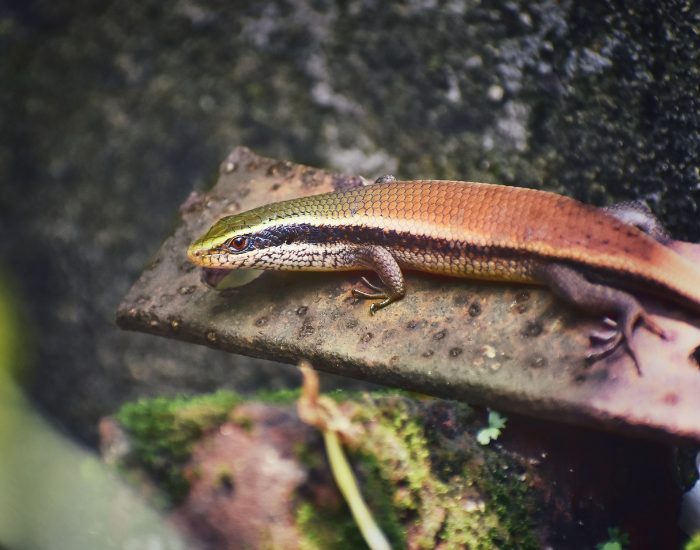
7. Ground Skink (Scincella lateralis)
The little brown skink, or ground skink, is a small lizard, typically measuring only 3-5 inches in total length. It sports smooth, shiny scales and bronze-to-brown tones. You’ll often hear it before you see it as it rustles through leaf litter, logs, and ground debris while hunting tiny insects and other invertebrates.
Ground skinks are secretive creatures that are more often heard than seen, rustling through fallen leaves as they search for tiny insects, spiders, and other invertebrates. They prefer moist, shaded areas and are commonly found in wooded habitats throughout eastern and central Texas.
8. Texas Alligator Lizard (Gerrhonotus infernalis)
The Texas alligator lizard is one of the more unique kinds of lizards in texas, distinguished by its segmented appearance and prehensile tail. Adults reach 16–20 inches and live mainly in the mountainous regions of West Texas. Distinct rows of scales create an armored, alligator-like appearance, true to the name.
Texas alligator lizards prefer rocky habitats with abundant cover, including boulder piles, cliff faces, and dense vegetation. They’re semi-arboreal, equally comfortable on the ground or in low shrubs and trees. Their diet consists of insects, spiders, small lizards, and occasionally bird eggs.

9. Ornate Tree Lizard (Urosaurus ornatus)
The ornate tree lizard is a common species in Texas, particularly abundant in desert and semi-desert regions. These small to medium-sized lizards are excellent climbers, spending most of their time on rocks, trees, and man-made structures. They’re recognized by their gray to brown coloration with intricate patterns of spots and crossbars.
Ornate tree lizards are highly territorial, with males defending prime basking and foraging sites from competitors. They’re active during daylight hours and feed primarily on insects and spiders. These adaptable lizards have successfully colonized urban areas, often seen on fences, buildings, and landscaping features.

10. Prairie Lizard (Sceloporus consobrinus)
The prairie lizard, also known as the northern fence lizard, completes our list of notable lizard species in texas. These medium-sized lizards are closely related to the Texas spiny lizard but are typically smaller and found in more northern regions of the state. Males display distinctive blue patches on their throats and sides during breeding season.
Prairie lizards prefer open woodlands, grasslands, and areas with scattered trees or rocky outcrops. They’re excellent climbers and are often observed basking on fence posts, rocks, or tree trunks. Their diet consists primarily of insects, spiders, and other small arthropods.

Habitat and Distribution of Texas Lizards
From the Chihuahuan Desert in the west to the Piney Woods in the east, each region supports distinct lizard communities adapted to local environmental conditions. Lizards of west texas have evolved remarkable adaptations for surviving in arid environments, including specialized kidney function for water conservation and behavioral modifications for temperature regulation.
Mesquite trees serve as crucial habitat components for many types of lizards texas supports, providing both shelter and foraging opportunities. These hardy trees create microhabitats that support diverse lizard communities, particularly in areas where natural vegetation has been altered by human activities. Rocky areas and cliff faces provide essential basking sites and retreat locations for many species, while fallen logs and leaf litter create habitat for secretive species like ground skinks.
Conservation Challenges and Efforts
Many lizards of texas face significant conservation challenges due to habitat loss, fragmentation, and climate change. Urban development has eliminated vast areas of native habitat, while agricultural practices have altered landscapes that once supported diverse lizard communities. The Texas horned lizard, once common throughout much of the state, has experienced dramatic population declines and is now considered a threatened species in many areas.
Conservation efforts for texas spiny lizard populations and other native species focus on habitat protection and restoration. Wildlife corridors connecting fragmented habitats allow lizards to move between suitable areas for feeding and breeding. Protected areas and wildlife management areas provide refugia for species that have declined in surrounding landscapes.
Ongoing reintroduction programs in 2026 are showing success in restoring Texas Horned Lizards to North Texas grasslands where they had previously vanished.
Can You Name That Texas Lizard? 🦎
A 10-photo identification challenge from across the Lone Star State. Pick the species you think it is — go back and change any answer before you score.
Which Texas lizard is this?
FAQs about Texas lizards
In many neighborhoods, it’s the Texas spiny lizard on fences and trees, with green anoles a close second in the east. In arid regions, whiptails and prairie (fence) lizards dominate.
Anoles are lizards. “Anole” refers to lizards with sticky toe pads and a colorful dewlap (throat fan). The green anole is our native anole.
For natives seen regularly, the Texas alligator lizard is one of the big Texas lizards, reaching 18+ inches in total length. Large collared lizards and Great Plains skinks are next.
Usually the little brown skink (ground skink)—tiny, shiny, and snake-like as it dashes through leaf litter.
Rules vary. Texas has regulations on nongame wildlife; always check state and local laws before keeping any wild lizard species in Texas. Ethically, it’s better to observe and leave them wild.
No. It’s non-venomous and harmless. It does scratch if mishandled (those sharp claws are made for climbing), so admire rather than pick up.
Not rare, often commonly found around homes with trees in central Texas and southern Texas.
Dozens—from skinks and geckos to spiny lizards, whiptails, anoles, and the state-symbol horned lizard. The list above highlights 10 frequent encounters across the state.
Wrap-up
Texas holds a remarkable variety of reptiles, and these 10 lizards of Texas are just the start. Whether you’re scanning lizards of West Texas in desert canyons or watching a Texas spiny lizard do push-ups on your fence, these animals are a living, breathing part of our natural heritage. Keep your distance, keep your cats indoors, and let the lizards do their job—quietly patrolling for pests while giving you a free nature show.
Further Reading:
References:
Altunışık, A., Kurtul, D., Gül, Ç., Boran, B., & Tosunoğlu, M. (2025). Age structure, growth, and survival rates of an insular population of Hemidactylus xturcicus. Ecology and Evolution, 15(7), e71735. https://doi.org/10.1002/ece3.71735
Hibbitts, T. D., & Hibbitts, T. J. (2015). Texas lizards: A field guide. University of Texas Press. Access: Google Books
Schaefer, R. R., Fleet, R. R., Rudolph, D. C., & Koerth, N. E. (2016). Relationships between Green Anoles (Anolis carolinensis) and shrub-level vegetation in fire-maintained longleaf pine (Pinus palustris) forests of Eastern Texas. Southeastern Naturalist, 15(sp9), 134-150. https://doi.org/10.1656/058.015.0sp901
Sherbrooke, W. C., & Middendorf, G. A., III. (2004). Responses of Kit Foxes (Vulpes macrotis) to antipredator blood-squirting and blood of Texas Horned Lizards (Phrynosoma cornutum). Copeia, 2004(3), 652-658. https://doi.org/10.1643/CH-03-157R1
Tucker, M. R., Biffi, D., & Williams, D. A. (2023). Thermal refugia and persistence of Texas Horned Lizards (Phrynosoma cornutum) in small towns. Ecology and Evolution, 13(7), e10245. https://doi.org/10.1002/ece3.10245
Texas Parks and Wildlife Department. (2026). Horny Toad homecoming: 2025-2026 release results for Phrynosoma cornutum. TPWD Conservation Reports.