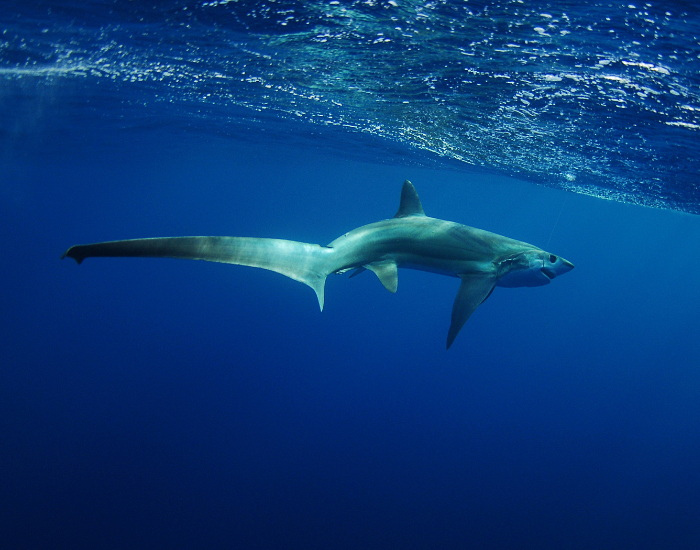
Have you ever seen a shark with long tail that looks like it’s wielding a whip underwater? Meet the thresher shark, one of the ocean’s most fascinating and misunderstood predators. These strange sharks aren’t just another shark species swimming through our oceans; they’re evolutionary marvel organisms that have perfected one of the most unique hunting techniques in the marine world.
The thresher shark represents something extraordinary in the shark family. While most people can easily picture a great white or hammerhead, thresher sharks often remain a mystery despite being some of the most spectacular hunters in temperate waters and tropical seas worldwide. Their distinctive tail fin – which can grow to half the length of their entire body, isn’t just for show. It’s a precision weapon that’s been millions of years in the making.
When marine biologists first studied these whiptail shark species, they discovered hunting behaviors that seemed almost too incredible to believe. We’re talking about sharks that can stun their prey with their powerful tails, launch themselves completely out of the water, and travel thousands of miles across ocean basins. These aren’t just big fish, they’re ocean athletes operating at the peak of evolutionary design.

In a nutshell, here are 12 Facts to know them better, but keep scrolling for those who are looking for detailed information
1. Thresher Sharks Have Legendary Long Tails
The caudal fin can reach half the shark’s total body length, up to 3 meters long in some common thresher sharks. This “whip” is both a weapon and a hunting tool, earning them names like whiptail shark, fox shark, and sea fox.

2. They Belong to a Unique Shark Family
Thresher sharks are part of the mackerel shark family (Alopiidae) and are close relatives of makos sharks and great whites. But unlike those sharks, they rely on their tails rather than massive jaws.

3. There Are Three Distinct Species
- Common Thresher Shark (Alopias vulpinus): the largest, reaching over 6 m (20 ft).
- Bigeye Thresher (Alopias superciliosus): adapted for deep-water hunting with huge eyes.
- Pelagic Thresher (Alopias pelagicus): the smallest, thriving in tropical waters.

4. Females Grow Larger Than Males
Like many sharks, females are bigger. They can reach 14.8 feet, while males mature at around 10.5 feet. This size difference helps females produce and carry larger pups.
5. They Are Ocean Wanderers
Thresher sharks are highly migratory species, traveling thousands of miles. They’re found across the Pacific, Atlantic, and Indo-Pacific oceans, from British Columbia to Mexico, and across temperate and tropical seas.

6. They Prefer the Open Ocean
Most thresher sharks are pelagic, sticking to the open ocean up to 550 meters deep. But common threshers often patrol coastal waters and continental shelves, making them more likely to encounter fisheries.
7. Thresher Sharks Hunt With Tail Whips
Their tail strike is legendary. Studies show tail tips can accelerate over 50 mph, stunning entire schools of fish like herring, sardines, and mackerel. This unique technique lets them catch multiple prey at once.

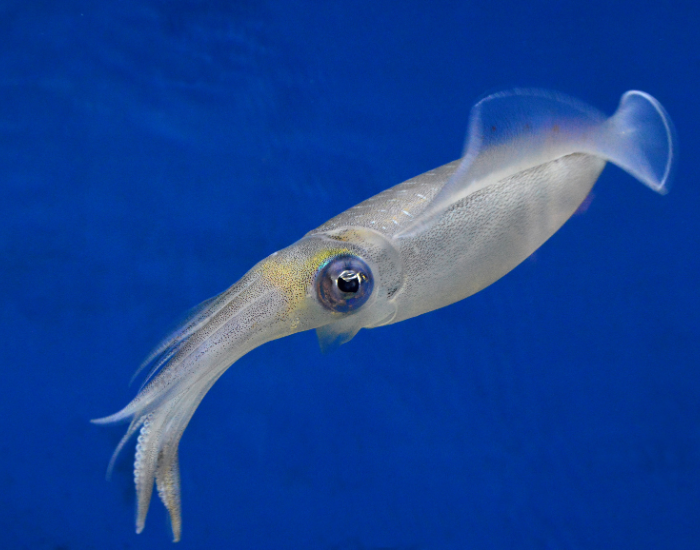
8. They Eat Schooling Fish and Squid
Their diet includes:
- Schooling fish: herring, sardines, mackerel.
- Squid and cephalopods.
- Occasionally smaller sharks and rays.
By controlling these populations, threshers help balance marine ecosystems.
9. They Can Leap Out of the Water
Thresher sharks sometimes breach, launching up to 3 m above the surface. Scientists think this helps them hunt surface prey, remove parasites, or communicate with other sharks.

Steve Momot, CC BY-SA 4.0, via Wikimedia Commons
10. They Reproduce Slowly
Thresher sharks are ovoviviparous, giving birth to live pups after a long gestation period. Litters are small, often just 2–4 pups, making populations very slow to recover from overfishing.
11. They Are Vulnerable to Overfishing
The IUCN lists thresher sharks as Vulnerable. Main threats include:
- Bycatch in tuna and swordfish fisheries.
- Targeted fishing for meat, fins, and liver oil.
- Slow reproductive rates that limit recovery.
12. Thresher Sharks Are Not Dangerous to Humans
Despite their size and intimidating tails, thresher sharks are shy and not aggressive toward people. Divers who see them in the wild describe the experience as unforgettable — and safe.
As promised, here is more detailed guide from each one of the facts:
Anatomy of a Living Whip: The Thresher’s Incredible Design
When you first encounter a thresher shark, the tail fin immediately commands attention. But this shark with long tail is engineered for performance in ways that go far beyond that obvious feature. Let’s break down what makes these sharks such incredible predators.
The Legendary Tail: A Precision Weapon
The thresher shark’s tail isn’t just long – it’s a biomechanical masterpiece. The caudal fin can reach lengths that are truly half the length of the shark’s body, creating a whip-like appendage that generates tremendous force. Common thresher sharks use this powerful tail to stun schooling fish, creating feeding opportunities that other shark species simply can’t access.
As mentioned before, recent studies have shown that thresher sharks can accelerate their tail tips to speeds exceeding 50 miles per hour underwater! Amazing eh! When that tail connects with a school of fish, the impact creates a shockwave that stuns or kills prey instantly. It’s like watching a underwater martial artist in action.

Body Design: Built for Performance
Beyond that famous tail, thresher sharks are built for efficiency:
- Length: Common thresher sharks can reach over 6 meters (20 feet), making them some of the larger sharks in ocean waters
- Body structure: Streamlined and powerful, perfect for highly migratory lifestyles
- Fins: Large pectoral fins provide excellent maneuverability
- Head: Relatively small compared to body size, housing efficient sensory systems
Males and females show interesting size differences, with females typically growing larger – a common pattern among shark species. Males reach sexual maturity at around 10.5 feet, while females mature between 8.5 and 14.8 feet.
Global Distribution: Where Thresher Sharks Rule the Seas
Thresher sharks are truly global citizens of the ocean. These highly migratory species travel incredible distances, and understanding their distribution patterns is crucial for conservation efforts worldwide.
Pacific Powerhouse
The Pacific ocean serves as a major stronghold for thresher sharks. Common thresher sharks are particularly abundant along the western Pacific and eastern Pacific coastlines. From British Columbia down to Baja California, these sharks patrol coastal waters and venture far into the open ocean.
Pelagic thresher sharks dominate the warmer Central Pacific and Western Pacific waters, where tropical conditions provide ideal hunting grounds. Meanwhile, bigeye thresher sharks prefer deeper waters across both Pacific regions.
Atlantic Adventures
In the Atlantic ocean, thresher sharks demonstrate their adaptability by occupying both temperate waters and tropical zones. These sharks migrate seasonally, following prey populations and optimal water temperatures.
Habitat Preferences: From Surface to Deep
Thresher sharks are primarily pelagic threshers, meaning they prefer open ocean environments. However, their habitat use is more complex than initially thought:
- Depth range: Primarily in the upper 550 meters, though bigeye thresher sharks dive much deeper
- Temperature: Temperate waters to tropical conditions
- Proximity to shore: While oceanic, they do venture into coastal waters when following prey
Habitat quality directly impacts thresher shark populations. Areas with abundant schooling fish and squid support higher densities of these predators.

Hunting Mastery: The Art of the Tail Whip
Here’s where thresher sharks truly shine as ocean predators. Their hunting technique is so unique that it’s become the subject of extensive marine research and countless nature documentaries.
The Stun and Feed Strategy
Thresher sharks have perfected what researchers call “threshing behavior.” Here’s how this incredible process works:
- Detection: Using their keen senses, thresher sharks locate schools of prey fish
- Approach: They position themselves strategically relative to the school
- Strike: The powerful tail whips forward with explosive force
- Stun: The impact stuns or kills multiple prey animals simultaneously
- Feed: The shark calmly consumes the stunned prey
This hunting method allows thresher sharks to catch multiple prey items with a single tail strike – an efficiency that other shark species can’t match.
Dietary Preferences: What’s on the Menu
Thresher sharks primarily eat:
- Schooling fish like herring, sardines, and mackerel
- Squid of various species
- Occasionally smaller sharks and rays
- Abundant seasonal prey that varies by location
Their diet makes them important predators in controlling fish populations, particularly schooling fish that can otherwise overwhelm marine ecosystems.
Spectacular Surface Behavior
One of the most incredible thresher shark behaviors occurs at the surface. These sharks can launch themselves completely out of the water using their powerful tails – a behavior called breaching. When a thresher shark breaches, it can reach heights of up to three meters above the ocean surface.
This breaching behavior serves multiple purposes:
- Stunning surface schooling fish
- Removing parasites
- Possibly communication with other thresher sharks
The Three Species: Each With Their Own Secrets
While all thresher sharks share that distinctive long tail, the three species have evolved distinct characteristics that suit their preferred environments.
Common Thresher Sharks: The Giants
Common thresher sharks (Alopias vulpinus) are the largest of the three species and the most widely distributed. These sharks can reach lengths exceeding 6 meters, making them some of the larger sharks in temperate and tropical oceans.
Common thresher sharks prefer coastal waters and continental shelf areas, particularly in the North Pacific and Atlantic oceans. They’re the species most likely to be encountered by divers and fisheries in temperate waters.

Bigeye Thresher: Deep Water Specialist
Bigeye thresher sharks (Alopias superciliosus) have evolved remarkable adaptations for deep-water hunting. Their enlarged eyes allow them to hunt effectively in the dim light of deeper ocean layers.
These sharks typically inhabit deeper waters than their cousins, diving to depths where most other shark species cannot compete effectively. Their hunting strategy focuses on deep-water squid and fish species.

Pelagic Thresher Sharks: Tropical Travelers
Pelagic thresher sharks (Alopias pelagicus) are the tropical water specialists of the family. These sharks are most abundant in warm Pacific waters, where they’ve adapted to hunt prey species specific to tropical marine environments.
Pelagic threshers are often smaller than common thresher sharks but make up for size with incredible agility and speed. They’re particularly important predators in tropical Pacific ecosystems.

Kevin Deacon, CC BY-SA 3.0, via Wikimedia Commons
Conservation Crisis: The Challenge of Protecting Ocean Nomads
The conservation status of thresher sharks presents one of the most complex challenges in marine conservation today. These highly migratory species face threats that span entire ocean basins, making protection efforts incredibly difficult to coordinate.
Current Threat Assessment
Thresher sharks are currently listed as vulnerable by the IUCN, but the reality may be even more concerning. The combination of their highly migratory nature and slow reproductive rates makes them particularly susceptible to overfishing and bycatch.
Key threats include:
- Commercial and recreational fisheries targeting thresher sharks directly
- Bycatch in fisheries targeting other species
- Demand for shark fins, meat, and liver oil
- Habitat degradation in critical feeding and breeding areas
- Climate change affecting prey distributions
The Reproduction Challenge
Thresher sharks face a significant biological challenge that makes conservation even more critical: they reproduce very slowly. Sexual maturity comes late – males mature around 10.5 feet length, females between 8.5-14.8 feet length.
The gestation period is lengthy, and females produce relatively few pups compared to other fish species. This means that thresher shark populations cannot recover quickly from overfishing or other mortality pressures.
Global Conservation Efforts
Protecting thresher sharks requires international cooperation because these sharks don’t recognize political boundaries. Several initiatives are showing promise:
Fisheries management programs are implementing catch limits and seasonal restrictions in key habitat areas. Bycatch reduction technologies are being developed to minimize accidental catch of thresher sharks in fisheries targeting other species.
Marine protected areas in critical habitat regions provide safe zones where thresher sharks can feed and reproduce without fishing pressure. However, these sharks travel such vast distances that protecting them requires much larger conservation areas than most species.
In Indonesia, communities helped reducing fishing of this species, despite been valued as source of food, until a new conservation initiative in the villages of Ampera and Lewalu aimed to change this. You can read the full story here.
Research Breakthroughs: What Science Is Revealing
Modern research on thresher sharks is revealing secrets that were impossible to uncover just decades ago. Advanced tagging technologies and underwater cameras are providing unprecedented insights into thresher shark behavior and ecology.
Tracking the Nomads
Satellite tagging studies have revealed that thresher sharks are even more highly migratory than previously thought. Individual sharks have been tracked traveling thousands of miles across ocean basins, following prey populations and optimal water conditions.
These tracking studies are revealing critical habitat areas that were previously unknown, helping conservationists focus protection efforts where they’ll have the greatest impact on thresher shark populations.
Understanding the Tail Strike
High-speed underwater cameras have finally captured the thresher shark’s tail strike in detail. The physics of this hunting technique are more complex than researchers initially realized. The tail doesn’t just hit prey, it creates complex water movements that stun fish even when they’re not directly struck.
Population Genetics
DNA analysis is revealing how thresher shark populations are connected across ocean basins. This research is crucial for understanding whether thresher sharks in different regions should be managed as separate populations or as connected species.
The Future of Thresher Sharks: Reasons for Hope
Despite the challenges, there are encouraging developments in thresher shark conservation. Growing public awareness, improved fisheries management, and innovative research techniques are creating new opportunities for protection.
Technology Solutions
New fishing gear designs are reducing thresher shark bycatch without significantly impacting catch rates for target species. These technological solutions show promise for reducing fishing mortality while maintaining viable fisheries.
Community Conservation
Coastal communities that depend on fishing are increasingly recognizing the value of thresher sharks – both for ecosystem health and eco-tourism opportunities. Thresher shark diving is becoming a significant economic driver in certain areas.
International Cooperation
International agreements are slowly beginning to address the challenges of protecting highly migratory species like thresher sharks. While progress is slow, the framework for ocean-wide conservation is beginning to take shape.
Masters of the Ocean’s Whip
The thresher shark represents one of evolution’s most remarkable success stories – a shark with long tail that has mastered a hunting technique unlike any other marine predator. The three species of thresher sharks – common thresher sharks, bigeye thresher sharks, and pelagic thresher sharks – each play crucial roles in maintaining healthy ocean ecosystems. As predators that control fish populations and maintain marine balance, their conservation isn’t just about saving spectacular sharks, it’s about preserving the health of our oceans.
The next time you think about sharks, remember the thresher shark – the whiptail shark that proves evolution can create solutions more elegant and effective than anything we could imagine. These sharks have mastered their ocean realm for millions of years. Now it’s up to us to ensure they can continue their remarkable journey for millions more.