Save the Species: a free endangered species game
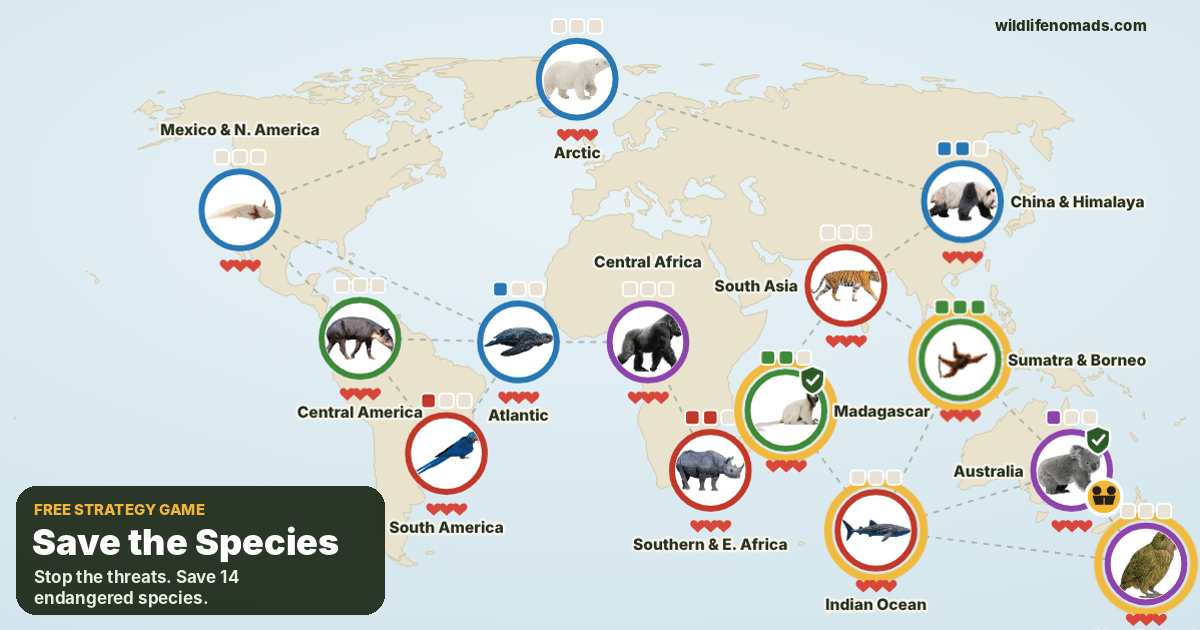
Threats are spreading around the world. Move your ranger, set up protected areas and unlock four conservation breakthroughs before three species are lost.
By Cesar Medina, conservation biologist · 14 regions, a new daily challenge every day
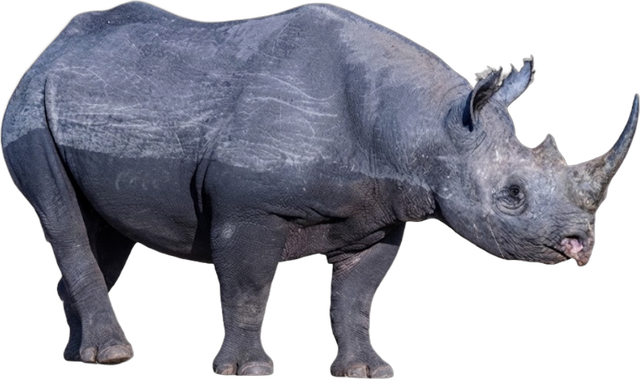 Stop poaching
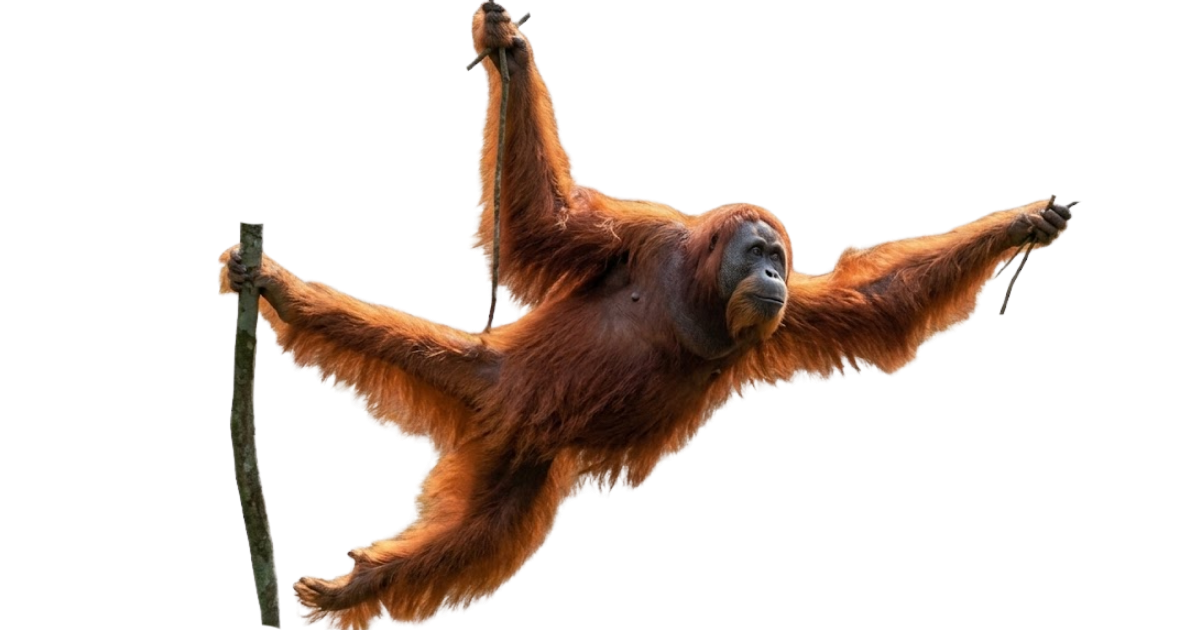 Save habitat
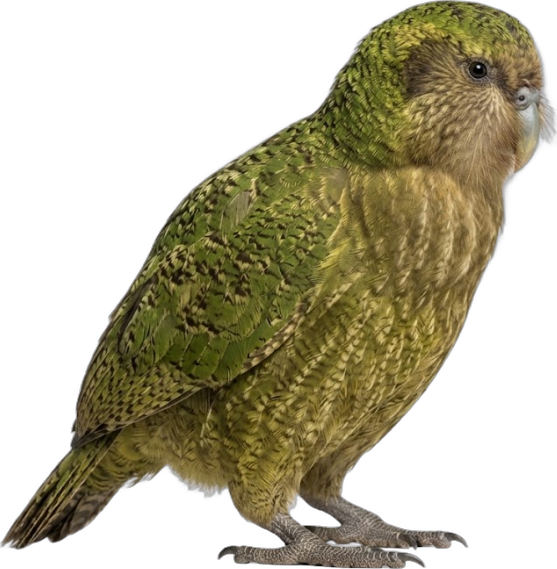 Keep pests out
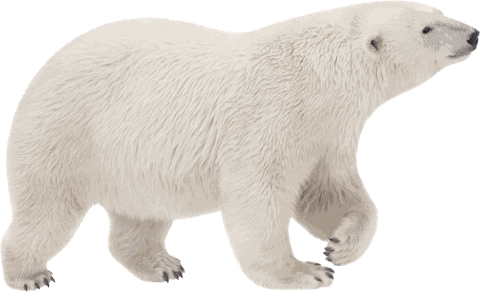 Fight climate change
What is Save the Species?
Save the Species is a free endangered species game. You play a ranger racing around a world map. Stop threats like poaching and habitat loss, and unlock four conservation breakthroughs before three species are lost.
How to play
- You get 4 actions a turn. Travel to a linked region, fly with a card, protect a region or set up a protected area.
- Protect removes one threat from the region you are in.
- A region can hold 3 threats. A 4th sets off a crisis. Its species loses a heart, and threats spread to linked regions.
- Protected areas stop crises from spreading in. You can also travel between two protected areas in one move.
- Breakthroughs: collect 4 cards of one colour and use them at a protected area.
- You win by unlocking all four breakthroughs. You lose if 3 species are lost, 8 crises break out or the funding runs out.
The four threats and how conservation fights them
The game groups the threats into four colours. Each breakthrough is a real conservation tool.
- Habitat loss: protected areas and corridors. They give animals room to live and move. Real example: Key populations live in protected reserves such as Calakmul in Mexico and Corcovado in Costa Rica.
- Poaching and overfishing: ranger patrols and trade bans. Real example: Intensive anti-poaching and moving rhinos to new reserves have raised numbers to 6,788 by the end of 2024.
- Invasive species and disease: biosecurity and disease control. Real example: kākāpō breed on predator-free islands. A record 90 chicks hatched in 2026, lifting the population to 325.
- Climate change and pollution: climate action and clean-ups. Real example: Xochimilco farmers and scientists are restoring canals as clean-water refuges. Trial releases of captive-bred axolotls are under way.
The 14 species in the game
Each region has one flagship species. Their Red List status and threats come from the IUCN Red List.
| Region | Species | IUCN status | Threat in the game |
|---|---|---|---|
| The Arctic | Polar bear (Ursus maritimus) | Vulnerable | Climate change |
| Mexico & North America | Axolotl (Ambystoma mexicanum) | Critically Endangered | Pollution and poison |
| Central America | Baird's tapir (Tapirus bairdii) | Endangered | Habitat loss |
| South America | Hyacinth macaw (Anodorhynchus hyacinthinus) | Vulnerable | Wildlife trade |
| Atlantic Ocean | Leatherback turtle (Dermochelys coriacea) | Vulnerable | Pollution and poison |
| Central Africa | Mountain gorilla (Gorilla beringei beringei) | Endangered | Disease |
| Southern & East Africa | Black rhino (Diceros bicornis) | Critically Endangered | Hunting and poaching |
| Madagascar | Crowned sifaka (Propithecus coronatus) | Critically Endangered | Habitat loss |
| India & South Asia | Tiger (Panthera tigris) | Endangered | Hunting and poaching |
| China & the Himalayas | Giant panda (Ailuropoda melanoleuca) | Vulnerable | Climate change |
| Sumatra & Borneo | Sumatran orangutan (Pongo abelii) | Critically Endangered | Habitat loss |
| Indian Ocean | Whale shark (Rhincodon typus) | Endangered | Fishing and bycatch |
| Australia | Koala (Phascolarctos cinereus) | Vulnerable | Disease |
| New Zealand | Kakapo (Strigops habroptila) | Critically Endangered | Invasive species |
Want to meet more threatened animals? Explore the Endangered Animals Explorer.
The daily challenge
Every day brings a new challenge. Everyone gets the same map and the same cards. Finish it, then post your score with three initials, arcade style. Only your first daily score counts, so think before you move.
Tips from the field
- Clear regions with 3 threats first. A crisis can set off a chain reaction.
- Put protected areas next to busy hubs, like the oceans and Southern Africa.
- Don’t spend cards of a colour you are collecting on flights.
Explore more games
Save the Species FAQ
Habitat loss is the biggest threat to most species. Hunting, the wildlife trade, invasive species, disease, pollution and climate change add to it.
They give animals safe places to live and breed. Corridors between them let animals move and keep populations connected.
Yes. With strong protection, some recover. Black rhinos, kakapo and tigers in India and Nepal have all grown in number.
Yes. It is free, needs no sign-up and works on phones and computers.
Everyone gets the same map and cards each day. Finish the game, then post your score to the daily leaderboard with three initials.
References
IUCN. (2026). The IUCN Red List of Threatened Species (Version 2026-1). https://www.iucnredlist.org/
Wildlife Nomads. (2026). Endangered Animals Explorer (species data and sources). https://www.wildlifenomads.com/play/endangered-animals/