Deep-Sea Sub: dive to the bottom of the ocean
Pilot a submersible from the sunlit surface to the Challenger Deep, 10,935 m down. Switch on your lights and scan the animals of every ocean zone.
By Cesar Medina, conservation biologist · 5 zones, 30 animals
 Twilight zone
 Midnight zone
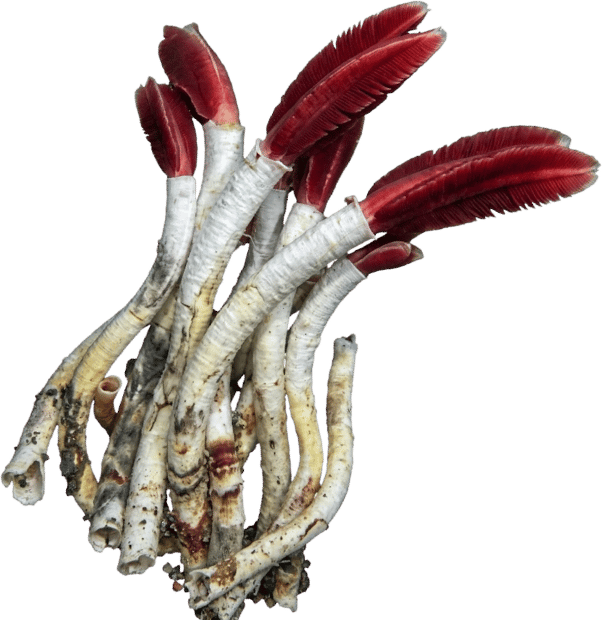 Hot vents
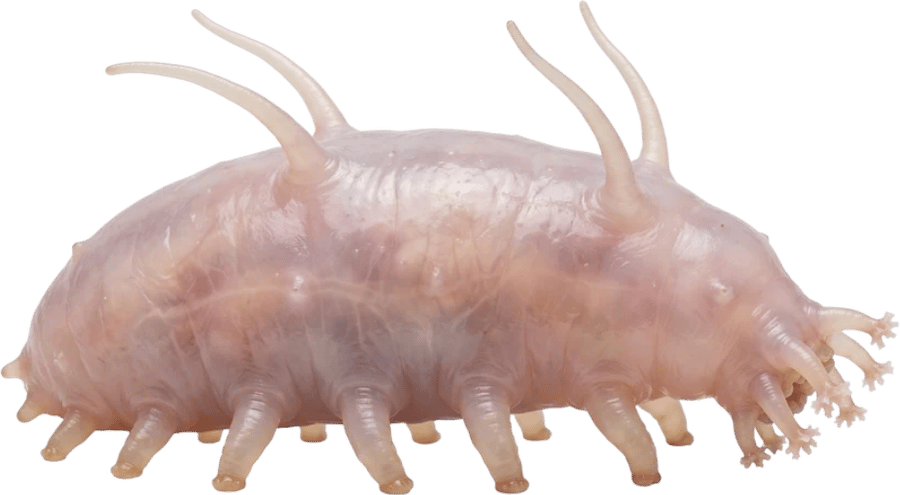 The abyss
What is Deep-Sea Sub?
Deep-Sea Sub is a free 3D deep sea game. You pilot a submersible from the surface to the Challenger Deep, the deepest known point in the ocean. On the way, you scan 30 real deep-sea animals for your logbook.
How to play
- Sink with ▼ or Q, and rise with ▲ or E. Auto-dive sinks for you and slows down near animals.
- Look around by dragging. Steer with the joystick or W, A, S and D.
- Scan an animal: put it in the circle and hold Scan, or Space. The yellow arrow points to the nearest animal you have not logged.
- Watch your battery. Your lights drain it. Below 1,000 m, switch them off to spot animals that make their own light.
The five ocean zones
| Zone | Depth | Animals in the game |
|---|---|---|
| Sunlight zone | 0–200 m | Comb jelly |
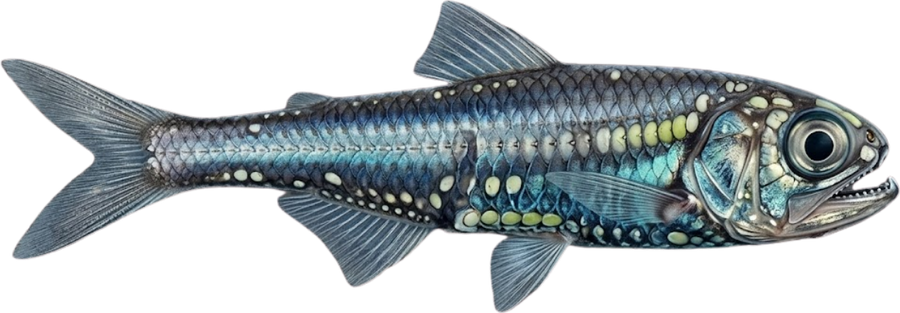
| Twilight zone | 200–1,000 m | Coelacanth, nautilus, oarfish, hatchetfish, lanternfish, giant squid, barreleye, goblin shark, frilled shark, vampire squid |
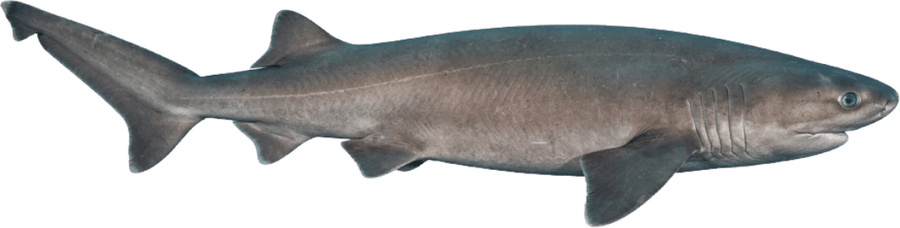
| Midnight zone | 1,000–4,000 m | Sixgill shark, blobfish, giant isopod, grenadier, Greenland shark, anglerfish, chimaera, Atolla jellyfish, black swallower, pelican eel, fangtooth, tube worms, yeti crab, giant sea spider, dumbo octopus |
| Abyssal zone | 4,000–6,000 m | Sea pigs, abyssal spiderfish, brittle stars, grenadiers |
| Hadal zone | 6,000–10,935 m | Dumbo octopus, near the deepest octopus record of 6,957 m |
Sunlight fades fast. Below about 1,000 m, no sunlight reaches the water at all. In the eastern Pacific, about three quarters of the main groups of deep-sea animals can make their own light.
Four deep-sea places to discover
- Whale fall (about 1,060 m): a sunken whale skeleton. A whale fall can feed deep-sea life for decades.
- Hydrothermal vent (about 2,310 m): a black smoker. Scientists first found vents teeming with life in 1977. Vent water can top 400 °C.
- Abyssal plain (about 4,510 m): cold, flat mud. Sea pigs walk here on tube feet.
- Challenger Deep (about 10,935 m): the bottom of the Mariana Trench. No fish has been filmed deeper than 8,336 m.
The shark at the window
At about 1,000 m, a bluntnose sixgill shark swims right up to your sub. It copies a real moment. In 2019, OceanX filmed a sixgill shark swimming right up to its submersible. The video went viral again in 2026. Sixgills have six gill slits, while most sharks have five.
Is the dive realistic?
Each animal sits at a depth where scientists have recorded it. But this dive mixes oceans. Greenland sharks live in the Arctic and North Atlantic. Yeti crabs live south of Easter Island, in the Pacific. In real life, you would not meet them all on one dive.
The game also squeezes the depth. Each step down covers 10 m, so a full dive takes minutes, not hours.
Myth buster: the blobfish
The famous droopy blob is a blobfish hauled up from the deep. Its soft body gets damaged on the way up. At home, 600 to 1,200 m down, water pressure and its loose skin keep its shape. In the game, you can meet one hovering near the whale fall.
Explore more games
Deep-Sea Sub FAQ
The Challenger Deep, in the Mariana Trench, is the deepest known point. It lies about 10,935 m below the surface.
The sunlight zone runs to 200 m and the twilight zone to 1,000 m. Then come the midnight zone, the abyssal zone and the hadal zone.
Lanternfish, hatchetfish, anglerfish, vampire squid, pelican eels and Atolla jellyfish all make light. In the eastern Pacific, about three quarters of the main groups of deep-sea animals can glow.
Giant tube worms, yeti crabs and many other animals live at vents. Bacteria there turn vent chemicals into food.
It only looks like a blob after being hauled up from the deep. The trip damages its soft body. At home, water pressure keeps its shape.
It is a bluntnose sixgill shark. OceanX filmed it swimming up to a submersible in 2019. Sixgills have six gill slits instead of five.
References
Engelhaupt, E. (2013, September 26). ‘World’s ugliest animal’ contest took blobfish out of water. Science News. https://www.sciencenews.org/blog/gory-details/worlds-ugliest-animal-contest-took-blobfish-out-water
Corliss, J. B., et al. (1979). Submarine thermal springs on the Galápagos Rift. Science, 203(4385), 1073–1083. https://doi.org/10.1126/science.203.4385.1073
Guinness World Records. (2020). Deepest octopus. https://www.guinnessworldrecords.com/world-records/83167-deepest-octopus
Guinness World Records. (2023). Deepest fish. https://www.guinnessworldrecords.com/world-records/deepest-fish
Monterey Bay Aquarium Research Institute. (n.d.). Sea pig. https://www.mbari.org/animal/sea-pig/
NOAA National Ocean Service. (n.d.). How long do Greenland sharks live? https://oceanservice.noaa.gov/facts/greenland-shark.html
Nielsen, J., et al. (2016). Eye lens radiocarbon reveals centuries of longevity in the Greenland shark (Somniosus microcephalus). Science, 353(6300), 702–704. https://doi.org/10.1126/science.aaf1703
Robison, B. H., & Reisenbichler, K. R. (2008). Macropinna microstoma and the paradox of its tubular eyes. Copeia, 2008(4), 780–784. https://doi.org/10.1643/CG-07-082