Safari Snap: a free 3D safari game for wildlife photographers
Drive the Serengeti and the Australian bush, or take a boat down an Amazon river. Photograph 39 animals, zoom in and snap the perfect shot for your album.
By Cesar Medina, conservation biologist · 3 parks · 39 animals
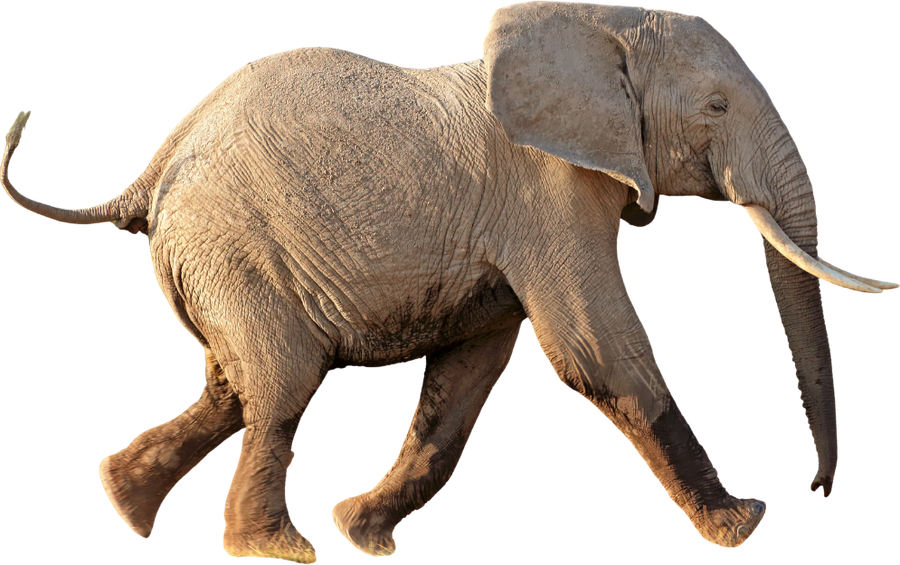 Elephant
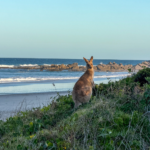
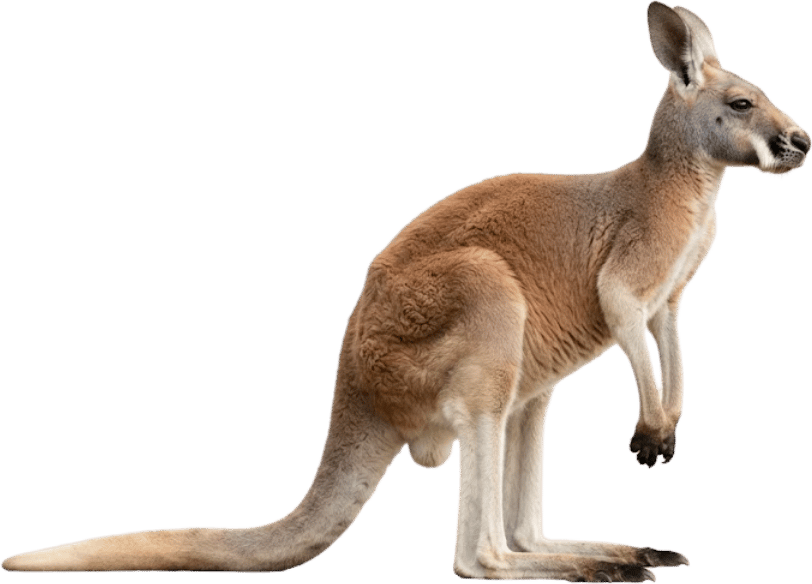 Kangaroo
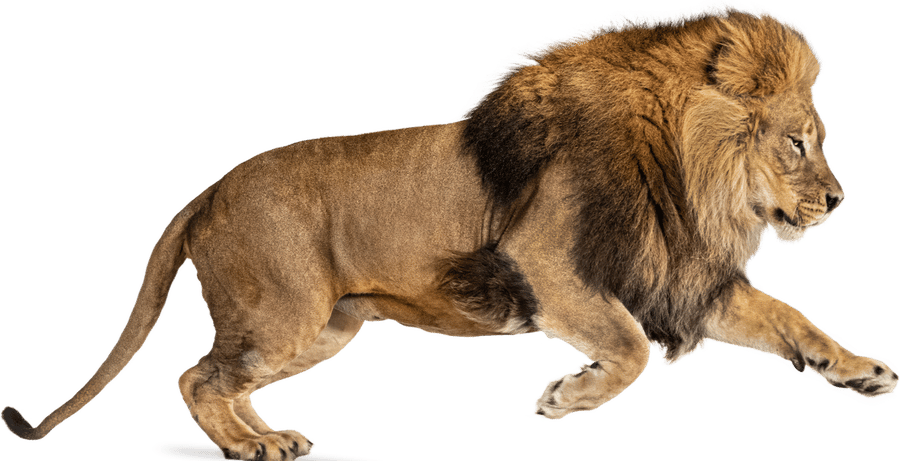 Lion
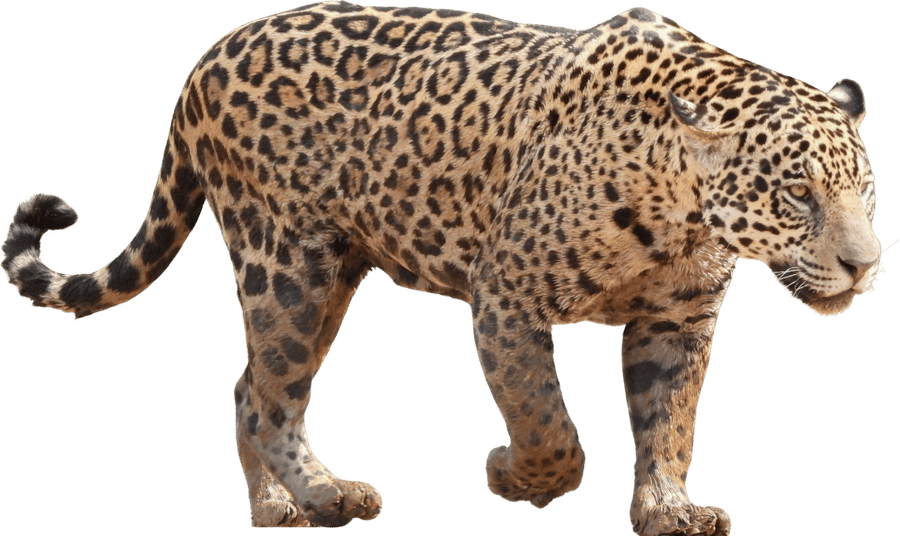 Jaguar
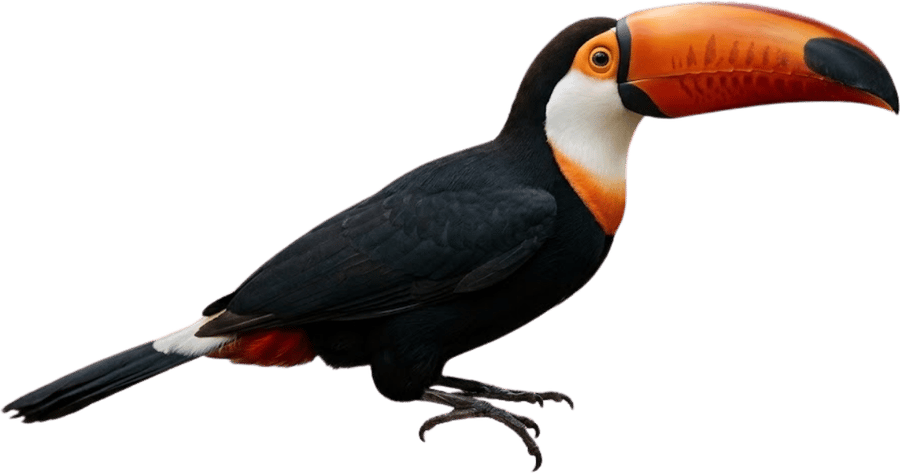 Toucan
What is Safari Snap?
Safari Snap is a free 3D safari game about wildlife photography. Pick a park: the Serengeti, the Australian bush or the Amazon rainforest. You get 12 shots per trip to photograph its 13 animals and fill your album.

I built it for people like me who dream of a safari. It is a game, but every animal card uses real science and its real conservation status.
Three parks to explore
- Serengeti, Tanzania: a jeep loop with lion and cheetah hunts and a wildebeest river crossing.
- Australian bush: a 4WD loop past kangaroo mobs, koalas in gum trees and galahs at a waterhole. At dusk, look for bilbies and northern hairy-nosed wombats.
- Amazon rainforest: a boat trip with pink river dolphins, giant otters, sloths and scarlet macaws. A jaguar may walk the riverbank.
The bush loop packs habitats from across Australia into one drive. In the wild, some of these animals never meet. The northern hairy-nosed wombat, for example, survives only in central Queensland.
How to take a high-scoring photo
- Fill the frame. Zoom in until the animal fills about half of the viewfinder.
- Keep it centred. Animals cut off by the corners lose points.
- Catch the action. A hippo yawning or a wildebeest leaping earns a big bonus.
- Shoot the herd. More animals of the same species add group points.
- Find the rare ones. Rare animals score double. Very rare ones score triple.
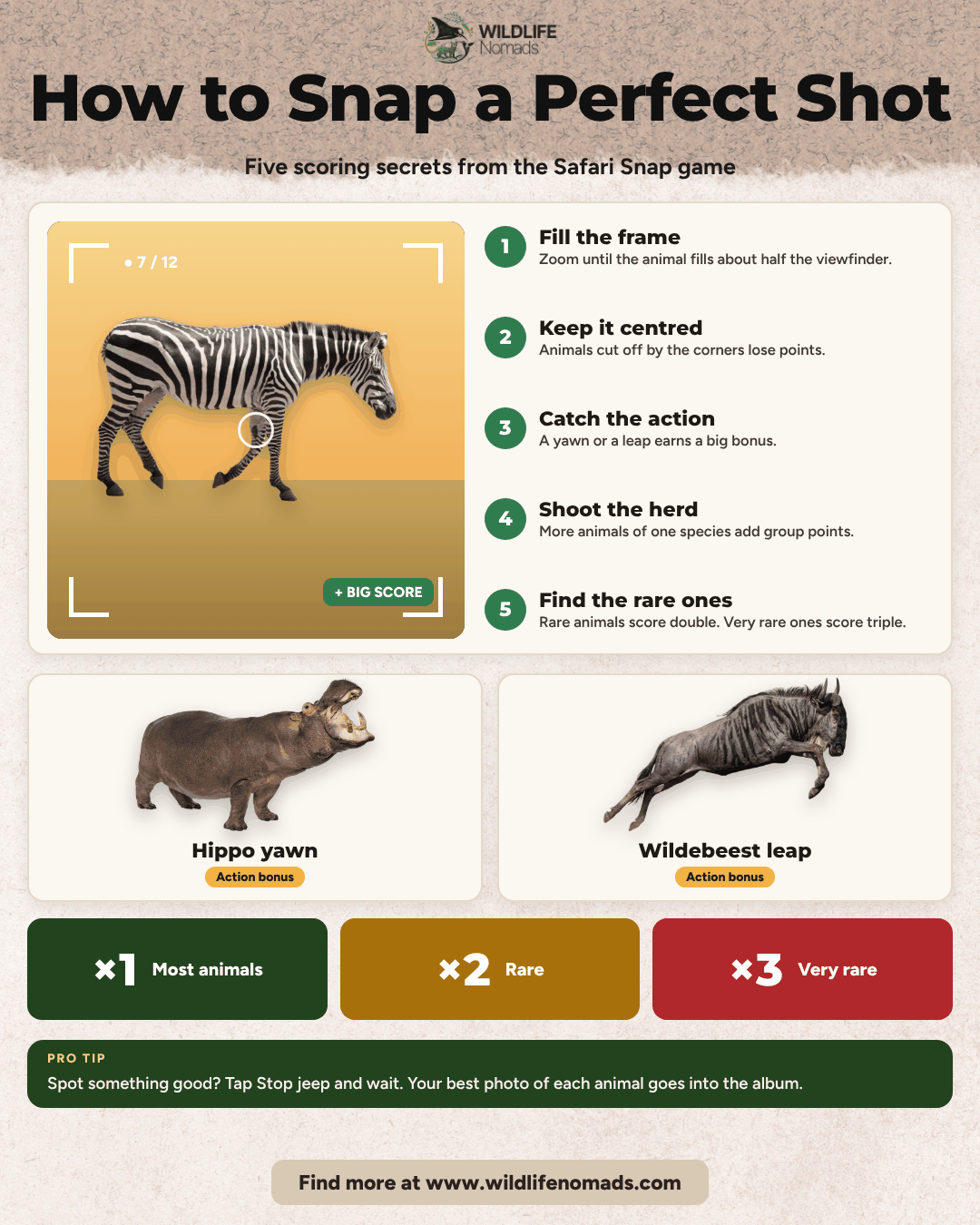
Spot something good? Tap Stop jeep and take your time. Your best photo of each animal goes into the album.
The 13 animals of the Serengeti
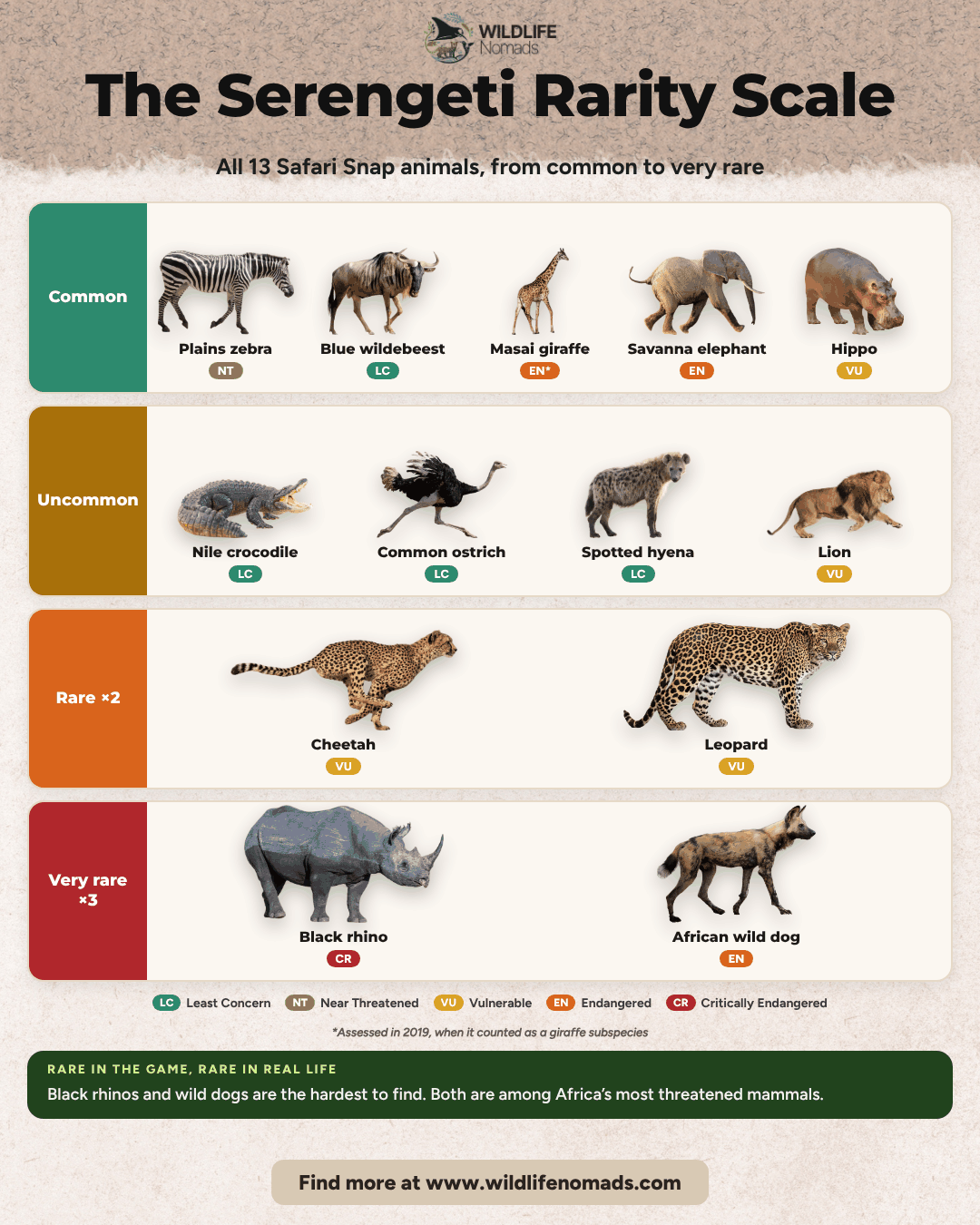
All 13 live in the Serengeti. Some are much harder to find than others, in the game and in real life.
| Animal | Scientific name | IUCN status | In the game |
|---|---|---|---|
| Plains zebra | Equus quagga | Near Threatened | Common |
| Blue wildebeest | Connochaetes taurinus | Least Concern | Common |
| Masai giraffe | Giraffa tippelskirchi | Endangered* | Common |
| African savanna elephant | Loxodonta africana | Endangered | Common |
| Hippopotamus | Hippopotamus amphibius | Vulnerable | Common |
| Nile crocodile | Crocodylus niloticus | Least Concern | Uncommon |
| Common ostrich | Struthio camelus | Least Concern | Uncommon |
| Spotted hyena | Crocuta crocuta | Least Concern | Uncommon |
| Lion | Panthera leo | Vulnerable | Uncommon |
| Cheetah | Acinonyx jubatus | Vulnerable | Rare |
| Leopard | Panthera pardus | Vulnerable | Rare |
| Black rhino | Diceros bicornis | Critically Endangered | Very rare |
| African wild dog | Lycaon pictus | Endangered | Very rare |
*The IUCN assessed the Masai giraffe in 2019, when it still counted as a giraffe subspecies. In 2025, the IUCN giraffe specialists recognised four separate giraffe species.
The Australian bush and Amazon animals
| Australian bush | IUCN status | Amazon rainforest | IUCN status |
|---|---|---|---|
| Red kangaroo | Least Concern | Capybara | Least Concern |
| Galah | Least Concern | Black caiman | Least Concern |
| Emu | Least Concern | Hoatzin | Least Concern |
| Laughing kookaburra | Least Concern | Scarlet macaw | Least Concern |
| Koala | Vulnerable* | Amazon river dolphin | Endangered |
| Short-beaked echidna | Least Concern | Toco toucan | Least Concern |
| Lace monitor | Least Concern | Two-toed sloth | Least Concern |
| Wedge-tailed eagle | Least Concern | Giant otter | Endangered |
| Dingo | Not assessed* | Agouti | Least Concern |
| Frill-necked lizard | Least Concern | Lowland tapir | Vulnerable |
| Thorny devil | Least Concern | Green anaconda | Least Concern |
| Greater bilby | Vulnerable | Blue poison dart frog | Least Concern |
| Northern hairy-nosed wombat | Critically Endangered | Jaguar | Near Threatened |
*The IUCN does not assess the dingo separately. The koala is listed as Endangered in Queensland, New South Wales and the ACT.
The wildebeest river crossing
More than a million wildebeest move in a yearly loop through the Serengeti and Kenya’s Maasai Mara. Zebras travel with them. To reach fresh grass, the herds must cross rivers like the Grumeti and the Mara. Nile crocodiles wait in the water.
In the game, the crossing happens on every morning drive. Follow the real herds month by month on my wildebeest migration map.
Golden hour: when the big cats come out
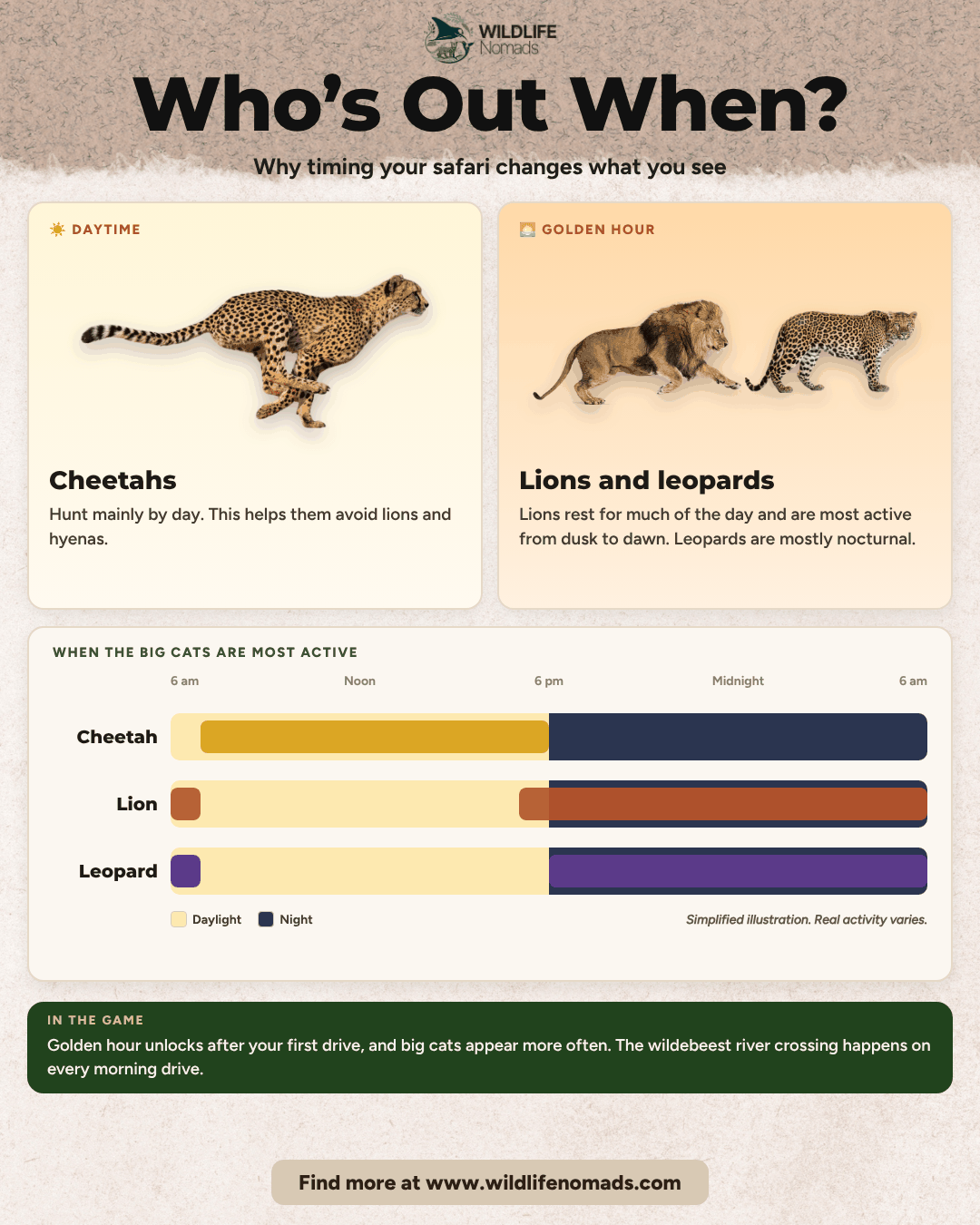
Golden hour unlocks after your first drive. Lions and leopards appear more often then, just like in the wild. Lions rest for much of the day and are most active from dusk to dawn. Leopards are mostly nocturnal too.
Cheetahs work the other way. They hunt mainly by day, which helps them avoid lions and hyenas. Learn more in my cheetah and leopard differences guide.
Explore more games
Safari Snap FAQ
Safari Snap is a free 3D wildlife photography game from Wildlife Nomads. You explore the Serengeti, the Australian bush and the Amazon, and photograph 39 animals. It runs in the browser on phones and computers.
Zoom in, keep the animal centred and catch it in action, like leaping or yawning. Groups add points, and rare animals score double or triple.
The Serengeti is home to lions, cheetahs, leopards, elephants, giraffes, zebras, wildebeest, hippos, spotted hyenas and Nile crocodiles. Small numbers of black rhinos and African wild dogs live there too.
A hippo’s wide yawn is often a threat display. It shows off the long tusks to rivals and intruders.
Early morning and late afternoon are best. Lions rest for much of the day and are most active from dusk to dawn.
References
Cheetah Conservation Fund. (2021, January 13). Why do cheetahs hunt during the day? https://cheetah.org/canada/2021/01/13/why-do-cheetahs-hunt-during-the-day/
IUCN. (n.d.). The IUCN Red List of Threatened Species. Retrieved November 23, 2026. https://www.iucnredlist.org
Mongabay. (2025). Giraffe is now officially four species. https://news.mongabay.com/short-article/giraffe-is-now-officially-four-species/
National Geographic. (n.d.). How wildebeest reshape the Serengeti during Africa’s Great Migration. https://www.nationalgeographic.com/animals/article/wildebeest-great-migration-africa-serengeti
Snapshot Serengeti. (2019, May 17). Wondering about African wild dogs. https://blog.snapshotserengeti.org/2019/05/17/wondering-about-african-wild-dogs/
What is Safari Snap?
Safari Snap is a free 3D safari game about wildlife photography. Your jeep drives a loop through the Serengeti in Tanzania. You get 12 shots to photograph 13 African animals and fill your album.
I built it for people like me who dream of an African safari. It is a game, but every animal card uses real science and its real conservation status.
How to take a high-scoring photo
- Fill the frame. Zoom in until the animal fills about half of the viewfinder.
- Keep it centred. Animals cut off by the corners lose points.
- Catch the action. A hippo yawning or a wildebeest leaping earns a big bonus.
- Shoot the herd. More animals of the same species add group points.
- Find the rare ones. Rare animals score double. Very rare ones score triple.
Spot something good? Tap Stop jeep and take your time. Your best photo of each animal goes into the album.
The 13 animals in the game
All 13 live in the Serengeti. Some are much harder to find than others, in the game and in real life.
| Animal | Scientific name | IUCN status | In the game |
|---|---|---|---|
| Plains zebra | Equus quagga | Near Threatened | Common |
| Blue wildebeest | Connochaetes taurinus | Least Concern | Common |
| Masai giraffe | Giraffa tippelskirchi | Endangered* | Common |
| African savanna elephant | Loxodonta africana | Endangered | Common |
| Hippopotamus | Hippopotamus amphibius | Vulnerable | Common |
| Nile crocodile | Crocodylus niloticus | Least Concern | Uncommon |
| Common ostrich | Struthio camelus | Least Concern | Uncommon |
| Spotted hyena | Crocuta crocuta | Least Concern | Uncommon |
| Lion | Panthera leo | Vulnerable | Uncommon |
| Cheetah | Acinonyx jubatus | Vulnerable | Rare |
| Leopard | Panthera pardus | Vulnerable | Rare |
| Black rhino | Diceros bicornis | Critically Endangered | Very rare |
| African wild dog | Lycaon pictus | Endangered | Very rare |
*The IUCN assessed the Masai giraffe in 2019, when it still counted as a giraffe subspecies. In 2025, the IUCN giraffe specialists recognised four separate giraffe species.
The wildebeest river crossing
More than a million wildebeest move in a yearly loop through the Serengeti and Kenya’s Maasai Mara. Zebras travel with them. To reach fresh grass, the herds must cross rivers like the Grumeti and the Mara. Nile crocodiles wait in the water.
In the game, the crossing happens on every morning drive. Follow the real herds month by month on my wildebeest migration map.
Golden hour: when the big cats come out
Golden hour unlocks after your first drive. Lions and leopards appear more often then, just like in the wild. Lions rest for much of the day and are most active from dusk to dawn. Leopards are mostly nocturnal too.
Cheetahs work the other way. They hunt mainly by day, which helps them avoid lions and hyenas. Learn more in my cheetah and leopard differences guide.
Explore more games
Safari Snap FAQ
Safari Snap is a free 3D wildlife photography game from Wildlife Nomads. You ride a jeep through the Serengeti and photograph 13 African animals. It runs in the browser on phones and computers.
Zoom in, keep the animal centred and catch it in action, like leaping or yawning. Groups add points, and rare animals score double or triple.
The Serengeti is home to lions, cheetahs, leopards, elephants, giraffes, zebras, wildebeest, hippos, spotted hyenas and Nile crocodiles. Small numbers of black rhinos and African wild dogs live there too.
A hippo’s wide yawn is often a threat display. It shows off the long tusks to rivals and intruders.
Early morning and late afternoon are best. Lions rest for much of the day and are most active from dusk to dawn.
References
Cheetah Conservation Fund. (2021, January 13). Why do cheetahs hunt during the day? https://cheetah.org/canada/2021/01/13/why-do-cheetahs-hunt-during-the-day/
IUCN. (n.d.). The IUCN Red List of Threatened Species. Retrieved November 23, 2026. https://www.iucnredlist.org
Mongabay. (2025). Giraffe is now officially four species. https://news.mongabay.com/short-article/giraffe-is-now-officially-four-species/
National Geographic. (n.d.). How wildebeest reshape the Serengeti during Africa’s Great Migration. https://www.nationalgeographic.com/animals/article/wildebeest-great-migration-africa-serengeti
Snapshot Serengeti. (2019, May 17). Wondering about African wild dogs. https://blog.snapshotserengeti.org/2019/05/17/wondering-about-african-wild-dogs/