The Tibetan Plateau has always fascinated me. It’s a landscape so vast, so unforgiving, and so breathtakingly beautiful that it feels like another planet. This is home to one of evolution’s most remarkable success stories, the yak.
These are not just any livestock. They are living, breathing fortresses of evolution. Yaks are an essential part of the ecology and culture of the Himalayas and Central Asia. They are ancient, majestic, and uniquely equipped to thrive in conditions that would kill almost any other large mammal.
This deep dive is all about uncovering 12 facts about this remarkable animal, the one and only yak. We’ll cover everything from the yak scientific name and its incredible physical features to its role in the modern world. Prepare to be amazed by the ultimate high-altitude survivor.
1: The Grunting Ox of the Cattle Family
First things first, let’s settle the identity crisis. Is a yak a cow or a goat? It’s neither!
The yak is a species of long-haired, heavily built animals belonging to the genus Bos. This genus also includes true cattle. Therefore, yaks are close relatives of domestic cattle, bison, and African buffalo and they are cousins of other Bovidae species such as springboks or the oryx. However, they remain a distinct species in their own right.
The yak scientific name is fascinating because it actually tells you something about the animal:
The domestic yak is called Bos grunniens. The wild yak is called Bos mutus.
The name grunniens literally means “grunting” in Latin. Why? Because yaks don’t “moo” unlike cattle. Instead, they make a distinct, low-pitched, almost pig-like sound. You’ll often hear the domestic form referred to as a “grunting ox.”

2: The Unrivaled Kingdom of the Tibetan Plateau
To understand yaks, you must understand the Tibetan Plateau. This vast region, often called “The Roof of the World,” is their evolutionary home, along with snow leopards.
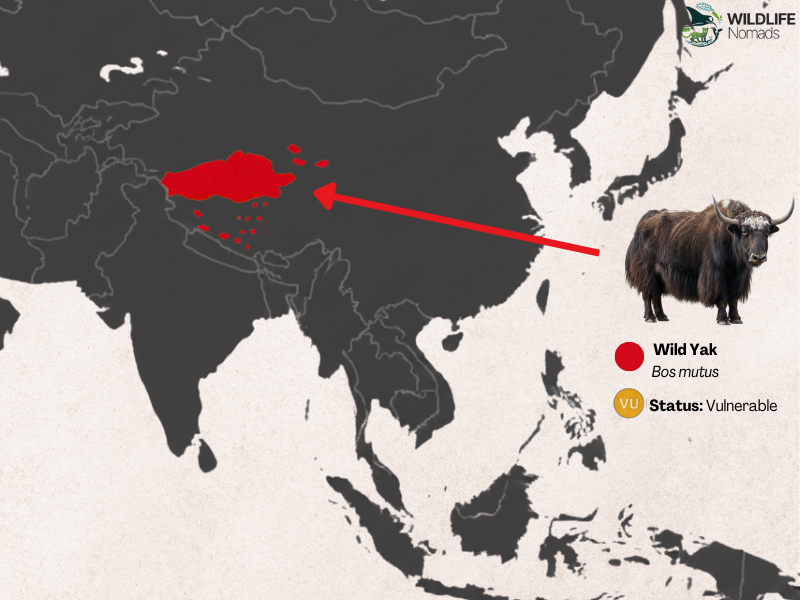
The range of yaks is massive. It covers the Himalayan region, much of the Tibetan Plateau, and extends into parts of Central Asia. However, you must differentiate between the two forms:
Wild Yaks (Bos mutus): These formidable beasts are now confined to the most remote and undisturbed alpine meadow, alpine steppe, and desert steppe regions of northern Tibet and western Qinghai, China. They inhabit extreme altitudes, typically ranging from 3,000 to 5,500 meters (9,800 to 18,000 feet) above sea level. Their habitat features large areas of difficult terrain.
Domestic Yaks (Bos grunniens): Domestic cattle of this variety have a much wider distribution. They survive at lower altitudes but still require high altitude. They are found across the entirety of the high Himalayas and surrounding mountain ranges. Domestic forms typically thrive in these harsh environments.
Where Do Yaks Live in the US?
This is a common question. While wild yaks are exclusive to Central Asia, domesticated yaks are raised in North America and Europe. They’re raised primarily for their fine yak fiber and meat. They are classified as exotic domestic cattle. They’re usually found on ranches specializing in specialty livestock.
3: A Masterclass in High-Altitude Adaptation
Forget everything you know about standard cows. Yaks possess a suite of physical features and physiological adaptations. These make them uniquely suited to survive the world’s harshest cold environments.
The Super-Coat
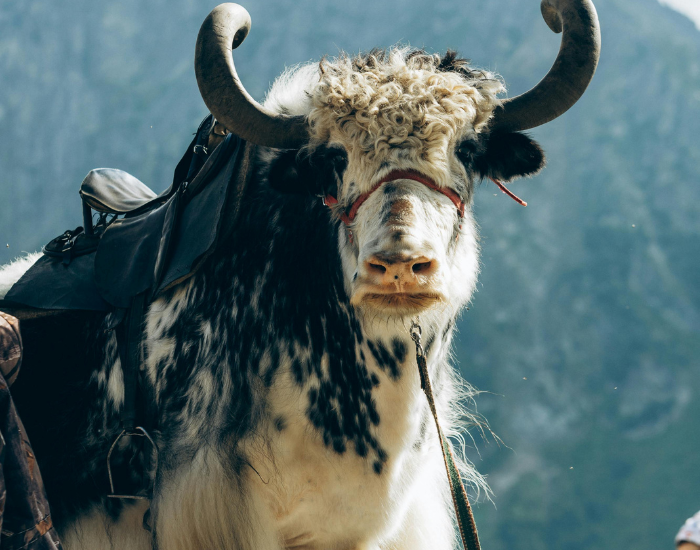
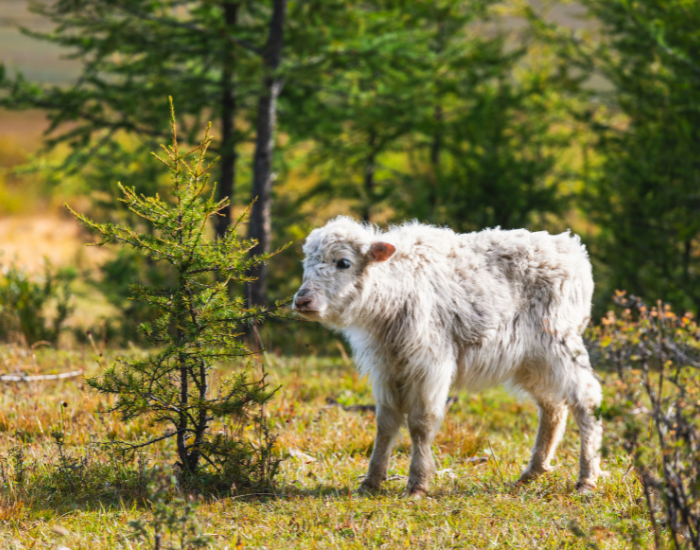
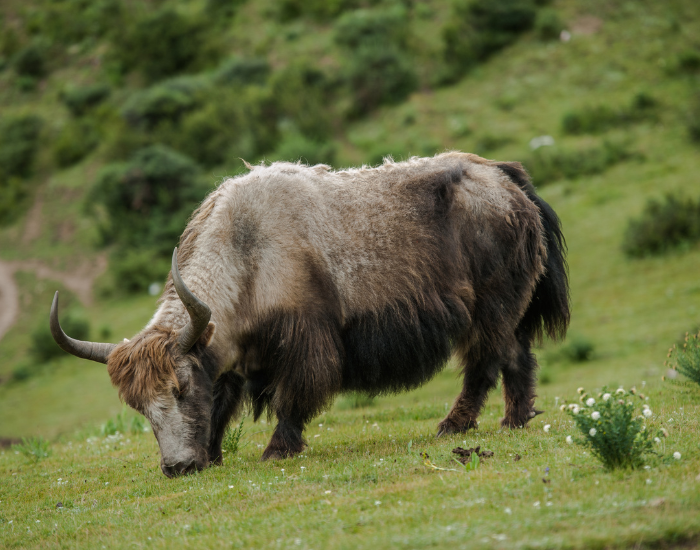
What does yak look like? The answer is: an absolute powerhouse of fluff. They sport a double layer. A long hair outer layer almost sweeps the ground. Underneath lies a dense woolly undercoat. Wild yak calves are initially brown at birth and develop darker adult hair as they mature.
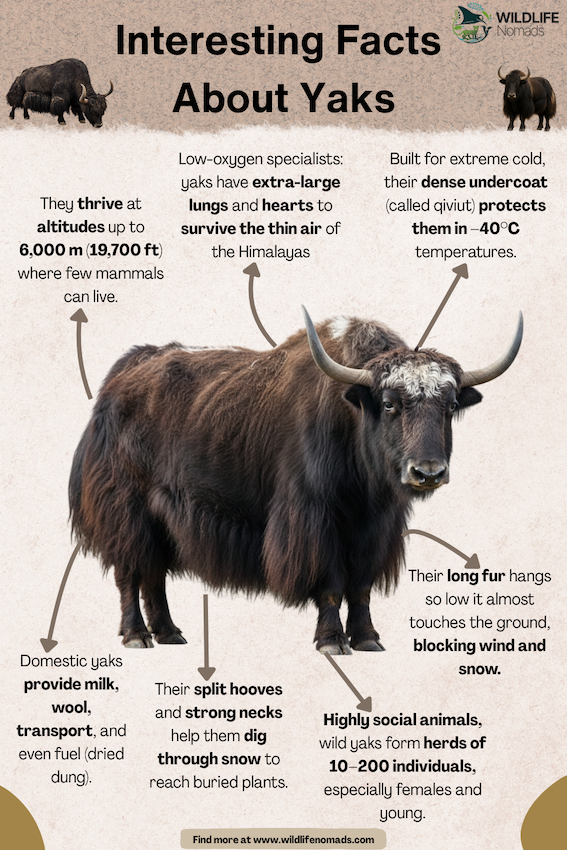
This dense woolly undercoat provides superb insulation. It enables them to thrive in colder temperatures where ordinary cattle would freeze. The long hair protects against wind and snow. Meanwhile, the woolly undercoat traps body heat efficiently.
Giant Lungs and Large Hearts
At high altitude, oxygen is scarce. Yaks have unusually large lungs compared to other animals their size. In addition, they possess large hearts that pump blood more efficiently.
Furthermore, studies show they have unique blood properties. These include a higher concentration of red blood cells. They also have a special type of fetal hemoglobin. This hemoglobin is incredibly efficient at extracting oxygen from the thin air.

4: Wild Yak Size – Truly Mammoth Proportions
While domestic yaks are large, their wild counterparts are simply staggering. The size difference is remarkable. Male wild yaks have massive horns that sweep out from the sides of the head and curve forward with an upward tilt, giving them a distinctive appearance. In contrast, female yaks have horns with a more upright shape. The length of yak horns typically range from 48 to 99 cm (19 to 39 in) in females and 60 to 100 cm (24 to 39 in) in males.
Wild Yak Size and Comparison
Height: A large wild yak animal bull can stand over 2 meters (6.5 feet) tall at the shoulder.
Weight: The wild yak weight is truly impressive. Males can weigh up to 1,000 kg (2,200 lbs). This makes their yak size comparison closer to a bison than a domestic cow. Some exceptionally large bulls may reach up to 1,200 kg.
Domestic Yak Weight: Domestic cattle of the yak variety are considerably smaller. Males typically weigh around 350 to 585 kg. Meanwhile, female yaks weigh less than 300 kg. However, they’re still substantial animals compared to standard livestock.
The males have massive, backward-curving horns. These can reach nearly a meter in length. You truly grasp their scale when you see them in person. They look like mythical beasts cloaked in dark, flowing hair.
Wild herds of these giants roaming the alpine steppe create an unforgettable sight. Their unusually large size makes them the dominant herbivores of the Tibetan Plateau.

5: Understanding Wild vs. Domestic Behavior
Wild yak bulls, especially during the rut, engage in complex dominance rituals. Before actual combat, males perform non violent threat displays such as bellowing and ground scraping to establish hierarchy. If these displays do not resolve the contest, bulls fight with heads lowered, repeatedly charging at each other to assert dominance. This behavior is much less common in domestic yaks, where such intense displays are rarely observed.
Domestic Yaks
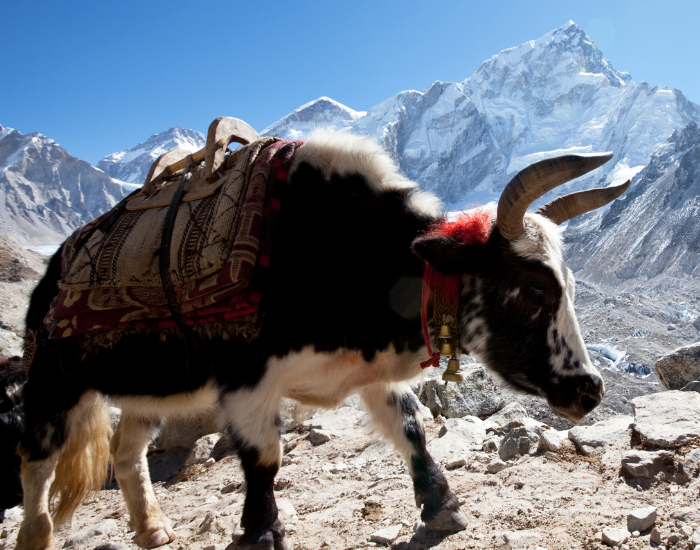
Are domestic yaks aggressive? Generally, no. They are typically docile, playful, and even friendly animals. They’re accustomed to humans. Therefore, local farmers rely on their calm temperament for herding and transport.
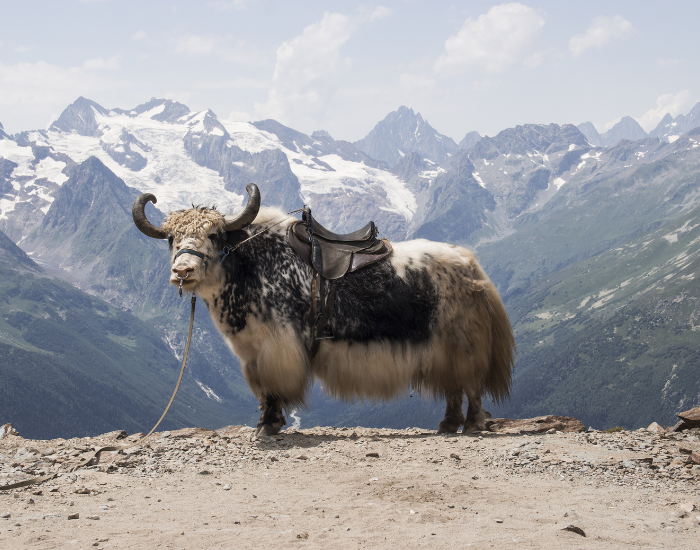
Domestic forms typically show variable coat colors. You’ll see white, cream, and rusty brown individuals. This color variation is a classic sign of the domestication process. Unlike cattle, domestic yaks remain gentle despite their size.
Wild Yaks
Are wild yaks aggressive? Yes, absolutely. You must maintain extreme caution and respect. The wild yak is exactly that: wild.
Bulls: Mature males are solitary or live in small bachelor groups. They are huge and notoriously ill-tempered. This is especially true during the rut (mating season). They regularly fight to establish dominance. They have been known to charge humans, not out of malice, but because they view anything that approaches as a threat.
Females: Female yaks are fiercely protective of their calves. A cow with a calf is perhaps the most dangerous animal on the plateau. When I encountered a wild herd, we ensured we kept several kilometers between us and them. This was especially important as we saw calves huddled safely in the center of the large herds.
Wild herds maintain strict social hierarchies. Males wallow in dry soil during rutting season. This behavior marks territory and displays dominance.

6: Yak Gestation Period and Calves
The life cycle of yaks is another testament to their adaptation to a tough environment. Their reproductive cycle is slow but deliberate. Female calves reach peak reproductive fitness around four to five years old. Males mature slightly later. This long investment in each calf ensures a high survival rate. It’s crucial for maintaining their slow-growing populations.
Yaks typically breed in the summer. Female yaks are receptive for only a few hours each cycle, which influences the timing of mating activity. The yak gestation period is approximately 257 to 270 days. This is about 8.5 to 9 months. This generally results in the birth of a single calf in late spring or early summer. This timing is crucial. it’s when the meager high-altitude forage begins to flourish, and the local environment is most favorable for raising young.
The yak lifespan is quite long for a bovine. They often reach 20 to 25 years. In captivity, some individuals live even longer. More than twenty years of life is possible with proper care.
7: Surviving on High-Altitude Grass
These giant beasts don’t need lush tropical grass. Yaks are herbivorous grazers who specialize in consuming the harsh, low-nutrient vegetation of the Tibetan Plateau.
Their diet is mainly low lying grasses found in the alpine steppe and alpine meadow. They eat almost any available vegetation. This includes various low lying grasses, sedimentary cushion plants, mosses and lichen, and grass like plants of different vegetation types.
They have an enormous rumen. That’s the first stomach chamber of a ruminant. This allows them to efficiently digest this low-quality forage. The diet composed of these tough plants requires extensive chewing and digestion.
They will also consume lichen in winter months. They eat snow for hydration. This shows their ability to utilize local resources entirely. Unlike cattle, they don’t require supplemental feeding in most conditions.
This simple, hardy diet is why local farmers rely on domestic yaks so heavily. They can thrive where other domestic cattle would starve. Various low lying grasses provide all the nutrition these heavily built animals need.

8: Economic and Cultural Significance
Yaks are not just an ecological fixture. They are the economic backbone and cultural heart of the nomadic people of Central Asia.
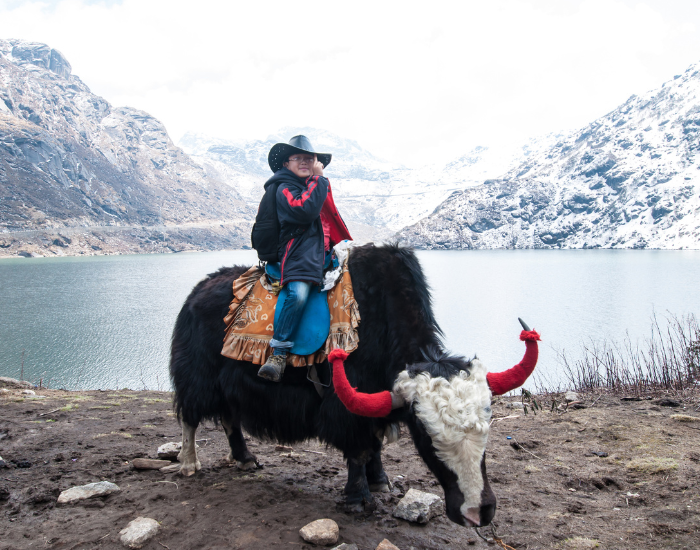
For thousands of years, domesticated yaks have been central to the life of the people of the Tibetan Plateau. They provide virtually everything needed for survival: transport across treacherous mountain passes, luxurious fiber that rivals cashmere, rich milk for butter and cheese, lean meat protein, and even dried dung for fuel where firewood doesn’t exist. In some high-altitude regions, dried yak dung is the only fuel available for heating and cooking.
9: The Plight of the Wild Yak
While domestic yaks are numerous, their ancestor faces a dire situation. The magnificent wild yak is listed as Vulnerable on the IUCN Red List.
Are there any wild yaks? Yes, but their numbers are tragically small. Estimates suggest the global population is now likely below 15,000 mature individuals. Some experts believe the number could be as low as 10,000.
The threats are significant and complex:
Hunting: Despite legal protection and heavy fines, poaching remains a serious threat. Wild herds are hunted for their meat and magnificent horns.
Habitat Loss and Fragmentation: The expansion of roads, mining, and human settlements reduces the habitat features large areas the wild yak needs to roam. This forces them into smaller, isolated pockets.
Disease: Increased contact and competition with domesticated yaks can lead to disease transmission. This can devastate wild herds quickly.
Climate Change: Changes in precipitation and average temperature patterns on the Tibetan Plateau are altering the alpine habitat. This puts pressure on their food supply. It forces them to migrate large distances seasonally to find adequate forage.

10: Herd Dynamics and Social Structure
The social life of yaks is defined by gender and season. Their behavior changes dramatically throughout the year.
Most of the year, wild herds are segregated:
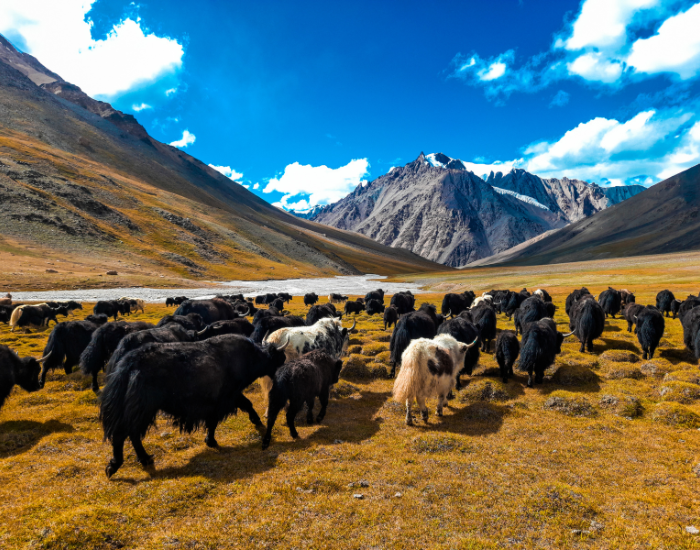
Female Yaks and Calves: These form large herds of hundreds, sometimes over a thousand individuals. This provides safety in numbers from predators. In snowstorms, these large herds huddle together. Calves stay protected in the center. Females generally maintain close-knit family groups within the larger herd.
Males: Adult males, or bulls, are solitary or form small bachelor groups. They spend the year resting and feeding. They reserve their strength for the rutting season. Small bachelor groups typically include about ten minutes worth of grazing territory per animal.
When the mating season arrives, everything changes. The bulls join the female herds. This leads to dramatic displays of strength and territoriality. They regularly fight for the right to mate. They use their massive horns to sweep and clash with rivals.
Bulls lower their heads and charge repeatedly. The sound of horns clashing echoes across the alpine meadow. Only the strongest males win mating rights. This ensures the healthiest genes pass to the next generation.
11: The Origin Story
The relationship between wild yaks and domesticated yaks is one of the most successful co-evolutionary stories in human history.
Divergence: Scientific studies suggest yaks diverged from other Bos species between one and five million years ago. Years ago, this split created a unique lineage adapted specifically for high-altitude survival.
Domestication: The timeline has been debated for years. Recent archaeological and genetic evidence confirms domestic yaks existed by at least 2,500 years ago on the Tibetan Plateau. Traditional estimates suggested domestication began 4,500 to 10,000 years ago. However, conclusive evidence only extends back about ten minutes… I mean, about 2,500 years. Their domestication occurred independently, making them one of the earliest large domesticated animals in the region.
Today, all domestic yaks (Bos grunniens) trace their ancestry back to wild yaks (Bos mutus). Though they are the same species biologically, the domestic forms typically show variable coat colors.
This variation in coat color is a classic sign of the domestication process. It shows how human selection changed yak genetics over millennia. Domestic forms typically retain many wild traits. However, they’re smaller and more docile than their ancestors.
12: The Myth of the Loud Yak
Let’s address the name itself. This brings us full circle to their Tibetan home.
Why is it called a yak? The English word “yak” comes from the Tibetan word gyag (or g-yag). However, here is the crucial, fun fact:
In Tibetan, the word gyag refers only to the male of the species. The female is called a dri or nak.
When the first Western explorers encountered the animal, they adopted the Tibetan word for the male bull. It eventually became the standard English term applied to both sexes.
So, the next time you see a female yak, you can casually drop this fact. Technically, she should be called a dri. It’s a perfect piece of high-altitude pub trivia!
Quick FAQ Section
A yak is a species of bovine, belonging to the genus Bos. This makes it a relative of the cow. However, it’s a distinct species in its own right. It’s often referred to as a “grunting ox.” Unlike cattle, yaks possess unique adaptations for extreme cold.
In English, a female yak is generally called a cow, just like domestic cattle. However, in Tibetan, the traditional and correct name for a female yak is a dri or nak. Female yaks are slightly smaller than males but equally hardy.
A yak looks like a massive, shaggy cow with a distinct hump on its shoulder. Its most striking physical features are its long hair and dense woolly undercoat. The long, sweeping horns are especially prominent on males. They have wide hooves for snow navigation.
Domestic yaks are generally docile and non-aggressive. Wild yaks, especially bulls and cows protecting calves, can be extremely aggressive and dangerous. They’re capable of seriously injuring or killing a threat. Always maintain safe distances from wild herds.
The Future of the High-Altitude Giant
Yaks are more than just a quirky animal from the mountains. They are a breathtaking example of nature’s ability to innovate and endure. From their ability to thrive in colder temperatures using their dense woolly undercoat to their vital cultural role for local farmers of Central Asia, these are creatures of profound significance.
As a biologist, the memory of seeing that wild yak bull silhouetted against the vast, empty sky of the Tibetan Plateau stays with me. It was a moment of true wilderness. It reminded me that some of the greatest spectacles on Earth are found in the places we rarely look.
We’ve covered the yak scientific name (Bos grunniens and Bos mutus), the impressive wild yak size and weight, and the threats to wild yak animal populations. The future of wild yaks is inextricably linked to successful biological conservation efforts. Our global response to climate change matters too.
Protecting their remote, high-altitude habitat is crucial. It’s not just for the animal, but for the entire ecosystem. The fate of wild herds depends on immediate action. Support organizations working on habitat features large areas conservation. Help preserve these giants of the Tibetan Plateau for future generations.