
Wildlife Nomads · Play · Dinosaur Size Comparison
What Was the Largest Dinosaur? See Them All at True Scale
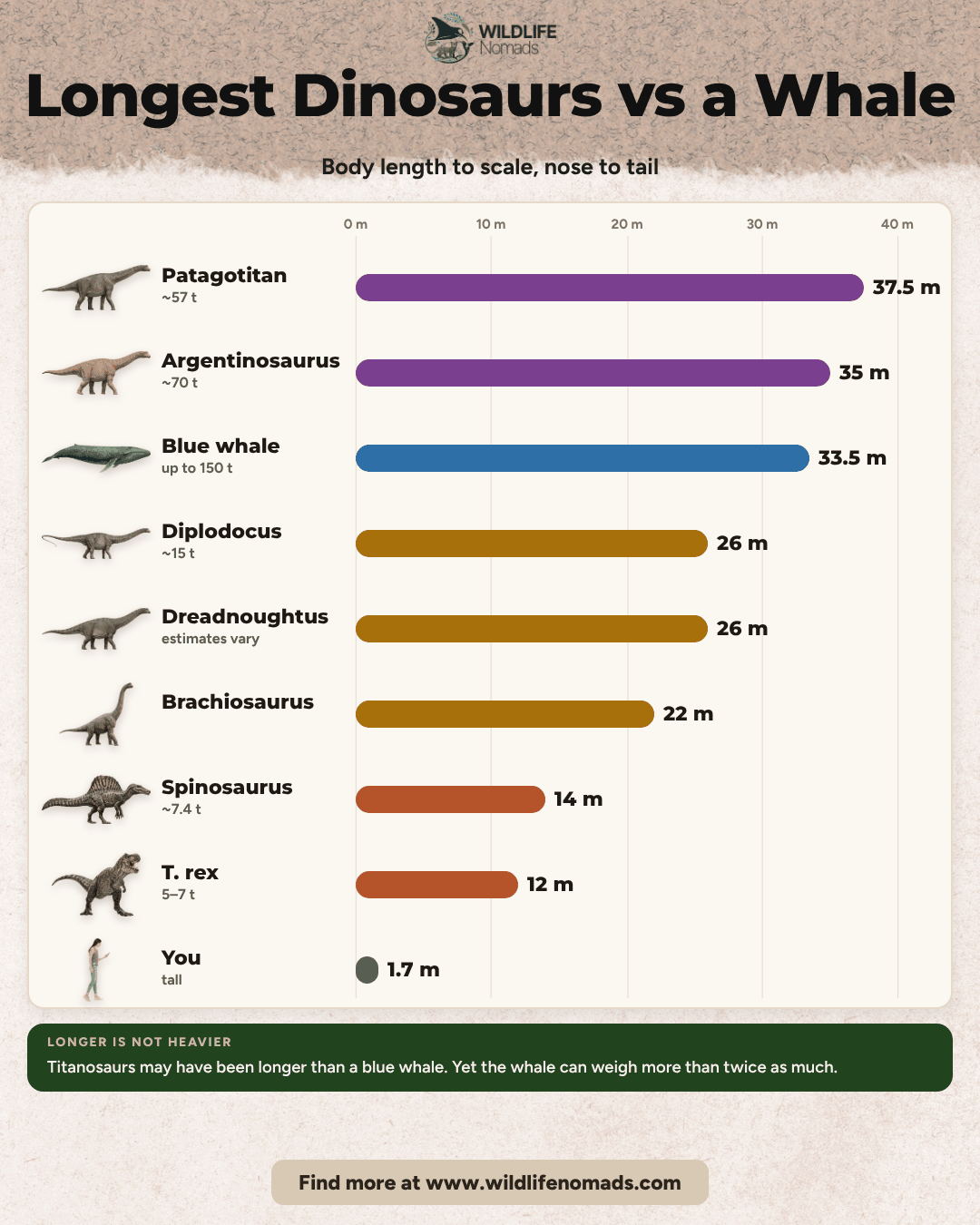
The largest dinosaurs were titanosaurs, giant plant-eaters such as Patagotitan and Argentinosaurus. Walk 21 dinosaurs from smallest to largest next to a person, an elephant and a blue whale. Then weigh the giants and see how scientists estimate their size from bones.
By Cesar Medina, conservation biologist · size comparison + Titanosaur Lab
What was the largest dinosaur?
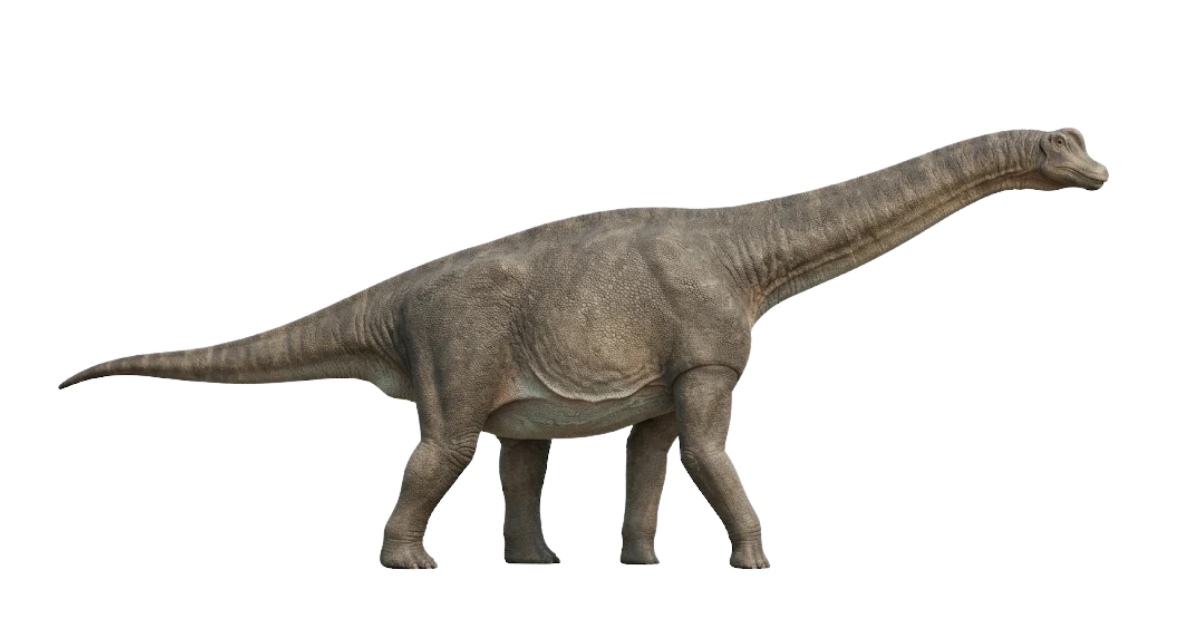
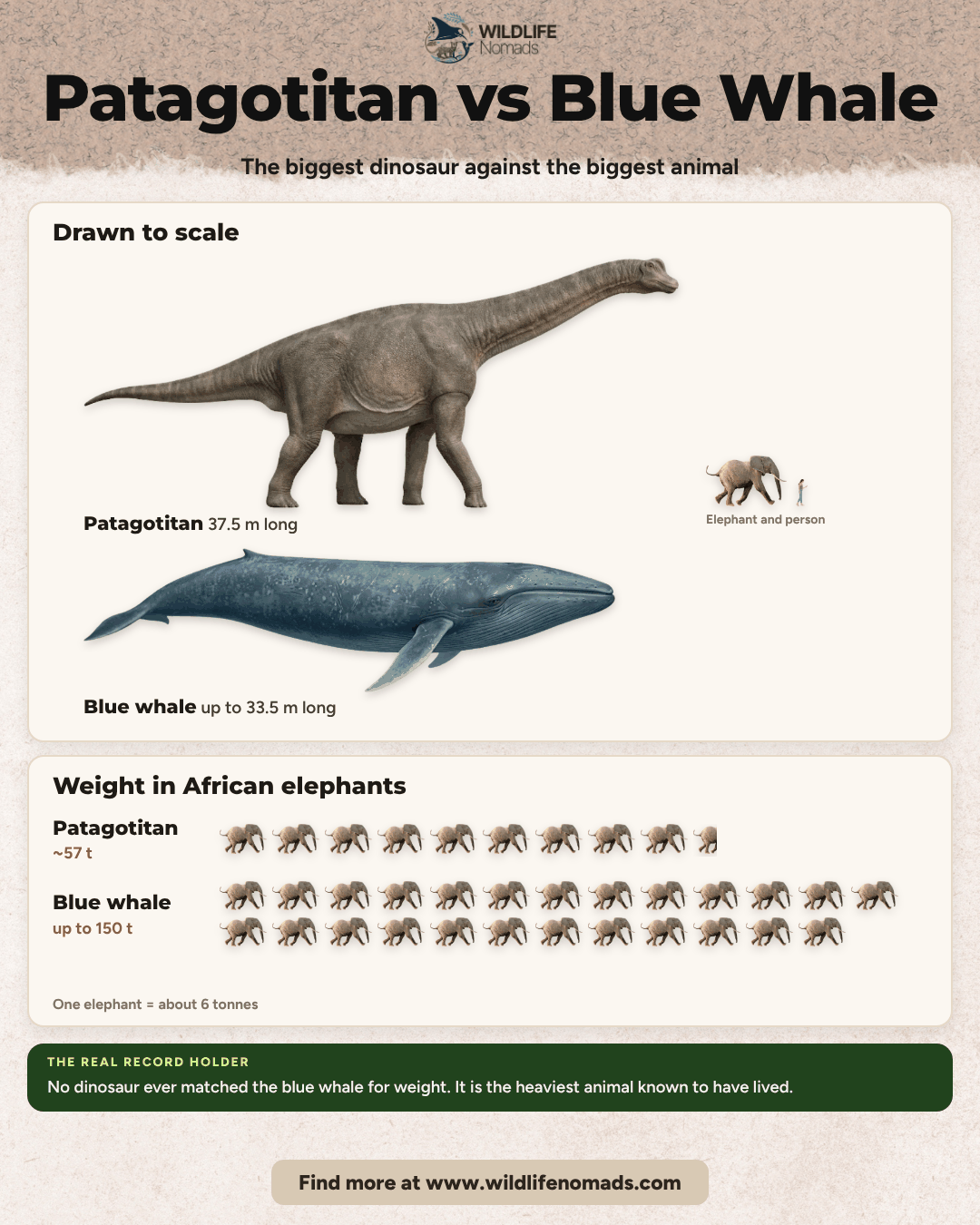
The largest dinosaur known from good fossils is Patagotitan mayorum, a titanosaur from Argentina. It was about 37.5 metres long and probably weighed around 57 tonnes. Argentinosaurus may have been just as heavy, but far fewer of its bones have been found.
Titanosaurs were long-necked, plant-eating sauropods. They include the largest land animals ever found. Yet no dinosaur matched the blue whale, which is still the largest animal known to have lived.
Size estimates for giant dinosaurs change as scientists find new bones and use new methods. So the honest answer to “what was the biggest dinosaur?” is a shortlist, not a single name. Explore it in the dinosaur size comparison above.
The biggest dinosaurs compared
Here are the giants in our lineup, with lengths and weights from the Natural History Museum in London. Ranges show how far published estimates differ.
| Dinosaur | Length | Weight | When | Found in |
|---|---|---|---|---|
| Patagotitan | 37.5 m | 57 t (42.5–71.4 t) | Early Cretaceous, ~101 Ma | Argentina |
| Argentinosaurus | 35 m | 70 t (60–88 t) | Late Cretaceous, ~90 Ma | Argentina |
| Diplodocus | 26 m | 15 t | Late Jurassic | USA |
| Dreadnoughtus | 26 m | ~48 t (22–59 t) | Late Cretaceous | Argentina |
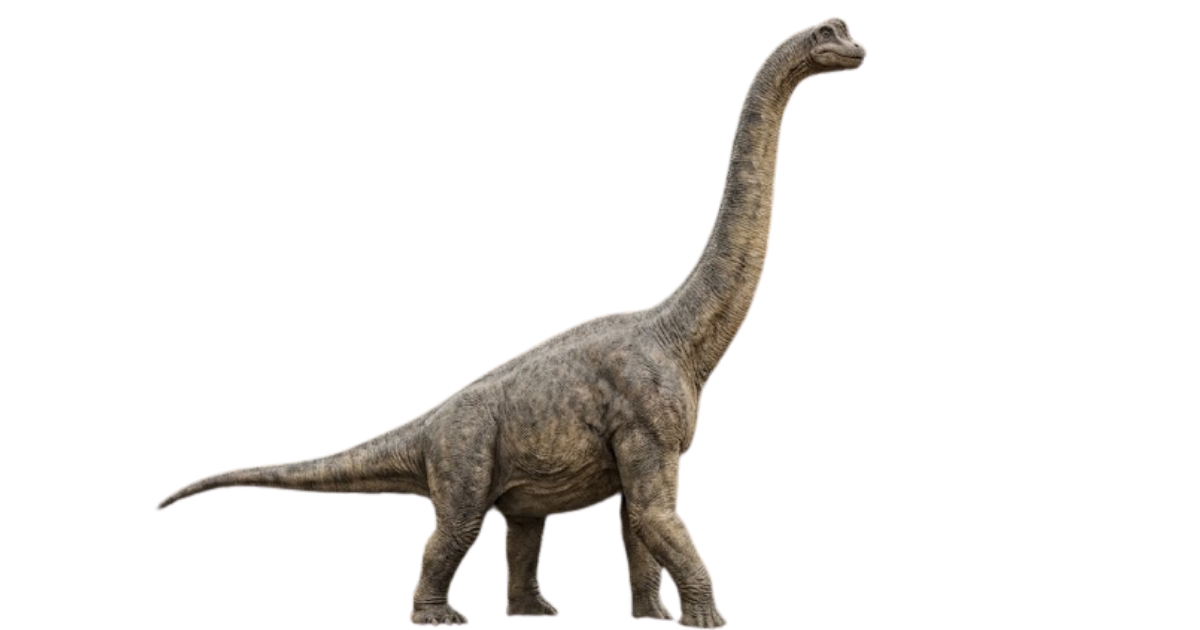
| Brachiosaurus | 22 m | 46.9 t | Late Jurassic | USA |
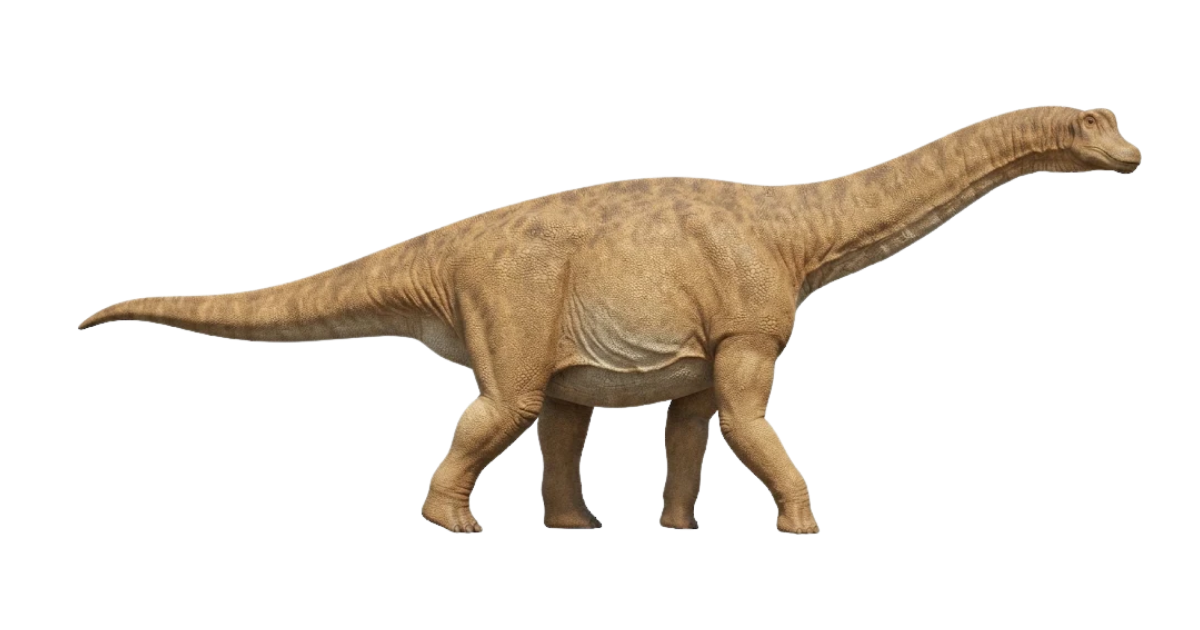
| Apatosaurus | 21 m | – | Late Jurassic | USA |
| Spinosaurus | 14 m | 7.4 t | Late Cretaceous | Egypt, Morocco |
| Giganotosaurus | 13 m | 7–14 t (estimates vary) | Late Cretaceous | Argentina |
| Tyrannosaurus rex | 12 m | 5–7 t (Sue and Scotty over 8 t) | Late Cretaceous | Canada, USA |
Notice how long and heavy do not always go together. Diplodocus was as long as Dreadnoughtus, but it was slim and weighed far less.
Patagotitan: the titanosaur from La Flecha
A ranch worker spotted an enormous dinosaur bone poking out of the ground at La Flecha Ranch in Patagonia. The site lies about 217 km (135 miles) west of Trelew, in Chubut Province, Argentina.
Between 2012 and 2015, a team from the Museo Paleontológico Egidio Feruglio dug up hundreds of fossil bones. José Luis Carballido and Diego Pol led the work. The bones came from at least six dinosaurs, buried in three separate floods.
In 2017, the team named the new species Patagotitan mayorum. The species name honours the Mayo family, who own the ranch, for their hospitality during the fieldwork.
A titanosaur cast too big for its room
In January 2016, the American Museum of Natural History in New York unveiled a 122-foot (37.2 m) cast of the dinosaur. It did not quite fit. Its neck and head reach out of the gallery towards the elevator banks.
The cast was built from 3D scans of the real fossils and made in fibreglass.
Argentinosaurus and the other contenders
Argentinosaurus huinculensis was described in 1993 from Neuquén Province, Argentina. It is one of the largest land animals ever found, but its remains are fragmentary. The Natural History Museum lists it at 35 metres and 70 tonnes.
Other studies put Argentinosaurus at anywhere from about 60 to 88 tonnes. With so few bones, it may have been slightly smaller or larger than Patagotitan. Nobody can say for sure yet.
Puertasaurus is another giant known only from very fragmentary remains. Dreadnoughtus is better known: scientists have about half of its skeleton, though never the skull.
How do scientists estimate dinosaur size?
Complete skeletons of giant dinosaurs are extremely rare. Scientists usually work from partial skeletons, then compare bones with related species to fill the gaps.
- Length comes from adding up the bones that were found, such as vertebrae from the neck, back and tail. Missing parts are scaled from relatives.
- Weight often comes from the thickness of the limb bones. In living animals, thicker thigh and upper arm bones carry more body mass.
- 3D models wrap a digital body around a scanned skeleton. Volume multiplied by body density gives the weight.
Different methods can give very different answers. In 2014, scientists estimated Dreadnoughtus at 59.3 tonnes. A 2015 study called that figure highly implausible. A calculation published in 2020 suggests about 48 tonnes.
Try the case study yourself in stop 2 of the Titanosaur Lab above.
What was the largest meat-eating dinosaur?
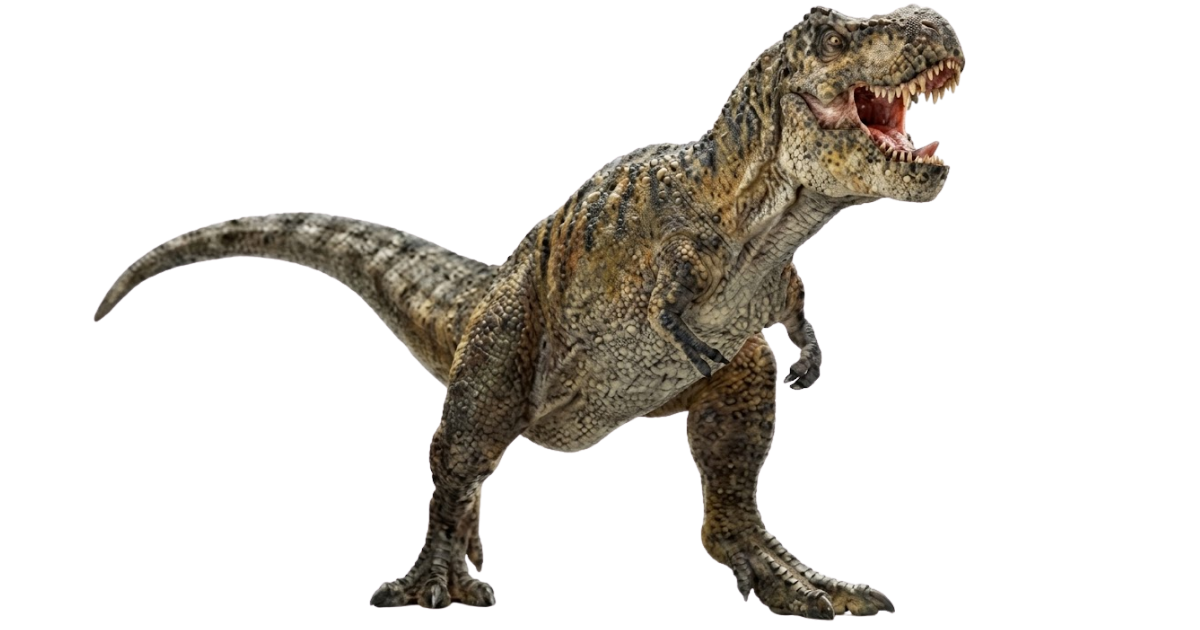
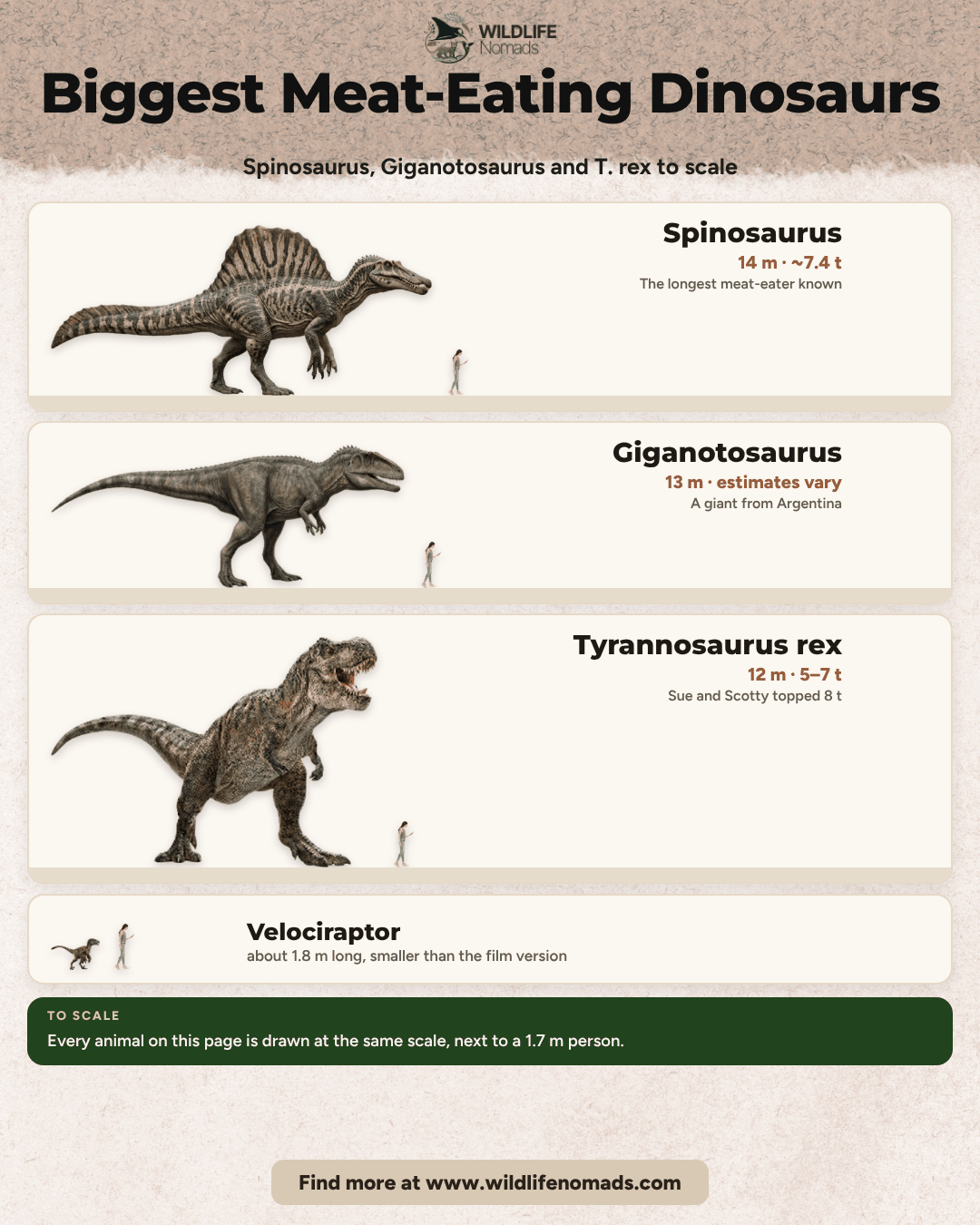
Spinosaurus was the longest known meat-eating dinosaur, at about 14 metres. Giganotosaurus reached about 13 metres, and Tyrannosaurus rex about 12 metres.
The largest T. rex specimens, Sue and Scotty, weighed over 8 tonnes and were almost 13 metres long. Most adult T. rex probably weighed 5 to 7 tonnes.
The smallest dinosaurs in our lineup
Dinosaurs varied hugely in size. Microraptor was only about 77 centimetres long and weighed about 1 kilogram. It had long feathers on both its arms and its legs.
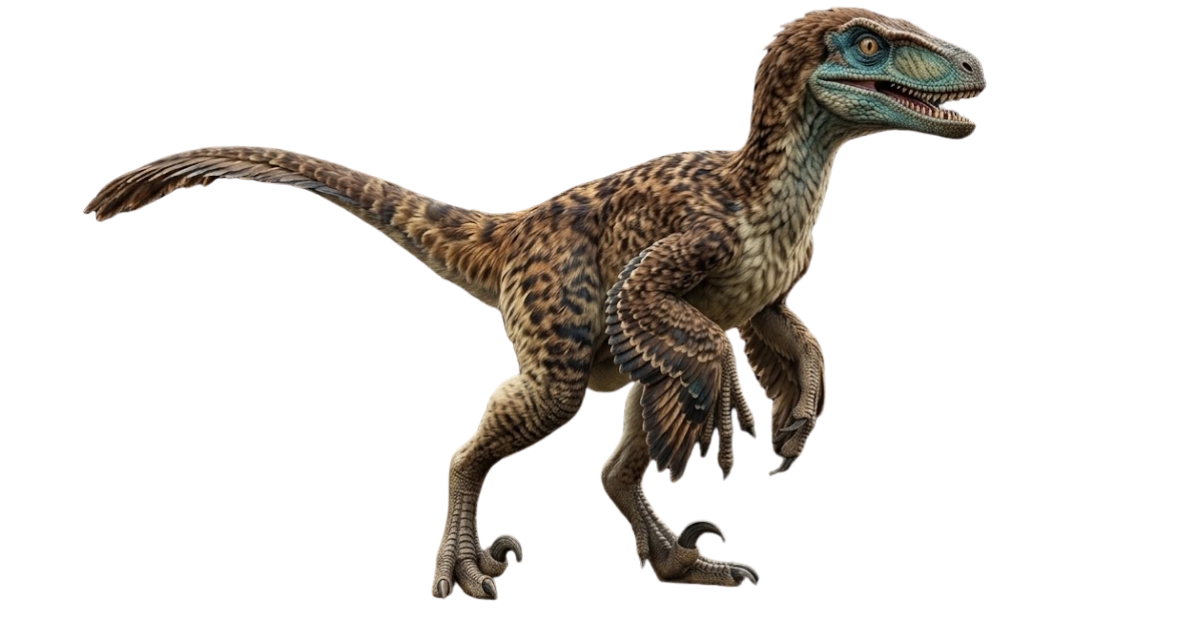
Velociraptor was much smaller than its film version, at about 1.8 metres long and 7 kilograms. A big titanosaur weighed thousands of times more.
Dinosaurs in the museum
I visited the Natural History Museum in London in 2026. It displays an almost complete Stegosaurus skeleton. Its online Dino Directory is the source for most sizes in this tool.
See how dinosaurs compare with today’s giants in my animal size comparison and whale size comparison. For the biggest prehistoric shark, try the shark size comparison and my megalodon facts.
Try it: open “Patagotitan vs blue whale” in Head to head, then weigh them both in the Titanosaur Lab.
Largest Dinosaur FAQ
The largest dinosaur known from good fossils is Patagotitan mayorum, a titanosaur from Argentina. It was about 37.5 metres long and weighed around 57 tonnes. Argentinosaurus may have been similar, but its remains are fragmentary.
Patagotitan was about 37.5 metres long. Its thigh bone alone was 2.38 metres long. Weight estimates range from about 42.5 to 71.4 tonnes, with the Natural History Museum giving 57 tonnes.
Possibly, but nobody knows for sure. Argentinosaurus is known from only a few bones. Estimates range from about 60 to 88 tonnes, which overlaps with Patagotitan’s estimates.
No. A blue whale can reach up to about 33.5 metres and 150 tonnes. Even the largest titanosaurs were far lighter, although some may have been slightly longer.
Spinosaurus was the longest known meat-eating dinosaur, at about 14 metres. Giganotosaurus and Tyrannosaurus rex reached about 13 and 12 metres.
They measure fossil bones and compare them with related species. Weight comes from limb bone thickness or from 3D body models. Because skeletons are rarely complete, every estimate has a range.
References
American Museum of Natural History. (n.d.). The Titanosaur. Retrieved November 18, 2026, from https://www.amnh.org/exhibitions/permanent/orientation-center/the-titanosaur
American Museum of Natural History. (n.d.). Meet Patagotitan mayorum. Retrieved November 18, 2026, from https://www.amnh.org/explore/news-blogs/news-posts/meet-patagotitan-mayorum
Bates, K. T., Falkingham, P. L., Macaulay, S., Brassey, C., & Maidment, S. C. R. (2015). Downsizing a giant: Re-evaluating Dreadnoughtus body mass. Biology Letters, 11(6), 20150215. https://doi.org/10.1098/rsbl.2015.0215
Carballido, J. L., Pol, D., Otero, A., Cerda, I. A., Salgado, L., Garrido, A. C., Ramezani, J., Cúneo, N. R., & Krause, J. M. (2017). A new giant titanosaur sheds light on body mass evolution among sauropod dinosaurs. Proceedings of the Royal Society B, 284(1860), 20171219. https://doi.org/10.1098/rspb.2017.1219
Lacovara, K. J., Lamanna, M. C., Ibiricu, L. M., Poole, J. C., Schroeter, E. R., Ullmann, P. V., Voegele, K. K., Boles, Z. M., Carter, A. M., Fowler, E. K., Egerton, V. M., Moyer, A. E., Coughenour, C. L., Schein, J. P., Harris, J. D., Martínez, R. D., & Novas, F. E. (2014). A gigantic, exceptionally complete titanosaurian sauropod dinosaur from southern Patagonia, Argentina. Scientific Reports, 4, 6196. https://doi.org/10.1038/srep06196
Natural History Museum. (n.d.). Dino Directory [Patagotitan, Argentinosaurus, Dreadnoughtus, Tyrannosaurus and other entries]. Retrieved November 18, 2026, from https://www.nhm.ac.uk/discover/dino-directory.html
NOAA Fisheries. (n.d.). Blue whale. Retrieved November 18, 2026, from https://www.fisheries.noaa.gov/species/blue-whale
Sellers, W. I., Margetts, L., Coria, R. A., & Manning, P. L. (2013). March of the titans: The locomotor capabilities of sauropod dinosaurs. PLoS ONE, 8(10), e78733. https://doi.org/10.1371/journal.pone.0078733



