
The Migration of Monarch Butterflies
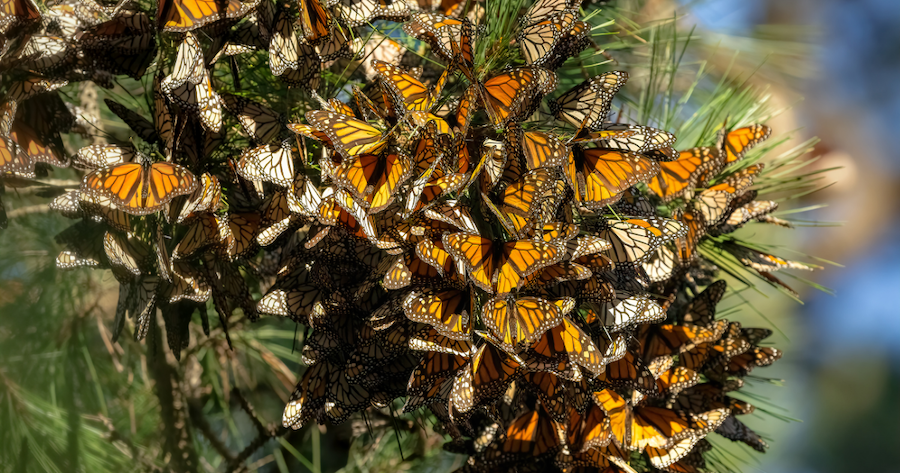
One butterfly flies the whole way south.
It takes four more to get the family home.
The migration of monarch butterflies is the only one of its kind on Earth. A single butterfly flies from Canada to a mountain forest in central Mexico, spends the winter hanging off a fir tree, and starts back north in spring — but it dies in Texas. Three more generations, each living a few short weeks, finish the journey home.
Why do monarch butterflies migrate at all?
Three reasons, and together they explain the four generations.
A northern winter kills them
Monarchs are insects, not birds. They cannot generate their own heat, and a frozen butterfly is a dead one. Nowhere in Canada or the northern United States is survivable in January, so the whole population has to leave.
Mexico cannot feed them either
The oyamel forest works as a fridge rather than a restaurant. Cool mountain air lets the butterflies idle on almost no energy, but there is no milkweed there for caterpillars, so they cannot breed. Waiting out the winter is all the forest is for.
Milkweed greens up in a wave
Caterpillars eat milkweed and nothing else, and it emerges progressively later the further north you go. No monarch lives long enough to follow that wave all the way, so each generation flies to the edge of the fresh growth, breeds and hands the journey on. Four generations, one lap.
Below is a map of the whole cycle. Drag the year, or press play, and the route changes colour every time one generation hands over to the next. It opens on today’s date, so whatever month you are reading this, the butterfly on the map is roughly where the real ones are.
How the migration of monarch butterflies actually works
Almost every migratory animal you can name makes the round trip itself. Wildebeest walk their loop and walk it again the following year. Humpback whales swim to the tropics and come home. Monarchs cannot do either, because no monarch lives long enough.
Their answer is a relay. Butterflies that emerge in late summer are physically different from the ones born in June: shorter days and cooler nights switch off their reproductive development, a state called diapause. Instead of breeding and dying in a month, they live for eight, and they fly south.
Those are the butterflies that reach Mexico. Around the middle of March they leave the forest, cross into Texas, lay eggs on the first milkweed of the year and die there. Everything after that is their descendants working north, one field of milkweed at a time.
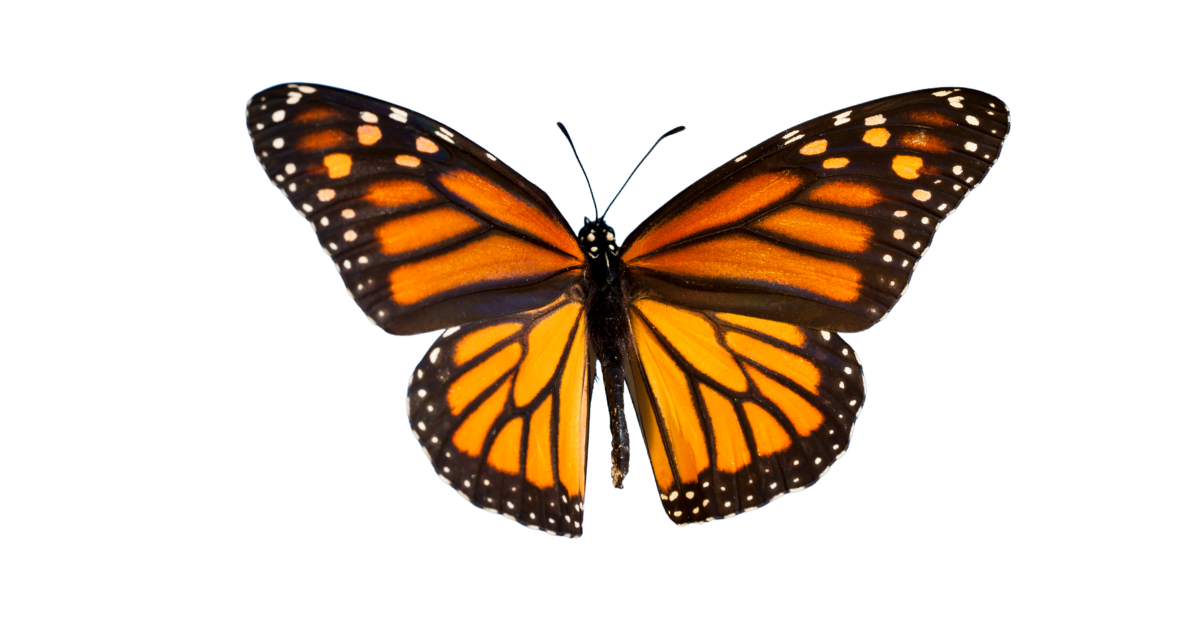
The relay, generation by generation
Dates shift with the weather. A warm spring pulls the whole sequence forward by a week or two, and a late one pushes it back.
The old butterflies go north
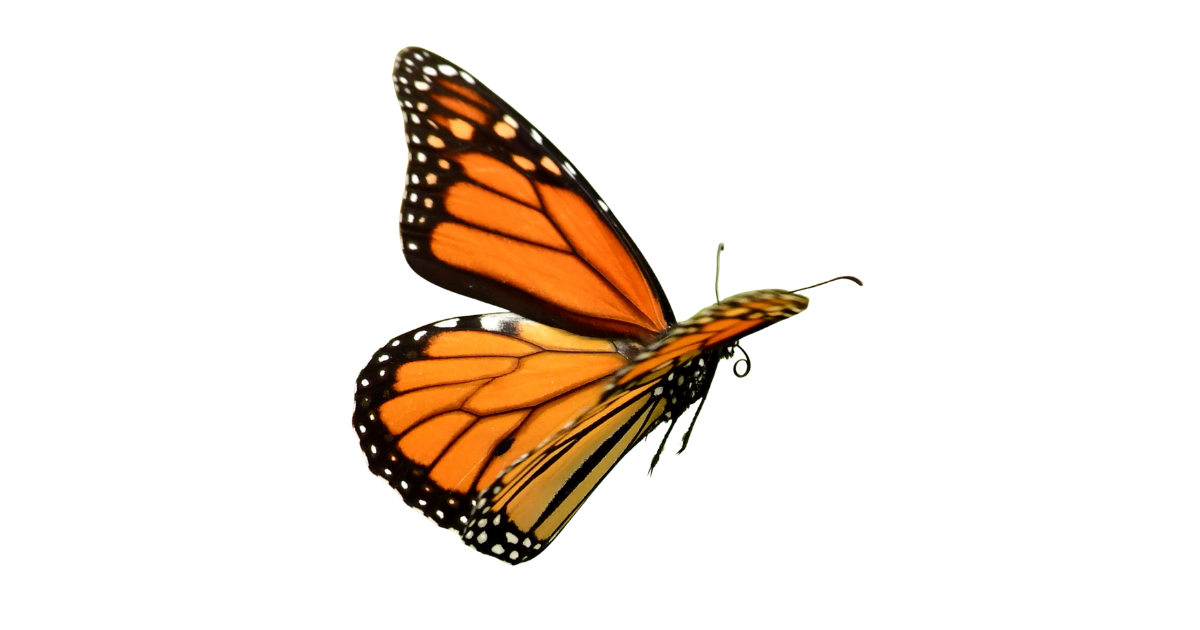
The roosts break up in mid-March. These are the same individuals that arrived in November, now seven months old and visibly worn — faded wings, torn edges, scales rubbed off.
They reach northern Mexico and Texas, find milkweed pushing up through the spring warmth, and lay several hundred eggs each. Within days of that, they are gone.
Every monarch alive today descends from a butterfly that died in a Texas field in April.
Generations one, two and three
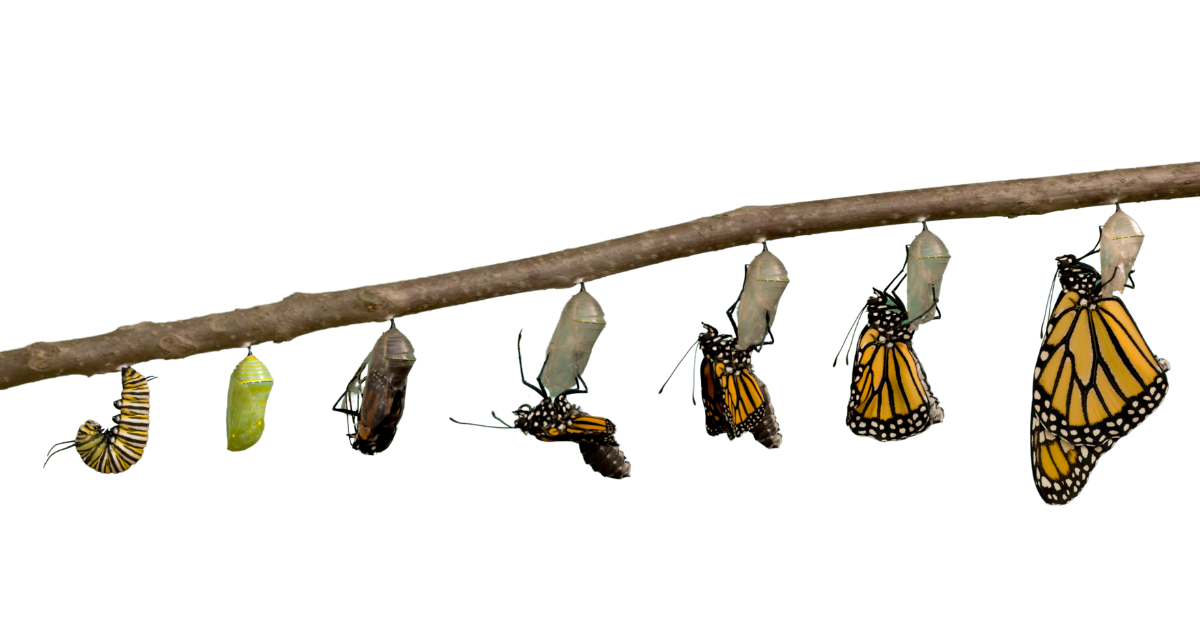
Each of these generations does the same four things: hatch, eat milkweed, fly north for a few hundred kilometres, breed. Four to six weeks, start to finish, and then the next one takes over.
Why bother with the relay at all? Milkweed is the reason. Monarch caterpillars eat nothing else, and milkweed greens up in waves as spring moves north, so breeding in stages lets the population ride that wave instead of chasing it.
The super generation flies south
Butterflies emerging from late July onward do not breed. They feed on nectar, build fat, and from mid-August they head south — riding thermals, gliding to save energy, funnelling down through Texas in numbers that show up on weather radar.
Most arrive in Michoacán at the end of October or the start of November, which is why they are so bound up with Día de Muertos. In Michoacán tradition the butterflies carry the souls of the dead home.
Winter in the oyamel forest
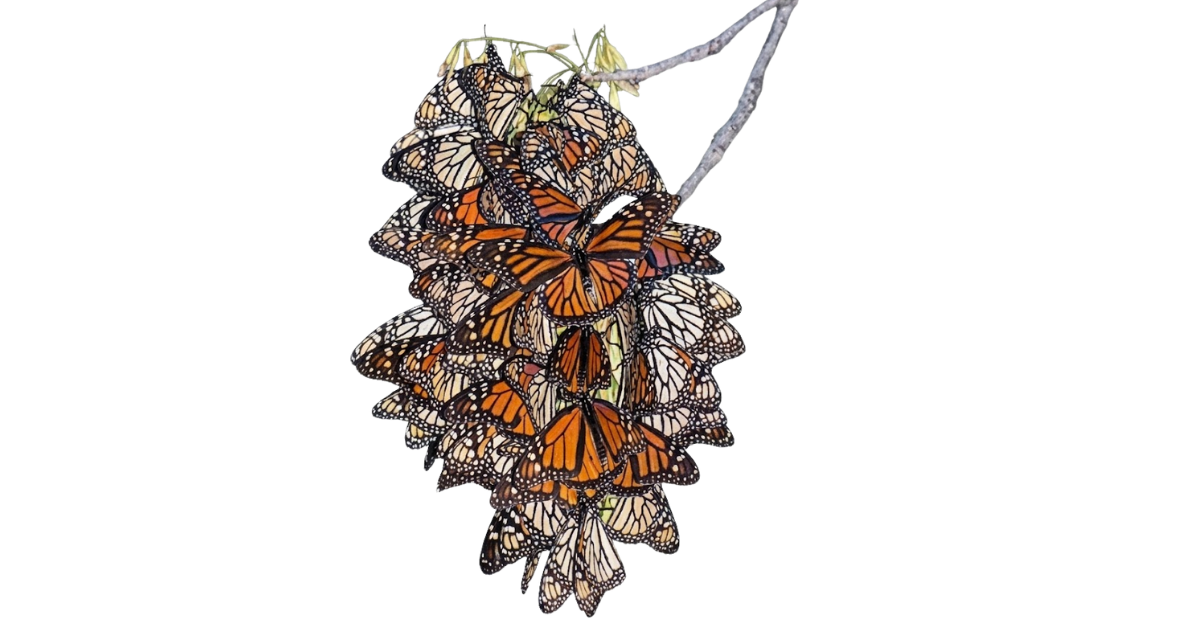
Tens of millions of butterflies pack onto the trunks and branches of oyamel firs at around 3,000 metres. Branches bend under the weight. The canopy works like a blanket, holding the colony just above freezing — cold enough to burn almost no energy, warm enough to survive.
None of them has been here before. Their great-grandparents left in March, and three generations have lived and died in between.
Why this one is personal
I was born in Mexico, where going to see the monarchs is one of those standard childhood excursions. Mine happened when I was about ten, and I only went the once. What stayed with me is the sheer number of them — more butterflies moving at one time than a ten-year-old has any way of filing. Unbelievable is a lazy word, but it is the honest one.
Later I became a biologist, and monarchs stopped being a day out and became a subject. Populations are down heavily. Climate change is part of it, but so is illegal logging in the overwintering forests, and so is the loss of milkweed across the breeding range in the United States.
The part Mexican biologists talk about is what defending that forest costs. In January 2020, Homero Gómez González — a former logger who had turned the El Rosario sanctuary into a conservation success and campaigned openly against illegal cutting — disappeared. His body was found in a holding pond on 29 January. Raúl Hernández Romero, a guide at the same sanctuary, was found dead days later. Netflix released a documentary about the case, The Guardian of the Monarchs, in 2024.
Conservation in that part of Michoacán is not a matter of signage and good intentions. It runs directly against organised crime and the money in illegal timber, and people who stand in the way of that have been killed for it. Worth holding in mind when you look at the map above and see a tidy orange line.
Where to see them
Michoacán and Estado de México
Late November to mid-March
The overwintering colonies, and the reason the Monarch Butterfly Biosphere Reserve is a UNESCO World Heritage Site. El Rosario and Sierra Chincua sit in Michoacán; Cerro Pelón and Piedra Herrada are in Estado de México, within a few hours of Mexico City.
The California coast
Late October to February
Monarchs west of the Rockies winter in eucalyptus, pine and cypress groves along the coast rather than in Mexico. Pacific Grove, Natural Bridges in Santa Cruz and Pismo Beach are the reliable ones. Numbers are a fraction of what they were.
Along the flyway
September and October
You do not need to go to Mexico. Autumn roosts form right across the eastern half of the continent as the super generation moves south, and a good one can hold thousands of butterflies in a handful of trees.
A few practical notes
- Go on a warm, still, sunny day. Cold butterflies stay clamped to the branches. Sun gets them flying, and that is the version everybody remembers.
- Midday beats early morning at the Mexican sanctuaries, which is the opposite of most wildlife advice.
- December to February is the peak in Mexico. The colonies are at their most compact, and February brings a burst of activity before they leave.
- Expect altitude. The sanctuaries sit near 3,000 m and the walk in is uphill. It is manageable, but not nothing.
- Watch the flyway hotspots in autumn: Point Pelee in Ontario, Cape May in New Jersey, and the Texas corridor from the Hill Country down to Eagle Pass.
- Stay behind the ropes and keep quiet. A cold butterfly knocked to the ground often cannot get back up.
How they are actually doing
The migration of monarch butterflies is measured by area rather than by counting, because counting tens of millions of insects is impossible. Each winter, WWF-México and CONANP survey the hectares of forest the colonies occupy. The 2025–26 season came in at 2.93 hectares, up 64% on the 1.79 hectares of the winter before — genuinely good news, though researchers put roughly 6 hectares as the level a stable population needs.
Out west the picture is bleaker. The Xerces Society’s 2025 Thanksgiving count recorded about 12,260 butterflies across 249 sites. That population regularly reached the low millions in the 1980s.
For an insect, the distance involved is absurd, and it earns the monarch a place among the longest animal migrations on the planet — alongside animals thousands of times its size.
In the United States the monarch was proposed for listing as a threatened species in December 2024, and a final decision is still pending. I have written about where that stands, and about the difference between the IUCN’s assessment and the American one, in are monarch butterflies endangered?
Common questions
Where can you see the butterfly migration?
Two places, depending on which population you mean. Eastern monarchs overwinter in the mountain forests of Michoacán and Estado de México, roughly two to three hours west of Mexico City, where four sanctuaries are open to visitors: El Rosario, Sierra Chincua, Cerro Pelón and Piedra Herrada. Western monarchs overwinter along the California coast, at sites such as Pacific Grove, Natural Bridges in Santa Cruz and Pismo Beach. If you cannot reach either, autumn roosts form across the eastern United States and southern Canada in September and October.
Where can I watch the monarch butterfly migration?
El Rosario is the largest and most accessible of the Mexican sanctuaries, with a paved trail, though it gets busy at weekends. Sierra Chincua has a shorter walk. Cerro Pelón is the quietest and the most demanding, with the steepest climb and the most intact forest. All four sit at around 3,000 metres, so allow for the altitude. Pick a warm, sunny, windless day around the middle of the day, when the butterflies are flying rather than clustered.
What time of year is the butterfly migration?
The southbound migration runs from mid-August to early November, with most butterflies reaching central Mexico around the start of November. They stay in the forest until mid-March, then head north, arriving in Texas through late March and April. Breeding then works north through spring and early summer, reaching Canada by July. Peak viewing in Mexico is December to mid-March; peak viewing on the California coast is November to January.
What state has the most monarch butterflies?
Texas, for sheer numbers passing through. Nearly the entire eastern population funnels across it twice a year — north in spring, south in autumn — which is why the state is often called the monarch funnel. For breeding, the Corn Belt states of Iowa, Illinois and Missouri produce a large share of the butterflies that reach Mexico. California is different again: it is where the western population spends the winter, so it holds the most overwintering monarchs in the United States.
What is the average lifespan of a monarch butterfly?
Two to six weeks for most of them. Summer generations hatch, breed and die inside about a month. The exception is the generation that emerges in late summer, which enters diapause: reproduction shuts down, and the butterfly lives for up to eight or nine months instead. That single change is what makes the migration possible, since it is the same individual that flies to Mexico, overwinters there and starts north again in spring.
References
- Reppert, S. M., & de Roode, J. C. (2018). Demystifying monarch butterfly migration. Current Biology, 28(17), R1009–R1022. https://doi.org/10.1016/j.cub.2018.02.067
- WWF-México. (2026). Area of forest occupied by the colonies of monarch butterflies in Mexico during the overwintering period 2025–2026. World Wildlife Fund.
- The Xerces Society for Invertebrate Conservation. (2026, January 29). Western monarch numbers remain at historic low. https://www.xerces.org/press/western-monarch-numbers-remain-at-historic-low
Routes on the map are corridors rather than individual tracks, and timing is averaged across many years of tagging and citizen-science sightings. Figures checked September 2026.



