Ever since the documentary My Octopus Teacher touched hearts worldwide, many people could not see octopuses in the same light. These intelligent creatures became more than just marine life. They became symbols of connection and wonder. Meanwhile, the legendary Kraken sparked curiosity about real deep-sea creatures with long tentacles. While the giant squid often takes center stage in such tales, the biggest octopus species are equally fascinating and far more accessible to study.
Have you ever looked at the vast, dark expanse of the ocean and wondered what’s actually lurking down there? Beyond the colorful coral reefs, the deep sea harbors creatures that inspired ancient mariners to check their hulls and question their sanity. When we talk about the world’s biggest octopus, we’re not discussing a few extra inches of tentacle. These are highly intelligent, three-hearted, blue-blooded masters of the deep. They can outweigh a professional wrestler yet squeeze through openings the size of a lemon.
In this guide, we’re counting down the heavyweights and answering one burning question: what is the biggest octopus in the world?

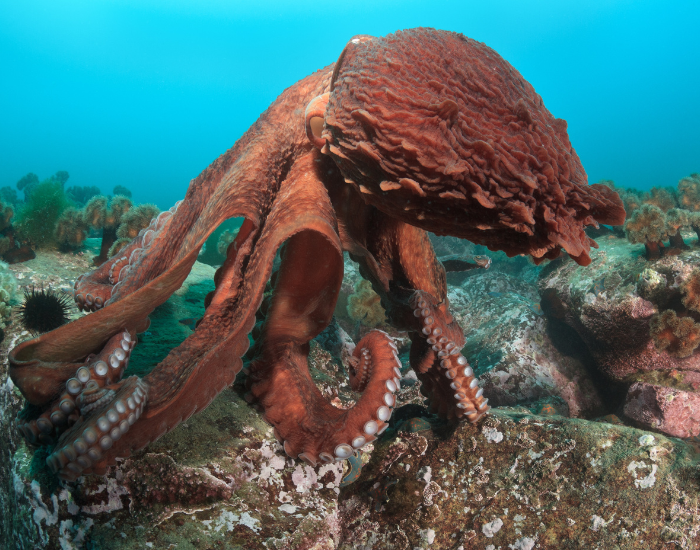
1. Giant Pacific Octopus (Enteroctopus dofleini)
If you’re looking for the undisputed heavyweight champion, the Giant Pacific Octopus is it. This is the largest octopus in the world. Frankly, it’s the one that most people picture when they think of a “monster” of the deep. These animals are the geniuses of the invertebrate world. They’re famous for their ability to solve puzzles, open jars, and even recognize individual humans in an aquarium setting
Found in the temperate waters of the Pacific Ocean, ranging from Alaska to Japan, these den dwellers are elite predators. They primarily eat sharks, lobsters, clams, crabs, and scallops. They use jet propulsion to move through the water and a parrot-like beak to crack through tough shells. Despite their size, they are masters of camouflage. They can change color and texture in a fraction of a second to avoid predators like seals and larger sharks.
- Size: The biggest octopus ever recorded was a massive specimen that reportedly weighed 600 pounds (about 272 kg) with an arm span of 30 feet (9 meters). However, a typical adult giant pacific octopus usually averages around 110 pounds.
2. Seven-Arm Octopus (Haliphron atlanticus)
Despite the misleading name, the seven-arm octopus actually has eight arms. The name comes from a unique biological quirk where males keep their mating arm coiled in a sac beneath their eye. This makes them appear to have only seven visible limbs. Scientists initially misclassified them based on preserved specimens that hid this eighth arm.
This species is a strong contender for the title of largest octopus by mass. They are incredibly thick compared to other octopus species, with bulky bodies that store substantial fat reserves. Unlike the bottom-dwelling giant pacific octopus, these creatures are often found drifting in the open ocean or near the ocean floor in both the Atlantic and Pacific.
Size: Females can reach lengths of 11 to 13 feet and weigh up to 165 pounds, making them the world largest octopus by weight in some scientific circles.
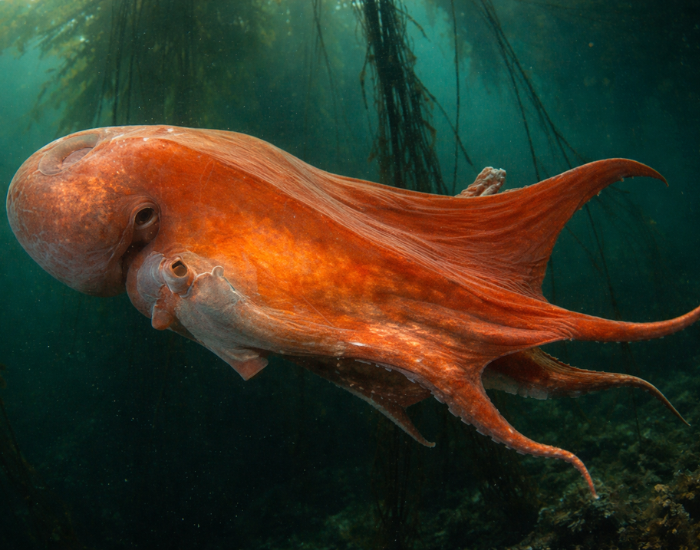
3. Frilled Giant Pacific Octopus (Enteroctopus sp.)
Discovered relatively recently (around 2017) in the waters of Prince William Sound, Alaska, this species is a “cryptic” relative of the Giant Pacific Octopus. It looks almost identical to its famous cousin but features a distinct “frill” of skin along its body and two white spots on its head. For years, fishermen caught these and just assumed they were regular big octopus variants.
DNA testing eventually proved they are a genetically distinct species. They seem to prefer the cold, nutrient-rich waters of the North Pacific and behave similarly to other large octopus types, though scientists are still mapping out their full range. Their discovery reminds us that even with the biggest octopus ever seen, there are still hidden giants in the world we haven’t fully categorized.
- Size: They are estimated to reach weights and lengths similar to the standard Giant Pacific, often exceeding 110 pounds and 16 feet in span.
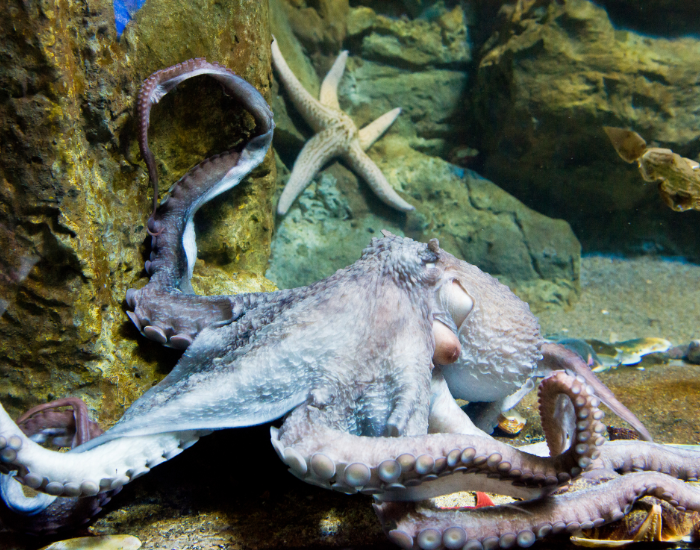
4. Southern Giant Octopus (Enteroctopus magnificus)
Found in the cold, deep waters off the coast of Namibia and South Africa, the Southern Giant Octopus is a true titan of the Atlantic. This species was only officially described in the 1980s. They are typically caught as bycatch in lobster and crab fisheries, as they love to sneak into traps for an easy meal.
Because they live at significant depths, they have larger eyes relative to their body size to help them hunt in the dim light of the ocean floor. They are high-level predators in their ecosystem, keeping populations of crustaceans in check. Their existence proves that the biggest octopus title isn’t just held by the Pacific varieties; the South Atlantic has its own heavyweights.
- Size: Large specimens can reach a total length of 11 feet and weigh over 30 pounds.
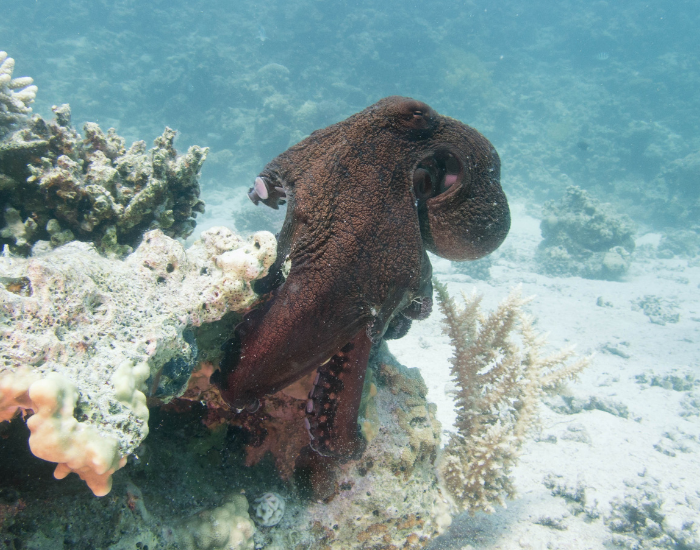
5. Māori Octopus (Macroctopus maorum)
The Māori Octopus, also known as the New Zealand giant octopus, is the largest species found in the waters around Australia and New Zealand. These are not your shy, retiring cephalopods; they are known for being quite territorial and even aggressive. They have been observed raiding lobster pots and outsmarting fish caught in nets, much to the frustration of local fishermen.
In the wild, they inhabit rocky reefs and shallow water areas alongside many coral fish. There, they hunt a variety of prey including crabs and other mollusks. Their skin is typically a mottled dark orange or purple-gray. This provides perfect cover among the kelp forests of the Southern Hemisphere. They are a vital part of the local marine life. They represent the biggest octopus in history for the South Pacific region.
- Size: They can grow to an arm span of nearly 10 feet and weigh up to 26 pounds.
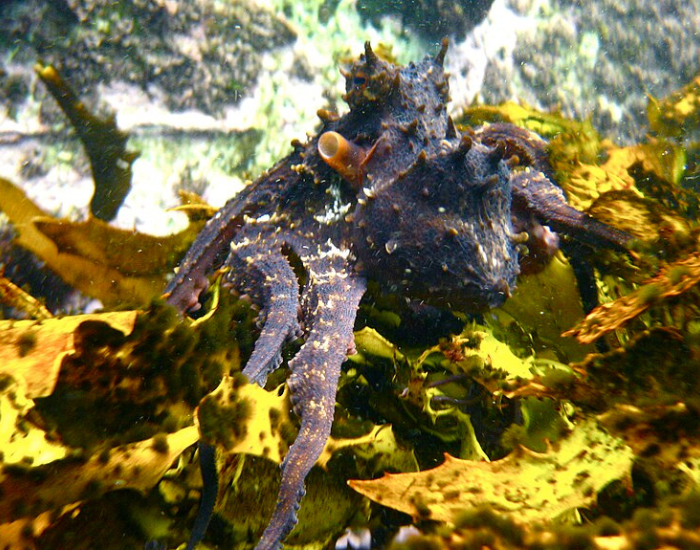
6. Giant Blue Octopus (Octopus cyanea)
While it shares a name with the “common” variety in some regions, the Giant Blue Octopus (also called the Day Octopus) is significant for one key reason. It is one of the few big octopus species that is active during the day. Most octopuses are nocturnal to avoid predators. But this guy uses incredible camouflage to hunt in broad daylight among coral reefs. Found throughout the Indo-Pacific, they are famous for their “moving rock” trick.
They can change color and texture to mimic a piece of coral sliding across the seafloor. This high intelligence and physical flexibility allow them to thrive in high-traffic reef environments. Sharks and other predators are constantly on the prowl in these areas.
- Size: They can reach an arm span of about 3 feet and weigh up to 10 pounds, which is massive for a reef-dwelling species.
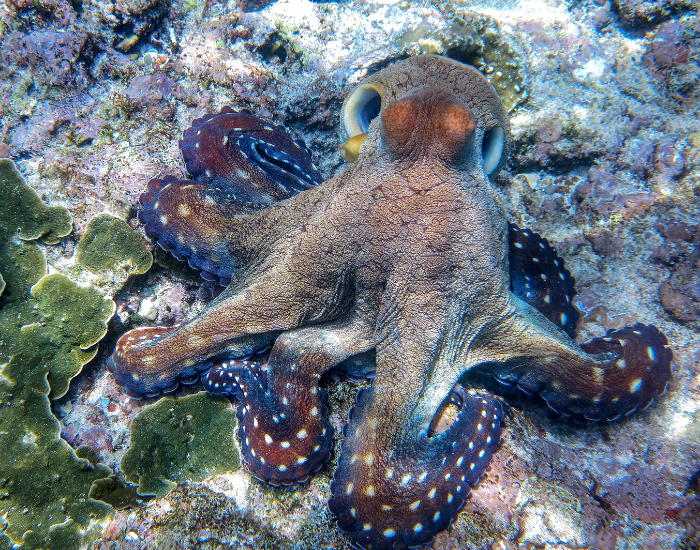
7. Common Blanket Octopus (Tremoctopus violaceus)
This is one of the most visually stunning species in the world. The females are the giants here, sporting long, cape-like membranes that they can unfurl to look much larger than they actually are. This “blanket” can also be detached to distract a predator, like a shimmering, ghostly decoy.
The size difference between males and females in this species is the most extreme in the animal phyla. While the female is a large octopus, the male is about the size of a walnut. They are nomadic, drifting through the open ocean rather than living as den dwellers, and they have even been known to rip the stinging tentacles off Man-o-War jellyfish to use as weapons.
- Size: Females can reach 6.6 feet in length, while the males are less than an inch long.
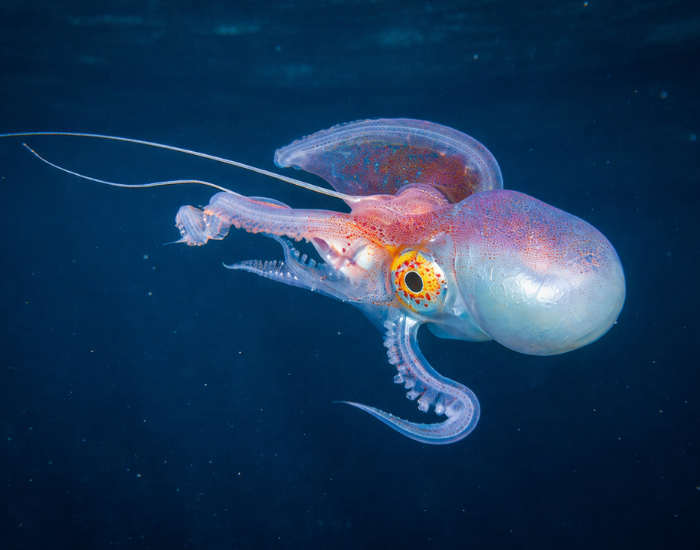
8. Southern Red Octopus (Enteroctopus megalocyathus)
A resident of the Patagonian coast in South America, this “big octopus” is a vital part of the sub-Antarctic marine life ecosystem. It is the largest octopus in the southern tip of the Americas and is highly prized in local gastronomy.
They prefer cold, shallow water where they hunt scallops, clams, and crabs. Like their cousins in the North Pacific, they are highly vulnerable to changes in water temperature, making climate change a significant threat to their long-term survival in the wild.
- Size: They can weigh up to 9 pounds and have an arm span of roughly 3 to 4 feet.

9. Dumbo Octopus (Grimpoteuthis)
While most Dumbo octopuses (named for the ear-like fins above their eyes) are small and cute, the largest recorded specimen was a total outlier. These are the deepest-dwelling of all octopuses, living on the ocean floor at mind-boggling depths of up to 13,000 feet.
They don’t have ink sacs because there is no light to use ink as a distraction, and they move by flapping their fins and pulsing their webbed arms. Because they live so deep, sightings are rare and usually involve high-tech ROVs. Finding a huge octopus at these depths is a testament to how well cephalopods adapt to extreme pressure.
- Size: Most are small, but the biggest octopus ever found of this genus reached nearly 6 feet in length and weighed 13 pounds.
10. Common Octopus (Octopus vulgaris)
Don’t let the name “common” fool you; in the world of invertebrates, this is a top-tier athlete and scholar. The Common Octopus is found globally and is the species most often seen in aquarium exhibits because of its incredible intelligence and personality.
They are the ultimate escape artists, capable of unscrewing bolts and squeezing through gaps no wider than their parrot-like beak. While they aren’t the biggest octopus in the world, their weight and strength make them a formidable predator of fish and crustaceans across the globe.
- Size: They can reach an arm span of about 3 feet and weigh up to 20 pounds in optimal conditions.
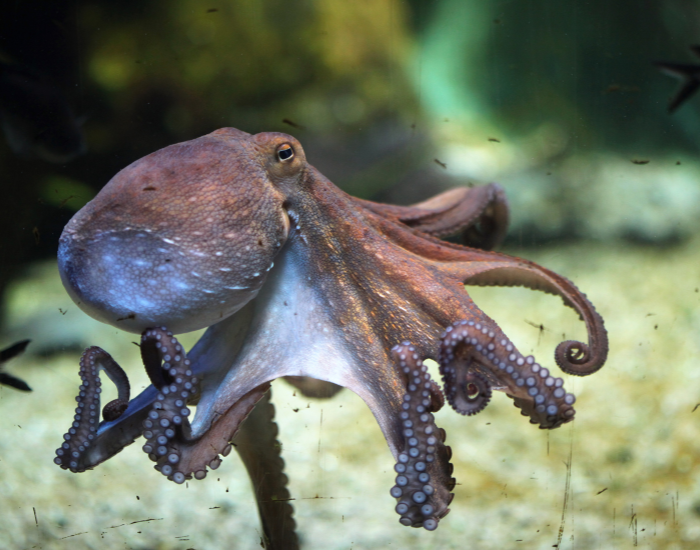
11. Yellow Giant Octopus (Enteroctopus zealandicus)
Since you already have the Māori Octopus on your list, you have to meet its rarer, deep-water cousin. The Yellow Giant Octopus is a bit of a sub-Antarctic mystery, found primarily in the chilly, high-pressure depths of the New Zealand Plateau. While sightings are rare compared to other big octopus species, it is a recognized member of the Enteroctopus genus—the literal “giant” family of the cephalopod world.
What makes this guy so interesting from a critical thinking perspective is its adaptation to the dark. Living in much deeper, colder water than most other large octopus types, it has developed a strikingly pale, yellowish-orange hue.
- Size: They can reach an arm span of roughly 4 to 5 feet and weigh between 8 and 12 pounds.

12. Caribbean Reef Octopus (Octopus briareus)
If the Giant Pacific is the heavyweight wrestler of the ocean, the Caribbean Reef Octopus is the “bodybuilder” of the tropics. It might not have the massive 30-foot span of the world’s biggest octopus. But it is famous among divers and scientists for having incredibly thick, muscular arms relative to its body size. When this octopus spreads its arms out to hunt, it creates a “canopy.” This makes it look much more formidable than your average common octopus.
Found throughout the warm waters of the Caribbean and the Gulf of Mexico, these are the masters of “crypsis”, the art of hiding in plain sight. They have some of the most advanced skin cells in the world. This allows them to mimic the exact texture of jagged coral or sandy seafloor in milliseconds.
- Size: They can reach a total length of about 2 to 3 feet, but their “beefy” arm structure makes them much heavier and more powerful than they appear.

FAQ: Your Biggest Octopus Questions Answered
The biggest octopus ever recorded was a giant pacific octopus that weighed 600 pounds with a 30-foot arm span. This specimen was documented off the coast of Alaska. While some older records report even larger individuals, this remains the most reliably measured giant. Most adult giant pacific octopuses average around 110 pounds, making the 600-pound specimen truly exceptional.
No, the largest octopus species cannot match the colossal squid for size. While the giant pacific octopus represents the world’s biggest octopus at roughly 600 pounds maximum, colossal squids can exceed 1,000 pounds and reach 45 feet in length. Giant squid and colossal squid both outsize even the most massive octopuses.
Verified accounts of large octopuses attacking humans remain extremely rare. Most are shy den dwellers that prefer to hide when divers approach. However, their arms possess incredible strength, and they should always be respected underwater. A few incidents involve giant pacific octopuses grabbing divers who ventured too close to their dens, but these encounters rarely result in serious injury.
The legend of the Kraken likely drew inspiration from sightings of both giant squid and the largest octopus species. Ancient sailors often exaggerated creature sizes, but the inspiration came from real marine life. Giant pacific octopuses and other large cephalopods were occasionally spotted by mariners, particularly in northern waters.

Conservation: Protecting Ocean Giants
As we explore what is the biggest octopus in the world, we must address their uncertain future. These animals have remarkably short lifespans. Even the giant pacific octopus lives only 3 to 5 years. They grow rapidly, breed once, and then die through a process called senescence. This reproductive strategy makes their populations extremely sensitive to overfishing and environmental changes. Sustainable seafood practices are crucial, but challenges like species identification in the seafood industry can complicate conservation efforts.
Giant Pacific octopuses are commercially fished in North America and Japan, and are often caught as bycatch in cod, crab, and prawn fisheries. Pollution in the pacific ocean threatens these creatures directly. Plastic debris, chemical runoff, and oil spills contaminate their habitats. Warming temperate waters are forcing octopus species to shift their ranges toward cooler regions. Some species have no cooler waters to retreat to, particularly those already living in polar regions.
If we want to keep seeing the world’s largest octopus in our oceans, we need better stewardship. Sustainable fishing practices, marine protected areas, and reduced carbon emissions all contribute to their survival. These intelligent, fascinating creatures deserve our protection and respect. The deep sea may seem distant, but the health of these ecosystems ultimately affects all marine life on which humans depend.