Meet the Chimpanzee
Chimpanzees (Pan troglodytes) aren’t just another primate. They’re our closest living relatives, sharing nearly 99% of our DNA. However, calling a chimpanzee a “chimpanzee monkey” is a common mistake. They’re not monkeys at all, but great apes, alongside gorillas, orangutans, and bonobos.
In this guide, we’ll uncover 12 fascinating chimpanzee facts, including fun facts that will surprise and educate you. We’ll explore everything from their family bonds and tool use to the challenges wild chimpanzees face today.

1. Chimpanzees Are Great Apes, Not Monkeys
While many people casually say “monkey chimpanzee,” chimps are firmly in the great apes family. They share this classification with gorillas, orangutans, and humans. Unlike monkeys, chimpanzees lack tails and have larger brains. Therefore, they share a far closer genetic relationship with us.
Scientists estimate we diverged from a common ancestor about 6–8 million years ago. This makes them a living window into our evolutionary past. Understanding the difference between Types of Primates: Fascinating Facts About Our Closest Relatives helps clarify why apes and monkeys belong to distinct categories.

2. Chimpanzee Faces Show Complex Emotions
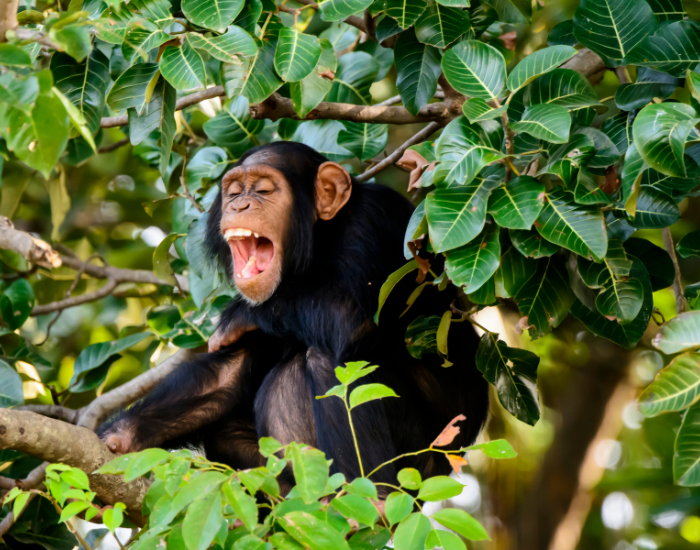
Anyone who has looked into chimpanzee faces knows they’re very expressive. They can smile, pout, bare their teeth in fear, or raise their eyebrows in surprise. These subtle facial expressions are part of their social toolkit. In addition, they allow chimps to navigate relationships inside their chimpanzee family or troop.
Research suggests that chimps use facial expressions flexibly depending on social context. This is a remarkable example of emotional intelligence. Wild chimps also use opposable thumbs to groom and communicate through touch, strengthening bonds within communities.

3. They Live in “Chimpanzee Families” Called Troops
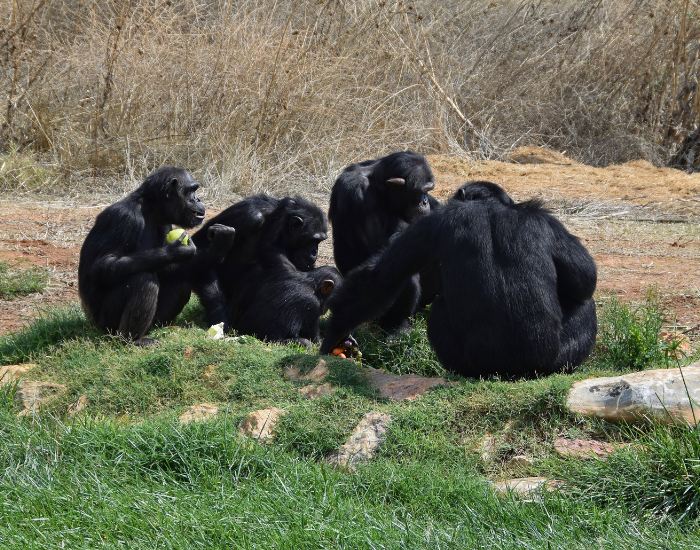
A chimpanzee family is never small. In the wild, many chimpanzees live together in large multi-male, multi-female groups called communities or troops, which include adults, young, and infants. Sometimes these chimpanzee troops number over 100 individuals. Within these, smaller subgroups, often called “parties”, form and dissolve throughout the day.
Adults play important roles in maintaining order and leading group activities, while young chimpanzees learn social skills from other members of the troop. Social bonds are formed not only with family but also with other chimpanzees and other chimps in the troop, strengthening group cohesion.
4. Tool Use Is Part of Chimp Culture
Chimpanzees are the original toolmakers among primates. They strip branches to fish termites, crack nuts with stones, and even sharpen sticks to spear small animals. Studies have shown how chimpanzees carefully select and modify plants, such as sticks, leaves, and branches, to use as tools for foraging, extracting termites, honey, and other food sources. In fact, tool use varies regionally, forming what scientists call chimpanzee culture.
Jane Goodall’s groundbreaking observations in the 1960s forever changed how we see non-human intelligence. Today, even zoo chimpanzees are encouraged to practice using tools with enrichment programs. This proves that chimps in zoo environments can play a role in conservation education. Moreover, these programs help maintain natural behaviors in captivity.
5. Chimpanzees Eat More Than Just Fruit
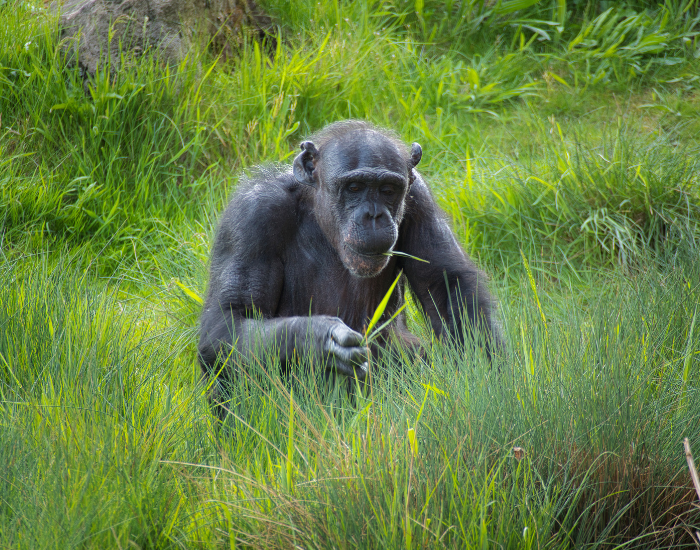
The chimpanzee diet is as diverse as their habitats. While fruit makes up the bulk of their food, they also consume leaves, nuts, seeds, insects, and eggs. In addition, diet consists of a small portion of meat. Yes, chimpanzees hunt.
In Tanzania, researchers have observed coordinated group hunting for red colobus monkeys, other small mammals, and medium sized mammals. While it’s only a very small portion of their diet, this meat-sharing strengthens alliances within a troop. Furthermore, their varied diet reflects their adaptability across central Africa and wild populations in different habitats.
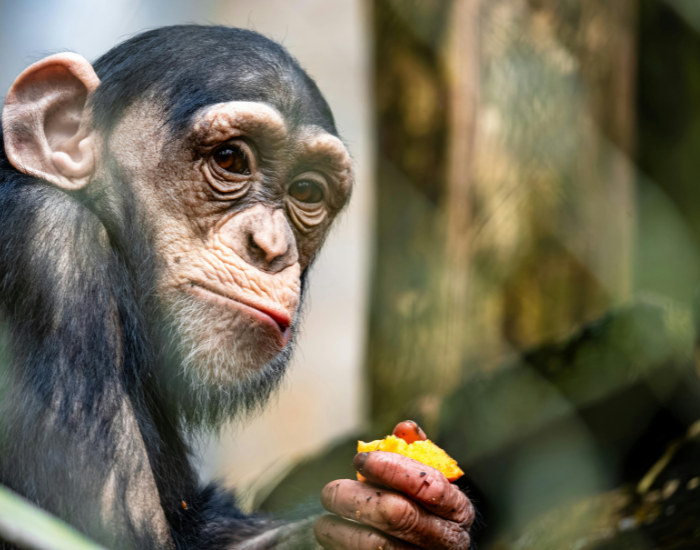
6. Chimpanzees Share 98.8% of Our DNA
Genetically, chimps are astonishingly close to humans. They’re closer than gorillas or orangutans. This similarity means chimpanzees are susceptible to many of the same diseases, including respiratory infections and even Ebola.
It also makes them crucial to understanding human health and evolution. Fortunately, biomedical research is moving away from using live chimps today. According to the World Wildlife Fund, this genetic closeness underscores our responsibility to protect these endangered animals.

7. They’re Endangered but Still Found in Zoos
The IUCN lists chimpanzees as endangered. They are at a very high risk of extinction in the wild. Populations are declining due to habitat loss, poaching, and disease. Today, perhaps 170,000–300,000 wild chimpanzees survive across central and western Africa.
Zoos play a controversial but important role here. AZA-accredited zoos support conservation efforts, fund anti-poaching patrols, and maintain chimpanzees in zoo populations as genetic “safety nets.” Many zoos support wild populations by funding snare removal teams and providing resources and expertise to help protect chimpanzees in their natural habitats. If you’ve ever watched zoo chimps forage for hidden treats or solve puzzles, you’ve witnessed enrichment in action. This is critical for their welfare and helps educate the public about conservation.
Curious about how long these incredible animals live? Read How Long Do Apes Live? Surprising Lifespans Revealed to discover lifespan differences between species.

8. Chimpanzees Communicate With More Than Sounds
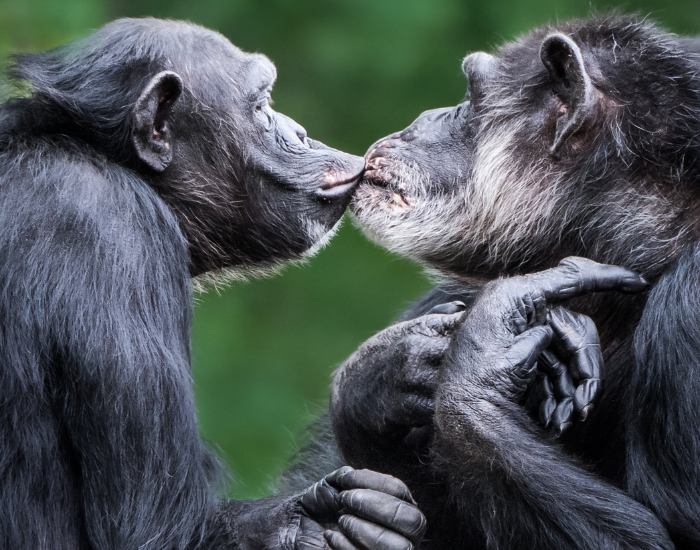
While pant-hoots are the most common call, and can echo for kilometers, chimps rely equally on gestures and body posture. They drum on tree trunks, kiss, embrace, and even laugh. Chimpanzees also use trees as vantage points for vocalizing and observing their surroundings, making trees essential to their communication behaviors. Therefore, their communication is multimodal.
This complex communication blurs the line between human and animal language. In addition, it sparks debates about the origins of speech itself. Pan troglodytes use at least 66 distinct gestures, making them one of the most communicative species outside humans.
9. Male Chimpanzees Rule, But Females Hold Power Too
Chimpanzee societies are often described as male-dominated. Alpha males assert authority through alliances and displays. However, don’t underestimate the females.
In some communities, females wield quiet but influential power. They decide troop movements, form alliances, and even shape the succession of alphas. As primatologist Frans de Waal noted, power in chimps isn’t just about brute strength. It’s about politics. Several males may compete, but females often determine outcomes.
10. Chimpanzee Faces Reflect Individual Identity
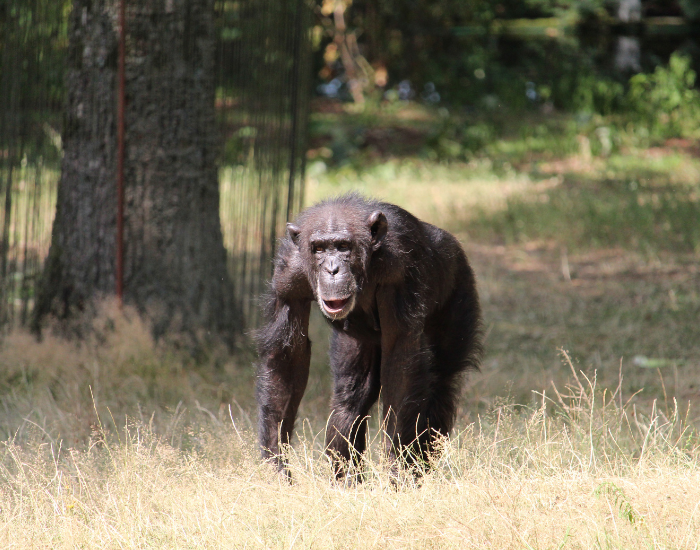
Just like human fingerprints, chimpanzee faces are unique. Researchers and conservationists often identify individuals by facial features, scars, hair patterns, or wrinkles.
When I worked alongside field researchers in Uganda, I remember meeting a chimp named “Greybeard.” His deeply lined face and calm demeanor set him apart instantly. That individuality is crucial for long-term conservation studies and tracking wild populations.

11. Jane Goodall Changed Everything We Know About Chimps
No story about chimps is complete without Jane Goodall. Starting in 1960 at Gombe Stream National Park, she revealed that chimpanzees hunt, use tools, and have complex emotional lives.
Her work inspired global conservation and led to the creation of the Jane Goodall Institute and its youth program, Roots & Shoots. Today, her legacy lives on in every zoo chimpanzee program, sanctuary, and conservation project dedicated to saving wild chimps.
Learn more about Jane Goodall’s extraordinary life and lasting impact in Honoring Jane Goodall: A Life of Hope and Conservation. Her pioneering research continues to shape primate conservation efforts worldwide.

12. Chimpanzees Need Our Protection More Than Ever
Despite their resilience, chimpanzees face a daunting future. Logging, mining, and agricultural expansion continue to carve away their forests in central Africa. Poaching for bushmeat or the pet trade decimates troops. Chimpanzees are sometimes captured and sold as exotic pets, which is a major threat to their survival and raises serious ethical concerns. In addition, diseases spread by human contact pose lethal risks to wild populations.
However, there is hope. Community-based conservation projects, sanctuaries, and the work of organizations like WWF and the Jane Goodall Institute are making an impact. Every time you support these efforts, or even learn about chimps in zoo programs, you contribute to their survival story.
13. There Are Two Species: Chimpanzees and Bonobos
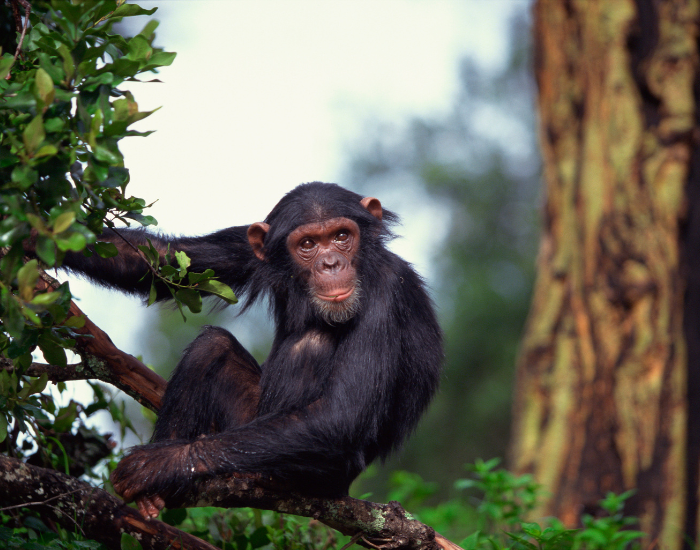
Most people don’t realize that the Pan genus actually includes two species, the common chimpanzee (Pan troglodytes) and the bonobo (Pan paniscus). At first glance, they look so similar that it’s easy to confuse them.
But look closer: bonobos tend to be slimmer, with darker faces, longer legs, and a more peaceful social structure. While chimpanzee troops are often dominated by aggressive male hierarchies, bonobos rely more on female alliances and social bonding.
Genetically, both species are equally close to humans. However, their contrasting behaviors reveal fascinating insights into primate evolution, showing us just how diverse our closest relatives can be.
I still remember visiting a sanctuary where both species lived side by side. Watching them in action, the differences became clear: chimps burst into loud pant-hoots and dominance displays, while the bonobos quietly groomed one another, diffusing tension with gentler interactions.

14. Chimpanzees in Culture and Media: Stereotypes vs Reality
Chimpanzees have long been cast in human stories, whether in films, TV shows, advertising, or even as childhood toys. These depictions often play on their intelligence and playful nature, but they can also create damaging stereotypes. A chimpanzee in a movie dressed in human clothes might look entertaining, but it risks sending the wrong message: that chimps are tame, funny companions rather than endangered great apes fighting for survival.
In reality, chimpanzees are powerful, highly social animals whose lives are deeply tied to forest ecosystems. The “chimpanzee family” in the wild is not a comedy act but a complex society where individuals rely on one another for survival. Unfortunately, cultural misrepresentations have even fueled the pet trade, with people seeking to “own” chimps without understanding their strength, needs, or conservation status.
Thankfully, documentaries and scientific communication have helped reshape public understanding. From Jane Goodall’s pioneering films at Gombe to modern National Geographic specials, the narrative has shifted toward respect and conservation. Today, AZA-accredited zoos and sanctuaries highlight chimpanzees as endangered species, not entertainers, reminding us that our closest relatives deserve dignity, not exploitation.
Latest Scientific Research on Chimpanzees
Recent studies continue to reveal surprising insights about these great apes. In 2024, researchers published groundbreaking findings on chimpanzee culture and behavior.
For example, a study examined how wild chimpanzees in central Africa adapt their tool use based on environmental changes. Researchers found that chimpanzee troops pass down specific techniques across generations. This demonstrates true cultural transmission.
Another fascinating study explored chimpanzee communication. Scientists discovered that chimps use more than 80 distinct gestures and vocalizations. Furthermore, they combine these signals in ways that suggest intentional meaning.
In addition, recent conservation research highlights the importance of protecting habitat corridors. These allow wild chimpanzees to move between fragmented forests. According to the IUCN Red List, maintaining these corridors is essential for genetic diversity and long-term survival of endangered populations.
A 2025 study published in Nature added an entirely new dimension to our understanding of great apes at the genetic level. Using advanced sequencing techniques, scientists successfully produced complete, gapless genomes for six ape species, including the chimpanzee, bonobo, gorilla, and orangutans. This achievement closed hundreds of missing regions in the DNA that had previously been uncharted, particularly in complex areas related to immunity, reproduction, and brain development.

Short FAQ About Chimpanzees
A chimpanzee is a great ape, not a monkey. Great apes lack tails and have larger brains.
Wild chimps can be dangerous and unpredictable. They are best admired from a safe distance.
Chimpanzees and bonobos share about 98.8% of our DNA, making them our closest relatives.
Yes, though it’s a small portion of their diet, they sometimes hunt monkeys or bush pigs.
A group is known as a “community” or “troop.”
Estimates suggest 170,000–300,000 wild chimpanzees remain across central and western Africa.
Habitat loss, poaching, disease, and human encroachment are the main threats to wild populations.
Absolutely. Chimps use tools like sticks for fishing termites and stones for cracking nuts.
Protecting Our Closest Relatives
Spending time with chimpanzees, whether in the wild or observing zoo chimpanzees, reminds us how deeply connected we are to the natural world. From their expressive faces to their family bonds, chimps blur the line between “us” and “them.”
Protecting them means protecting ourselves: our shared evolutionary story, our forests, and our future. Next time you hear a pant-hoot echo across a forest, or through the chatter of chimps in zoo environments, remember: these aren’t just animals. They’re kin.
Understanding great apes like chimpanzees helps us appreciate the diversity of primates. If you’re curious about other primate species, explore Types of Primates: Fascinating Facts About Our Closest Relatives to discover more about our evolutionary family tree.
📌 Sources & Further Reading:
Find Amazing Chimpanzee Experiences in Africa!
This blog is reader-supported. When you buy experiences through links listed on this site, we may earn an affiliate commission.