
Nature Journaling
Nature journaling means recording what you notice outside with words, pictures and numbers. You don’t need art skills. A pencil, some curiosity and good pages are enough.
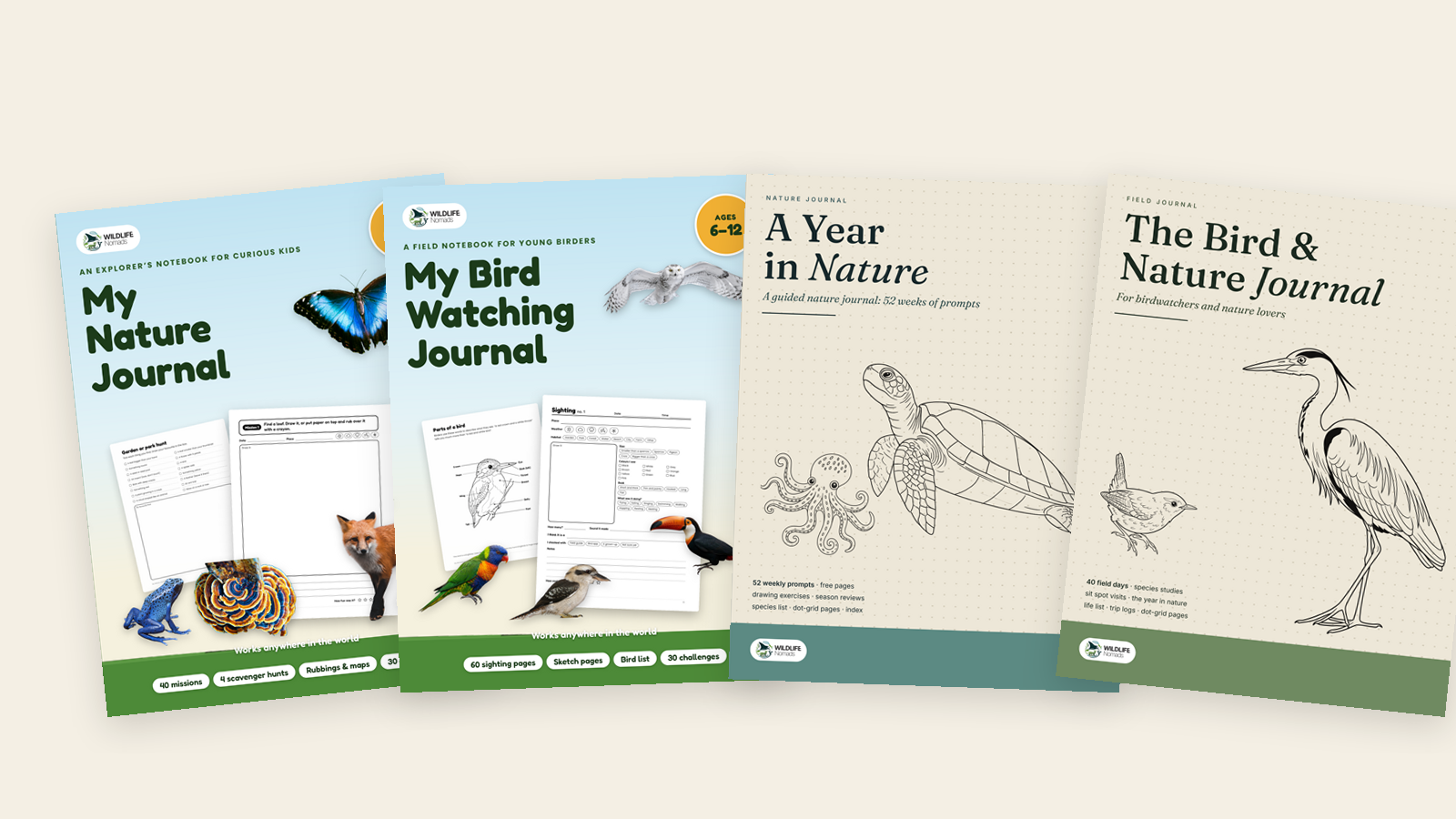
I’m a conservation biologist, and I designed these four journals for kids and adults. Print one at home and step outside.
What is nature journaling?
A nature journal is a notebook about the world outside your door. You record what you see, hear and wonder about, then come back to see what changed.
Naturalists have kept field notebooks for hundreds of years. Today, birdwatchers, artists, teachers and families keep them too. There are no strict rules. One page can hold a sketch, a bird list, the weather and a question.
Choose your nature journal
Every journal works anywhere in the world and comes as A4 and US Letter PDFs.
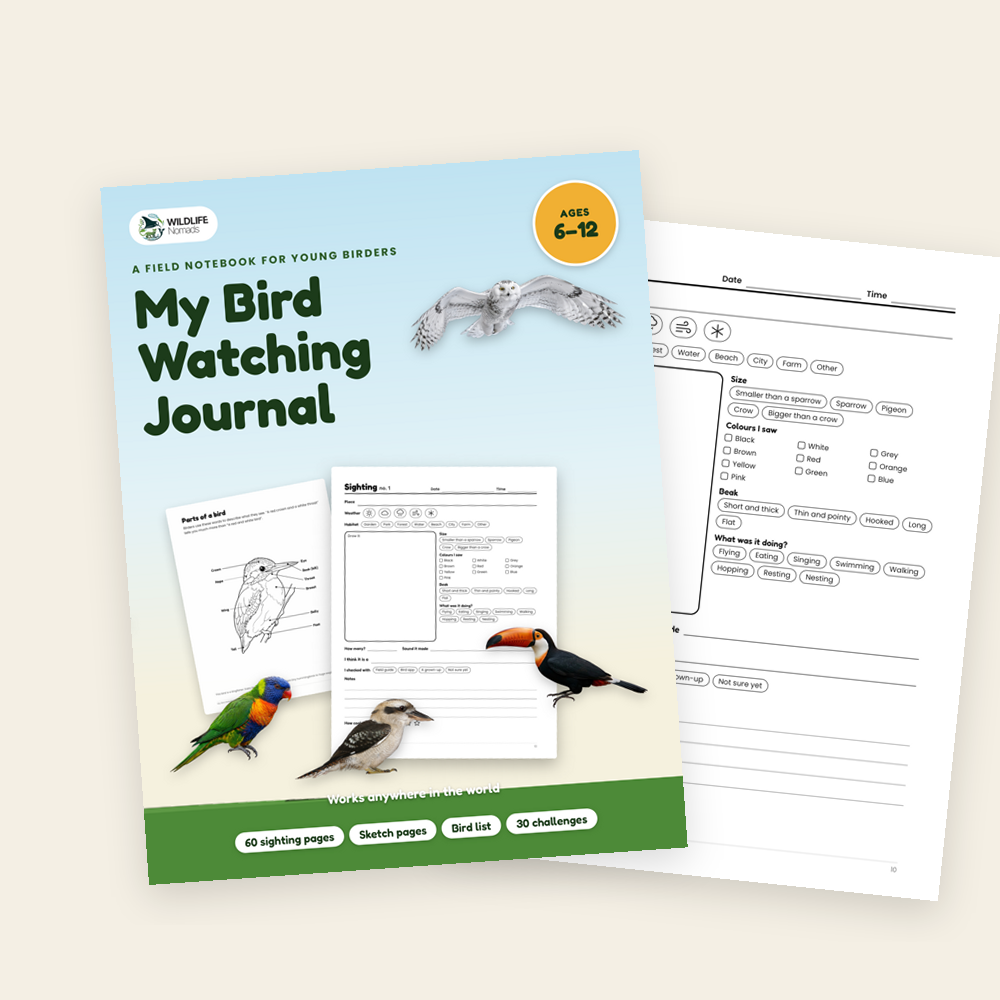
My Bird Watching Journal
- 60 sighting pages with tick boxes and a big sketch box
- Parts of a bird, beak detective and the 6 clues birders use
- Bird list, sound maps, 30 challenges and a certificate
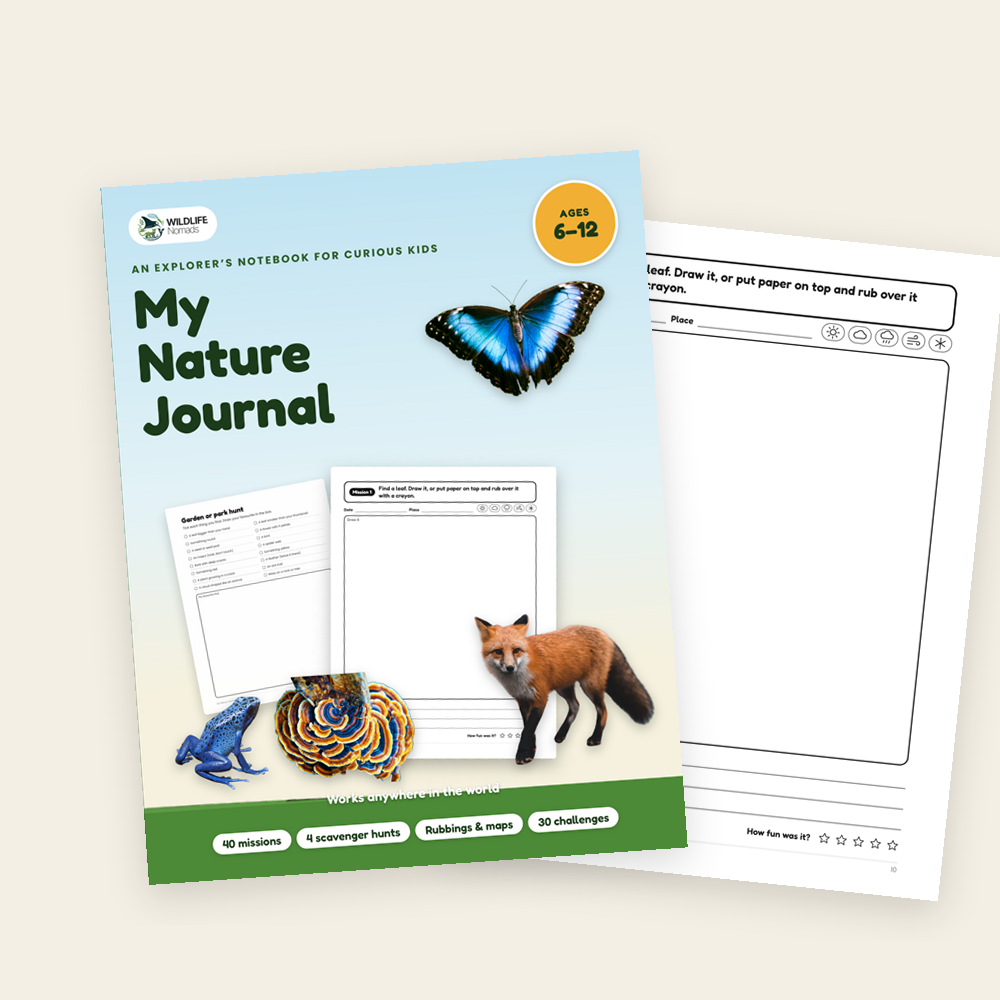
My Nature Journal
- 40 explorer missions, from leaves and clouds to bugs and the moon
- 4 scavenger hunts, a cloud spotter and a weather watch
- Rubbings, maps, 30 challenges and a certificate
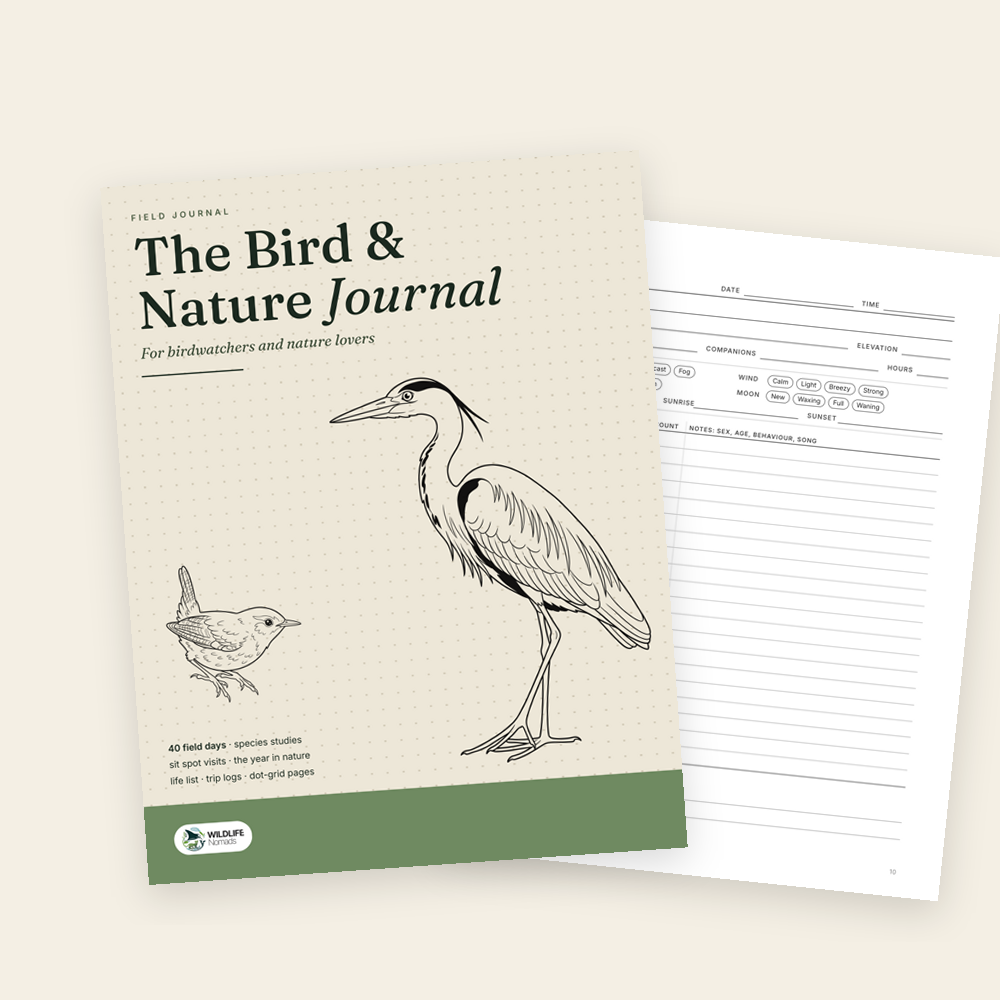
The Bird & Nature Journal
- 40 field days with conditions and a species list
- A facing dot-grid page with “I notice, I wonder” prompts
- Bird topography, field ethics, sit spot visits and a 150-species life list
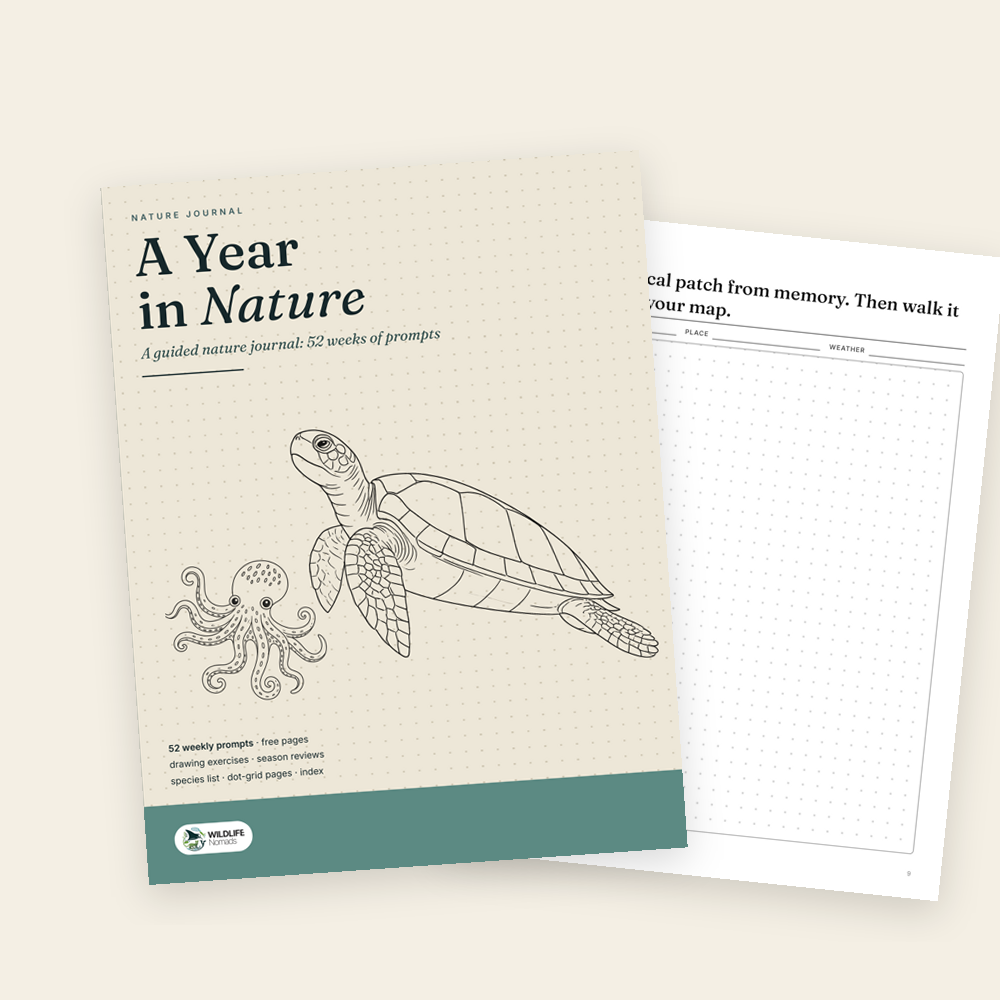
A Year in Nature
- 52 weekly prompts that work in any season, in either hemisphere
- A free dot-grid page for every week
- Drawing exercises, season reviews and an index
How to start nature journaling
- Choose a spot close to home. A garden, park, balcony or window is perfect.
- Bring a pencil and your journal. Coloured pencils are a bonus, not a must.
- Sit still for a few minutes. Birds and insects soon get used to you.
- Write the date, place and weather first. Then record whatever you notice.
- Come back often. Repeat visits show you how one place changes through the year.
Getting started is easier than it looks. The first blank page is the hardest part, so every journal here gives you prompts.
Three prompts that work on any page
Naturalist and educator John Muir Laws popularised three simple prompts. All four journals use them.
They turn a quick look into real observation. They also work for kids, beginners and experienced naturalists alike.
Print at home
Prefer a bound book? Paperback editions are on their way to Amazon.
More ways to explore
Nature journaling FAQ
Nature journaling is recording what you notice outdoors with words, pictures and numbers. It helps you slow down, look closely and remember what you saw. You don’t need any art skills to start.
Start with any notebook or a printable journal. Write the date, place and weather, then sketch and describe what you notice. Add questions as you go, and return to the same place often.
It is easy to start. Ten minutes outside with a pencil is enough. Prompts like “I notice, I wonder, it reminds me of” make the first pages much easier.
People group journaling in different ways. In nature journaling, the three building blocks are words, pictures and numbers. Most good pages use all three.
A diary usually records daily events and feelings. A journal can also hold observations, sketches, ideas and data. A nature journal focuses on the world outside.
No. A nature journal is a record of what you noticed, not a work of art. Quick, rough sketches with labels and notes are perfect.



