
Sharks that walk sound like a myth. Yet a small group of sharks really do use their fins like legs on shallow reefs. In 2026, scientists named a brand-new one.
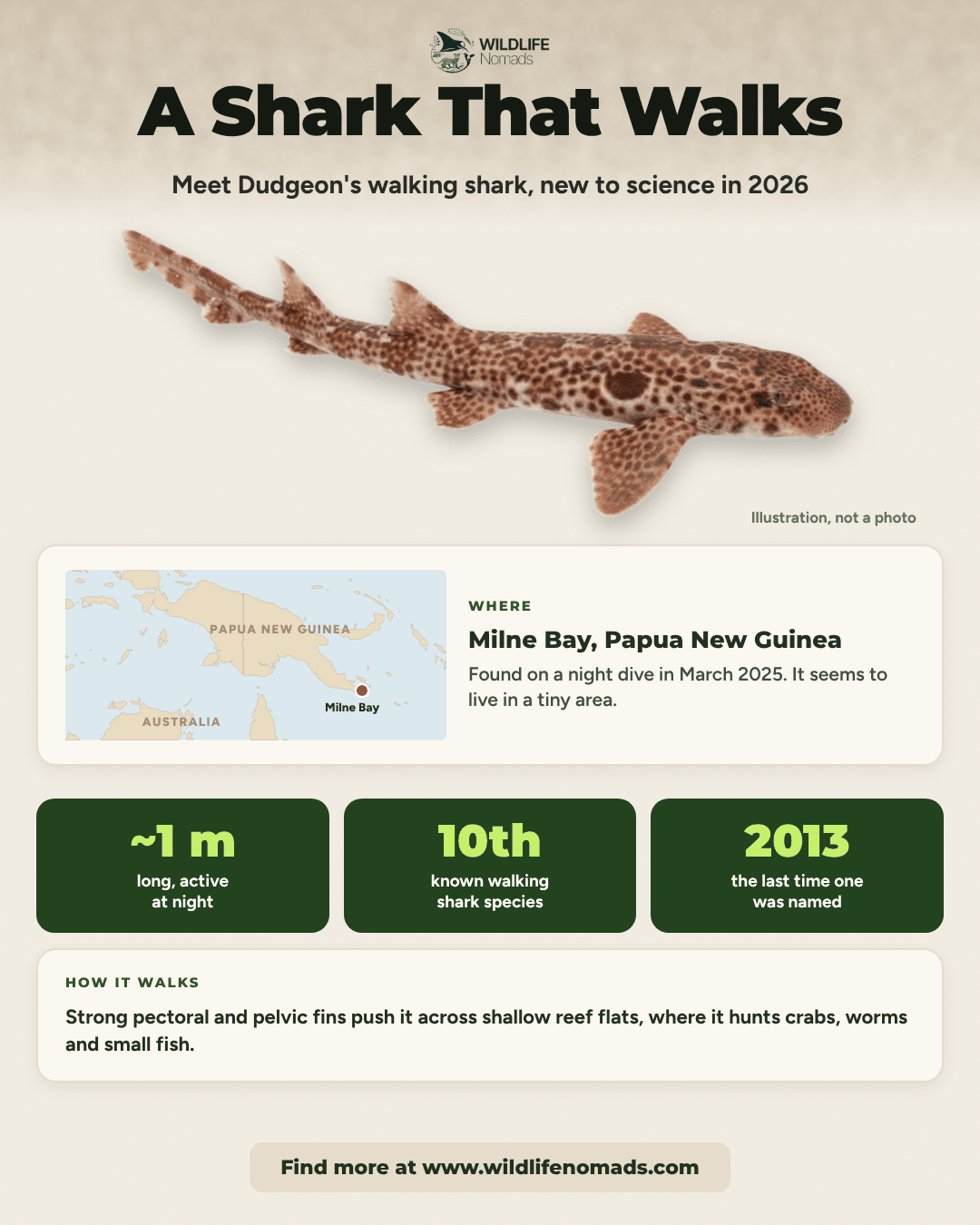
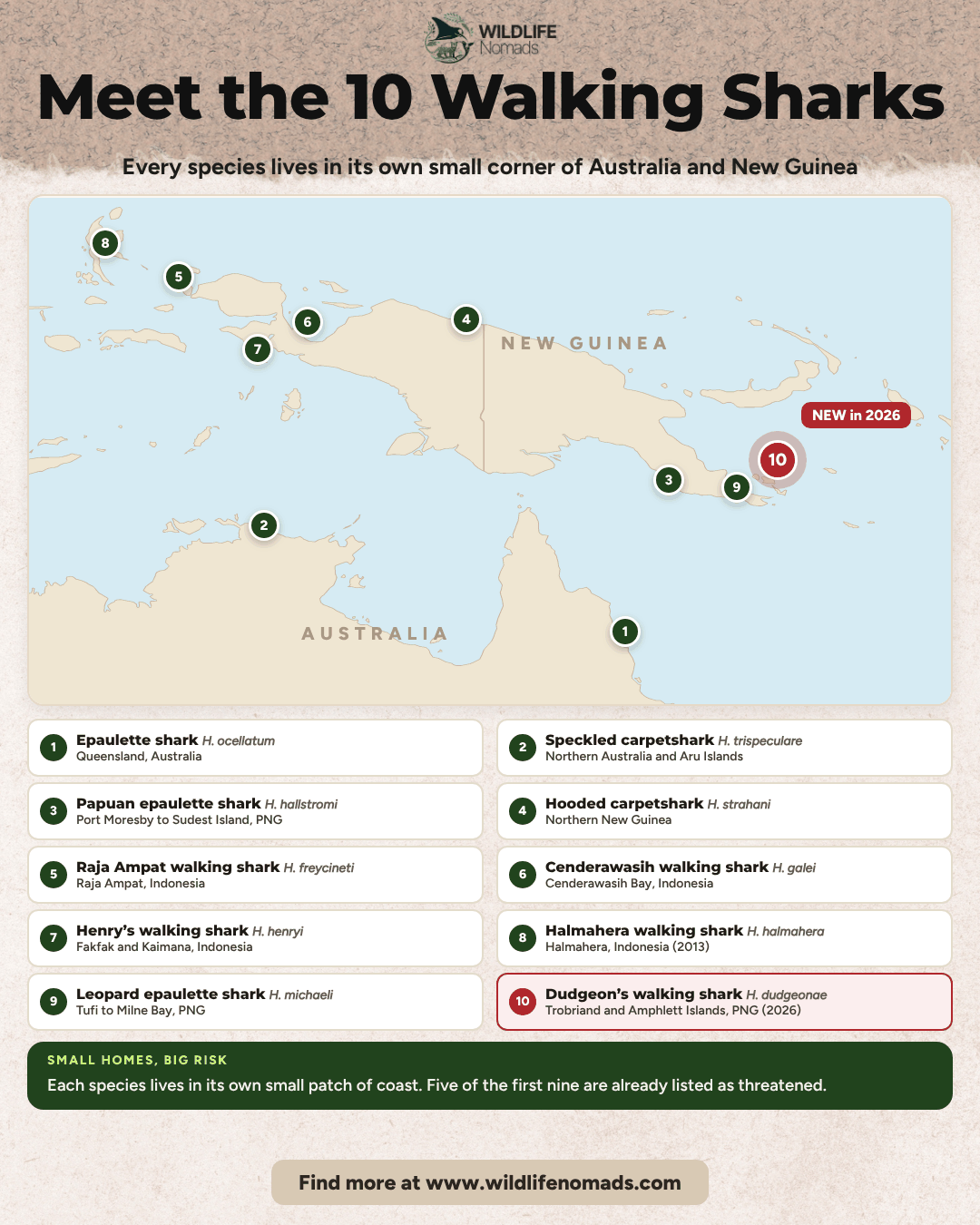
Meet Dudgeon’s walking shark (Hemiscyllium dudgeonae), found in Milne Bay, Papua New Guinea. It may already be at risk.
A Night Dive in Milne Bay
A University of the Sunshine Coast team was surveying walking sharks in Milne Bay, off southeastern Papua New Guinea. They were counting endangered epaulette sharks after dark.
In March 2025, Dr Christine Dudgeon caught a large walking shark by hand and guided it to the boat. She first thought it was a known local species, the Milne Bay walking shark.
PhD student Jess Blakeway, now the paper’s lead author, saw it first in the boat’s lights. Its pattern looked different, with spots and dashes she said reminded her of braille or morse code.
Genetic tests back in Australia confirmed it. The species was published in the Journal of the Ocean Science Foundation on 15 June 2026.
How Do Sharks Walk?
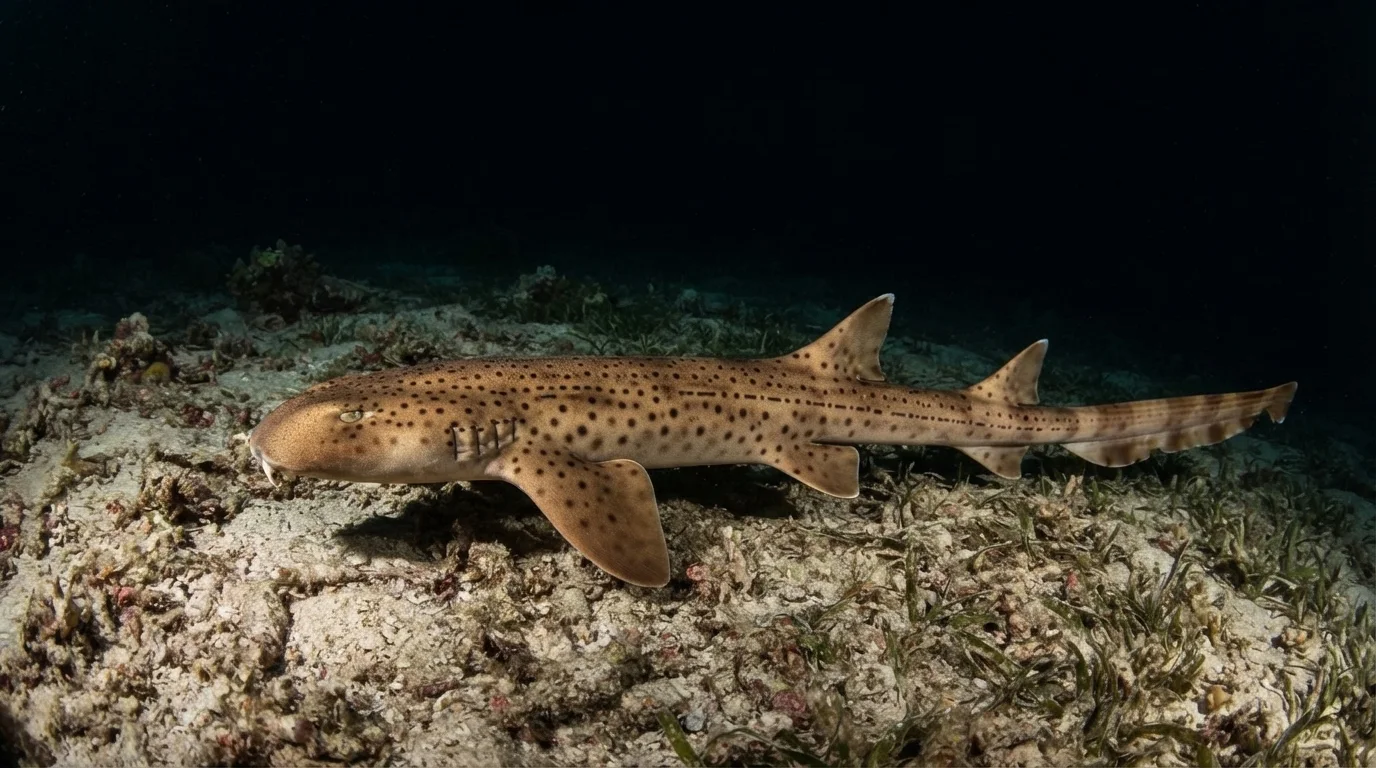
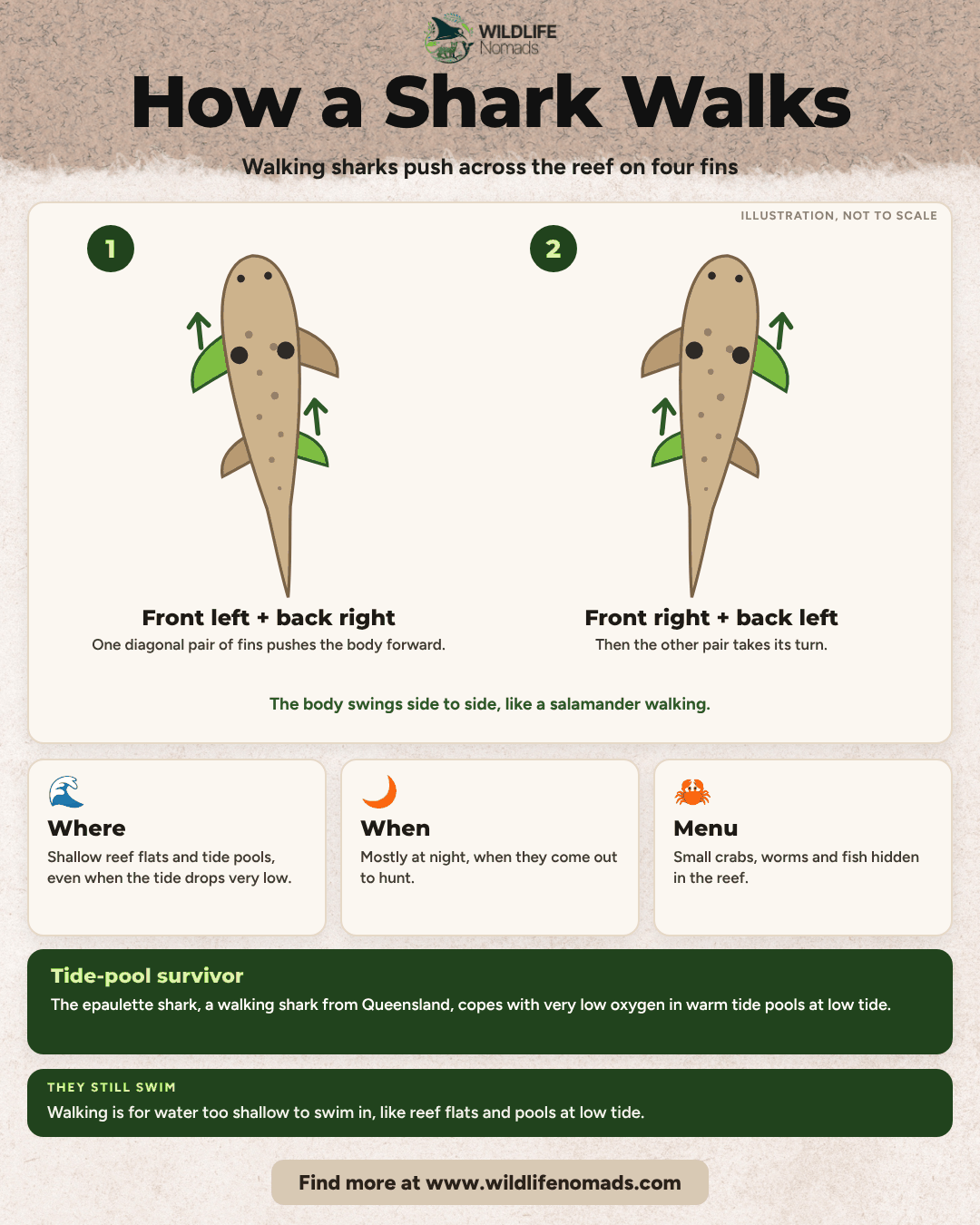
Walking sharks, genus Hemiscyllium, live on shallow reefs around northern Australia and New Guinea. They use strong pectoral and pelvic fins to push across the seafloor.
This lets them hunt in tide pools and shallow reef flats, even when the water drops very low. They feed at night on small crabs, worms and fish.
They belong to the carpet sharks, the same order as wobbegongs and zebra sharks. I’ve dived with both off Australia, but I’ve never seen a walking shark. That’s now high on my list.
A Name and a Warning
Locals call it kadedekedewa, which loosely means “dog shark” or “lazy shark”. Dudgeon joked that it’s definitely the first species named after her.
The serious part is its range. Like other walking sharks, it seems to live in a very small area. Species with tiny ranges can disappear fast if fishing or habitat loss hits that one spot.
The team suspects it is at risk of extinction. Formal assessment will need more surveys, but the warning came with the discovery.
Why New Species Still Matter
Each new species is a reminder of how much we still don’t know, even about sharks. Learn more about the sharks of Australia, many of them close relatives of this new find.
FAQs About Dudgeon’s Walking Shark
It is a new species of walking shark, Hemiscyllium dudgeonae, described in 2026 from Milne Bay, Papua New Guinea. The largest measured so far was 78 cm.
Walking sharks use their strong fins like legs to move across shallow reefs and tide pools. They still swim too.
No. Walking sharks are small, shy and nocturnal. They feed on small crabs, worms and fish, not people.
Small Shark, Big Discovery
A small shark with a morse-code pattern, walking across reefs at night. Science only met it in 2025. Let’s hope we keep it around long enough to really get to know it.
References:
Blakeway, J., Dudgeon, C. L., Erdmann, M. V., et al. (2026). A review of walking shark (Hemiscylliidae: Hemiscyllium) distributions in Papua New Guinea and description of a new species. Journal of the Ocean Science Foundation, 46, 71–110. Zenodo
University of the Sunshine Coast. (2026). New walking shark species named after UniSC researcher. EurekAlert!