
Mass extinction time machine: live through the Big Five
Travel back to each mass extinction in Earth’s history. Explore the world before it hits, bet on which species survive, then live through the ice, the volcanoes and the asteroid impact.
By Cesar Medina, conservation biologist · 5 crises to survive
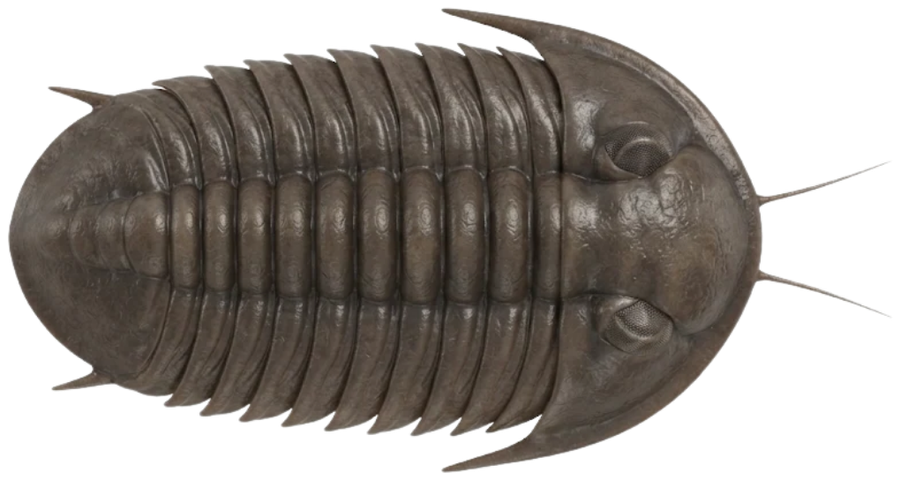 443 million
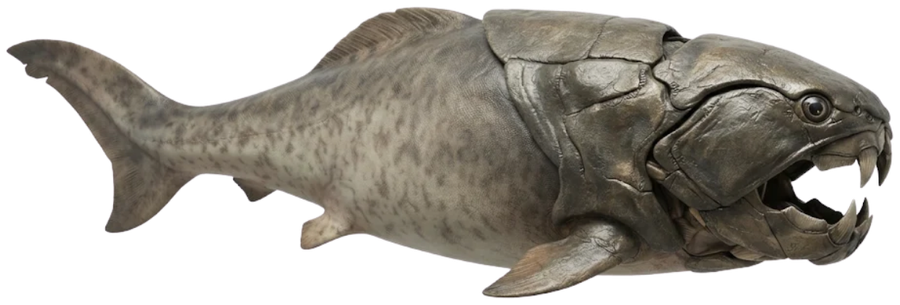 372 million
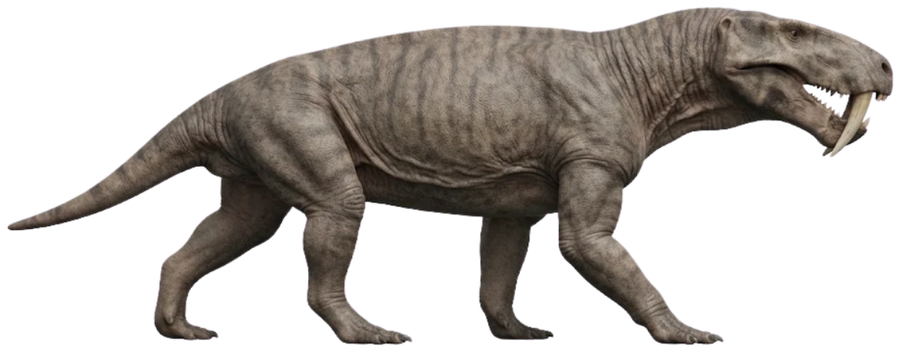 252 million
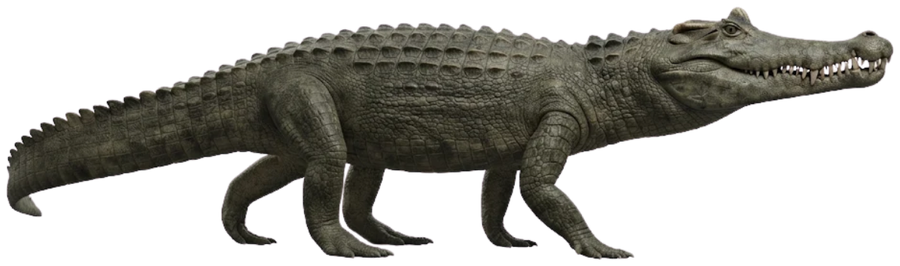 201 million
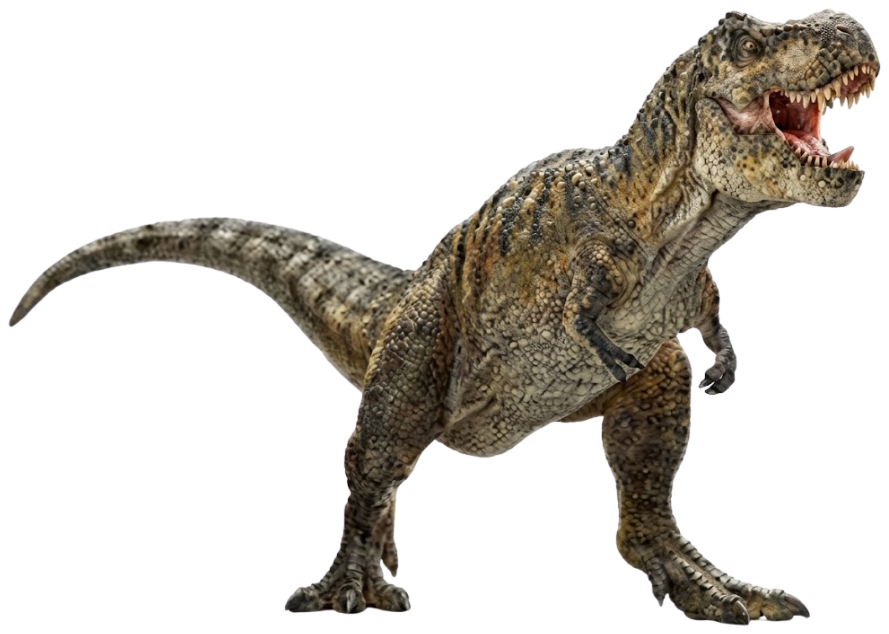 66 million
What is a mass extinction?
A mass extinction is a geologically short time when Earth loses about three quarters or more of its species. The fossil record shows five of these events in Earth’s history, known as the Big Five.
Extinctions happen all the time at a low, steady rate. Scientists call this background extinction. A mass extinction event is different. Many unrelated groups vanish at once, on land and in the sea.
I grew up in Mexico, the country where the dinosaurs’ asteroid landed. I have dived with whale sharks off Holbox, at the tip of the Yucatán Peninsula. The crater lies buried under that same peninsula. For this game, I wanted you to feel each crisis in first person. Try the time machine above, then read on.
The Big Five mass extinctions
Each crisis had its own trigger. Ice, volcanoes, low-oxygen oceans and one giant asteroid all played a part.
| Event | Million years ago | Species lost | Main cause | Who vanished | Who made it through |
|---|---|---|---|---|---|
| End-Ordovician | 443 | 86% | Glaciation and falling sea levels, then low-oxygen seas | Many trilobite, brachiopod and graptolite species | Most big groups, with a few species each |
| Late Devonian | 372 to 359 | 75% | Low-oxygen oceans, possibly linked to nutrient runoff from new forests | Armoured placoderm fish, sponge reefs | Lobe-finned fish, early tetrapods |
| End-Permian (Great Dying) | 251.9 | 96% | Siberian Traps eruptions, warming, acidic and low-oxygen oceans | Trilobites, gorgonopsians, pareiasaurs, Glossopteris forests | Lystrosaurus, a few ammonoids |
| End-Triassic | 201.4 | 80% | Central Atlantic eruptions and carbon dioxide release | Phytosaurs, big crocodile-line predators | Dinosaurs, early mammal relatives |
| End-Cretaceous | 66 | 76% | Chicxulub asteroid impact, then an impact winter | Non-avian dinosaurs, ammonites, mosasaurs | Birds, small mammals, crocodilians, turtles |
Species losses are estimates from the US National Park Service. Researchers still debate some causes, especially for the Late Devonian. Want to see where each event sits in time? Ride the geologic time scale elevator.
What causes a mass extinction?
Most mass extinctions came from rapid changes to climate and ocean chemistry. Only one has a confirmed asteroid impact.
Huge lava eruptions released carbon dioxide and other gases. The planet warmed, and the oceans turned acidic and lost oxygen.
At the end of the Ordovician, ice sheets locked up water. Sea levels fell and shallow tropical seas drained away.
At the end of the Cretaceous Period, an asteroid struck Mexico. Fires, darkness and an impact winter followed.
The Great Dying shows how deadly greenhouse gases can be. The Siberian Traps erupted lava over a vast area. The warming, acidic and oxygen-poor oceans then wiped out most marine species.
How do scientists know an asteroid killed the dinosaurs?
Researchers read the answer in the rocks. In 1980, Luis Alvarez and his colleagues found iridium in a thin clay layer at the Cretaceous–Paleogene boundary. Iridium is rare in Earth’s crust but common in asteroids.
Then came the crater. In 1991, scientists identified the buried Chicxulub crater on the Yucatán Peninsula. It is about 180 kilometres wide. The impactor was an asteroid about 10 to 15 kilometres across.
Fossil evidence fits the same story. Non-avian dinosaurs, ammonites and mosasaurs disappear at the boundary layer. Just above it, fern spores spike. Ferns were among the first plants to return to the burnt land.
Who survives a mass extinction?
Survival is partly luck. Some traits still gave animals better odds.
- Small body size. Small animals need less food and breed faster. Rat-sized mammals came through the asteroid impact.
- A flexible diet. Omnivores, insect-eaters and scavengers survived the end-Cretaceous better than specialists.
- Shelter. Burrowing, or living in fresh water or the deep sea, may have helped some animals ride out the worst.
Survivors inherit the planet. After the end-Triassic, dinosaurs rose to dominance. After the end-Cretaceous, mammals filled the empty niches. That is why the game asks you to bet on survivors before each crisis.
Are we living through a sixth mass extinction?
Many scientists warn that we could be. The IPBES Global Assessment found that around 1 million animal and plant species are now threatened with extinction. Human actions have severely altered about 75% of Earth’s land environment.
Today’s extinction rates are tens to hundreds of times higher than the average over the past 10 million years. Losses have not reached the scale of the Big Five. That means there is still time to act.
The main drivers today are changes in land and sea use, hunting and fishing, climate change, pollution and invasive species. Explore the threatened species in my endangered animals explorer.
Explore more interactive labs
Mass extinction FAQ
A mass extinction is a geologically short time when Earth loses about three quarters or more of its species. Many unrelated groups vanish at once, on land and in the sea.
The Big Five are the end-Ordovician (443 million years ago), Late Devonian (372 to 359), end-Permian (251.9), end-Triassic (201.4) and end-Cretaceous (66).
The end-Permian extinction, also called the Great Dying, was the worst. About 96% of species vanished, including the last trilobites.
An asteroid about 10 to 15 kilometres wide hit what is now Mexico’s Yucatán Peninsula 66 million years ago. It left the Chicxulub crater and caused fires and an impact winter.
Birds, small mammals, crocodilians, turtles, frogs and many fish survived. Most surviving mammals were about the size of rats.
Researchers study fossil evidence in rock layers. Many species disappear at the same layer. Clues like iridium, ash and changes in carbon reveal the causes.
Many scientists warn that we could be heading into one. Around 1 million species are threatened with extinction, but losses have not yet reached the scale of the Big Five.
References
Alvarez, L. W., Alvarez, W., Asaro, F., & Michel, H. V. (1980). Extraterrestrial cause for the Cretaceous-Tertiary extinction. Science, 208(4448), 1095–1108. https://doi.org/10.1126/science.208.4448.1095
Barnosky, A. D., Matzke, N., Tomiya, S., et al. (2011). Has the Earth’s sixth mass extinction already arrived? Nature, 471(7336), 51–57. https://doi.org/10.1038/nature09678
Blackburn, T. J., Olsen, P. E., Bowring, S. A., et al. (2013). Zircon U-Pb geochronology links the end-Triassic extinction with the Central Atlantic Magmatic Province. Science, 340(6135), 941–945. https://doi.org/10.1126/science.1234204
Burgess, S. D., & Bowring, S. A. (2015). High-precision geochronology confirms voluminous magmatism before, during, and after Earth’s most severe extinction. Science Advances, 1(7), e1500470. https://doi.org/10.1126/sciadv.1500470
Hildebrand, A. R., Penfield, G. T., Kring, D. A., et al. (1991). Chicxulub crater: A possible Cretaceous/Tertiary boundary impact crater on the Yucatán Peninsula, Mexico. Geology, 19(9), 867–871. https://doi.org/10.1130/0091-7613(1991)019%3C0867:CCAPCT%3E2.3.CO;2
IPBES. (2019). Nature’s dangerous decline ‘unprecedented’; species extinction rates ‘accelerating’ [Media release]. https://www.ipbes.net/news/Media-Release-Global-Assessment
National Park Service. (n.d.). Mass extinctions through geologic time. https://home.nps.gov/subjects/fossils/mass-extinctions-through-geologic-time.htm
Natural History Museum. (n.d.). What is mass extinction and are we facing a sixth one? https://www.nhm.ac.uk/discover/what-is-mass-extinction-and-are-we-facing-a-sixth-one
Schulte, P., Alegret, L., Arenillas, I., et al. (2010). The Chicxulub asteroid impact and mass extinction at the Cretaceous-Paleogene boundary. Science, 327(5970), 1214–1218. https://doi.org/10.1126/science.1177265
Vajda, V., Raine, J. I., & Hollis, C. J. (2001). Indication of global deforestation at the Cretaceous-Tertiary boundary by New Zealand fern spike. Science, 294(5547), 1700–1702. https://doi.org/10.1126/science.1064706
Wilson Mantilla, G. P., Chester, S. G. B., Clemens, W. A., et al. (2021). Earliest Palaeocene purgatoriids and the initial radiation of stem primates. Royal Society Open Science, 8(2), 210050. https://doi.org/10.1098/rsos.210050



