
Interactive lab · Ecology
Biomagnification: watch toxins climb the food chain
Spray DDT on a marsh and follow it from plankton to fish-eating birds. Then rescue the bald eagle, build a mercury-safe fish plate and track PCBs into killer whales.
By Cesar Medina, conservation biologist · 6 interactive stops
What is biomagnification?
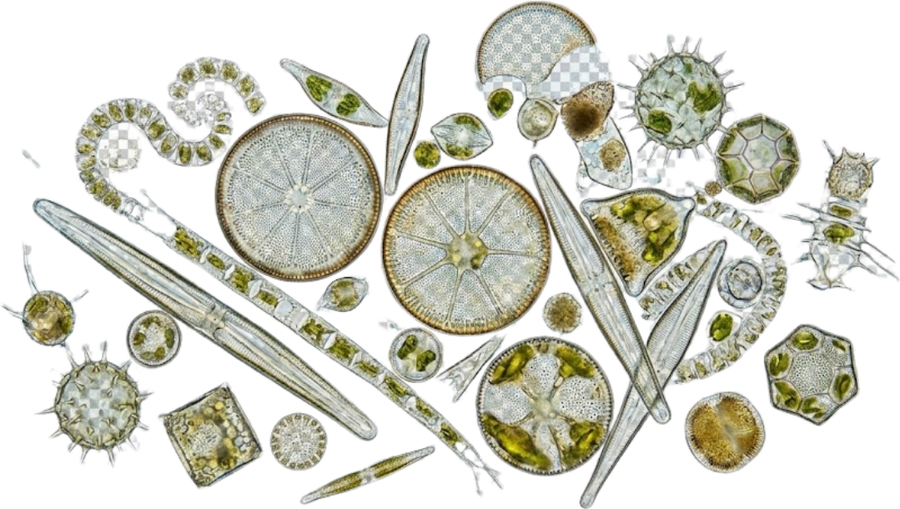
Biomagnification is the rise in a pollutant’s concentration at each step up a food chain. Predators eat many contaminated prey, so they store more of the chemical than anything they eat. The top predators end up with the highest levels.
Scientists also call it biological magnification. It only happens with certain chemicals. They must resist breaking down, dissolve in fat and leave the body slowly. DDT, PCBs and methylmercury fit all three rules.
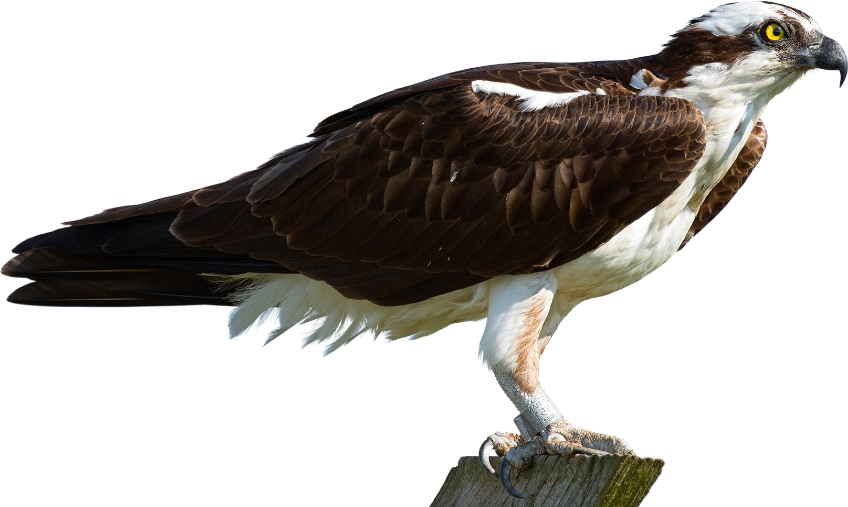
I have watched ospreys and white-bellied sea eagles over the water at Burleigh Heads. Seeing them hunt reminds me how close fish-eating birds sit to the top of the chain. Try the Biomagnification Lab above, then read on for the science.
Bioaccumulation vs biomagnification
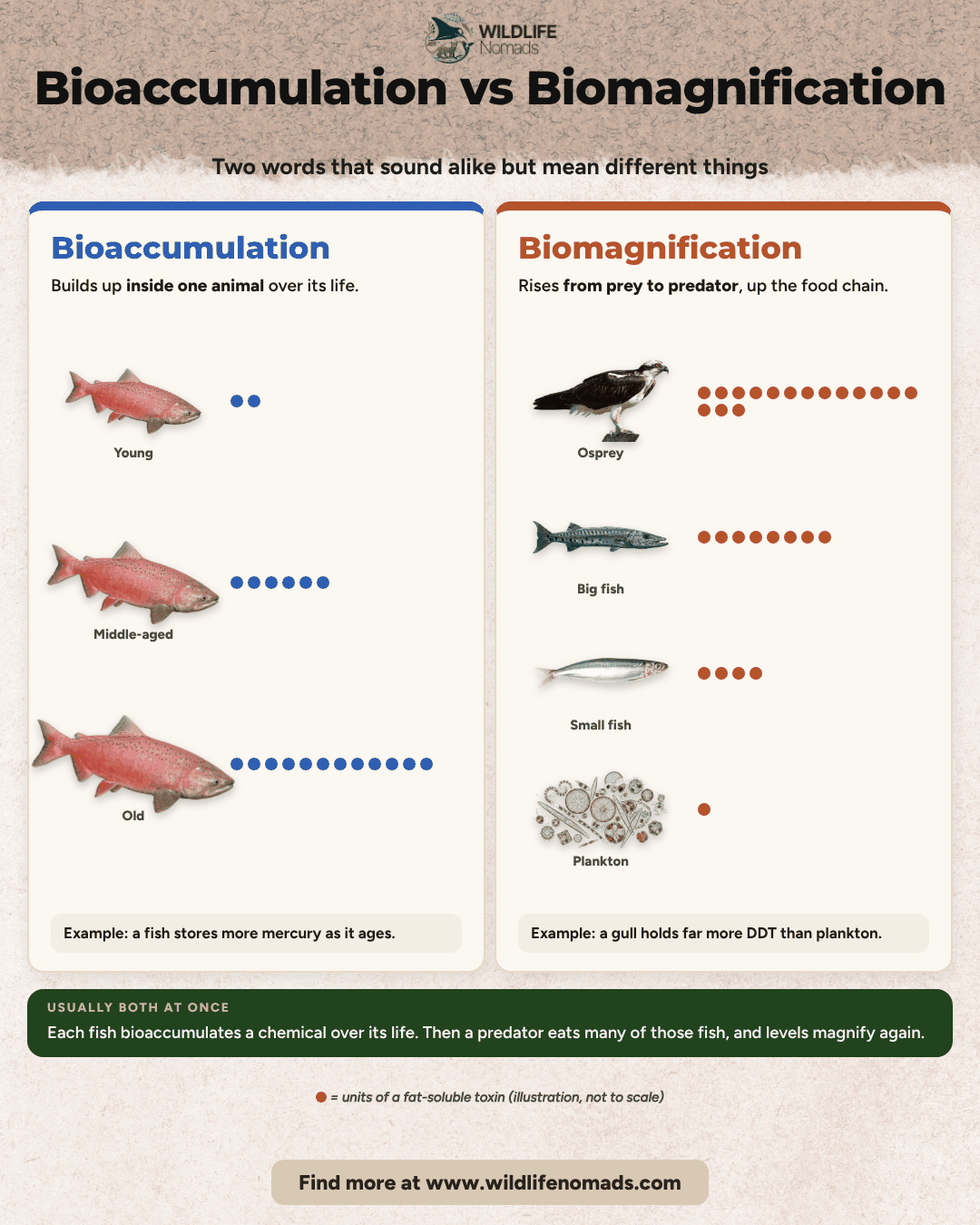
These two terms sound alike, but they describe different things. Bioaccumulation happens inside one living organism over time. Biomagnification happens between organisms, from prey to predator.
| Term | What it means | Example |
|---|---|---|
| Bioaccumulation | An organism takes in a chemical faster than it gets rid of it | A fish stores more mercury as it ages |
| Biomagnification | Concentrations rise at each higher trophic level | A gull holds far more DDT than the plankton at the base |
| Trophic dilution | Concentrations fall at each higher trophic level | A chemical that predators break down or excrete |
Persistent pollutants usually do both. Each fish bioaccumulates the chemical over its life. Then a predator eats many of those fish, and the levels magnify again.
How biomagnification works
Energy moves up a food chain through trophic levels. Primary producers sit at the base. Grazers eat them, and predators eat the grazers. Only part of the energy passes up each step, so a predator must eat a lot of prey.
The chemical resists degradation. It lasts for years in water, soil and living tissue.
It dissolves in fat, not water. Animals store it in their fatty tissues and internal organs.
The body metabolises it slowly. It stays put instead of leaving in urine.
Water-soluble chemicals behave differently. Animals excrete them quickly, so they never build up. Flip between DDT and a water-soluble chemical in Stop 1 of the lab to compare.
Measuring it: BMF and TMF
Scientists measure biomagnification with two numbers. A biomagnification factor (BMF) compares a predator with its diet. A trophic magnification factor (TMF) uses the slope across a whole food web. A value above 1 means the chemical biomagnifies. A value below 1 means trophic dilution.
Which chemicals biomagnify?
The best-known examples are persistent organic pollutants and one heavy metal compound.
- DDT is an insecticide. Its breakdown product DDE thinned the eggshells of birds of prey.
- PCBs (polychlorinated biphenyls) are industrial chemicals once used in electrical equipment. They do not readily break down.
- Methylmercury is a form of mercury that builds up in fish. It is why some large fish carry mercury advice.
The UN Stockholm Convention tackles persistent organic pollutants worldwide. In 2004, more than 90 countries committed to phase out PCBs through it.
The DDT story: from estuary to eagle
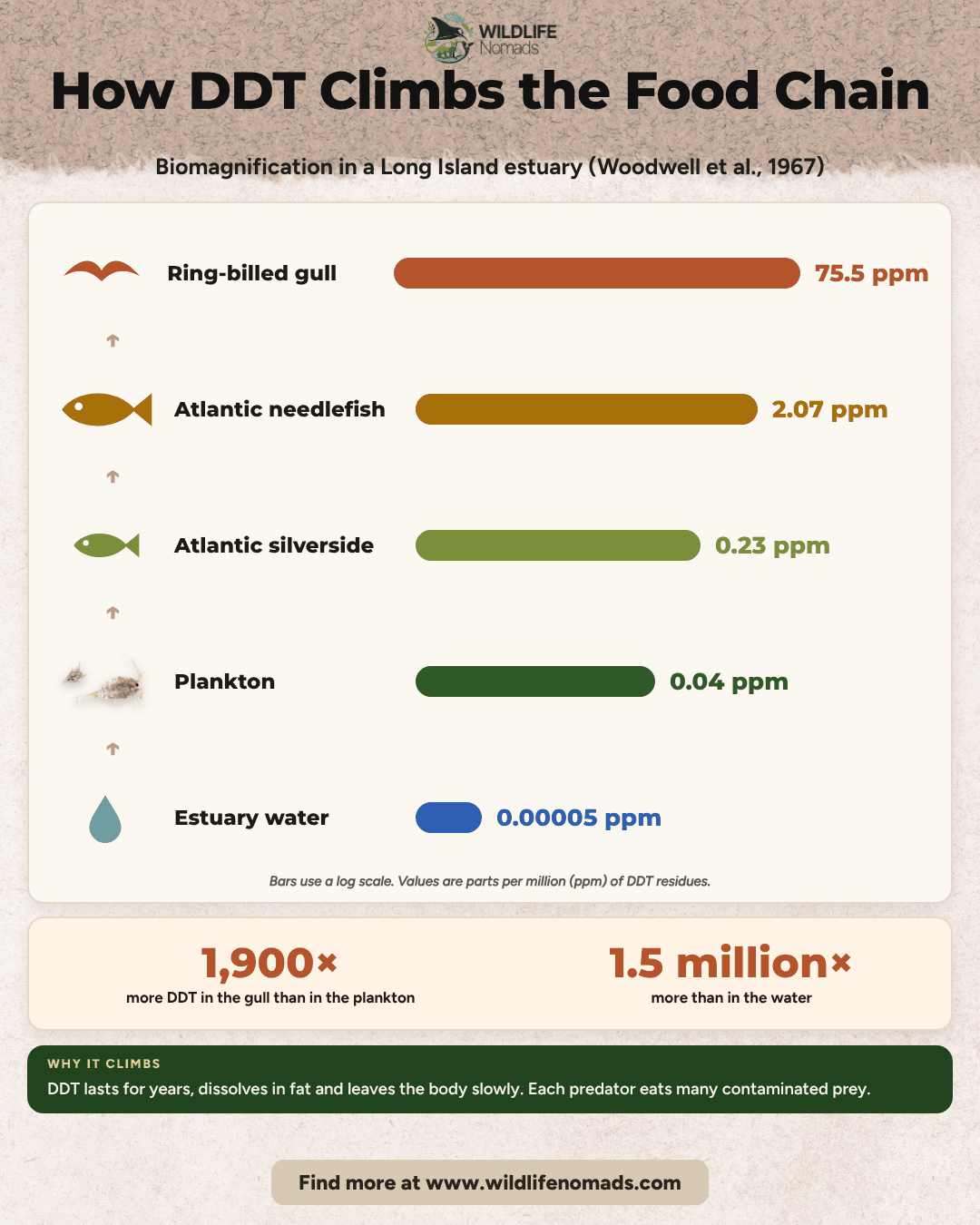
In 1967, George Woodwell and his colleagues measured DDT in a Long Island estuary. Plankton held 0.04 parts per million (ppm). Small fish held around 0.2 ppm, and a needlefish held 2.07 ppm. An immature ring-billed gull held 75.5 ppm (Woodwell et al., 1967).
That gull carried almost 1,900 times more DDT than the plankton. Compared with the estimated level in the water, it carried about 1.5 million times more.
Thin eggshells, empty nests
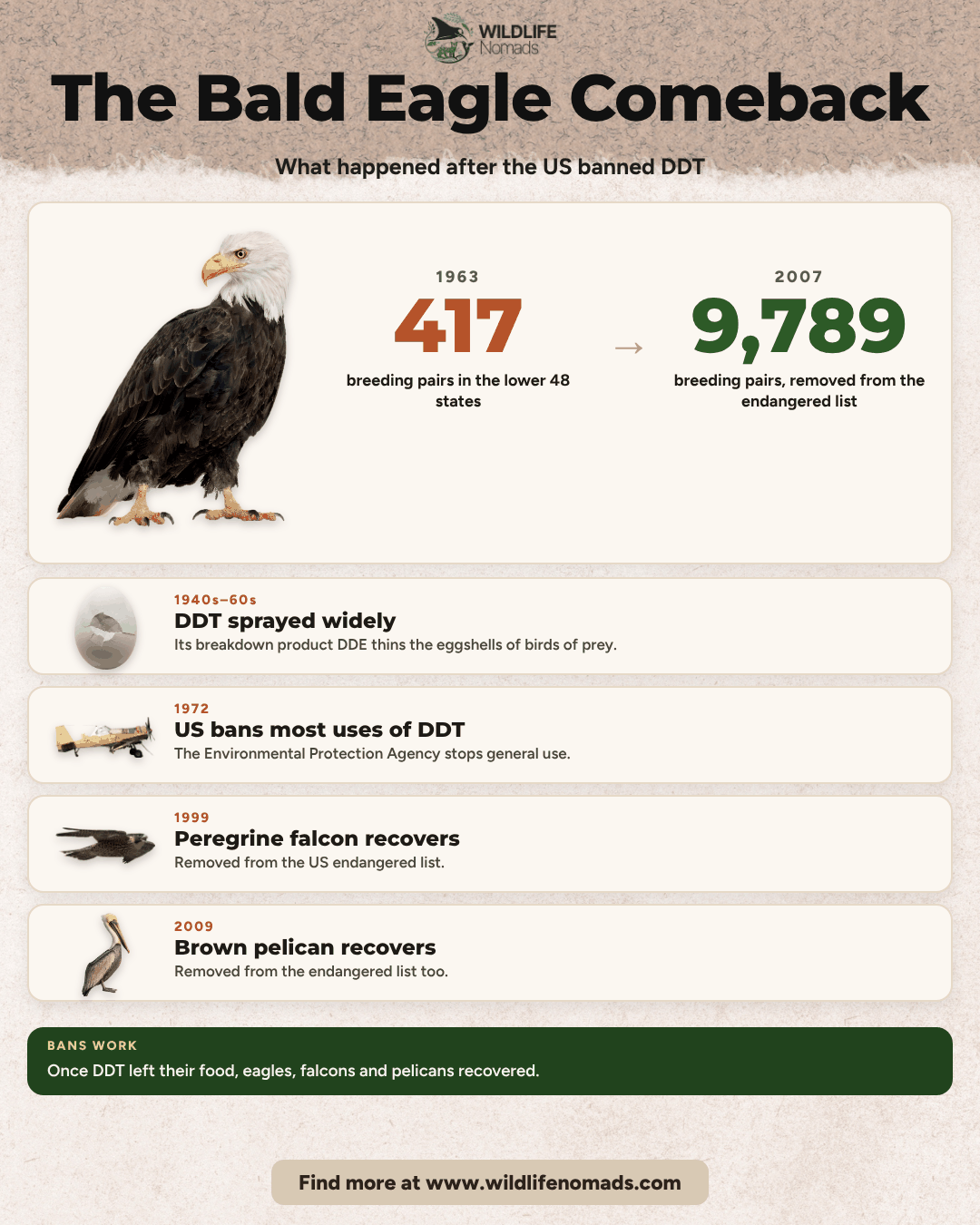
DDT’s main harm to birds of prey was not killing adults. DDE, a breakdown product, thinned their eggshells (US EPA). The eggs failed, and populations crashed. Bald eagles fell to 417 breeding pairs in the lower 48 states in 1963.
The ban and the comeback
The US Environmental Protection Agency banned most uses of DDT in 1972. Birds of prey slowly recovered. The peregrine falcon left the endangered list in 1999, and the bald eagle followed in 2007. By then, eagles had grown to 9,789 breeding pairs. The brown pelican came off the list in 2009.
Mercury in fish and what it means for you
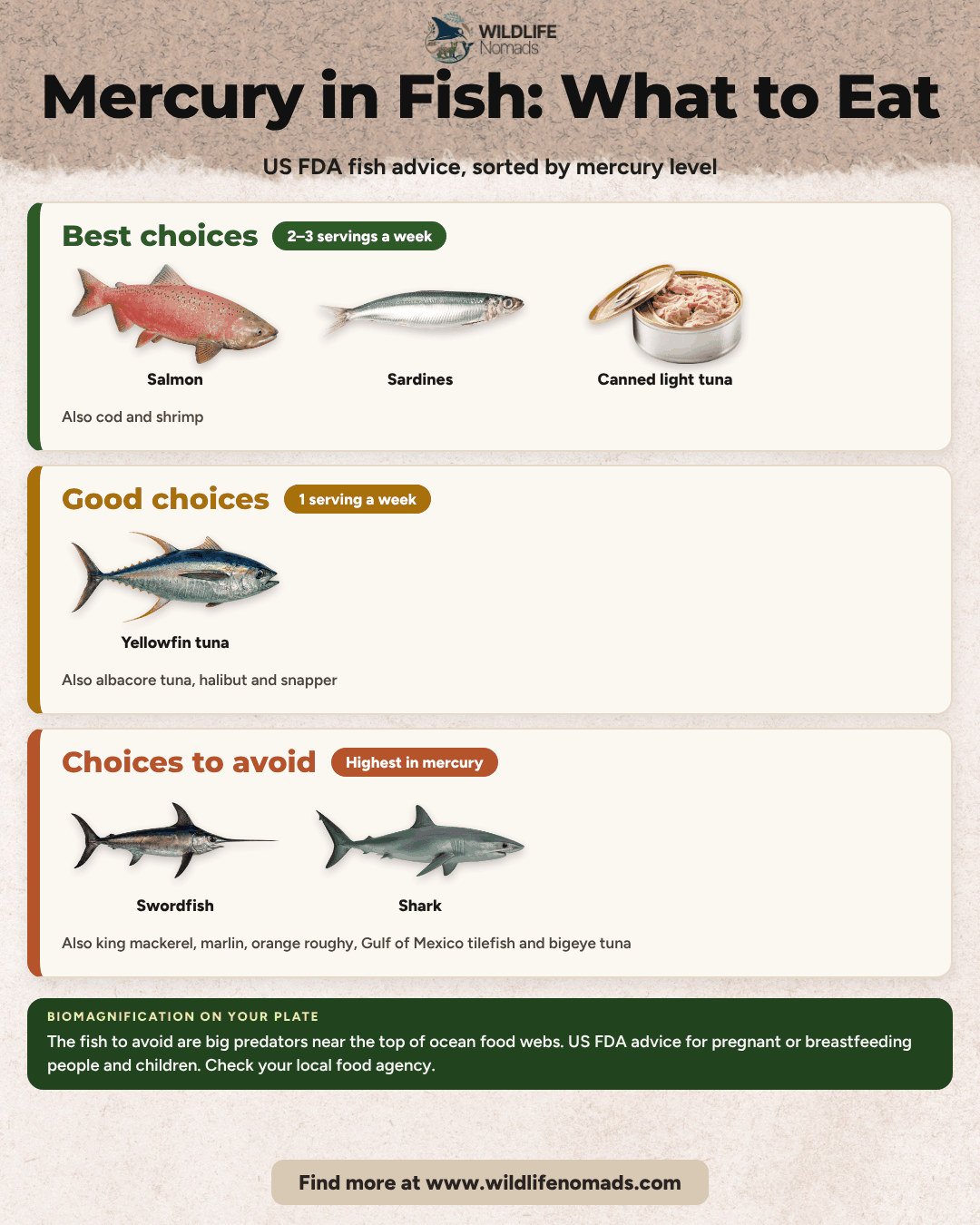
Mercury builds up in fish too. The US FDA and EPA sort fish into best choices, good choices and choices to avoid. Their advice is for people who are or might become pregnant, people who are breastfeeding, and children.
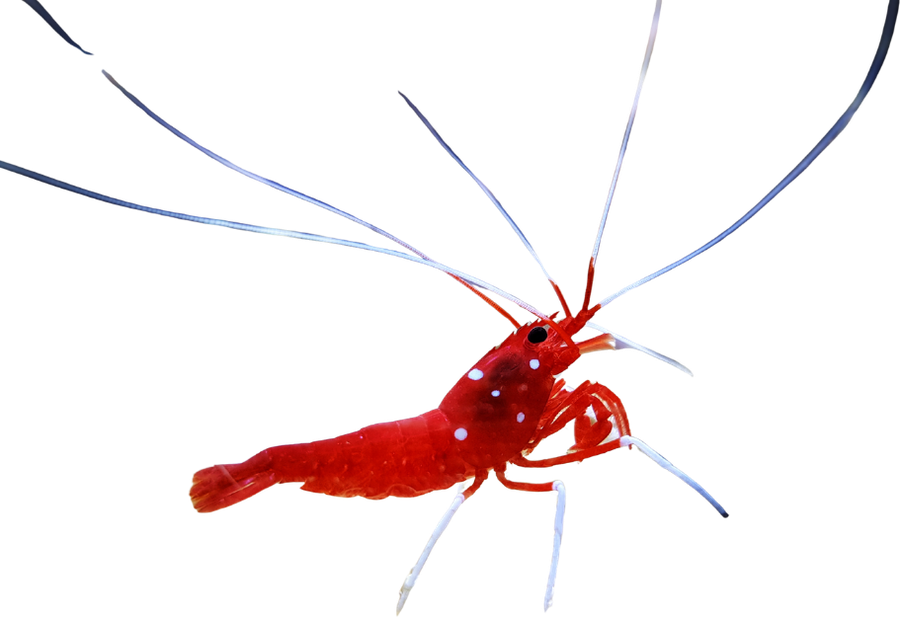
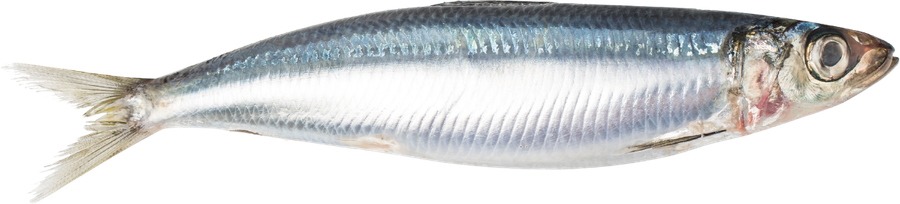
Salmon, sardines, shrimp, cod and canned light tuna. Pregnant or breastfeeding people can eat 2 to 3 servings a week.
Yellowfin tuna, albacore tuna, halibut and snapper. The advice is 1 serving a week.
King mackerel, marlin, orange roughy, shark, swordfish, Gulf of Mexico tilefish and bigeye tuna.
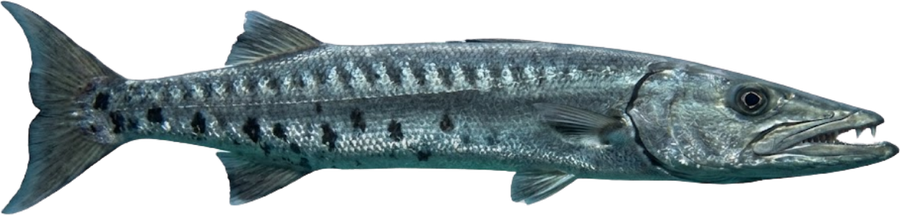
Look at the avoid list. Shark, swordfish and marlin are large predators near the top of ocean food webs. That is biomagnification on your plate. Still, the FDA recommends fish during pregnancy, because it can help a baby’s cognitive development. Advice differs between countries, so check your local food agency.
PCBs and killer whales
The US banned PCB manufacture in 1979, yet PCBs still linger in the ocean. A 2018 study looked at PCBs in killer whales (Desforges et al., 2018). It predicted PCBs threaten more than half of the world’s populations. Orcas near industrial regions, and those feeding high in the food web, face the highest risk.
The worst levels turned up off Brazil, around the UK, in the Strait of Gibraltar and the northeast Pacific (ZSL, 2018). Mothers also pass PCBs to their calves through fat-rich milk. By the 1960s, scientists could even detect PCB traces in Arctic animals.
Not all poisoning is biomagnification
Since the early 1990s, three South Asian vulture species have dropped by over 95%. The cause was diclofenac, a painkiller given to livestock. Vultures fed on treated carcasses and died of kidney failure (Oaks et al., 2004).
This was secondary poisoning, not biomagnification. The drug jumped one step, from carcass to vulture. It did not build up through a long food chain.
Why biomagnification matters
Apex predators pay the highest price. High toxin levels can cause reproductive failure and push species into decline. Humans eat high on the food chain too, so the same chemicals can reach our plates.
The good news is that bans work. Eagles, falcons and pelicans recovered once DDT disappeared from their food. Explore how energy flows through these chains in the Food Web Game.
Keep exploring
Free mini guide
Take biomagnification with you
All four infographics in one printable PDF: how DDT climbs the food chain, bioaccumulation vs biomagnification, the bald eagle comeback and mercury in fish, plus a quick quiz.
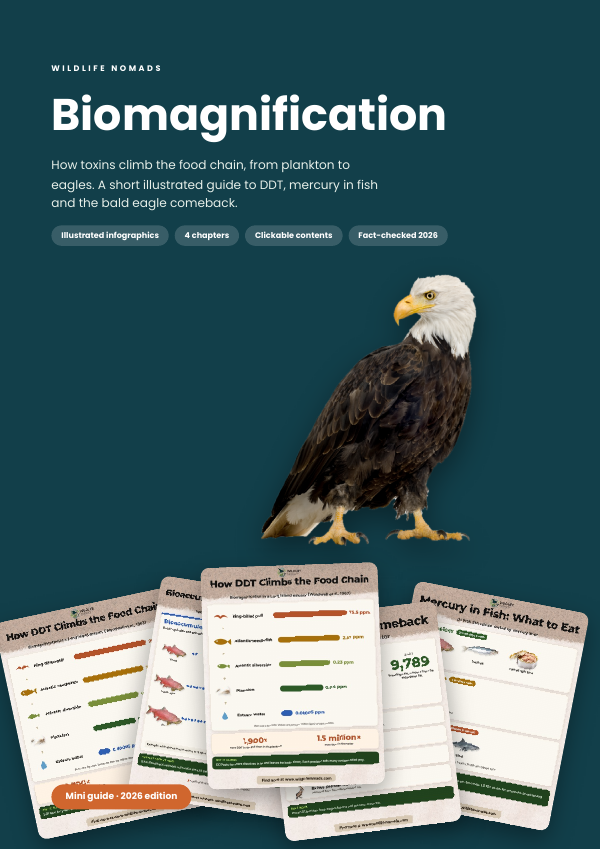 Free PDF · 14 pagesBiomagnification Mini GuideDDT, eagles, mercury and food chains, ready to print for home or class.Download free →
Biomagnification FAQ
Biomagnification is the increase in a pollutant’s concentration at each higher level of a food chain. Predators eat many contaminated prey and store the chemical, so top predators carry the highest levels.
Bioaccumulation happens inside one organism, which takes in a chemical faster than it removes it. Biomagnification happens between trophic levels, as predators eat prey and concentrations rise up the food chain.
Persistent, fat-soluble chemicals that the body removes slowly biomagnify. The best-known examples are DDT, PCBs (polychlorinated biphenyls) and methylmercury.
DDE, a breakdown product of DDT, thinned eagle eggshells, so many eggs failed. Bald eagles fell to 417 breeding pairs in the lower 48 states in 1963. After the 1972 US ban, they recovered to 9,789 pairs by 2007.
The FDA lists king mackerel, marlin, orange roughy, shark, swordfish, Gulf of Mexico tilefish and bigeye tuna as choices to avoid. Many are large predators near the top of ocean food webs.
Trophic dilution is the opposite of biomagnification. A chemical’s concentration falls at each higher trophic level, usually because predators break it down or excrete it.
Apex predators eat many animals that already carry the chemical. Fat-soluble pollutants stay stored in their bodies, so the amounts add up at every step of the food chain.
References
Desforges, J.-P., Hall, A., McConnell, B., et al. (2018). Predicting global killer whale population collapse from PCB pollution. Science, 361(6409), 1373–1376. https://doi.org/10.1126/science.aat1953
NPR. (2007, June 28). Bald eagle leaves endangered species list. https://www.npr.org/2007/06/28/11504430/bald-eagle-leaves-endangered-species-list
Oaks, J. L., Gilbert, M., Virani, M. Z., et al. (2004). Diclofenac residues as the cause of vulture population decline in Pakistan. Nature, 427(6975), 630–633. https://doi.org/10.1038/nature02317
U.S. Department of the Interior. (2009, November 11). Brown pelican removed from endangered species list. https://www.doi.gov/node/15053
U.S. Environmental Protection Agency. (n.d.). The case of DDT: Revisiting the impairment. CADDIS. https://www.epa.gov/caddis-vol1/case-ddt-revisiting-impairment
U.S. Environmental Protection Agency. (n.d.). Learn about polychlorinated biphenyls (PCBs). https://www.epa.gov/pcbs/learn-about-polychlorinated-biphenyls-pcbs
U.S. Food and Drug Administration. (2021). Advice about eating fish. https://www.fda.gov/food/consumers/advice-about-eating-fish
Woodwell, G. M., Wurster, C. F., & Isaacson, P. A. (1967). DDT residues in an east coast estuary: A case of biological concentration of a persistent insecticide. Science, 156(3776), 821–824. https://doi.org/10.1126/science.156.3776.821
Zoological Society of London. (2018). PCB pollution threatens to wipe out killer whales. https://www.zsl.org/science/news/pcb-pollution-threatens-to-wipe-out-killer-whales



