A guest post by Iamania Vergara, marine biologist and coral reef researcher.
We have all heard that coral reefs matter. But reefs are complex, delicate ecosystems, and many things must go right for them to work. In this post, I want to share an experiment from my master’s research. It asked a simple question: does the way corals are arranged change how fish use them?
Corals Are the Buildings of the Reef
Every ecosystem is built by foundation species. On land, those are trees. In the ocean, they are corals and kelp.
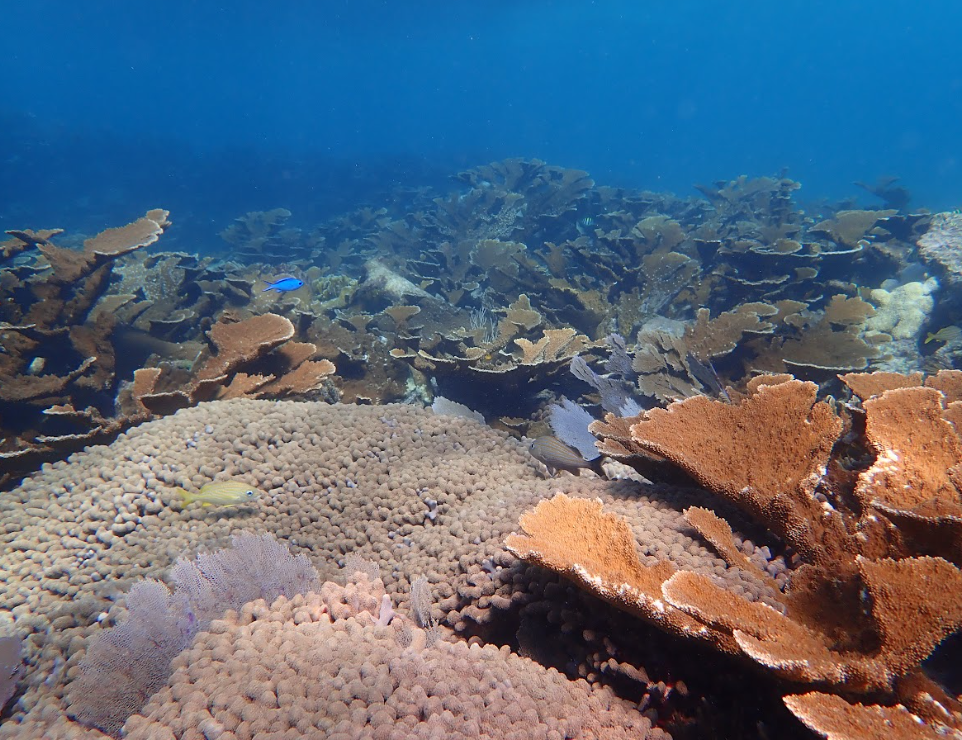
The corals that build reefs are called scleractinian, or stony, corals. They are sessile, which means they don’t move. Like trees in a forest, they give the reef its structure and three-dimensional shape.
Coral reefs are among the most diverse and productive ecosystems on Earth. Reef-building corals create habitats and tiny microhabitats for countless other organisms, including the fish I love to study.
Think of the corals as buildings in a neighbourhood, and the fish as its residents. Some live there all year. Others rent a room for a while, and some only visit for the summer holidays. How those buildings are arranged affects who lives in the neighbourhood.
When Reefs Break Apart
Naturally or because of human impact, some reefs break into separate patches. Imagine your suburb cut off from a friend’s suburb by a creek. The connection between the two is lost, and so are some of the residents.
Ocean warming and acidification already cause coral bleaching. On top of that, this loss of connectivity can affect whole reef communities.
My passion for fish made me wonder how much the connections between corals really matter to them. I was living in the Mexican Caribbean, where elkhorn coral (Acropora palmata) is one of the most important reef-building species. Elkhorn coral is also listed as Critically Endangered by the IUCN. I wanted to test how much its structure matters, and what that means for protecting and restoring it.
Why Elkhorn Coral?
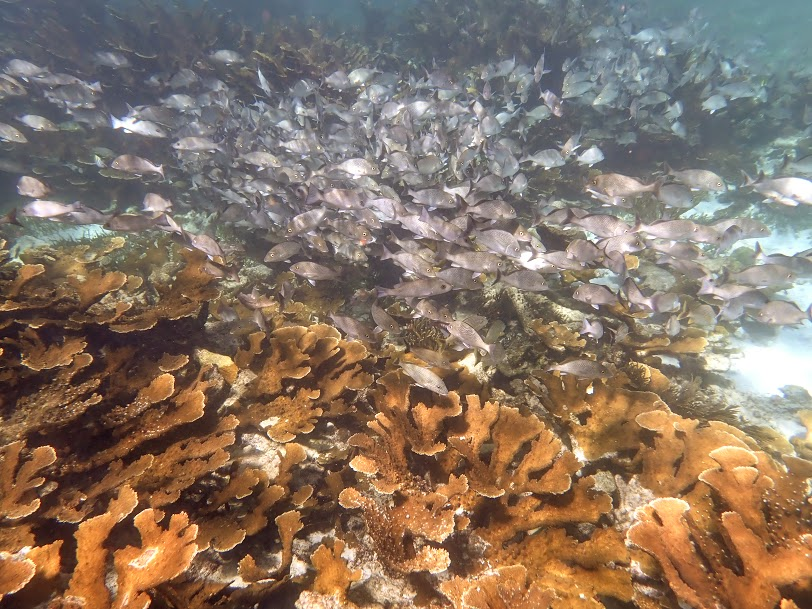
Branching corals like elkhorn have a strong link with fish diversity. Reefs dominated by branching colonies offer more shelter space than reefs built by flat or non-branching corals.
For my master’s thesis, my supervisor and I spent two years exploring one question. How do coral abundance and the structure of a coral patch affect the fish that live there? To find out, we used simplified models of branching coral. We tested them first on a computer and then in the sea.
Step One: Building Virtual Corals
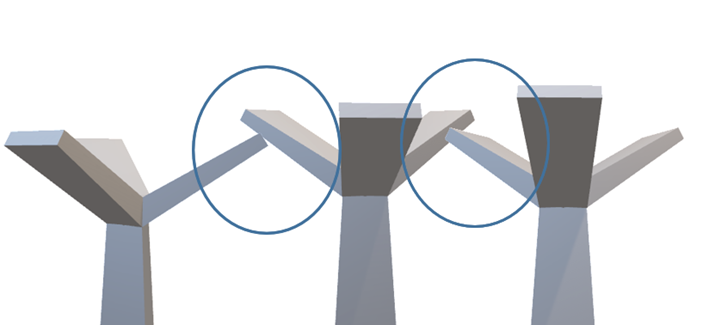
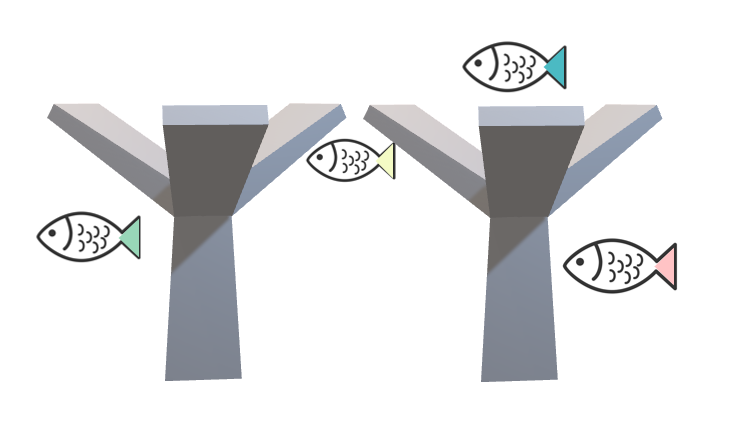
First, we designed a simplified 3D model of an elkhorn colony in AutoCAD. Each model had a triangular base and three branches at right angles. We then placed different numbers of colonies at random inside a virtual 3 × 3 metre grid. In total, we built 13 scenarios, from 3 to 50 colonies.
For each scenario, we counted branch interactions. A branch interaction is where branches from neighbouring colonies overlap.
We also measured the shape of each virtual patch with six metrics:
- Convexity: how colony volume fills its three-dimensional space.
- Packing: how colony surface area fills that space.
- Sphericity: how close the colony’s shape is to a sphere.
- Rugosity: how much surface area the colony has compared with its flat, two-dimensional footprint.
- Fractal dimension: how complex the structure is at small scales.
- Shelter volume: the space between colonies, including gaps formed where branches overlap.
Step Two: Building Real Corals
Next, we built real replicas of the coral model. We cast 48 structures at two heights, 20 and 30 centimetres. Before the experiment, we left them underwater for at least a month at a site about 2 kilometres away. That gave time for a natural film of microbes and algae to grow on them.
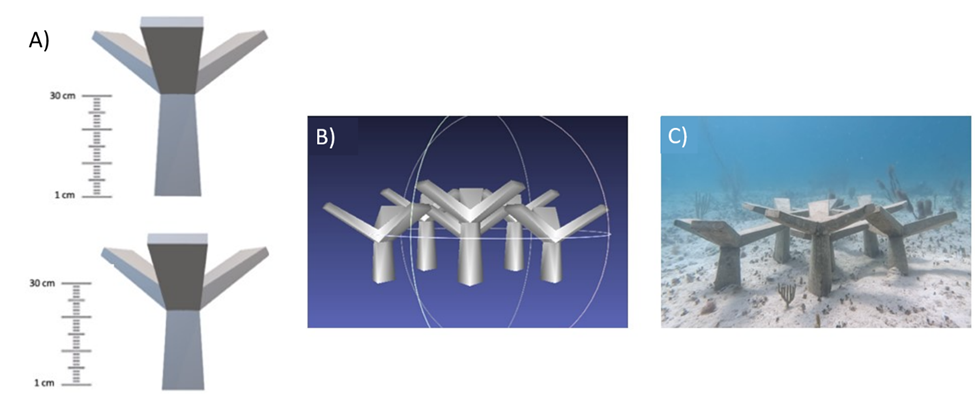
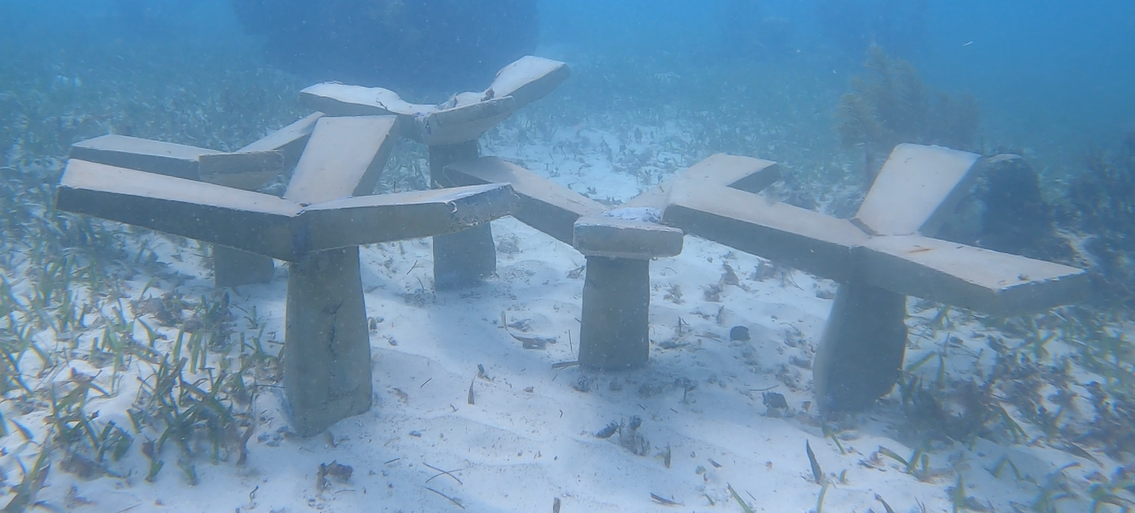
We then set up four arrangements: one, three, five and seven colonies. The single colony was our control, because it has no branch interactions. The other three arrangements were the treatments.
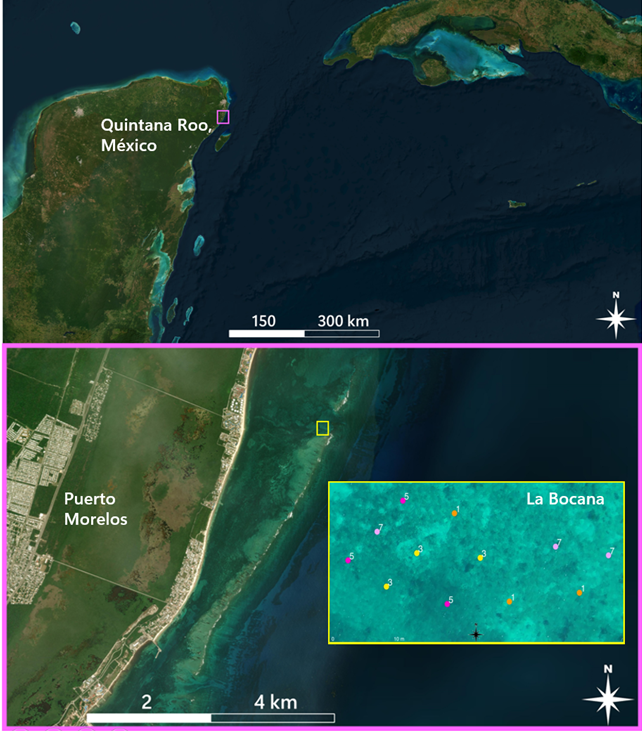
We installed the experiment on 18 and 19 October 2023 at La Bocana, a back-reef site in Puerto Morelos Reef National Park. The site is about 4 metres deep, with limestone, rubble and sand, scattered small coral heads and nearby seagrass. Our structures sat about 150 metres from the reef crest and 1.5 kilometres from shore.
Eight months later, on 3 May 2024, we filmed the fish around each structure with stationary underwater cameras.
What We Found
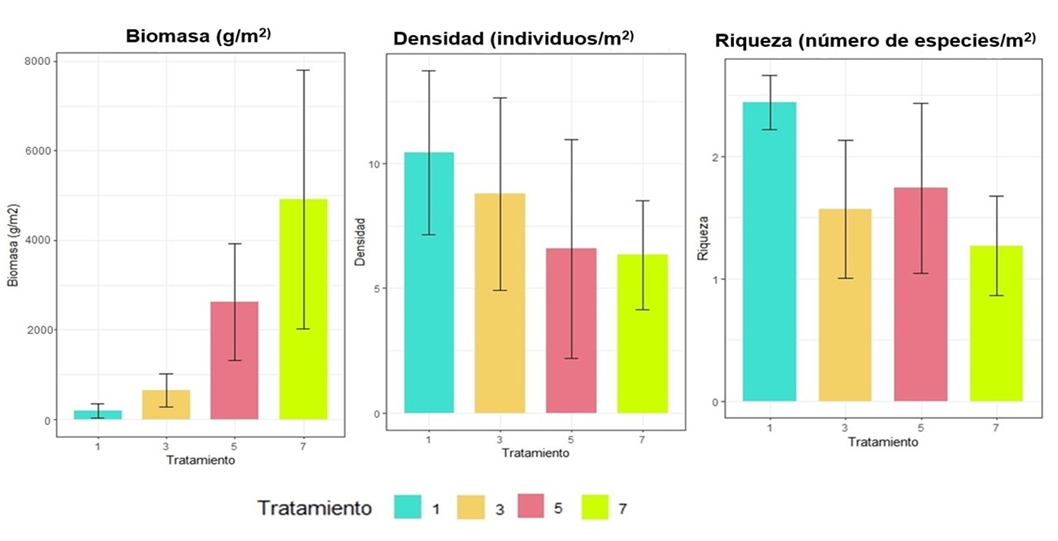
After a lot of fish identification and data analysis, the results surprised us. The number of species and the number of fish did not differ significantly between the arrangements.
Fish biomass, the total weight of fish, told a different story. It was significantly higher around the seven-colony arrangement. This suggests that more colonies sharing the space create more shelter, forming a denser patch that bigger fish can use.
We also checked whether fish preferred the spaces between overlapping branches, as we had expected. They didn’t. Fish used the whole patch, both below and above the colonies.
Why This Matters for Reef Restoration
Restoration projects plant thousands of coral fragments every year. Our results suggest that how those corals are arranged may matter, not just how many are planted.
Branching colonies planted close together can create new shelter for fish. Patch design could therefore help restored reefs support healthier fish communities. More research is needed, but it is a promising step for coral restoration and artificial reefs.
References:
Vergara, I., Guendulain-García, S.D., López-Pérez, A.S. and Alvarez-Filip, L. (2026). Spatial interactions among branching coral colonies shape structural heterogeneity and reef fish shelter use. Preprint, SSRN. papers.ssrn.com.