Imagine descending deeper than Mount Everest is tall, into a realm so alien it might as well be another planet. Welcome to the hadal zone, Earth’s deepest and most mysterious ocean frontier. This extraordinary environment represents one of the last unexplored regions on our planet, a place where crushing pressure, eternal darkness, and extreme conditions create one of the most fascinating ecosystems imaginable.
Recent breakthroughs in deep-sea exploration have revolutionized our understanding of the hadal zone, revealing thriving communities of life in what was once thought to be a biological desert. From the enigmatic hadal snailfish to bizarre hadal animals like tube worms surviving in conditions that would instantly kill most surface creatures, these deepest parts of our ocean are rewriting the rules of what we thought possible for life on Earth.

What Exactly Is the Hadal Zone?
The hadal zone represents the deepest oceanic environment on Earth, extending from 6,000 meters (approximately 20,000 feet) down to the deepest known point at 11,034 meters in the Mariana Trench’s Challenger Deep. To put this in perspective, if you placed Mount Everest in the deepest part of the hadal ocean, its peak would still be more than a mile underwater.
What does hadal mean? The term “hadal” derives from Hades, the ancient Greek underworld, a fitting name for these abyssal depths that exist in perpetual darkness. Scientists also refer to this region as the hadalpelagic zone, distinguishing it from the shallower abyssal zone above.
Is hadal deeper than abyssal? Absolutely.This is a common confusion. While the abyssal zone extends from 4,000 to 6,000 meters deep, the hadal zone begins where the abyssal zone ends, making it the deepest oceanic environment on our planet.
Key Characteristics of the Hadal Zone
The hadal zone is defined by several extreme characteristics that make it one of Earth’s most challenging environments:
- Crushing Pressure: At these depths, water pressure reaches more than 1,100 times that at sea level, equivalent to having 50 jumbo jets pressing down on every square meter of surface.
- Complete Darkness: No sunlight penetrates to these depths. The hadal zone exists in absolute darkness, broken only by the occasional bioluminescent flash from deep-sea creatures. The complete absence of light creates a world where hadal animals must rely on other senses and adaptations to survive.
- Near-Freezing Temperatures: Water temperatures hover just above freezing, typically ranging from 1-4°C (34-39°F). These frigid temperatures, combined with the dark environment, create some of the most challenging conditions for life on Earth.
- Limited Food Sources: With no photosynthesis possible, hadal zone organisms depend entirely on organic matter that drifts down from surface waters or chemosynthetic processes. This creates a complex food chain where dead organisms from above provide the foundation for life in the deepest trenches.

The Geological Formation of Hadal Trenches
Hadal trenches form through the dramatic process of plate tectonics. When oceanic plates collide, one is forced beneath another in what scientists call a subduction zone. This creates long, narrow trenches that cut deep into the ocean floor—the deepest scars on Earth’s surface.
The most famous of these is the Mariana Trench in the western Pacific, but hadal depths exist in trenches worldwide, including the Kermadec Trench, Japan Trench, and Peru-Chile Trench. These oceanic trenches aren’t just geological features; they’re unique habitats that support specialized communities of life found nowhere else on Earth.
Recent geological studies have revealed that these trenches act as massive funnels, concentrating organic matter from vast areas of the ocean surface into relatively small deep-sea regions. This phenomenon helps explain how hadal zone creatures can survive in such an apparently resource-poor environment.
Has Any Human Been to the Hadal Zone?
The short answer is yes, but only recently and in very limited numbers. Human exploration of the hadal zone represents one of the most challenging endeavors in scientific exploration, more difficult in many ways than space travel.
The first crewed descent to hadal depths occurred in 1960 when Jacques Piccard and Don Walsh reached Challenger Deep in the bathyscaphe Trieste. However, their brief visit provided limited scientific data. For decades afterward, the hadal zone remained largely inaccessible to human exploration.
This changed dramatically in recent years. Victor Vescovo, in his submersible Limiting Factor, has completed multiple dives to the deepest points in all five major oceans. His expeditions, part of the Five Deeps Expedition, have provided unprecedented insights into hadal environments and their inhabitants.
These crewed missions face extraordinary challenges. The high pressure at hadal depths requires specially designed submersibles with thick titanium hulls. Advanced technology enables these expeditions to withstand forces that would instantly destroy conventional vessels. The descent alone takes hours, and once at depth, explorers work in a space no larger than a small car while surrounded by crushing forces.
Incredible Hadal Zone Animals: Life in the Abyss
Despite the extreme conditions, the hadal zone teems with life. Recent discoveries have revealed a remarkable diversity of hadal zone animals that have evolved incredible adaptations to survive in this hostile environment. Scientists studying the hadal seafloor have discovered species that challenge our understanding of life’s limits.
The Mysterious Hadal Snailfish
Perhaps no creature better represents hadal zone creatures than the hadal snailfish. These remarkable fish hold the current depth record for vertebrates, with specimens found at depths exceeding 8,000 meters. These have a very different appearance than what regular viewers of the Deep Discoverer dives would expect from deep-sea fishes.
Hadal fish like the snailfish have evolved extraordinary adaptations. Their bodies contain specialized proteins that prevent cellular damage under extreme pressure. They lack swim bladders (which would be crushed at depth) and instead maintain neutral buoyancy through specialized lipids and reduced bone density.

Recently Discovered Deep-Sea Communities
Groundbreaking research by scientists has revealed thriving ecosystems in the deepest parts of our planet. A Chinese expedition using advanced submersible technology discovered thousands of worms and mollusks nearly 10 kilometers (six miles) below sea level in the Kuril-Kamchatka Trench and the western Aleutian Trench, representing the deepest colony of creatures ever observed on the hadal seafloor.
These discoveries have fundamentally changed our understanding of deep-sea life. The newly discovered communities primarily consist of diverse species including siboglinid Polychaeta and Bivalvia spanning a distance of 2,500 km (1,553 miles) at the deepest depths from 3.6 to 5.92 miles. Scientists now recognize that the hadal seafloor supports far more life than previously thought possible.

The Diverse Ecosystem of Hadal Organisms
Hadal zone organisms represent an incredible array of life forms, each uniquely adapted to extreme conditions:
Amphipods: These crustacean-like creatures are among the most abundant hadal animals. Some species, like the supergiant amphipod Alicella gigantea, can grow to enormous sizes compared to their shallow-water relatives, adapting to high pressure and the dark environment.
Sea Cucumbers: These echinoderms have been discovered at the deepest depths, playing crucial roles in processing organic matter that reaches the hadal seafloor. Scientists have found these species thriving in the dark, high pressure conditions.
Polychaete Worms: Various species of marine worms thrive in hadal sediments on the hadal seafloor, including the recently discovered tube worms that form dense colonies around hydrothermal vents and cold seeps. These hadal animals have adapted to survive high pressure and complete darkness.
Bivalves: Specialized clams and mussels have been discovered at record-breaking depths, often associated with chemosynthetic communities. Scientists continue to find new species of these hadal animals adapted to the extreme environment.
Foraminifera: These single-celled organisms, some visible to the naked eye, represent some of the most abundant life forms in hadal sediments.

Do Any Fish Live in the Hadal Zone?
This question fascinates both scientists and the public. Are there fish in the hadal zone? The answer is a resounding yes, though they become increasingly rare at the greatest depths.
Hadal fish include several fascinating species. Cusk eels and rattails are found at moderate hadal depths, while snailfish hold the depth records. Below that are two new species of snailfish including the deepest fish ever recorded.
However, it’s important to understand that fish represent just one group among many in hadal ecosystems. Marine life decreases with depth, both in abundance and biomass, but scientists have discovered a wide range of metazoan organisms on the hadal seafloor, mostly benthos, including fish, sea cucumber, bristle worms, bivalves, isopods, sea anemones, amphipods, copepods, decapod crustaceans and gastropods. The food chain in these deepest environments operates differently than surface waters, with species adapted to the dark, high pressure conditions.

The Science Behind Hadal Zone Exploration
Exploring the hadal zone requires cutting-edge technology capable of withstanding pressures that would instantly crush conventional equipment. Scientists and engineers have developed increasingly sophisticated tools to explore these deepest regions. The exploration of the hadal zone requires the use of instruments that are able to withstand high pressure of up to a thousand or more atmospheres, operating in complete darkness where no light penetrates.
Advanced Technology for Extreme Depths
Modern hadal exploration employs several technology approaches developed by scientists and engineers:
- Landers: Autonomous instruments that free-fall to the hadal seafloor and return to the surface with samples and data. These workhorses of hadal science can operate for hours or days on the seafloor in the dark, high pressure environment.
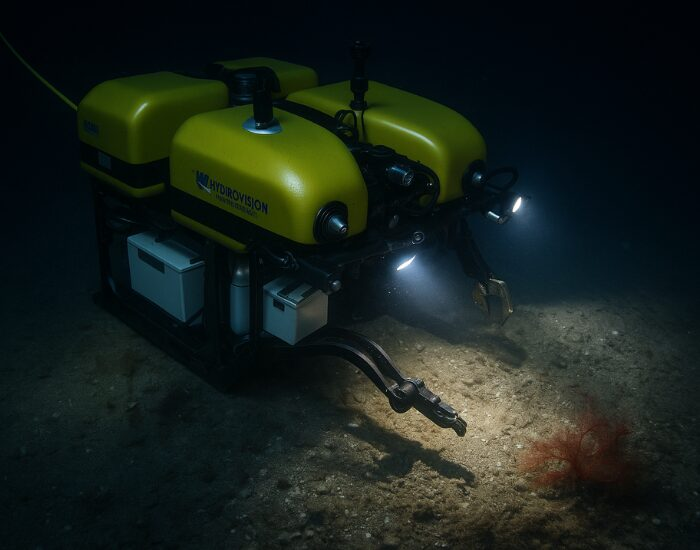
- ROVs (Remotely Operated Vehicles): Tethered robots controlled from surface ships, though few can reach the deepest hadal depths where hadal animals live.
- Full Ocean Depth Submersibles: Advanced crewed vessels like the Limiting Factor and Triton’s ultra-deep submarines that can carry humans to the deepest parts of the ocean using cutting-edge technology.
- Baited Traps: Specialized devices that attract and capture hadal animals for study, helping scientists understand species distribution on the hadal seafloor.
Challenges in Hadal Research
The study of the hadal zone remains challenging as a result of the extreme high pressure, more than 60 MPa, on the hadal seafloor. These challenges extend beyond just pressure:
Cost: Deep-sea expeditions require specialized vessels, equipment, and extensive support teams, making research extremely expensive for scientists and oceanographic institutions.
Technical Limitations: Equipment and technology must function flawlessly under extreme conditions, with no possibility of repair at deepest depths in the dark.
Limited Access: Only a handful of vehicles worldwide can reach the deepest hadal depths where diverse species of hadal animals live.
Weather Dependency: Surface conditions affect the ability to deploy and recover technology safely during expeditions.
Why Are There Few Organisms in the Hadalpelagic Zone?
While recent discoveries have revealed more life than previously expected, hadal zone organisms are still relatively sparse compared to shallower ocean regions. Scientists studying the hadal seafloor have identified several factors that contribute to this:
Energy Limitations: The hadal zone depends entirely on organic matter falling from surface waters. This “marine snow” becomes increasingly sparse with depth, limiting the energy available to support large populations in the food chain.
Extreme Conditions: The combination of crushing high pressure, near-freezing temperatures, and complete absence of light creates an environment that few species can tolerate.
Isolation: Hadal trenches are separated by vast distances and shallow ocean ridges, limiting genetic exchange between populations and creating isolated evolutionary laboratories where species of hadal animals develop unique adaptations.
Chemical Constraints: The chemistry of deep waters, including low oxygen levels in some regions and high concentrations of dissolved gases, can limit which organisms can survive.
However, it’s crucial to note that “few” is relative. Recent research by scientists has revealed that hadal environments can actually support remarkably dense communities of hadal animals in specific locations, particularly around hydrothermal vents and cold seeps where chemical energy sources support chemosynthetic communities on the hadal seafloor.
The Role of Chemosynthetic Communities
One of the most exciting discoveries in hadal science has been the identification of thriving chemosynthetic communities. Unlike surface ecosystems that depend on photosynthesis, these deep-sea oases derive energy from chemical processes.
- Cold Seeps: Areas where hydrogen sulfide, methane, and other chemicals seep from the seafloor support dense communities of tube worms, clams, and bacterial mats. “These communities are sustained by hydrogen sulfide-rich and methane-rich fluids that are transported along faults traversing deep” ocean trenches.
- Hydrothermal Vents: Superhot water emerging from the seafloor creates localized ecosystems that support unique life forms adapted to both extreme pressure and high temperatures.
These discoveries have revolutionized our understanding of life’s limits and possibilities, suggesting that similar communities might exist on other worlds with subsurface oceans.

Climate Change and the Deep Ocean
The hadal zone plays a crucial role in global ocean circulation and carbon cycle processes. These deep trenches act as repositories for organic carbon, effectively removing it from the active carbon cycle for long periods.
Deep-Sea Carbon Storage: Organic matter that reaches hadal depths becomes buried in sediments, potentially storing carbon for thousands of years.
Ocean Circulation: Hadal regions influence deep-water circulation patterns that affect global climate.
Temperature Stability: While surface oceans show temperature changes due to climate change, hadal temperatures remain remarkably stable, providing potential refuges for deep-sea species.
Understanding these processes becomes increasingly important as we grapple with climate change and its effects on ocean systems.
Current Research Frontiers
Hadal science is experiencing unprecedented growth, driven by technological advances and international collaboration. Major oceanographic institutions worldwide are investing in hadal research:
Woods Hole Oceanographic Institution (WHOI): Leading research with the upgraded Alvin submersible, now capable of reaching upper hadal depths.
Chinese Academy of Sciences: Making groundbreaking discoveries with advanced deep-sea vehicles and extensive hadal expeditions.
Schmidt Ocean Institute: Supporting innovative research with state-of-the-art vessels and equipment.
Japanese Agency for Marine-Earth Science and Technology (JAMSTEC): Pioneering hadal exploration techniques and technologies.
Recent scientific exploration has focused on several key areas:
Biodiversity Surveys: Cataloging the full range of life in hadal environments.
Evolutionary Studies: Understanding how organisms adapt to extreme conditions.
Biogeochemistry: Studying chemical processes and their effects on global systems.
Microbiology: Investigating microscopic life and its role in hadal ecosystems.
Conservation Challenges in the Deep
While the hadal zone might seem remote from human influence, these deep environments face increasing threats:
Deep-Sea Mining: Proposed mining operations for rare metals could devastate hadal ecosystems before we fully understand them.
Pollution: Plastic debris and chemical pollutants have been found even at the deepest ocean depths.
Climate Change: Changing ocean chemistry and circulation patterns may affect hadal communities.
Limited Protection: Most hadal regions lie in international waters with minimal legal protection.
The race is on to study and understand these ecosystems before human activities irreversibly alter them.
The Earth’s Final Frontier?
The hadal zone represents one of our planet’s last true frontiers—a realm as alien and mysterious as any distant world. Recent discoveries of thriving hadal zone creatures, from the remarkable hadal snailfish to extensive worm communities, have revolutionized our understanding of life’s possibilities under extreme conditions.
These deepest parts of our ocean challenge our assumptions about the limits of life and remind us how much we still have to learn about our own planet. As we continue to explore these abyssal depths, each expedition reveals new wonders: bizarre hadal zone animals with incredible adaptations, complex ecosystems sustained by chemical energy, and evolutionary stories written in the genes of creatures that have never seen sunlight.
The hadal ocean holds keys to understanding not just life on Earth, but potentially life throughout the universe. As technology advances and international collaboration grows, we stand on the brink of unprecedented discoveries in these deepest realms.
The next time you look out at the ocean’s surface, remember that beneath those waves lies a world stranger and more wonderful than science fiction, a realm where hadal zone organisms have written their own rules for survival in conditions that would instantly destroy most surface life. In these deepest waters, life persists, thrives, and continues to surprise us with its incredible ingenuity and resilience.
Frequently Asked Questions About the Hadal Zone
Yes. Explorers like Jacques Piccard and Don Walsh (1960) and later James Cameron (2012) have reached the Mariana Trench, part of the hadal zone.
No. The Mariana Trench is part of the hadal zone and includes the deepest known point on Earth.
Yes. Despite extreme pressure and darkness, many organisms thrive there, including amphipods, sea cucumbers, and snailfish.
No. It’s near freezing, usually between 1–4°C (34–39°F), though hydrothermal vents in some areas release localized heat.
Examples include giant amphipods, hadal snailfish, sea cucumbers, and specialized worms and microbes.
Yes. A handful of crewed submersibles and robotic vehicles have explored it, but visits are extremely rare.
Organisms include amphipods, polychaete worms, sea cucumbers, xenophyophores (giant single-celled organisms), and specialized bacteria.