Name That Dinosaur
Thirty species, three levels, one picture at a time. Start with the famous faces and work down to animals the size of a pigeon.
Most of us can name three dinosaurs. Push past Tyrannosaurus, Triceratops and Stegosaurus and the picture gets blurry fast, which is exactly where this quiz starts to get interesting. Every question shows one animal and asks you to put a name to it. Guess from the shape, because shape is what palaeontologists use too: a crest, a claw, a row of plates along the back.
Level one holds the species almost everyone knows. Level two rewards anyone who reads about this for fun. While level three is drawn from the smallest dinosaurs ever found, several of them no bigger than a crow, and it will humble most people. Pick a level and see how far down you can go.
Which dinosaur is this?
How to read a dinosaur
Identification comes down to a handful of features that nothing else shares. Horns, crests, plates, armour and claws all evolved for particular jobs, and each one leaves a shape you can learn to recognise in a second. Colour and height help far less, since both are reconstructions rather than measurements.
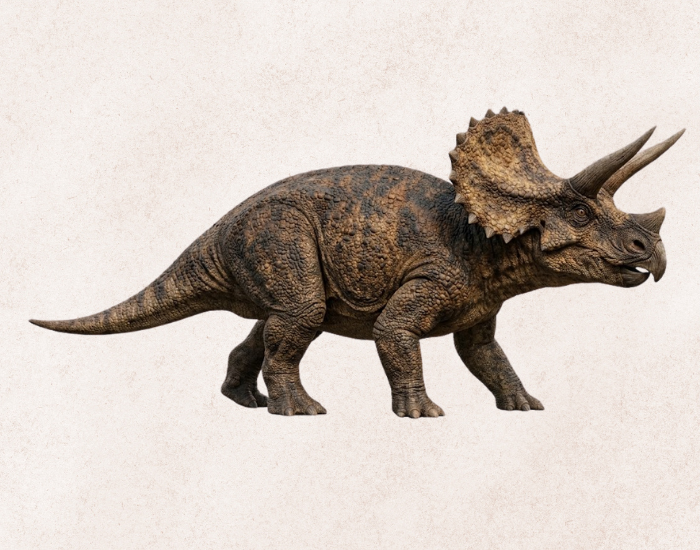 Horns and a bony frillThree horns above a solid shield of bone mean a ceratopsian. Triceratops is the one everybody pictures.
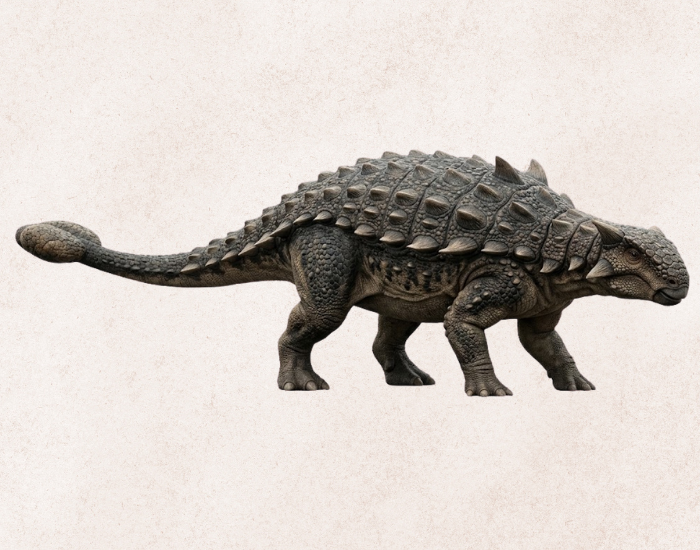 Armour and a tail clubAn armored dinosaur built like a tank, swinging a lump of fused bone heavy enough to break a predator’s leg.
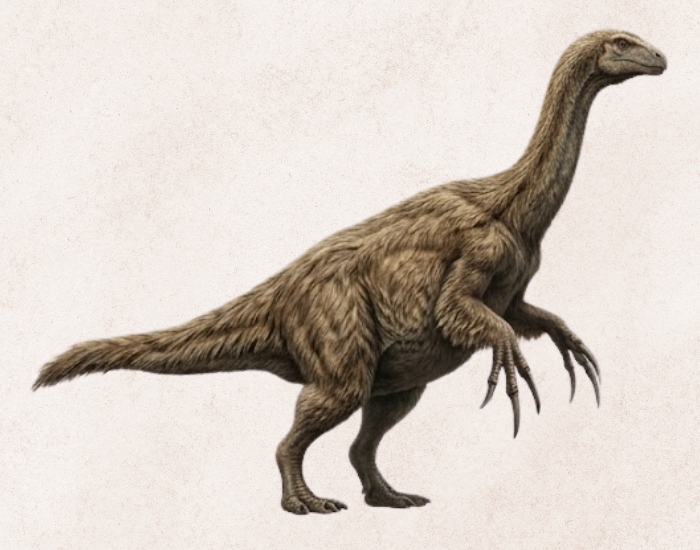 Sharp claws, gentle dietTherizinosaurus carried the longest claws of any known land animal and ate nothing but plants.
Names help as well, because most are simply descriptions in Greek and Latin. Pachycephalosaurus means thick headed lizard, and one look at its 25-centimetre skull dome tells you why. Velociraptor means swift thief. Once you hear the pattern, a name you have never met still gives you a clue about the animal wearing it.
Sizes worth knowing
Numbers anchor the guesswork. A few of these animals sit so far outside ordinary experience that the figures are the only honest way to describe them, so here are the ones that come up most.
Bite force is where T. rex still stands alone. Measurements of its jaw muscles give the strongest bite of any land animal ever tested, living or extinct, and its conical teeth were built to crush bone rather than slice flesh. Meanwhile the true heavyweight of the Cretaceous period was a plant eater: Argentinosaurus, a long necked dinosaur estimated at roughly 30 to 35 metres and somewhere near 70 tonnes.
Why the figures move. Nearly every dinosaur is known from incomplete bones, so lengths and weights are calculated rather than measured, and each new specimen shifts them. Treat size as a filter that narrows the options, never as proof on its own. Two dinosaurs of the same length can belong to completely different groups.
Curious how these animals measure against things you have actually stood next to? Our animal size comparison draws living species at one true scale, from a tardigrade to a blue whale.
The three great groups
Every dinosaur in this quiz belongs to one of three branches, and knowing which one you are looking at cuts the options down before you have read a single answer.
Theropods: two legs, sharp teeth
A bipedal dinosaur with clawed hands and a long balancing tail is almost always a theropod. The group holds every carnivorous dinosaur people can name, from the apex predator of the late Cretaceous period to the sickle shaped claws of the raptors. It also holds the birds in your garden, which is why a bird like dinosaur such as Archaeopteryx sits in this quiz at all.
Sauropodomorphs: the long necks
Four pillar legs, a small head and a neck that solved a problem no other animal solved the same way. Brachiosaurus held its head high like a giraffe, while Diplodocus ran its neck out flat and balanced it with a whip of a tail. Apatosaurus went thick and heavy instead, and yes, this is the animal you may know as Brontosaurus.
Ornithischians: horns, plates and beaks
Large herbivores with beaks, and the most inventive body decoration in the group. Plates, spikes, domes, frills and hollow crests all evolved here. Parasaurolophus carried a tube over a metre long that probably worked like a trumpet, and Corythosaurus wore a rounded helmet instead of a tube.
What the films got wrong
Jurassic Park shaped how a whole generation pictures these animals, and two of its most memorable choices were invented rather than discovered. Knowing the difference is half the fun of the quiz.
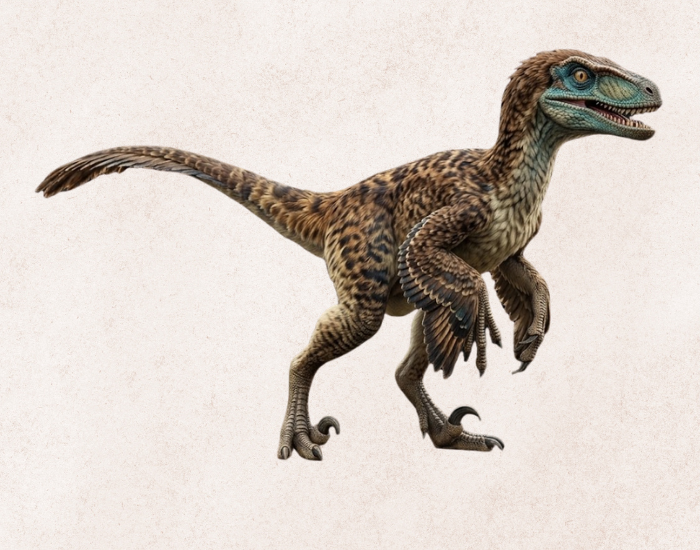 Velociraptor was tinyTurkey-sized and covered in feathers. The film’s raptors were closer in size to Deinonychus.
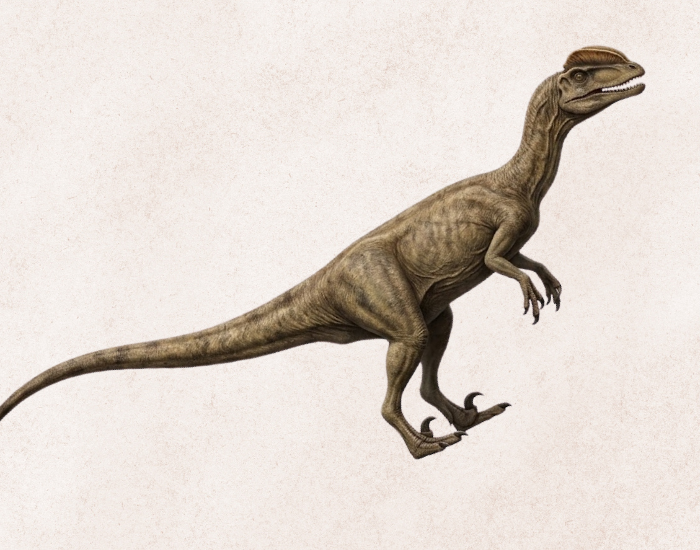 Dilophosaurus had no frillNo neck frill, no venom, and seven metres long rather than dog-sized. The twin crests are real.
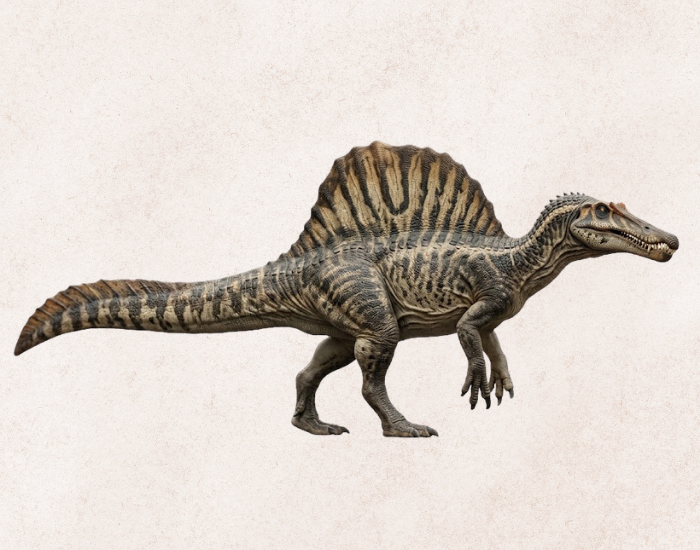 Spinosaurus went fishingIts cone teeth and long jaws suit fish. Quite how aquatic it was remains actively argued.
Jurassic World kept the tradition going with a Mosasaurus in a lagoon. That animal was real and genuinely enormous, but it was a marine reptile, not a dinosaur at all — and the same goes for every flying reptile you have ever seen labelled a pterodactyl. Dinosaurs walked on land, with their legs held underneath the body rather than sprawled out to the sides.
The small ones nobody guesses
Level three comes from the other end of the scale entirely. Anchiornis was about the size of a crow, Fruitadens weighed roughly as much as a bag of sugar, and Mei long was found curled up like a sleeping bird, which is what its name means. Several of these species preserved their feathers, and a few preserved enough microscopic detail for researchers to reconstruct their actual colours.
Sinosauropteryx is the best example. Fossil melanosomes show a ginger-striped tail and a dark band across the eyes, making it one of the few extinct animals whose real colour pattern we know. If level three leaves you flattened, the full story lives in our guide to the smallest dinosaurs.
Every species in the quiz
Thirty animals, from a nine-tonne predator to something you could hold in one hand.
Questions people ask
Which dinosaur had the strongest bite?
Tyrannosaurus rex, by a wide margin. Studies of its jaw muscles and skull give the most powerful bite measured for any land animal, extinct or living, strong enough to crush bone. It lived in western North America and disappeared in the extinction event 66 million years ago.
What was the largest carnivorous dinosaur?
Spinosaurus, at roughly 15 metres. It was longer than Tyrannosaurus rex though much more lightly built, with a tall sail along its back and narrow jaws full of conical teeth suited to catching fish. Giganotosaurus and Carcharodontosaurus were also longer than T. rex.
Was there ever an aquatic dinosaur?
Not a fully aquatic one. Spinosaurus comes closest and probably hunted in and around water, but how much time it spent swimming is still argued over by researchers. The ocean giants of the age — mosasaurs, plesiosaurs and ichthyosaurs — were marine reptiles rather than dinosaurs.
What does the name Pachycephalosaurus mean?
Thick headed lizard. Its skull roof reached about 25 centimetres of solid bone, which may have been used in head-butting or flank-butting contests. Dinosaur names are usually plain descriptions built from Greek and Latin roots, so they often tell you what to look for.
Is Brontosaurus a real dinosaur?
The name has had a complicated century. Brontosaurus was declared a duplicate of Apatosaurus in 1903, vanished from textbooks, then a large 2015 study argued the differences were real enough to bring it back. Plenty of palaeontologists remain unconvinced, so both names stay in use.
Which dinosaurs had feathers?
Far more than most people expect. Feathers appear across the theropods, including Velociraptor, Deinonychus, Microraptor and the early tyrannosaur relative Dilong. Birds are the surviving branch of that same group, which makes every sparrow a living dinosaur.
References
Erickson, G. M., Van Kirk, S. D., Su, J., Levenston, M. E., Caler, W. E., & Carter, D. R. (1996). Bite-force estimation for Tyrannosaurus rex from tooth-marked bones. Nature, 382(6593), 706–708. https://doi.org/10.1038/382706a0
Ibrahim, N., Maganuco, S., Dal Sasso, C., Fabbri, M., Auditore, M., Bindellini, G., Martill, D. M., Zouhri, S., Mattarelli, D. A., Unwin, D. M., Wiemann, J., Bonadonna, D., Amane, A., Jakubczak, J., Joger, U., Lauder, G. V., & Pierce, S. E. (2020). Tail-propelled aquatic locomotion in a theropod dinosaur. Nature, 581(7806), 67–70. https://doi.org/10.1038/s41586-020-2190-3
Zheng, X., Zhou, Z., Wang, X., Zhang, F., Zhang, X., Wang, Y., Wei, G., Wang, S., & Xu, X. (2013). Hind wings in basal birds and the evolution of leg feathers. Science, 339(6125), 1309–1312. https://doi.org/10.1126/science.1228753