

1.3 million wildebeest, an 800 km loop, two rivers.
Follow the herds month by month.
Every year, somewhere between 1.2 and 1.5 million wildebeest walk a great clockwise loop across the Serengeti–Mara ecosystem. Around 300,000 zebra and 400,000 Thomson’s gazelle walk it with them. No one leads. No one decides. The herds simply follow the rain, and the short green grass that comes a few days behind it.
The map below tracks that loop month by month. Drag the timeline, or press play and watch a year pass in half a minute. It opens on today’s date, so the marker shows where the main herds usually are right now.
A word on “usually”. The great wildebeest migration has no schedule. It is driven entirely by rainfall, and rainfall has become harder to predict. Every month on this map is an average of many years, not a promise about this one.
What the Great Migration actually is
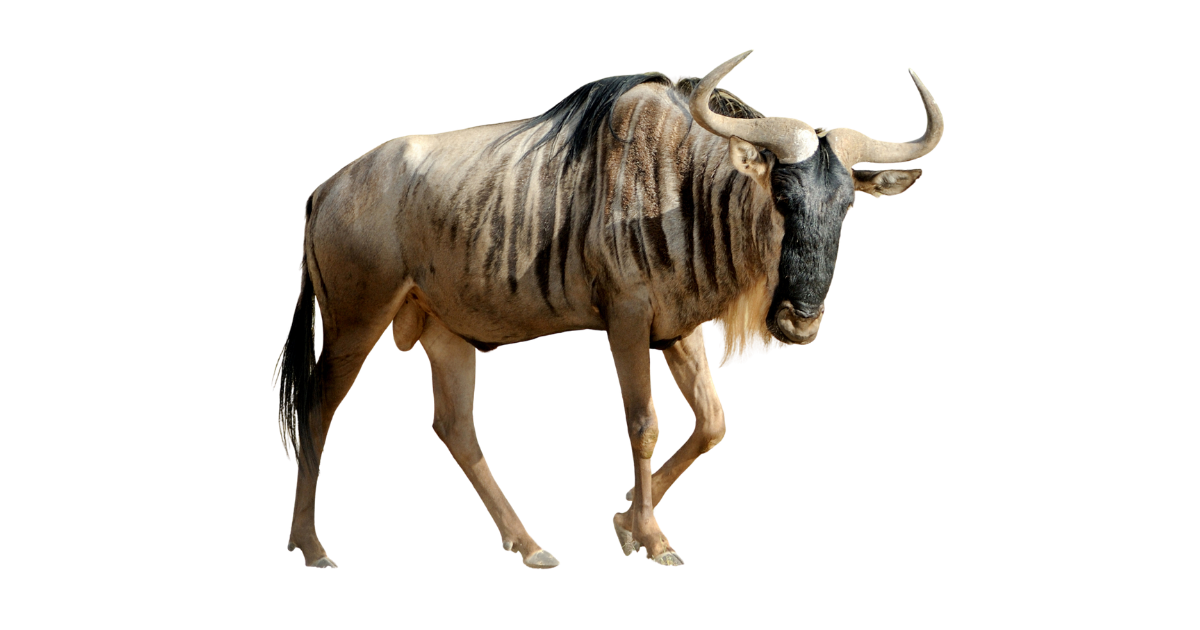
It is not a single journey with a start and an end. It is a continuous circuit, running roughly clockwise through Tanzania’s Serengeti National Park and up into Kenya’s Masai Mara National Reserve, and the herds are somewhere on it every day of the year.
The Serengeti–Mara ecosystem covers about 30,000 square kilometres. The animals following the rain across it make up the largest movement of land mammals left on Earth.
An individual wildebeest covers roughly 800 kilometres if you measure the circuit itself. Measure everything it actually walks — the daily wandering, the backtracking, the false starts at a river — and the figure is closer to 3,000. Both numbers get quoted, which is why they seem to contradict each other.
The migration month by month
Four phases, matching the four coloured markers on the map above.
Calving on the southern plains
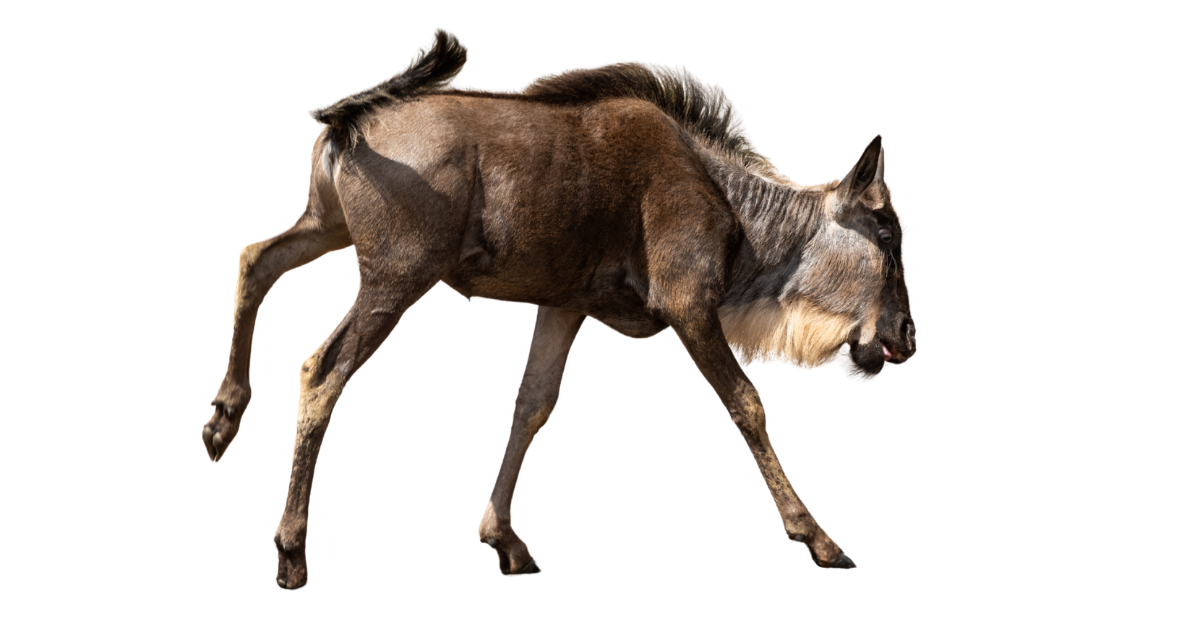
The herds spread across the short-grass plains of the southern Serengeti and the western edge of the Ngorongoro Conservation Area, around Lake Ndutu. This is calving season, and it is extraordinarily concentrated.
At the February peak, as many as 8,000 calves are born in a single day.
The synchrony is the strategy. Predators can only eat so much at once, so flooding the plains with newborns over a few weeks means most survive — even with lion, hyena, cheetah and wild dog working the same ground. A calf is standing within minutes of birth and running with the herd within a day.
The western corridor and the Grumeti
As the long rains end and the southern plains dry out, the columns form and move north and west through the central Serengeti, past Moru and Seronera, into the western corridor between the Grumeti and Mbalageti rivers.
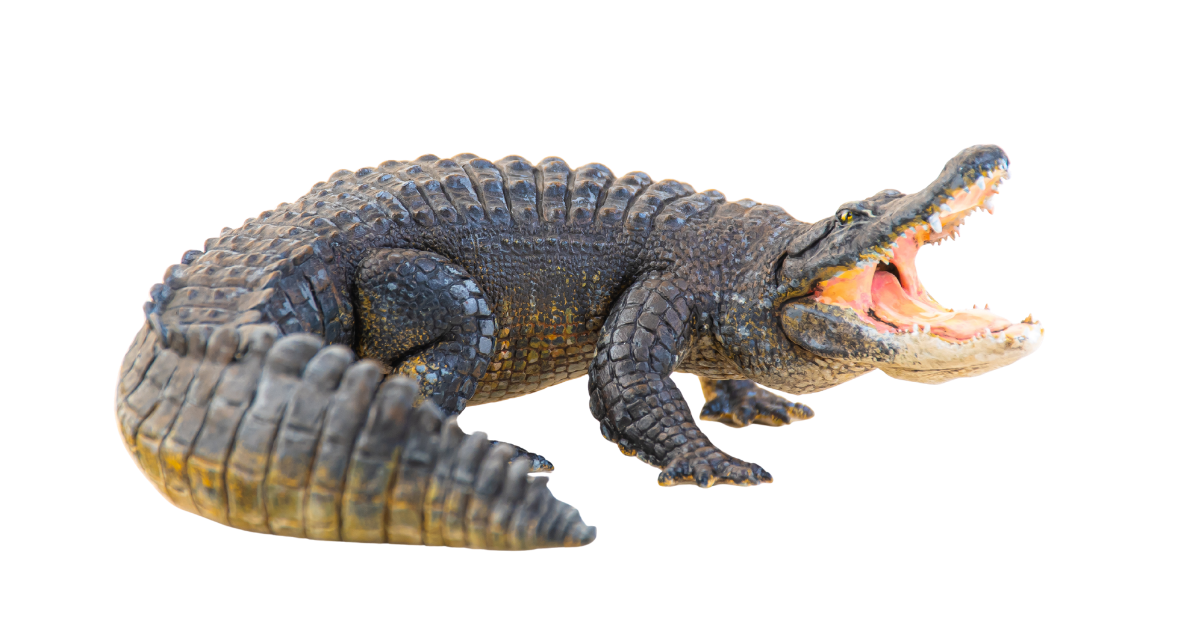
The first river crossings happen here, at the Grumeti — narrower and muddier than the Mara, and holding some of the largest Nile crocodiles left anywhere.
This is also the rut. Males fight, hold small territories for a few hours, and lose them again, all while the herd keeps walking. The mating season happens on the move.
The Mara River and Kenya
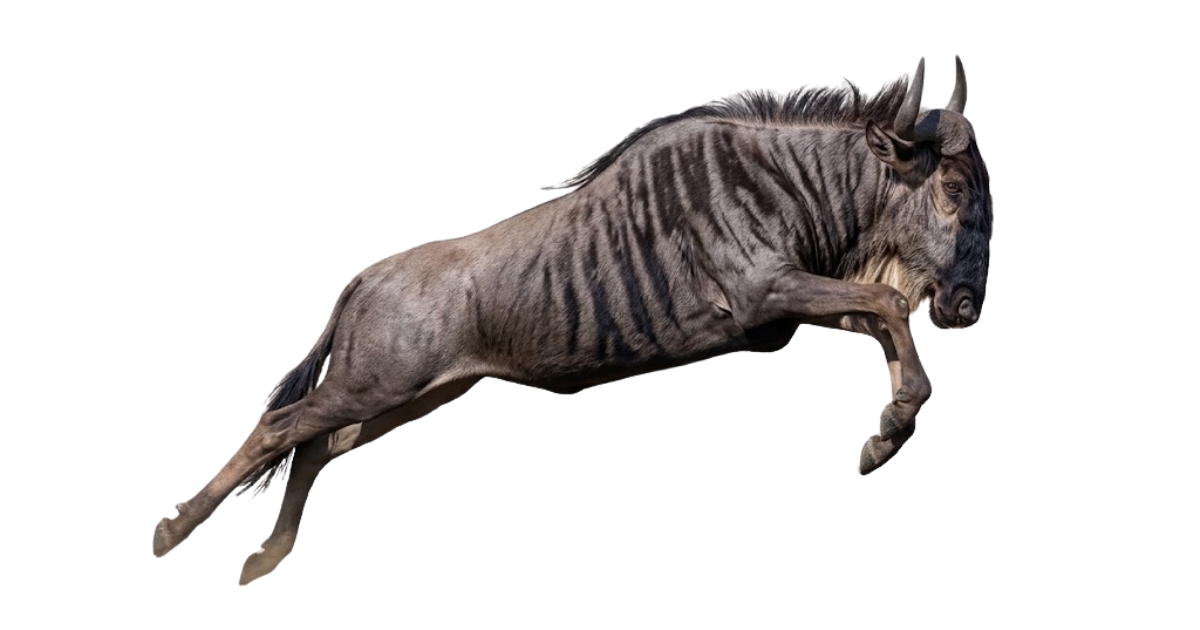
The main herds push into the northern Serengeti and towards the Mara River, and from late July into September the dramatic river crossings begin.
There is no single crossing point and no timetable. Herds gather on the bank for days, turn back, gather again, then go all at once for reasons nobody has satisfactorily explained.
Many cross into Kenya’s Maasai Mara and graze there through the dry season. Others stay north in the Serengeti. Plenty cross more than once, back and forth — which surprises people who picture it as one dramatic event.
Back down the eastern side
When the short rains arrive, the herds turn south again, moving down the eastern side through Loliondo and Lobo, back towards the plains where the calving will start.
The loop closes. It has been closing this way, uninterrupted, for far longer than anyone has been watching it.
Why they move at all
The honest answer is grass chemistry, and it is more interesting than it sounds.
The southern Serengeti plains sit on volcanic ash blown from the Ngorongoro highlands. The soil is thin, which keeps the grass short, but it is unusually rich in calcium and phosphorus — exactly what a wildebeest cow needs while she is producing milk. That is why calving happens there and nowhere else on the circuit.
When those plains dry out and the nutritious grass is gone, the only reliable grazing is north and west. So they walk.
This is also why the migration cannot simply be fenced around or relocated. The route is not a habit. It is a response to where soil, rain and grass line up — in that order.
The two rivers, and what is waiting in them
I should be straight about this. I have not stood on the bank of the Mara and watched a crossing. What I do have is years of working with crocodiles in a reptile house — feeding them, cleaning their enclosures, learning which individuals were placid and which genuinely were not.
That experience makes something clear to me that photographs tend to obscure. A large Nile crocodile is not primarily a hunter of healthy adult wildebeest. It is an ambush animal that works with almost no energy expenditure, waits weeks between meals, and takes whatever comes within reach of a very short strike.
A river crossing is not a battle. It is a queue of animals moving through a place where a handful of extremely patient predators happen to live.
Most wildebeest that die at a crossing are not taken by crocodiles at all. They drown, or are trampled in the crush, or break a leg on the bank and cannot climb out. The crocodiles are simply the part that gets filmed.
Who else makes the journey
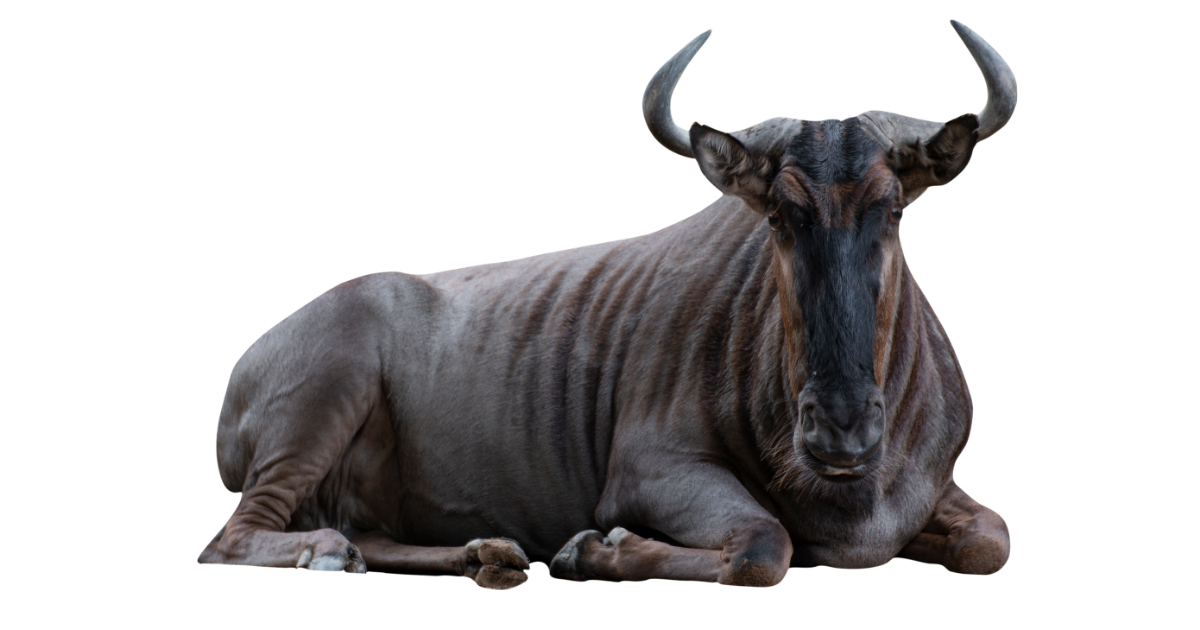
Three species, three grazing heights, one moving front. It is one of the cleanest examples of resource partitioning anywhere in the world — and you can watch it happen from a vehicle.
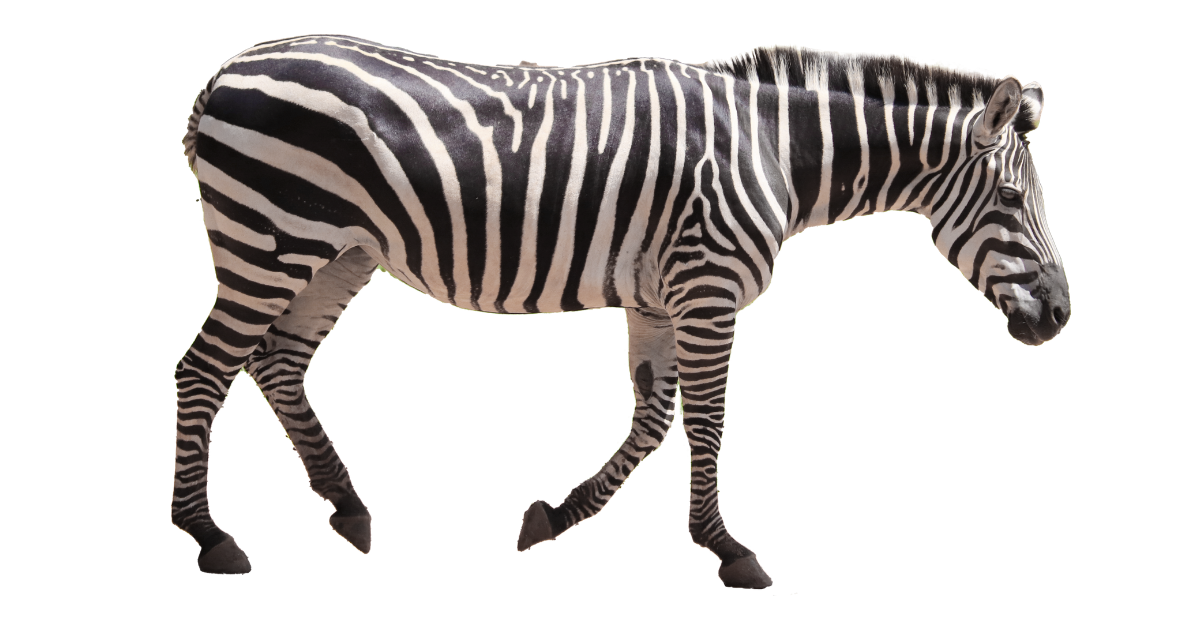
Not passengers. Zebra crop the tall, coarse top growth that wildebeest digest poorly, exposing the softer grass underneath. Better eyesight and better memory for water, so they tend to move at the front.
The bulk of the herd, taking the middle layer. Unremarkable animals individually; utterly transformative in these numbers, cropping and fertilising the plains as they pass.
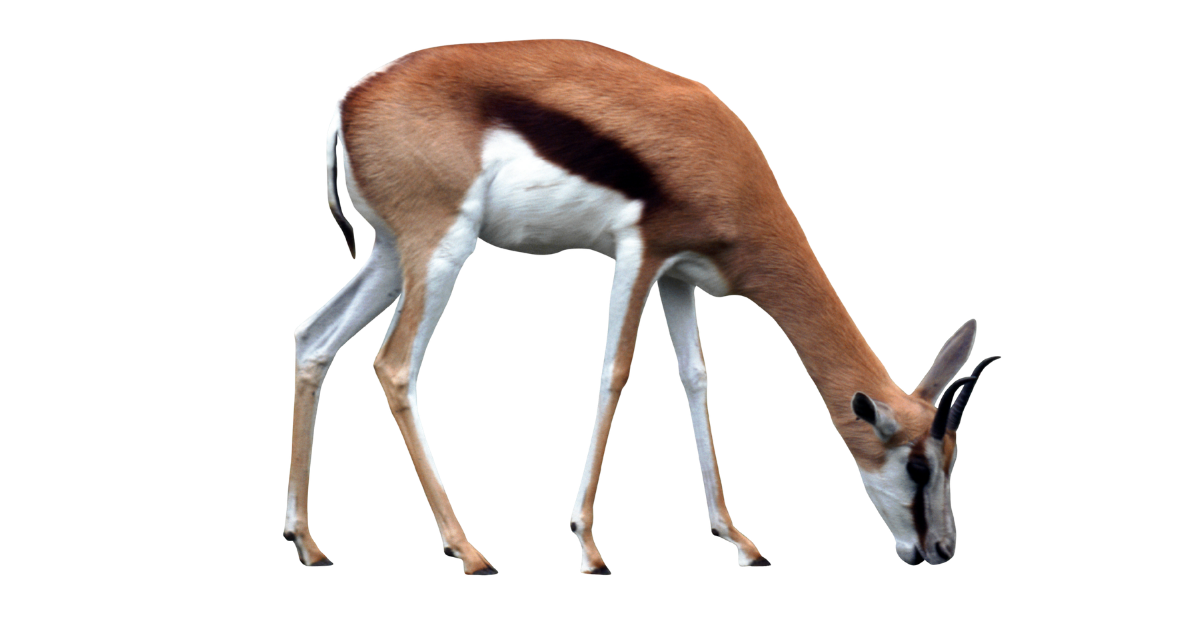
Following behind, taking the shortest regrowth after the larger animals have passed. Small enough to need the highest-quality forage, and quick enough to survive in the open.
What the circuit costs
That is roughly how many do not survive a typical circuit — drowned at crossings, taken by predators, or lost to exhaustion and thirst. Around 30,000 zebra die with them.
The number reads as a tragedy, and it is worth resisting the reflex. Those carcasses are the reason the ecosystem works. They feed crocodiles, vultures, hyena and an enormous volume of invertebrate life, and the animals that die in the rivers deliver an annual pulse of nutrients that the whole aquatic system depends on.
A migration that lost no animals would be a migration feeding nothing.
If you are planning to see it
The most common question is which month. The honest answer depends on what you actually want to see.
To see calving
Late January – March
Southern Serengeti, Ndutu area
Enormous numbers in one place, newborns everywhere, and the highest concentration of predator activity of the year.
To see the Mara crossings
Late July – September
Northern Serengeti, Masai Mara
The footage everyone has seen — and the least predictable thing on this list. Give yourself several days, not one.
To avoid the crowds
May – June
Western corridor, Grumeti
The Grumeti crossings and the rut. Far fewer vehicles, and genuinely good.
Practical notes
- Mobile camps follow the herds through the year and put you closest to the action. Permanent lodges are more comfortable and less mobile.
- Private conservancies bordering the Maasai Mara allow off-road driving and night drives that the national reserve does not — worth knowing if photography matters to you.
- A hot air balloon safari at dawn over the plains is expensive and, by most accounts, worth it once.
- Book the region, not the date. Guides in northern Tanzania and Kenya track the herds daily, and any good operator will tell you honestly that the animals have not read the brochure.
Common questions
What month is the wildebeest migration in Africa?
All twelve of them — the migration is continuous, and the herds are somewhere on the circuit every day of the year. What changes is where. Calving is January to March on the southern Serengeti plains, the western corridor and Grumeti River crossings fall around May and June, the Mara River crossings run from late July into September, and the herds move back south through November and December.
What is the best time to see the migration in the Serengeti?
For sheer numbers and newborn calves, February in the southern Serengeti. For the dramatic river crossings, late July to September in the northern Serengeti and the Masai Mara. For fewer vehicles and an underrated experience, May and June in the western corridor. There is no single best month, only the best month for the thing you want to see.
Why are there so many wildebeest in the Serengeti?
Because the ecosystem is unusually productive and the herds can move to wherever it is productive right now. Rainfall across the Serengeti–Mara ecosystem is patchy in both space and time, and an animal able to walk to the rain can exploit far more grass over a year than one holding a fixed territory. Add synchronised calving, which overwhelms predators for a few weeks each year, and the population can sustain numbers no resident grazer could.
What is the top predator in the Serengeti?
Lion, by weight and by influence — the Serengeti holds one of the largest lion populations left in Africa. But spotted hyena kill more prey overall, and are far more often hunting than scavenging, a reputation that took decades of research to correct. At the river crossings, the Nile crocodile is the resident specialist.
Do the wildebeest cross the Mara River more than once?
Frequently. Herds cross north into Kenya, then back south, then north again, sometimes within days. The single dramatic crossing is a story we impose on the animals. From the herd’s point of view it is just grass on the far bank.
Which direction does the migration travel?
Roughly clockwise. South to the calving plains, north and west through the central Serengeti into the western corridor, north to the Mara River and Kenya, then back down the eastern side through Loliondo to the south. The route bends and stretches from year to year with the rain, but the direction holds.
How far do the wildebeest actually walk?
The circuit itself is about 800 kilometres. An individual animal walks closer to 3,000 kilometres a year once you count the daily wandering, the grazing detours, and the crossings attempted and abandoned. Both figures are correct; they measure different things.
What is the rarest animal to see in the Serengeti?
The black rhino, which survives in very small numbers and is most reliably seen in the Ngorongoro Crater rather than out on the plains. African wild dog are the next hardest, being wide-ranging and thinly spread. Both are matters of luck rather than planning.
Sources
- Africa Geographic — Great Wildebeest Migration overview: population range, the 800 km cycle, annual mortality.
- Asilia Africa — month-by-month herd movement and river crossing windows.
- Map waypoints placed from published coordinates for Ndutu, Moru, Seronera, Kirawira, Kogatende, Lobo and the Mara Triangle.
Figures checked September 2026. The map is redrawn whenever the underlying data is updated.



