A few weeks ago, I was trekking through eucalyptus scrub in Australia when a tiny bird stopped me cold. Its frantic, hovering flight and iridescent flash felt impossibly familiar. For a split second, I was back home in Mexico watching hummingbirds zip through my garden. That tiny Australian resident turned out to be a Weebill — and it sent me straight back to my field notes to compile this definitive ranking of the smallest birds in the world. The Weebill is Australia’s smallest bird and primarily feeds on insects.
When biologists talk about the smallest bird species (or the biggest birds), we aren’t just admiring cute aesthetics. We are looking at the absolute limits of vertebrate physiology. To be that small means running a metabolism like a Formula 1 engine, and many of these birds are about the same size as a large bumblebee or a golf ball, making their tiny stature even more remarkable.
What Defines the World’s Smallest Bird?
In the scientific community, ‘smallest’ is a moving target. Do we rank by minimum length — beak to tail — or by minimum weight? Generally, body mass is the more significant biological indicator because it drives metabolic demands. A bird that weighs less than a nickel must consume up to half its body weight in nectar and insects daily just to keep its heart beating.
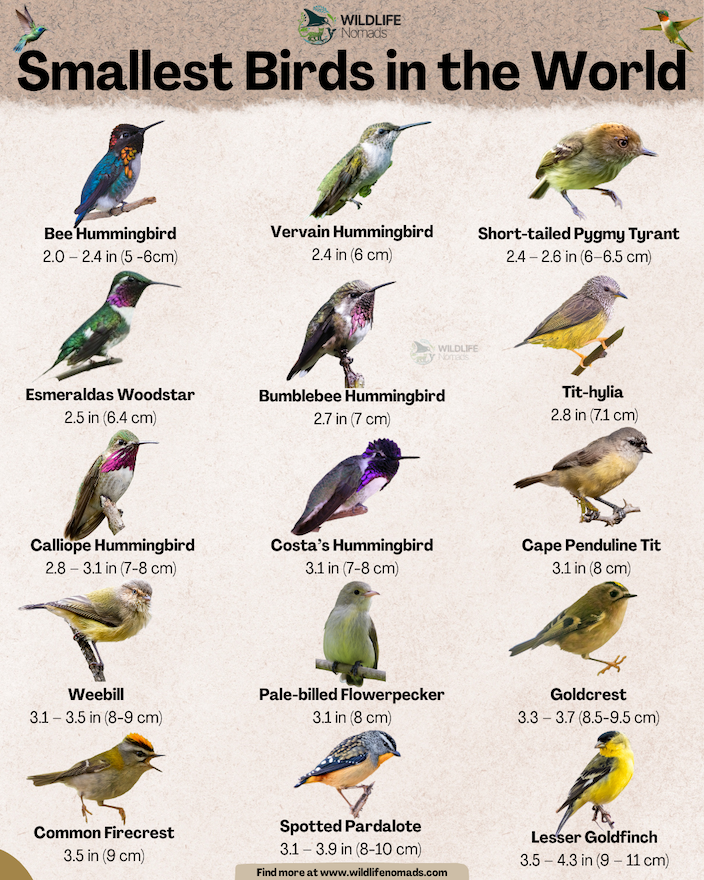
However, length is the metric most people recognize, so we use both in the rankings below. With that in mind, here are the top 12 smallest birds in the world, from the mountains of North America to the tropical forests of South Asia.
Top 12 Smallest Birds in the World
12. American Goldfinch (Spinus tristis)
Size: 11–14 cm | Distribution: North America
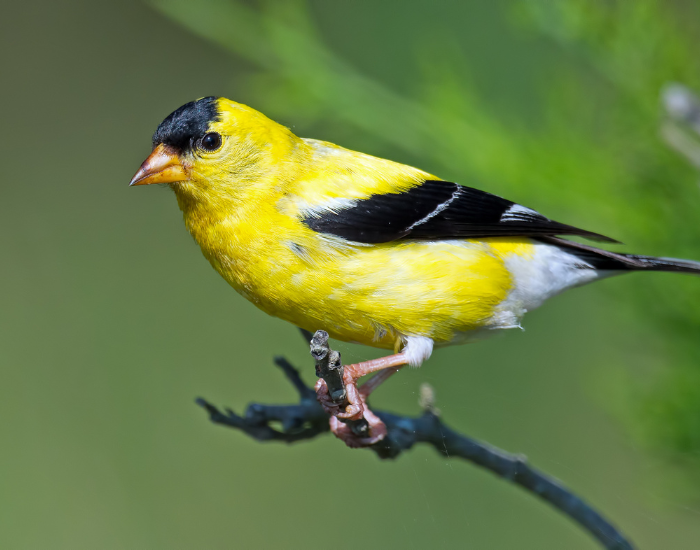
Finches will be appear more than once on this list. While they aren’t the smallest on this list, they fascinate me for one unique reason: the American Goldfinch is the only finch that undergoes a complete molt twice a year. Their strictly seed-based diet is also a rarity among tiny birds — most small species need the high-protein punch of insects to sustain their energy.
11. Lesser Goldfinch (Spinus psaltria)
Size: 9–11 cm | Distribution: Southwestern US to South America
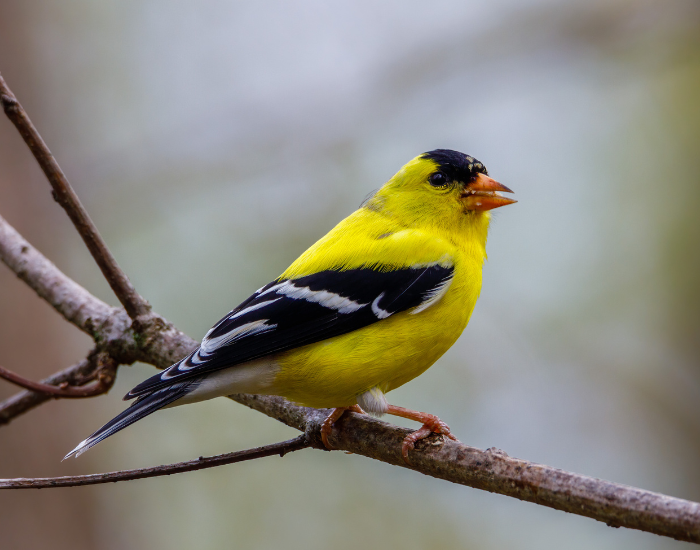
The Lesser Goldfinch is the smaller, more rugged cousin of the American Goldfinch. I’ve tracked them through scrublands across the Americas, and their ability to thrive in arid environments is a masterclass in adaptation. They typically travel in large, social flocks and stick close to water sources in the desert — a smart survival strategy.
10. Verdin (Auriparus flaviceps)
Size: 11 cm | Distribution: Southwestern US and Northern Mexico
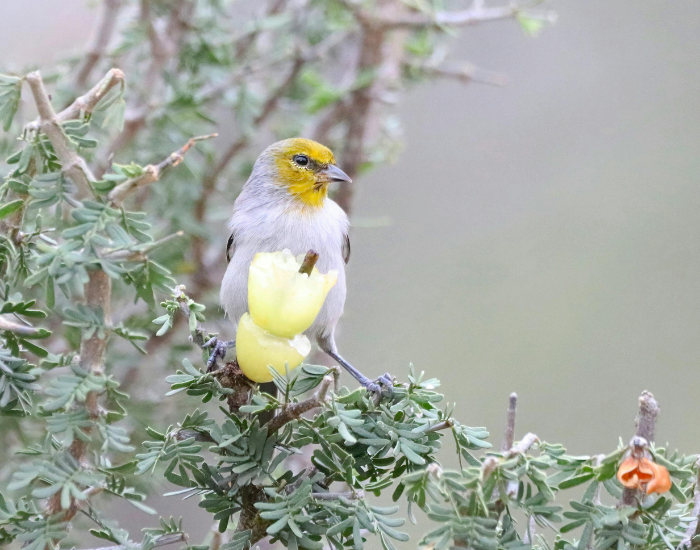
The Verdin is a scrappy survivor of the Sonoran Desert. I’ve watched these birds build massive, thorny nests that look like messy footballs. These structures aren’t just for eggs — they act as climate-controlled chambers that shield the bird from extreme heat and winter cold alike. Verdins have also been observed occasionally feeding on dried sugar from hummingbird feeders in desert environments. When visitors to the American Southwest ask ‘what are those tiny birds called?’, the Verdin is almost always the answer.
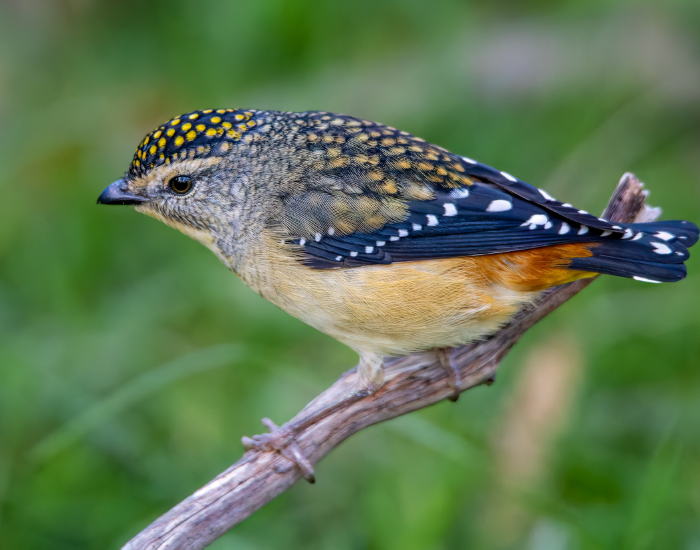
9. Spotted Pardalote (Pardalotus punctatus)
Size: 8–10 cm | Distribution: Australia
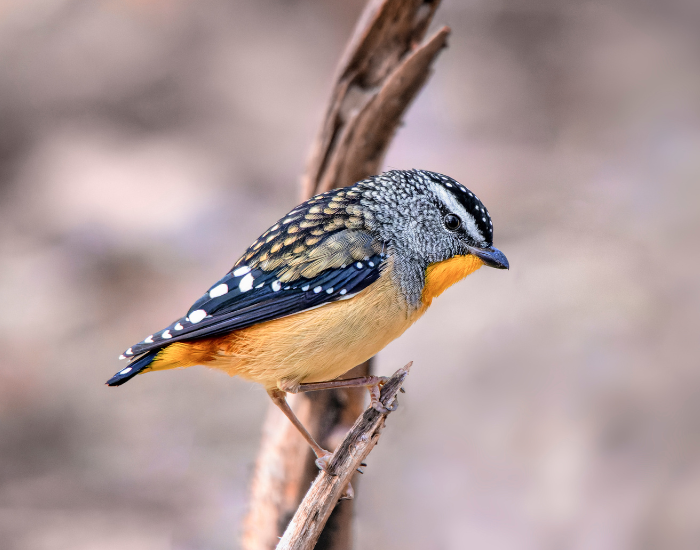
This is one of the tiny bird species that genuinely surprises people. They look like they’ve been hand-painted with white spots. Unlike most small birds that stay high in the canopy, Spotted Pardalotes nest in tunnels dug into earthen banks. The first time I saw one emerge from a hole in the ground, it was a jarring sight for a creature that looks like it belongs on a Christmas ornament.
8. Common Firecrest (Regulus ignicapilla)
Size: 9 cm | Distribution: Europe and North Africa
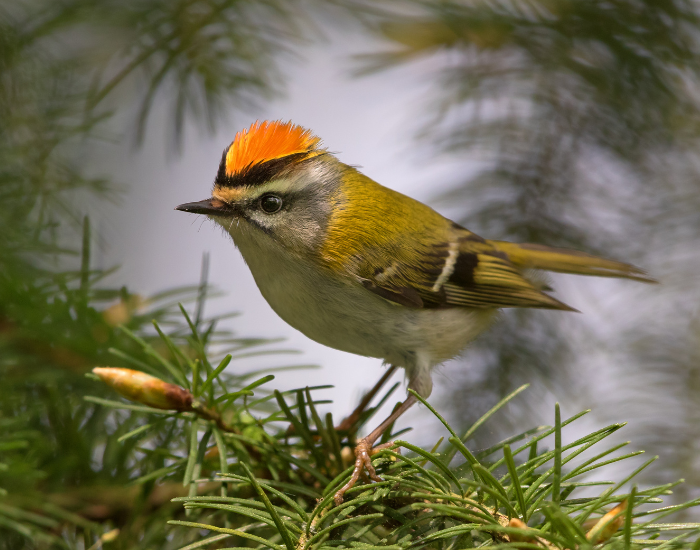
The Firecrest is a tiny powerhouse of the Palearctic. Closely related to the Goldcrest, it’s distinguished by a bronze shoulder patch and a striking black eye stripe. Their metabolic rate is so high that they are almost constantly in motion, foraging for spiders and small insects among coniferous needles. In winter, watching one hunt is like watching a pinball machine come to life.
7. Goldcrest (Regulus regulus)
Size: 8.5–9.5 cm | Distribution: Eurasia
Often cited as the smallest bird in Europe, the Goldcrest carries a fitting Latin name: Regulus, meaning ‘petty king,’ a nod to its bright orange or yellow crown. During research in Scandinavia, I was stunned by their resilience. These 5-gram birds survive sub-zero winters that would kill animals many times their size — an extraordinary feat of biology.

6. Cape Penduline Tit (Anthoscopus minutus)
Size: 8 cm | Distribution: Southern Africa
The Cape Penduline Tit measures about 8 cm in length and weighs around 8 grams. For sheer architectural genius, look no further than the Cape Penduline Tit. It constructs a nest from felted wool, plant fibers, sheep’s wool, and spider webs, so tightly woven it feels almost like fabric. The nest often has multiple entrances to confuse predators. The kicker? The nest includes a ‘false entrance’ to trick predators like snakes. The real door is a hidden flap the bird closes behind itself. It’s one of the most sophisticated defense mechanisms I’ve ever documented in the field.
5. Pale-billed Flowerpecker (Dicaeum erythrorhynchos)
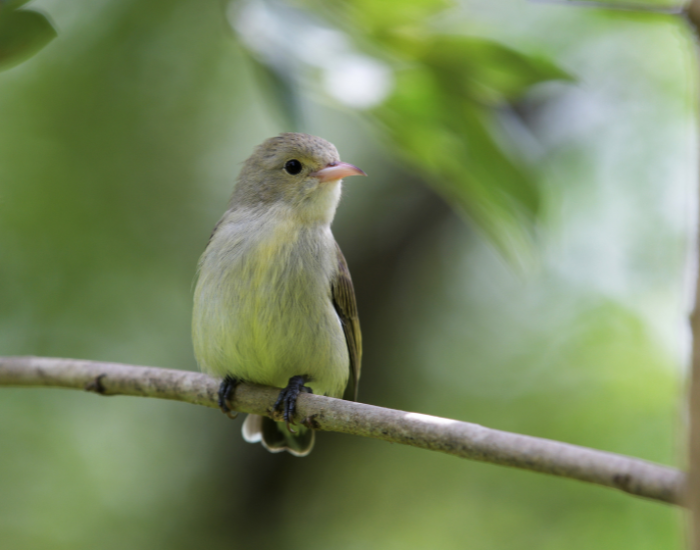
Size: 8 cm | Distribution: Indian Subcontinent
This tiny bird has a specific ecological job: planting mistletoe. It maintains a mutualistic relationship with the plant — it eats the berries, and the incredibly sticky seeds pass through its gut and onto tree branches where they germinate. In the forests of Sri Lanka, I’ve spent hours watching these birds zip through the canopy, acting as the primary architects of the forest’s parasitic plant life.
4. Weebill (Smicrornis brevirostris)
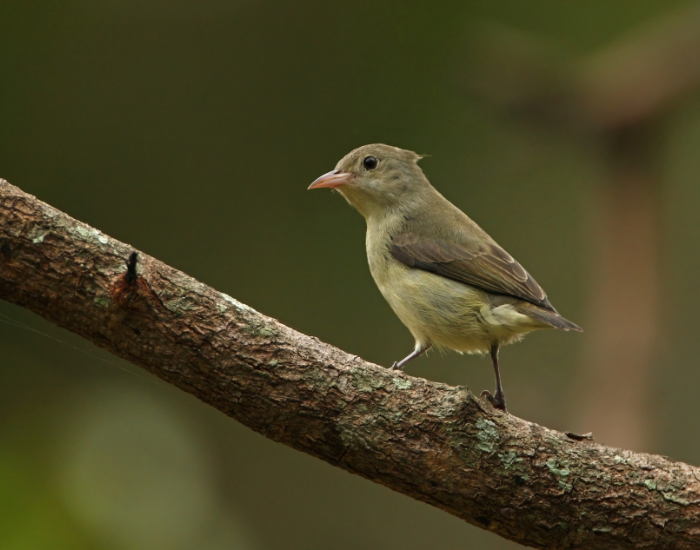
Size: 8–9 cm | Distribution: Australia
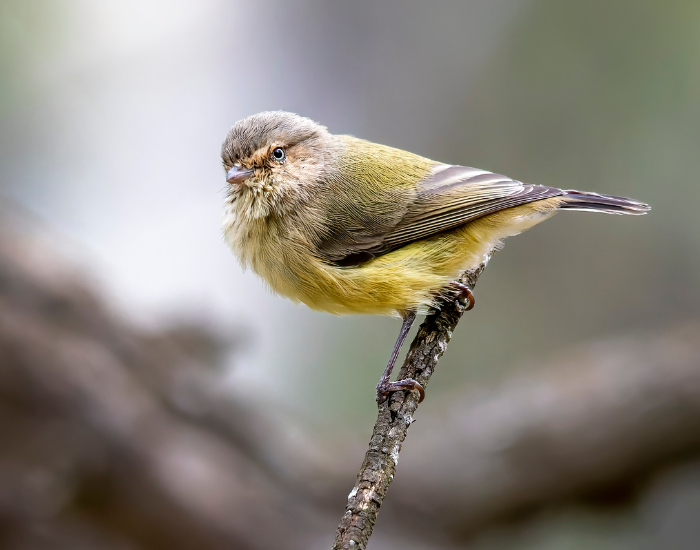
This is the bird that triggered my Mexico flashback. The Weebill is Australia’s smallest bird. While it lacks iridescent feathers, its ‘hover-gleaning’ technique — hovering to pluck insects off eucalyptus leaves — is remarkably similar to a hummingbird’s foraging style. Seeing it work reminded me that nature often finds the same solutions to the same problems, regardless of the continent.
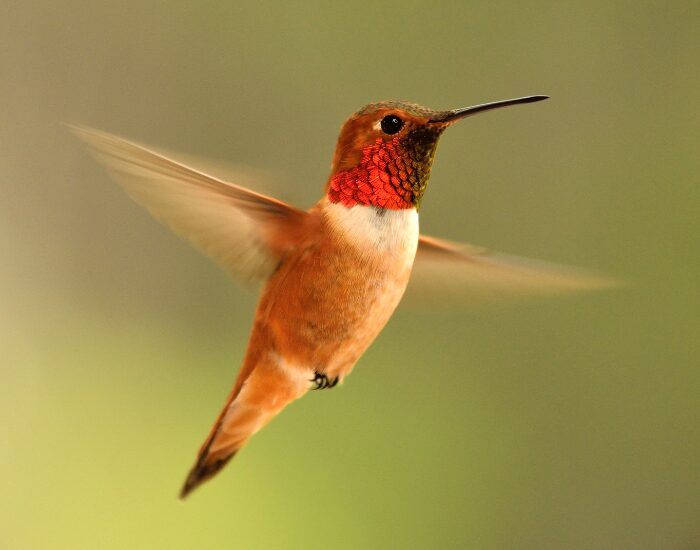
3. Rufous Hummingbird (Selasphorus rufus)
Size: 7–9 cm | Distribution: North America
Hummingbirds is another type of bird that needed to be on the list of course. These guys can be tiny. The Rufous is the feisty one. They also hold the record for the longest migration relative to body size among North American hummingbirds, traveling nearly 4,000 miles from Alaska to Mexico and back. Their aggressive personality and outsized ambition make them one of nature’s most compelling characters.
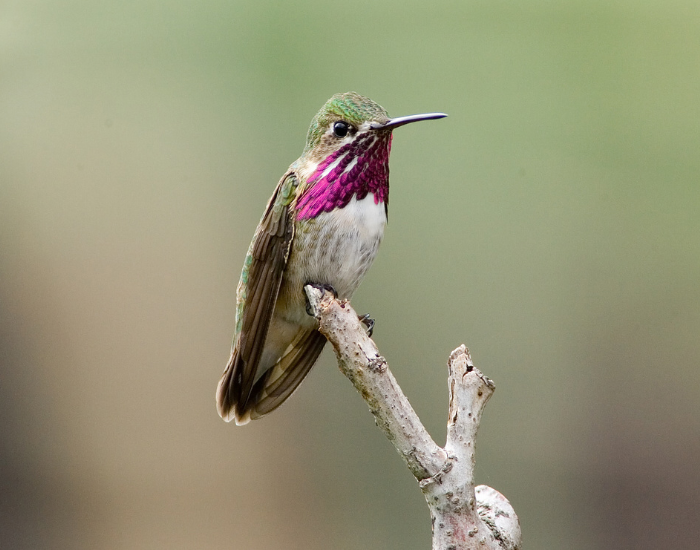
2. Calliope Hummingbird (Selasphorus calliope)
Size: 7 cm | Distribution: Western North America
The Calliope Hummingbird is the smallest bird species found in the United States and Canada. Weighing roughly 2.5 grams — about the same as a ping-pong ball — it breeds in high-altitude mountain meadows. To survive freezing mountain nights, it enters torpor: a state of temporary, nightly hibernation where its body temperature drops and heart rate slows dramatically to conserve energy.
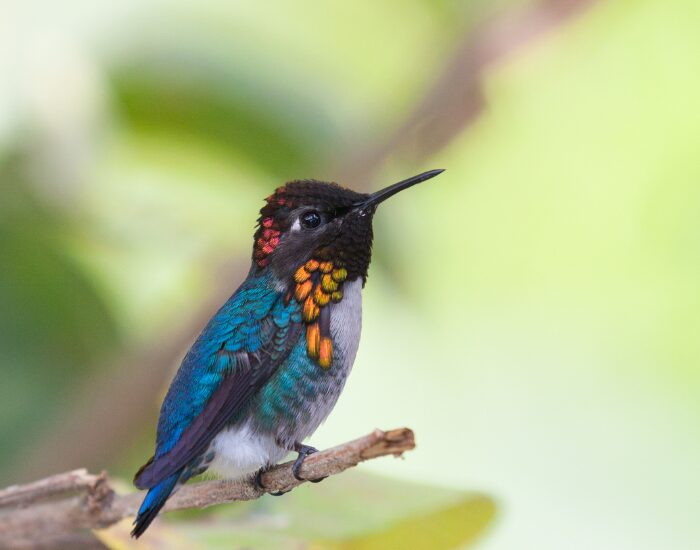
1. Bee Hummingbird (Mellisuga helenae) — The World’s Smallest Bird!
Size: 5.5–6.1 cm | Weight: 1.95–2.6 g | Distribution: Cuba
The Bee Hummingbird is definitively the world’s smallest living bird. Endemic to the Cuban archipelago — including the main island of Cuba and Isla de la Juventud — this bird is so tiny it is routinely mistaken for an insect. Males measure just 5.5 cm and weigh less than 2 grams, while females are slightly larger at 6.1 cm and 2.6 grams.
The female builds a cup-shaped nest roughly 2.5 cm (1 inch) in diameter, woven from cobwebs, bark, and lichen. She lays one to two eggs, each about the size of a coffee bean, and incubates them alone for 21 days.
In flight, its wings beat 80 times per second. During courtship displays, that figure surges to 200 beats per second. There is no other bird like it on Earth.
Smallest Birds Comparison Table
| Bird Name | Length (cm) | Weight (g) | Region | IUCN Status |
| Bee Hummingbird | 5.5–6.1 | 1.95–2.6 | Cuba | Near Threatened |
| Calliope Hummingbird | 7.0 | 2.5 | North America | Least Concern |
| Weebill | 8–9 | 5.0 | Australia | Least Concern |
| Goldcrest | 8.5–9 | 5.5 | Eurasia | Least Concern |
| Pale-billed Flowerpecker | 8.0 | 4.0 | Asia | Least Concern |
Conservation: Why Small Size Is a Double-Edged Sword
Being small has advantages — lower food requirements than large predators, the ability to hide in dense foliage, and agility that outmaneuvers many threats. However, small size also makes these birds incredibly vulnerable to habitat loss.
The Bee Hummingbird is listed as Near Threatened by the IUCN, with its population in decline. Its range is restricted to Cuba, and because it has such extreme metabolic needs, even a small disruption in local flowering plants can trigger a population crash. Deforestation and land conversion for agriculture are the primary drivers of habitat loss across its range.
Cuba has committed to keeping its annual deforestation rate at just 0.1 percent, and the government’s Reforestation Plan has resulted in hundreds of millions of trees planted since the 1960s. However, mass tourism and economic development continue to pressure key habitats like the Zapata Swamp — the species’ most important stronghold.
For the Goldcrest in Europe, Common Firecrest in North Africa, and Spotted Pardalote in Australia, the threats are different but equally real: pesticide use reducing insect populations, urban sprawl fragmenting forest habitats, and climate change shifting the timing of food availability.
The good news? You can help from your own backyard. Planting native, nectar-rich flowers provides a vital lifeline for tiny birds. Avoiding pesticides protects the insects they depend on.
FAQ: Your Questions About the World’s Smallest Birds
The Bee Hummingbird (Mellisuga helenae), a tiny hummingbird endemic to Cuba, is recognized as the world’s smallest bird species. Males measure just 5.5 cm in length and weigh under 2 grams — smaller than many insects.
The Weebill in Australia and the Goldcrest in Europe are the top contenders. The Weebill holds the title of Australia’s smallest bird at around 8 cm, while the Goldcrest is widely recognized as the smallest bird in Europe.
Yes — Cuba is the exclusive home of the Bee Hummingbird, also known as the Helena Hummingbird, the world’s smallest bird. The species is found across the Cuban archipelago, with the highest concentrations in the Zapata Swamp and the Viñales Valley.
The Bee Hummingbird beats its tiny wings approximately 80 times per second in normal flight. During courtship displays, this rate surges to around 200 beats per second — fast enough to produce an audible hum.
Most tiny birds require a high-energy diet. Hummingbirds feed primarily on nectar and supplement with small insects and spiders for protein. The Weebill and Goldcrest are primarily insectivorous, gleaning small insects from foliage and tree bark. Seeds are rarer in the diets of very small birds because they don’t deliver enough immediate energy.