Why I’m Obsessed with the Sand Cat
I’ll be honest, I’ve been a cat person my whole life. I can’t get enough. But when I first learned about the sand cat? Game changer. Here’s the thing: this isn’t your average fluffy house pet. The sand cat (Felis margarita) is basically a tiny, adorable survivor that makes its home in some of the most brutal places on Earth. We’re talking scorching deserts where most creatures would simply give up.
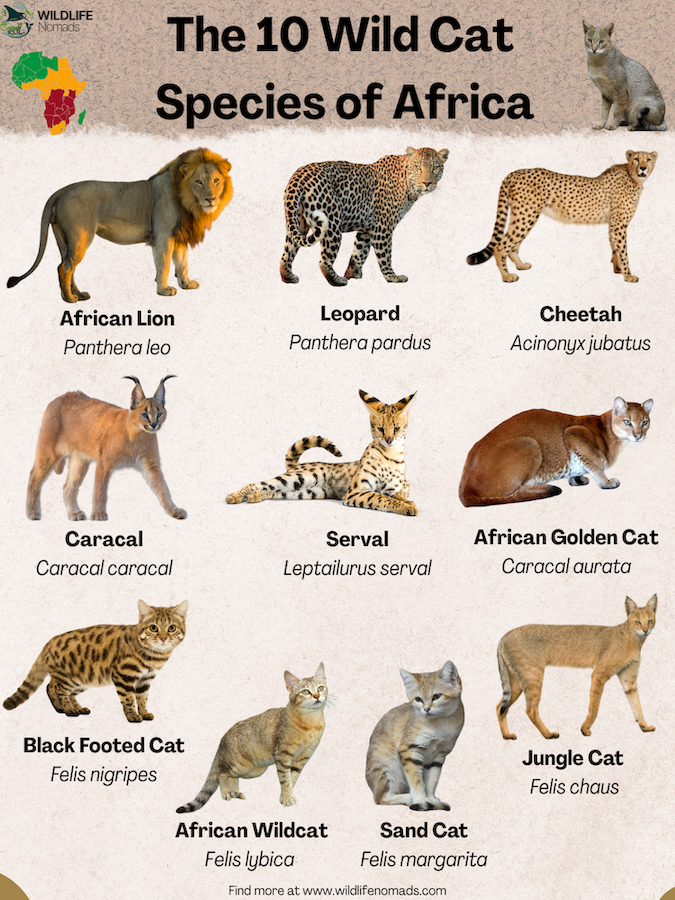
What really gets me is how they share their territory with some seriously impressive neighbors. You’ve got fastest animal in the world, the cheetah, the caracal prowling around, though they prefer spots with a bit more greenery. Then there’s the black footed cat hanging out in southern Africa’s drylands. Each one has its own survival strategy, but the sand cat? They took “desert living” to a whole new level.
So buckle up! I’m about to share 12 absolutely fascinating facts about sand cats. We’ll dive into where they actually live, how they manage to thrive in places that would kill most animals, and why we should all care about protecting them. Ready to meet nature’s ultimate desert badass?
1: Sand Cats Don’t Just Live in Africa, They’re Everywhere!
Okay, so here’s something that blew my mind: most people think sand cats only hang out in Africa. Wrong! These desert dwelling species have a way bigger neighborhood than you’d expect.
They’re World Travelers (Sort Of)
Picture this: sand cats are chilling across three entire continents. Let me break it down:
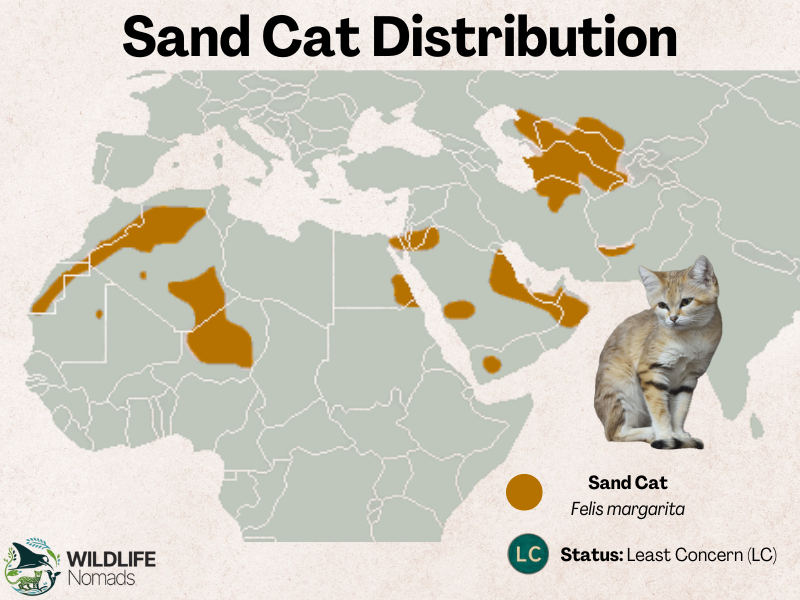
North Africa: The Sahara Desert is basically their main headquarters. You’ll find them in Morocco, Algeria, Niger, and Tunisia. This is where the North African subspecies lives, and honestly, if you can survive the Sahara, you can survive anything.
Middle East and Arabian Peninsula: These guys are living their best lives in Saudi Arabia, UAE, Oman, and Yemen. The Arabian Peninsula sounds romantic, but it’s brutally hot. Sand cats don’t seem to mind though.
Central Asia: Here’s where it gets really interesting, they’re also in Pakistan, Turkmenistan, Uzbekistan, and Kazakhstan. That’s the eastern edge of their range, and it shows just how adaptable these cats are.
Now, we’re talking about roughly 1.5 million square miles here. But here’s the catch: their populations are super patchy. They’re not everywhere within this range, more like scattered pockets.
Picky About Their Real Estate
Within these huge areas, sand cats are actually pretty selective about where they set up shop. They want arid habitats with barely any plants around. Give them sandy dunes or gravel plains, and they’re happy campers. Rocky valleys work too, surprisingly.
Here’s what’s wild: unlike Africa’s wild cats like the serval or caracal, sand cats actually avoid places with decent vegetation. Seems backward, right? But they need loose sand for digging, it’s non-negotiable. That’s why true desert habitat is their jam.
Sure, there are protected areas across the Middle East and North Africa trying to help them out. But honestly? Most sand cats live outside these protected zones, which makes keeping them safe pretty tricky.
2. They’re Basically Pocket-Sized Predators
When you think “desert predator,” you probably picture something big and scary. Sand cats? They’re more like nature’s compact edition, small but mighty.
Like many desert-dwelling species, sand cats have developed unique survival strategies to thrive in harsh desert environments.
Just How Small Are We Talking?
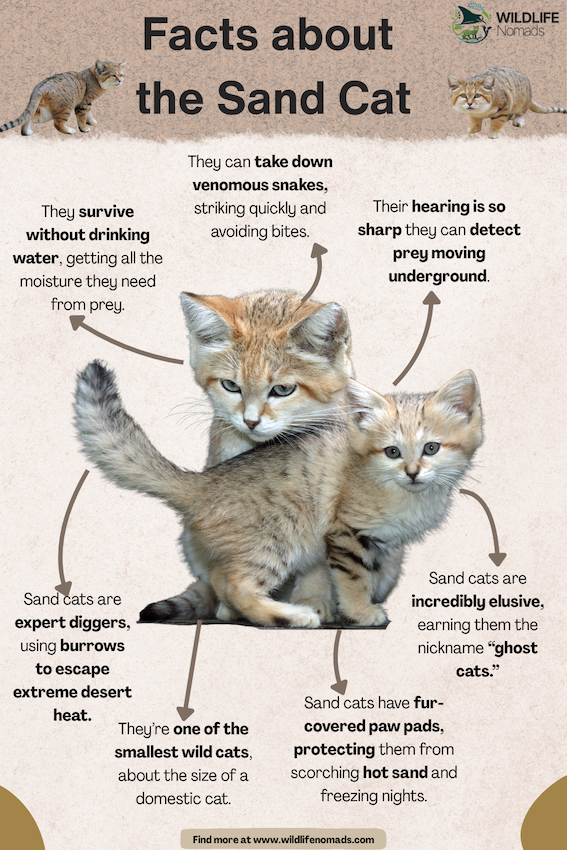
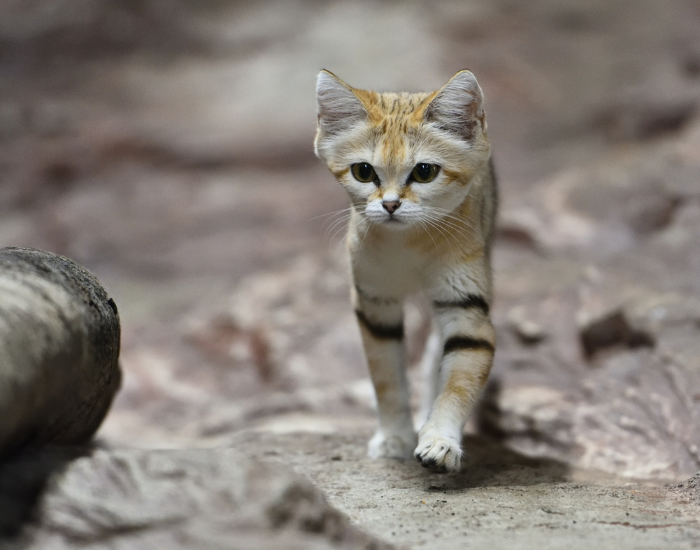
Sand cats are surprisingly small. Males weigh around 4–8 pounds, with females even lighter at 3–7 pounds, about the same as a bag of sugar. Their bodies measure just 15–20 inches long, plus a 9–12 inch tail, and they stand only 10–12 inches tall at the shoulder. In other words, they’re roughly the size of a domestic cat, but compared to most wild cats, they’re absolutely tiny.
What They Look Like
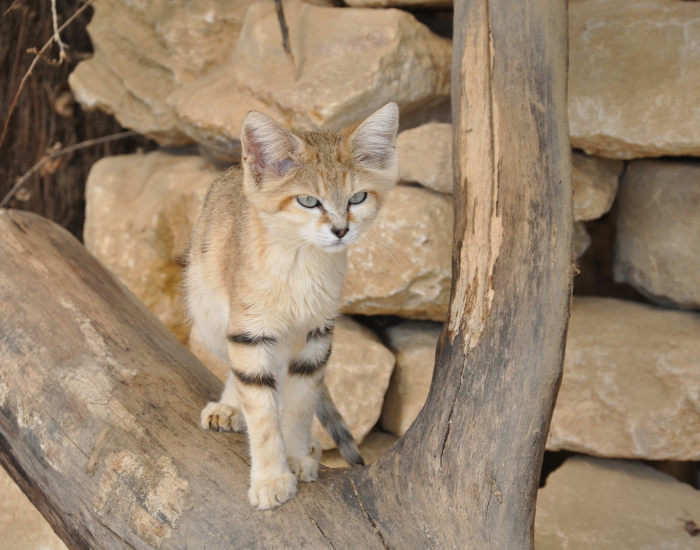
Despite being small, adult sand cats have some seriously distinctive features that make them stand out:
Wide Head: Their skulls are noticeably broad. It gives them this unique, almost square-jawed look.
Short Legs: They’re not winning any high-jump competitions with those stubby legs, but those short limbs keep them stable on shifting sand.
Pale Coat: Their fur is this gorgeous sandy color that basically makes them invisible in the desert. Nature’s camouflage at its finest.
Black Tip: Most sand cats have this distinctive dark brown or black tip on their tail. It’s like their signature accessory.
3. Their Paws Are Basically Desert Snowshoes
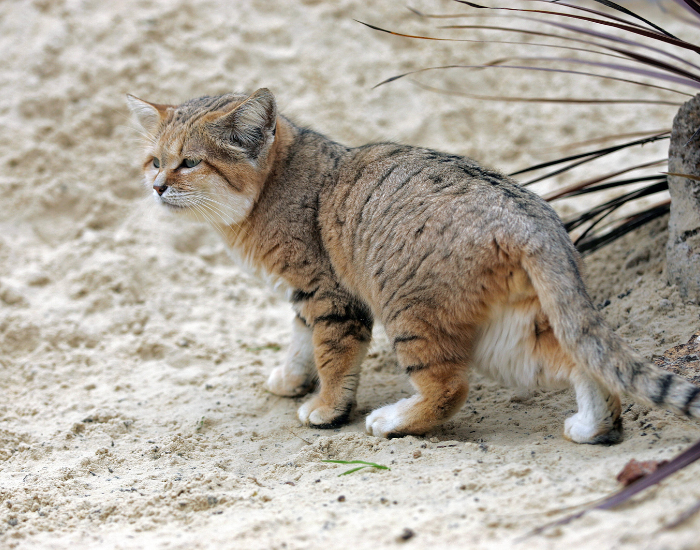
Their paws are completely covered in dense hair. I’m not talking about a little fuzz, I mean long, thick fur that covers even the bottom pads entirely.
Heat Protection: This hair keeps their sensitive pads safe from hot sand. And we’re talking about surface temperatures that can hit 124°F! Without this furry protection, they literally couldn’t walk during the day. It’d be like trying to walk barefoot on a scorching parking lot.
Natural Traction: The fur works exactly like snowshoes. It spreads out their weight so they don’t sink into loose, blowing sand. That’s how they can sprint across sand dunes like it’s no big deal.
Stealth Mode: Bonus feature, the fur muffles sound. This helps them sneak up on prey across what would otherwise be super crunchy, noisy sand.
4. Those Enormous Ears Aren’t Just for Show
If you’ve ever seen a photo of a sand cat, you probably noticed their ears first. They’re HUGE. But there’s a really good reason for that, similar to the fennec fox ears, these things are basically biological radar dishes. The sand cat’s ears are set low on the sides of its head, which helps them detect prey moving underground. Their acute hearing allows them to detect prey even when it is hidden beneath the sand, making them highly effective hunters in their desert environment.
Super-Powered Hearing
Their ear canal is way bigger than other cats’. This enhanced sense of hearing isn’t just impressive, it’s essential for survival:
Underground Prey Detection: Get this, they can hear small rodents moving underneath the sand. Like, literally under the ground. Those tiny vibrations and sounds that we’d never detect? Sand cats pick them up perfectly and know exactly where to dig.
Long-Distance Communication: Their ears also help them catch high pitched calls from other sand cats across massive desert expanses. When you live in a place where your nearest neighbor might be miles away, good hearing matters.
Why Their Ears Are Different
The ears sit low and wide on their head. This position helps them pinpoint exactly where sounds are coming from. Plus, that big surface area means they catch even the faintest noises.
Now, other small wild cats have pretty good hearing too. The serval has big ears, but that’s for hearing prey in tall grass, totally different challenge. The caracal’s tufted ears are more about looking impressive and communicating with other caracals. And the black footed cat has normal-sized ears by comparison.
Sand cats evolved their hearing specifically for one job: finding prey underground in dead-silent desert environments. Among wild cats, this makes them pretty special.
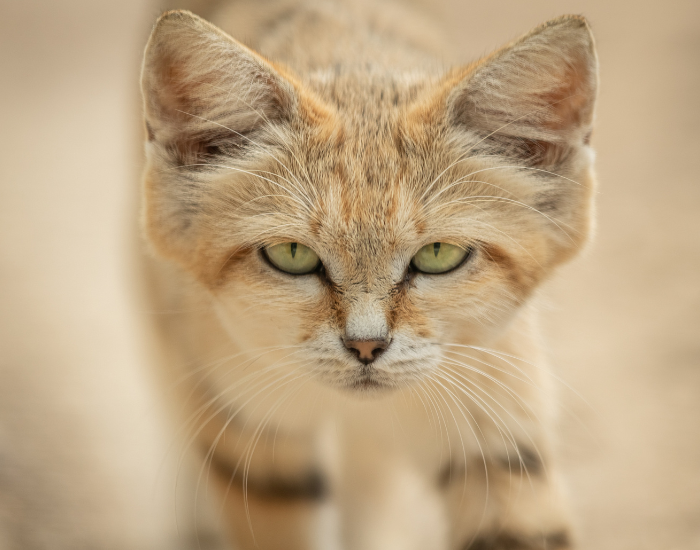
5. They Hunt Venomous Snakes (And Win!)
Most animals see a venomous snake and think “nope, not worth it.” Sand cats? They see lunch. Okay, this fact is the one that made me go from “oh, cute cat” to “WHAT?!” Sand cats have this totally insane reputation among researchers: they’re fearless snake hunters
Think about it: the black footed cat sometimes hunts snakes too, but not nearly as often. The serval and caracal? They usually steer clear of venomous prey entirely. It’s just too risky.
But sand cats made this their specialty. They help keep snake populations in check, which benefits literally every other animal in the desert ecosystem. Plus, it shows just how tough these little guys are. They might be small, but they’ve got absolutely zero chill when it comes to hunting.
Their snake-hunting skills have made them legends among wildlife researchers. It’s one of those characteristics that really sets them apart from every other wild cat out there.
6: They Never Need to Drink Water (Seriously!)
This might be the most mind-blowing adaptation of all. Sand cats have achieved what most desert animals can only dream of: complete independence from drinking water.
How Is This Even Possible?
These desert dwelling species get absolutely all their water from the prey they eat. No rivers, no oases, no morning dewdrops needed.
Juicy Prey: Their diet of small rodents, birds, and lizards contains about 70% water. Small mammal prey is basically a meal and a drink in one package.
Super-Efficient Kidneys: Their kidneys produce incredibly concentrated urine. This means they lose almost no water when they pee, way less than other cats.
Moisture Conservation: They’ve even evolved to lose less water when they breathe compared to other felines. Every drop counts in the desert!
This Gives Them a Massive Edge
Let me put this in perspective: the serval needs to drink regularly. The caracal can handle some dry periods but still needs water eventually. Even the black footed cat, another desert specialist, will drink when water’s available.
Sand cats? They’re on another level entirely. They thrive in the driest arid habitats on planet Earth. We’re talking places that might not see rain for months or even years. No standing water? No problem.
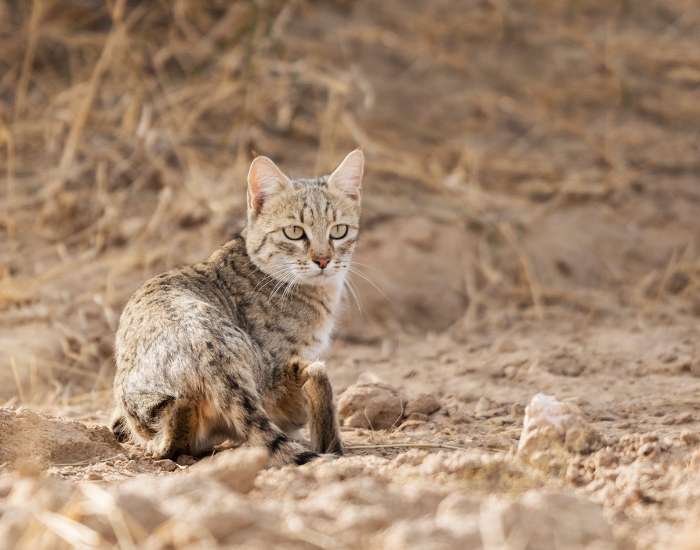
7. Good Luck Ever Seeing One in the Wild
Sand cats are notoriously elusive. Like, “cryptid” levels of hard to spot. Their nocturnal lifestyle makes them one of the most mysterious small wild cats on the planet.
Night Owls of the Desert
There are several smart reasons why they’re active at night:
Cooler Temps: Nighttime brings much cooler surface temperatures. This means they can move around comfortably without scorching those fur-covered paws. Sand cats are nocturnal and crepuscular animals, avoiding the intense heat of the desert by hiding in burrows during the day.
Prey Timing: Primarily small rodents come out at night too. Gerbils, jerboas, and other small mammal prey are all nocturnal, so it makes sense to hunt when dinner’s available.
Hiding from Predators: Darkness helps them avoid larger predators like jackals and eagles. When you’re small, staying invisible is a solid survival strategy.
What They Do During the Day
To escape the desert heat, sand cats shelter in shallow burrows, either digging their own or taking over abandoned ones. They’ll even share a burrow with another sand cat, just not at the same time. They’re solitary, after all. Lying on their backs outside the burrow might look odd, but it helps release heat through their less-insulated belly.
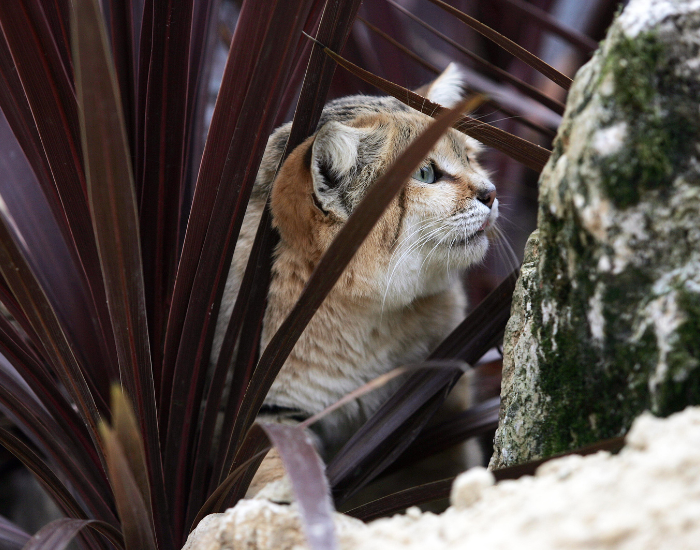
8. They’ll Eat Pretty Much Anything They Can Catch
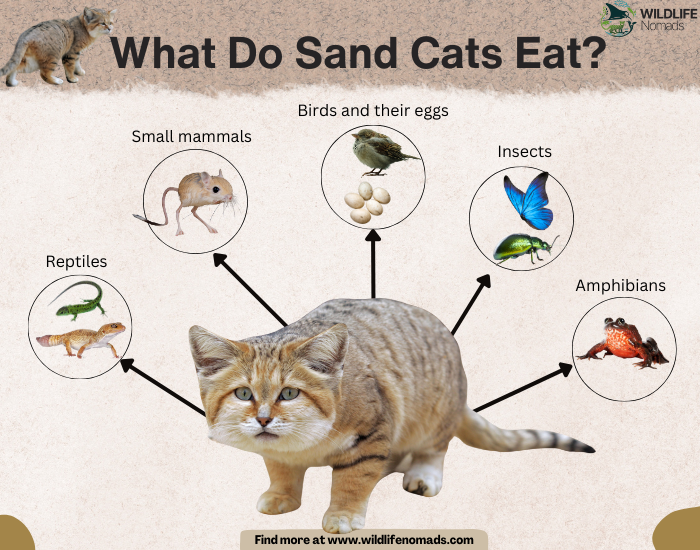
Living in the desert means you can’t be picky about food. Sand cats are the ultimate opportunistic feeders, if it moves and they can catch it, it’s dinner. Sand cats eat primarily small rodents, occasionally hares, birds, spiders, insects, and reptiles. They have been observed preying on small rodents, the young of cape hare, and various reptiles. When hunting, sand cats can sprint at speeds of 30–40 km/h.
Their Go-To Menu
Gerbils: These make up most of their diet in many areas. They’re abundant and the perfect size for a sand cat snack.
Jerboas: These hopping rodents are like desert kangaroos. They provide a more substantial meal.Various Other Rodents: Really, any small rodent is fair game depending on what’s around.
Smart Storage System
Here’s something cool: sand cats often kill more than they can eat in one sitting. Do they waste it? Nope! They create shelter by burying their extra kills, then come back later for a snack. This kind of forward planning is rare in small cats and highlights their intelligence. Along with powerful digging skills and exceptional hearing, it helps make them surprisingly effective hunters despite their size.
9. Female Sand Cats Are Amazing Moms
Watching how sand cats handle reproduction is fascinating. Female sand cats show these incredibly strong maternal instincts even though they normally live alone. Sand cats are fully independent by the end of their first year and become sexually mature soon after, typically around one year of age. The sand cat is solitary, except during the mating season and when a female has kittens.
When Baby Season Happens
The breeding season actually changes depending on where you are:
Sahara Desert: January through April is peak baby-making time.
Central Asia (Turkmenistan): April is when things get romantic.
Pakistan: September through October brings mating season.
This timing isn’t random, it lines up with regional weather patterns so kittens are born when conditions are best for survival.
Finding a Mate
Female sand cats don’t just sit around waiting. They actively attract males using vocalizations. Those high pitched calls can travel across huge long distances in the desert. Males hear them and come running to find breeding opportunities.
Unlike some Africa’s wild cats that pair up for a while, sand cats keep it brief. They mate, then go their separate ways. The males don’t stick around for dad duty at all.
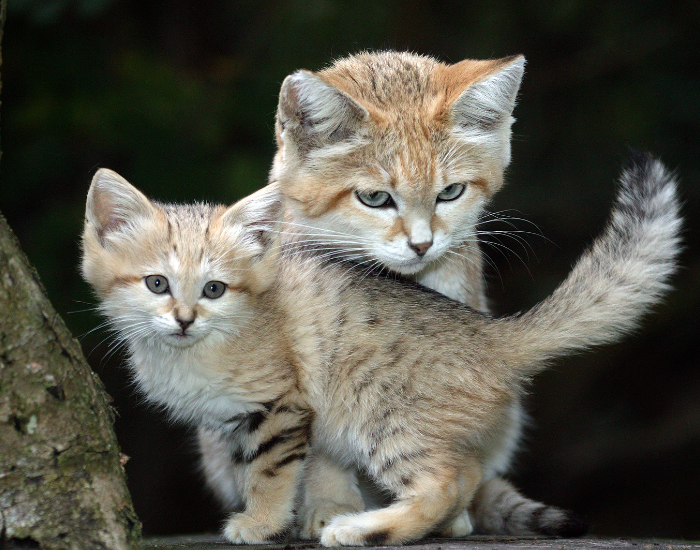
10. They’re in More Trouble Than You’d Think
Despite living across such a huge area, sand cats are facing some serious challenges. Major threats to the sand cat include habitat loss, human activities, hunting, and disease transmission. They are also threatened by the introduction of feral and domestic dogs and cats, which create direct prey competition and introduce diseases.
The Official Status (And Why It Might Be Wrong)
The International Union for Conservation of Nature says sand cats are “Least Concern.” Sounds good, right? Well, not so fast.
Recent research is suggesting their populations might be way smaller than anyone realized. Here’s the issue: sand cats need huge territories, which means fewer individuals can fit in any given area. A lot of conservationists are pushing for the status to be reconsidered.
What’s Threatening Them
Sand cats are getting hit from multiple directions:
- Habitat Loss
- Livestock Grazing
- Mistaken Identity Killings
- Feral and Domestic Dogs
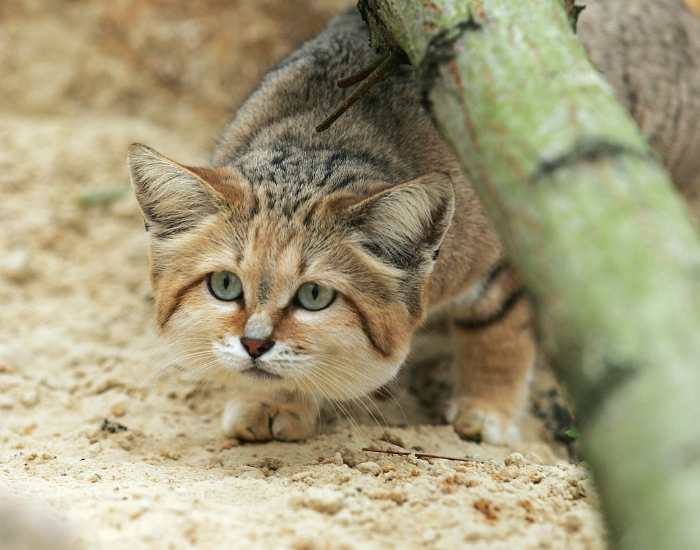
11. They’re Loaded with Cool Adaptations Beyond Those Paws
Everyone focuses on their furry feet (understandably, they’re awesome), but sand cats have a whole suite of other amazing specializations.
Their Coat Is Seriously High-Tech
That fur does way more than just look pretty:
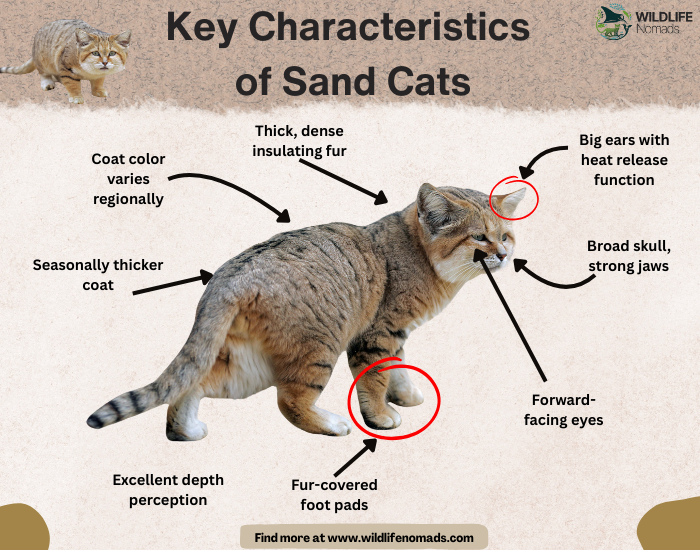
Insulation Central: Thick, dense hair covers their whole body. This insulates them against extreme temperatures, both the insane heat and the freezing desert nights.
Regional Fashion: The exact color varies by location. Northern Africa sand cats are super pale, almost ghostly. Central Asia populations are a bit darker. It’s all about matching the local sand color.
Seasonal Adjustments: Their coat changes thickness with the seasons, though not as dramatically as cats in temperate climates do.
Powerful Jaws: That wide head we mentioned? It’s not just for looks—the broad skull holds powerful jaw muscles perfect for killing prey quickly.
Forward Eyes: Their large eyes face forward, giving them excellent depth perception. Critical when you’re pouncing on prey.
Night Vision Plus: Their eyes reflect light brilliantly at night, helping with nocturnal hunting. But here’s something weird, when approached by humans or bright lights, they close their eyes. This makes them almost invisible in the dark.
12: Desert Ecosystems Rely on Them
The sand cat helps keeping the ecosystem together. Their role affects way more species than you’d think.
Keeping Everything in Balance
As mid-level predators, they’re like ecosystem managers:
Rodent Police: They keep populations of primarily small rodents in check. Without them, those rodents would absolutely explode in numbers and devour what little vegetation exists in the desert habitat.
Snake Control: That fearless snake hunters reputation isn’t just for show. By controlling venomous snakes, they make the desert safer for tons of other species.
Bug Management: Even their consumption of insects and spiders has ripple effects through the invertebrate community.
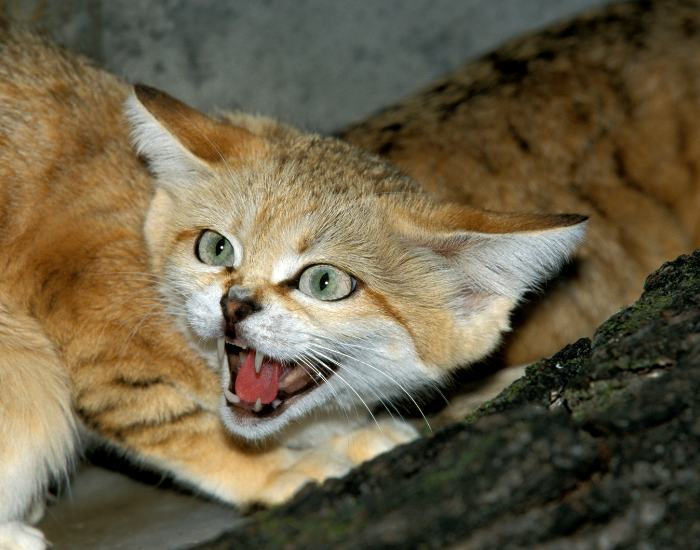
Wrapping It Up: Let’s Protect Sand Cats
So here we are at the end of our journey into the world of the sand cat. These small wild cats are absolute marvels, from those fur-covered feet to their fearless snake hunters reputation, they’re perfectly adapted for desert life.
Sand cats have evolved to survive extreme weather in their desert habitats, enduring high temperatures and harsh conditions, but now human-caused threats are their biggest challenge. Habitat loss, climate change, overgrazing from livestock, direct persecution, the challenges keep mounting.
What really gets me is how overlooked they are. Everyone knows about the serval or the caracal. Even the black footed cat gets media attention now and then. But sand cats? They’re fighting for survival in relative obscurity.
That needs to change. These cats play an irreplaceable role in desert ecosystems. Lose them, and you lose way more than just one adorable species, you lose a keystone of biodiversity and a piece of evolutionary genius.