
When I first started writing about wild cats, it was the ocelot that first caught my attention. A small wild cat that have always fascinated me. Then came the serval, that long-legged hunter of the African grasslands. And more recently, the most widespread cat of the Americas, the cougar or mountain lion. Each story felt like a window into a new realm of feline diversity. However, one species kept resurfacing in my notes, often overlooked, oddly elusive, and distinctly odd looking: the jaguarundi.
I remember seeing jaguarundis a few times in Mexican zoos, small cats with elongated bodies pacing their enclosures with the cautious grace of something caught between a weasel and a panther. Despite all my time in the American continent, I’ve never been privileged to spot one in the wild. Perhaps that’s what makes this wild cat species so fascinating, a ghost of the lowlands, slipping quietly through forests and scrublands from Mexico down to Argentina.
Today, let’s explore 12 fascinating facts about the jaguarundi, a cat unlike any other wild cats in the Americas.

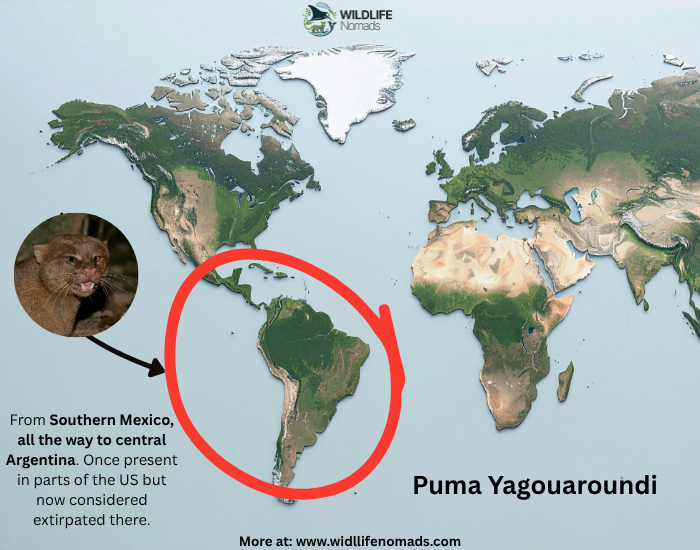
1. Jaguarundis Live Across an Entire Continent
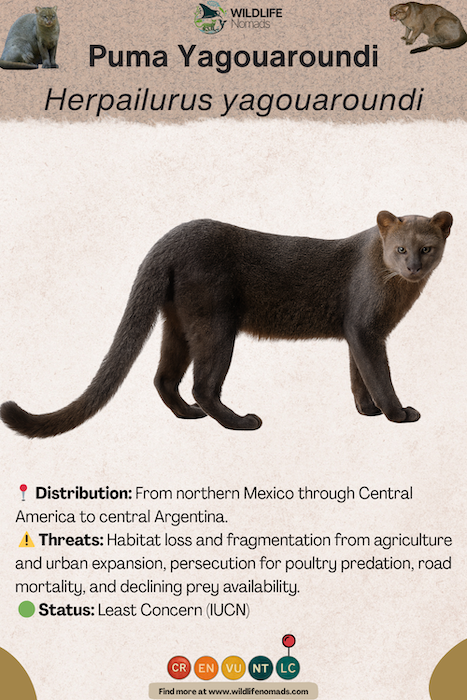
The jaguarundi’s (Herpailurus yagouaroundi) range spans an impressive geographic area from northern Mexico to central Argentina. This wild cat species inhabits nearly all of Central and South America, making it one of the most widely distributed small cats in the Americas. The jaguarundi’s range covers a vast array of habitats and regions, contributing to its broad distribution.
Their continental distribution includes diverse regions across multiple countries. In Central America, jaguarundis thrive in countries like Belize, Guatemala, Honduras, and Costa Rica. Moving south, populations extend through Colombia, Venezuela, and Brazil. Furthermore, they’re found in Peru, Bolivia, Paraguay, and northern Argentina. These are the main range countries within the jaguarundi’s range.
Historically, small populations existed in south Texas near the Lower Rio Grande Valley. However, the last confirmed sighting in the United States occurred decades ago. Despite sporadic reports from south Texas and northern Mexico, no physical evidence has been documented recently. Therefore, conservationists consider the species functionally extinct north of the Mexican border.
2. They’re Called “Otter Cats” for Good Reason
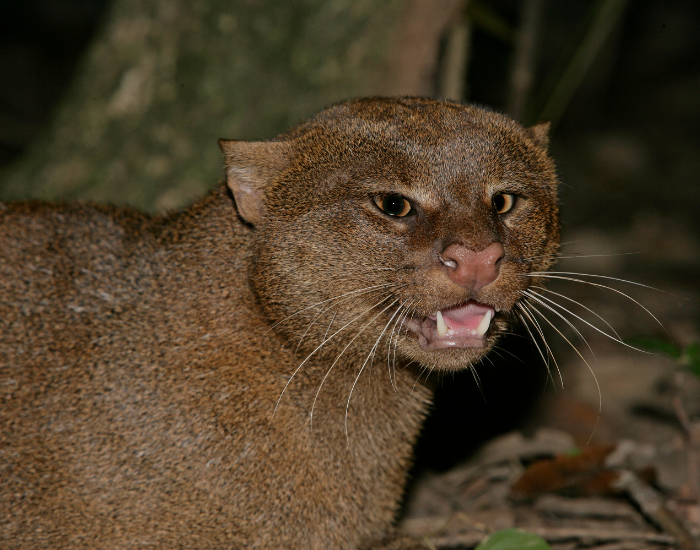
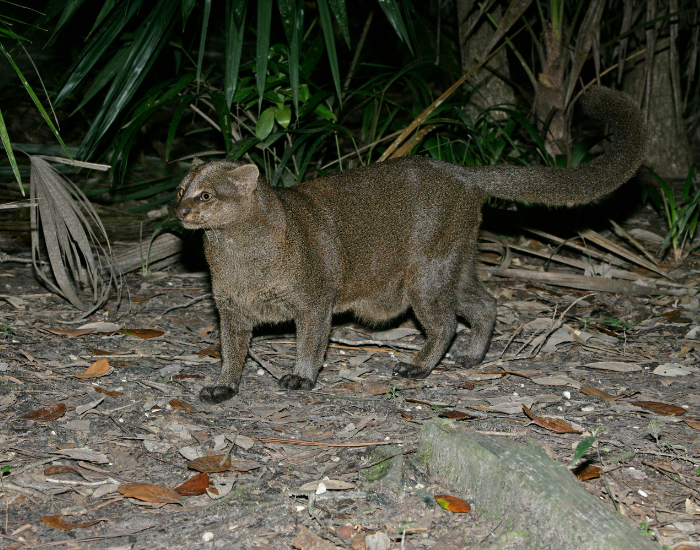
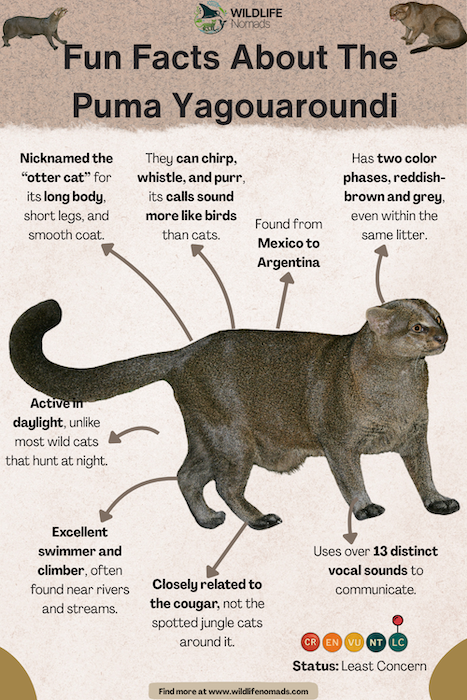
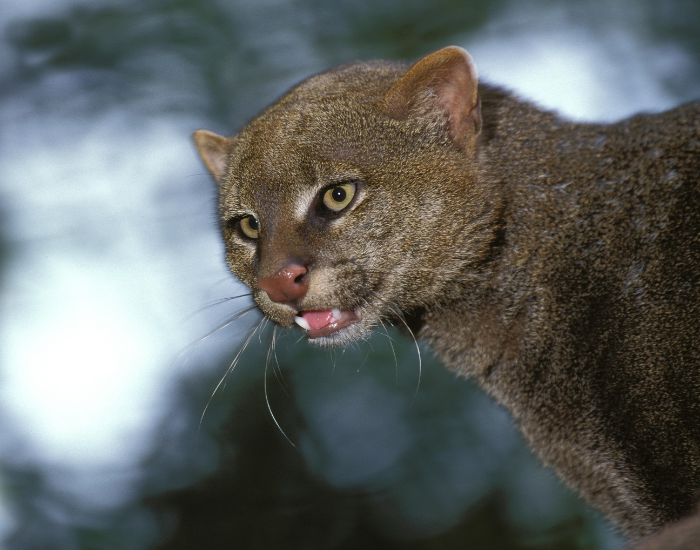
The jaguarundi’s distinctive appearance earned it the nickname “otter cat” across its range. Their slender bodies, short legs, and long tail create an unmistakably weasel-like silhouette. In fact, many people mistake them for otters or even domestic cats when glimpsed briefly, though the jaguarundi is slightly larger than a typical domestic cat.
Their thick tail measures 30–60 cm (12–24 inches) and provides crucial balance during climbing. The elongated body stretches 53–77 cm (21–30 inches) in length. Moreover, their small head and small, round ears further distinguish them from other wild cats.
The “otter cat” comparison extends beyond appearance. Jaguarundis swim remarkably well compared to most wild cat species. They often hunt along riverbanks and aren’t afraid to enter water pursuing prey. Therefore, locals in Central America sometimes call them “gato nutria” (Spanish for “otter cat”).

3. Jaguarundis Are Closely Related to Mountain Lions
Despite their small size, jaguarundis share a surprising evolutionary connection with Puma concolor (the mountain lion or cougar). Genetic research confirms they’re more closely related to big cats like pumas than to other small cats in their range. While conservation efforts often focus on ‘big cat’ species as charismatic, umbrella species, the jaguarundi, despite its close relation, has different habitat needs and is often overlooked.
The scientific name Puma yagouaroundi reflects this relationship. Some taxonomists previously classified them under the genus Herpailurus. However, DNA sequencing revealed their true evolutionary lineage. Both jaguarundis and mountain lions descended from a common ancestor that migrated from Eurasia to the Americas roughly between 6.7 to 8.25 million years ago.
This close relationship explains certain behavioral similarities. Like mountain lions, jaguarundis maintain large home ranges spanning 88–100 square kilometers. Furthermore, both species are solitary animals that mark territories using scent glands. They also share similar vocalizations compared to other wild cat species.
Interestingly, they’re not closely related to other small South American cats like ocelots or margays. These spotted cats belong to different evolutionary lineages. Therefore, the jaguarundi represents a unique branch in the wild cat family tree, distinct from both house cats and other cats in their geographic range.

4. They Come in Two Distinct Color Phases
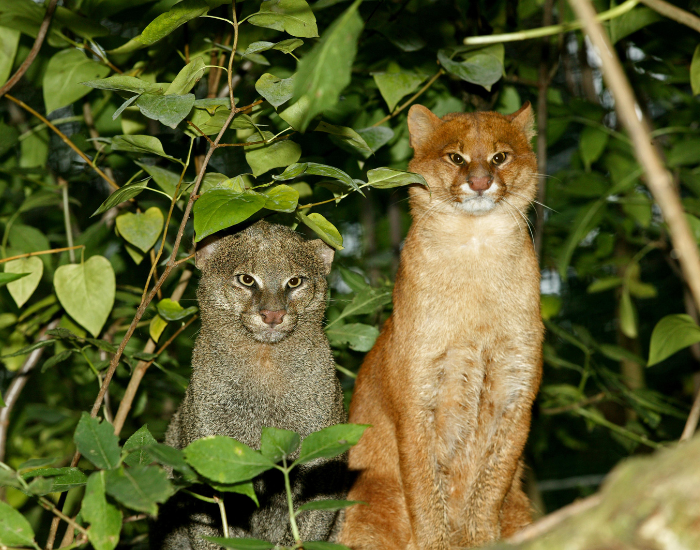
The jaguarundi exhibits remarkable color variation unlike most wild cats. Two primary color phases exist: the red phase and the brownish grey phase. Both can appear within the same litter, demonstrating genetic polymorphism rather than geographic adaptation.
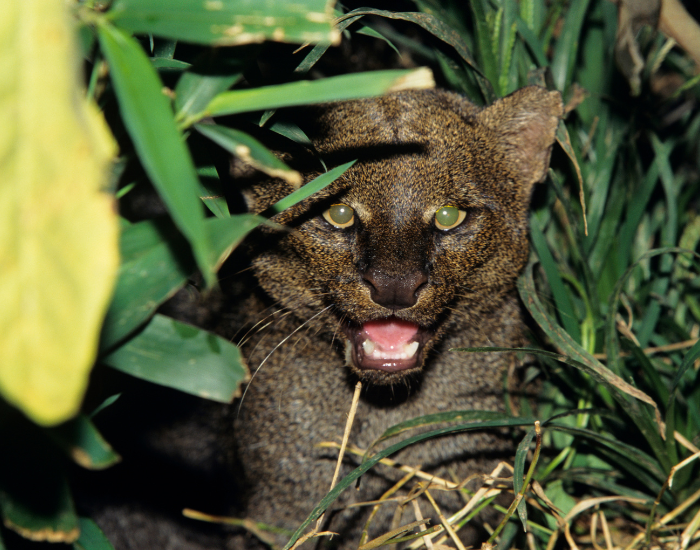
The red phase displays rich reddish-brown fur ranging from fox-red to chestnut. This coloration appears particularly vibrant in Central America populations. In contrast, the brownish grey phase varies from charcoal to nearly black. Some individuals appear so dark they’re mistaken for melanistic cats.
Early naturalists believed these color phases represented separate cat species entirely. However, research confirmed they’re simply genetic variations within Puma yagouaroundi. Furthermore, color phases don’t correlate with specific habitats or regions. Red phase and grey phase individuals coexist throughout their range, and both color phases can be found living in the same habitat, demonstrating the jaguarundi’s adaptability to various environments.
Neither color phase features spots, stripes, or rosettes common in other wild cats. This plain coat provides excellent camouflage in shadowy undergrowth. Moreover, the smooth, thick tail and streamlined body remain consistent regardless of color variation. This lack of markings distinguishes them from domestic cats and other small cats in Central America and South America.
5. They Hunt During Daylight Hours
Unlike most wild cat species, jaguarundis are diurnal cats most active during early morning and late afternoon. This unusual behavior sets them apart from nocturnal hunters like ocelots and margays. Therefore, they occupy a unique ecological niche among wild cats in their range.
Their daytime activity provides several advantages for catching prey. Diurnal hunting reduces competition with nocturnal predators for small animals. Furthermore, their excellent daytime vision helps them spot birds and small mammals moving through vegetation. Many prey species are also more active during daylight hours.
Camera traps throughout Central America and South America confirm their activity patterns. Studies in northern Mexico and south Texas show peak movement during morning and afternoon hours. However, they occasionally hunt at dusk or dawn depending on prey availability and weather conditions.
This diurnal behavior makes them potentially observable compared to other wild cats. Researchers in Texas parks and protected areas sometimes document jaguarundis during daylight surveys. Moreover, farmers occasionally spot them near domestic poultry farms during morning hours. Despite this visibility, they remain elusive and rarely photographed in natural habitat.
6. Jaguarundis Have Diverse Hunting Strategies
The jaguarundi employs remarkably varied hunting strategies to catch different prey types. Their elongated body and short legs facilitate multiple hunting techniques across diverse habitats. Furthermore, their adaptability allows them to exploit food sources other wild cat species cannot access efficiently.
They excel at catching birds through impressive leaping abilities. Jaguarundis can spring several meters vertically to snatch birds from low branches. Their long tail provides crucial balance during these acrobatic maneuvers. Moreover, they pursue flying birds through dense vegetation with surprising speed and agility.
Ground-dwelling prey requires different tactics. They stalk small mammals like rodents and agoutis through grasslands and forest floors. Their slender bodies let them pursue prey into burrows and hollow logs. Furthermore, they’re adept at catching prey in dense underbrush where larger carnivores cannot maneuver.
Aquatic hunting represents another unique strategy. Unlike most wild cats, jaguarundis readily enter water pursuing amphibians and fish. They hunt along riverbanks, catching frogs and small reptiles. This versatility in catching prey explains their success across varied habitats from dry scrub to tropical forests.
7. They Thrive in Diverse Habitats Across the Continent
Jaguarundis demonstrate exceptional habitat adaptability compared to other wild cat species. Their natural habitat encompasses tropical forests, savannah woodland, dry scrub, and even settled areas. They are found in both open and closed habitats, such as dense forests and shrublands. This versatility explains their extensive range from northern Mexico to central Argentina.
In Central America, they prefer lowland tropical forests with dense undergrowth. Primary forest is an important habitat supporting jaguarundi populations and overall biodiversity. These environments provide abundant cover for stalking prey and avoiding larger predators. However, they also inhabit secondary forests and disturbed areas near human settlements. Therefore, they tolerate habitat modification better than many small South American cats.
South America populations occupy even broader habitat types. They’re found in the Amazon rainforest, Brazilian cerrado, and Argentine pampas grasslands. Furthermore, they inhabit mountainous regions up to 3,200 meters elevation. This altitudinal range demonstrates remarkable physiological adaptability.

8. They Make Unusual Bird-Like Vocalizations
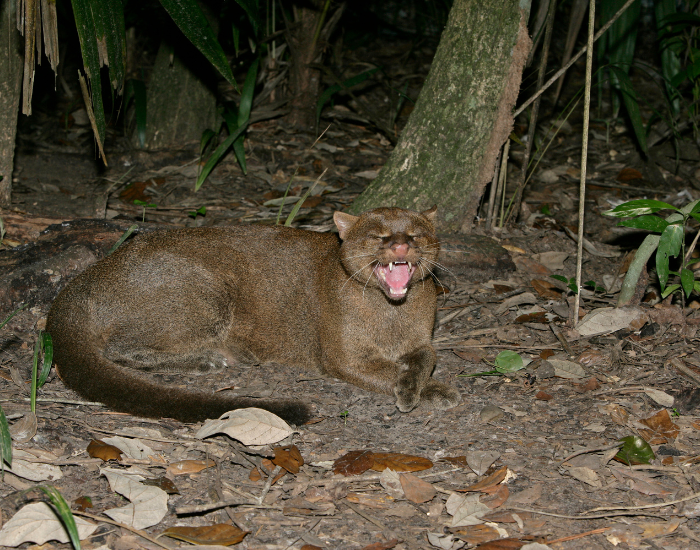
The jaguarundi’s vocal repertoire differs dramatically from typical wild cats. Instead of roaring, growling, or meowing like domestic cats, they produce chirps, whistles, and yaps. These unusual sounds often puzzle observers who mistake them for bird calls.
Their primary vocalizations serve communication between mothers and kittens. Young cats chirp softly to signal their location in dense vegetation. Mothers respond with similar high-pitched calls. Furthermore, these bird-like sounds travel well through thick forest undergrowth.
Adult jaguarundis also use vocalizations during territorial disputes and mating season. Males produce loud whistling calls to attract females and warn rival males. These sounds carry surprisingly long distances across their large home ranges. Moreover, both sexes emit sharp yaps when threatened or cornered.
This unique vocal behavior likely evolved to suit their dense habitat preferences. Low-frequency sounds typical of other cats don’t travel well through thick vegetation. Therefore, high-pitched calls prove more effective for communication. This adaptation distinguishes them from both mountain lions and other small cats in their range.
9. Small Cats with Large Home Ranges
Despite weighing only 3.5–9 kg (8–20 lbs), jaguarundis maintain home ranges that vary considerably across their distribution. Home range size depends on habitat quality, prey availability, and regional conditions, making generalizations difficult.
In Brazil, researchers documented relatively compact territories with females occupying 1.4–18 km² and males ranging across 8.5–25.3 km². Similarly, studies in Mexico found territories around 9 km² for males and 8.9 km² for females. However, exceptional cases exist: two males in Belize maintained remarkably large ranges of 88–100 km², comparable to much larger carnivores. These outliers likely reflect particularly low prey density or fragmented habitat in that specific region.
Both male and female jaguarundis are solitary animals that defend territories. Males generally maintain larger ranges than females. Furthermore, male territories often overlap with several female home ranges, though individuals of the same sex typically avoid each other except during mating season.
They mark territorial boundaries using multiple methods. Scent glands located near their tails deposit chemical signals on vegetation. Moreover, they create scratch marks on tree trunks and logs throughout their range. These visual and olfactory markers warn intruders and help prevent direct confrontations.
Studies using GPS collars reveal complex movement patterns. Individual cats regularly patrol their territories, checking key hunting areas and territorial boundaries. Furthermore, they show strong site fidelity, returning to the same resting locations repeatedly. This territorial behavior resembles patterns seen in mountain lions rather than small cats like domestic cats.
10. Habitat Loss Threatens Population Across Their Range
Despite being classified as Least Concern by the IUCN Red List, jaguarundis face significant conservation challenges. Habitat loss represents the primary threat across their extensive range in Central America and South America, and it also affects smaller cats that share the same environments. Agricultural expansion, urbanization, and deforestation fragment suitable habitat continuously.
In Central America, conversion of tropical forests to cattle ranches eliminates critical habitat. Palm oil plantations and commercial agriculture further reduce available wild fields and forest corridors. Moreover, these changes decrease prey availability, forcing jaguarundis into smaller, isolated populations.
Northern Mexico experiences particularly severe habitat loss impacts. Desert scrubland conversion to agriculture removes native vegetation. Furthermore, border infrastructure and urban development fragment remaining habitat. These changes likely contributed to the species’ disappearance from south Texas and ongoing decline in northern Mexico.
South America faces similar pressures despite vast remaining forests. The Amazon faces ongoing deforestation from logging and agricultural expansion. In central Argentina and Paraguay, grassland conversion threatens local jaguarundi populations. Persecution for killing poultry is also a significant threat contributing to jaguarundi decline. Therefore, even widespread species face regional extinction risks.
11. Conservation Efforts Focus on Habitat Connectivity
Effective jaguarundi conservation requires maintaining habitat connectivity across their extensive range. Wildlife corridors linking protected areas allow movement between populations. Furthermore, these connections prevent genetic isolation that threatens long-term viability of small populations.
Several organizations lead conservation initiatives throughout Central and South America. Panthera implements small cat conservation programs across multiple countries. The Wildlife Service coordinates monitoring efforts in northern Mexico and south Texas. Moreover, local conservation groups establish protected areas preserving critical habitat.
Camera traps provide crucial data about jaguarundi populations and habitat use. These devices document presence, population density, and activity patterns. Researchers deploy camera traps in Texas parks, protected areas throughout Central America, and across South America. This technology enables non-invasive population monitoring.
12. They’re Ghost Cats, Rarely Seen Despite Wide Distribution
Despite their continental range, jaguarundis remain remarkably elusive. Even experienced wildlife biologists working in prime habitat rarely encounter them. Like many wild felids, jaguarundis are difficult to detect and study due to their secretive behavior. This ghostly nature makes population assessment challenging and contributes to limited public awareness.
Their secretive behavior stems from several factors. As solitary animals, they avoid conspecifics except during mating season. Furthermore, their preference for dense undergrowth keeps them hidden from observers. Even during diurnal activity periods, they move cautiously through shadowed vegetation.
The last confirmed sighting in the United States occurred decades ago in south Texas. Since then, only unverified reports and questionable photographs have emerged. Wildlife cameras throughout Texas parks have failed to document any individuals. Therefore, scientists consider them likely extirpated from the United States.
Even in regions with healthy populations, sightings remain uncommon. Researchers in Central America and South America rely heavily on camera traps rather than direct observation. Local communities familiar with their habitat occasionally spot them near settled areas. However, most people living within the jaguarundi range never see one.
FAQs About Jaguarundis
The jaguarundi (Puma yagouaroundi or Herpailurus yagouaroundi) is a small wild cat species native to Central America and South America. It has an elongated body, short legs, rounded ears, and a long tail measuring 30–60 cm.
Adults typically weigh between 4.5–9 kg (10–20 lbs), similar to large domestic cats. They measure about 53–77 cm (21–30 inches) in body length. In addition, their thick tail adds another 30–60 cm (12–24 inches).
Genetically, jaguarundis are closely related to Puma concolor (mountain lion or cougar), not house cats or other small cats. They share a common ancestor and similar behavioral traits including large home ranges and solitary behavior. Therefore, scientists classify them as Puma yagouaroundi rather than grouping them with domestic cats or other small South American cats.
Their slender bodies, short legs, and long tail create an otter-like appearance, hence the nickname “otter cat.” In addition, they swim remarkably well compared to most wild cat species and often hunt along riverbanks.
There’s no confirmed population in the United States today. The last confirmed sighting occurred decades ago in south Texas near the Mexican border. Despite sporadic unverified reports from south Texas, no physical evidence through camera traps or confirmed sightings has been documented recently
They exhibit two distinct color phases: the red phase and the brownish grey phase. Both can appear within the same litter, demonstrating genetic polymorphism. The red phase displays rich reddish-brown fur, while the brownish grey phase varies from charcoal to nearly black. Neither phase features spots or stripes like other wild cats.
They produce unusual bird-like vocalizations including chirps, whistles, and yaps rather than typical cat sounds. These high-pitched calls help mothers and kittens communicate in dense vegetation.

Protecting a Continental Ghost
Writing about the Puma yagouaroundi reveals the fascinating complexity hidden within seemingly simple wild cat species. Their close evolutionary relationship to mountain lions, their continental distribution, and their remarkable adaptability demonstrate nature’s creativity.
The jaguarundi may not have the glamour of big cats like jaguars. However, its quiet resilience across diverse habitats tells a deeper story about adaptation and survival. Moreover, their role as mid-level predators maintaining ecosystem balance makes them ecologically crucial throughout Central America and South America.
Their future depends on maintaining connected habitats across their extensive range. As agriculture and urbanization continue fragmenting landscapes, protecting wildlife corridors becomes increasingly critical.
Maybe one day, walking through a reforested patch in northern Mexico or Belize, I’ll finally see one of these otter cats. A flicker of movement in the grass, a long tail disappearing into the brush. Until then, the jaguarundi remains what it is for most of us: a mystery moving through the margins, silently keeping nature’s balance intact.
Further Reading:
- Opossums (Didelphidae): The Other Marsupials of the Americas
- Top 10 Things You Need to Know About the Giant River Otter
- The Beaver Effect: How One Species Rebuilds Entire Landscapes