I’ll never forget my first encounter with sea lions in the wild, laying over a rock next to “the arch” in Los Cabos, Baja California. At first, I watched one stretched out lazily on the rocks, sunbathing without a care in the world. Moments later, I began diving and to my surprise, we encountered a couple diving near by. Diving with such animals was an unforgetable experience. There’s something about sea lions, their mix of cuteness, dog style beahivour, playfulness, resilience, and raw power, that really continues to captivate me.
Sea lions are intelligent predators, vital to marine ecosystems. Let’s explore their world, species by species, before diving into ten facts that reveal just how fascinating they are.
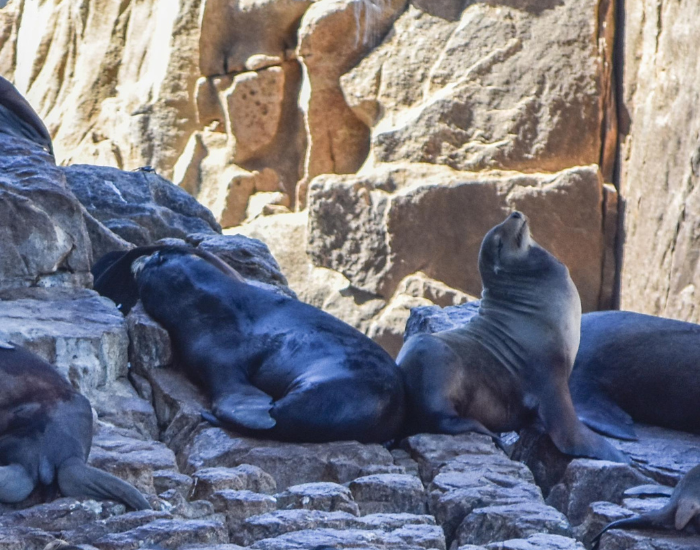
What Are Sea Lions?
Sea lions are marine mammals in the pinniped family, which also includes many types of seals and sea lions’ close relatives: walruses. As animals within the animal kingdom, sea lions are a type of marine mammal that have evolved unique adaptations for life in aquatic environments, such as streamlined bodies and specialized flippers. Unlike true seals (also called fur seals), sea lions are eared seals, meaning they have visible external ear flaps that distinguish them from their flipper-footed cousins. They’re also more agile on land thanks to their ability to rotate hind flippers forward and “walk” upright, a stark contrast to seals and sea lions that must slide on their bellies. The physical characteristics of sea lions, such as their external ears and mobility on land, set them apart from other pinnipeds.
They live along coastal areas in both the Northern and Southern Hemispheres, from Alaska to South America, Australia, and the Galápagos Islands. Their preferred habitats are rocky shores, sandy beaches, and upwelling areas rich in fish and squid. These upwelling areas are particularly crucial, as they bring nutrient-rich waters to the surface, creating feeding hotspots where sea lions can dive deep to hunt.
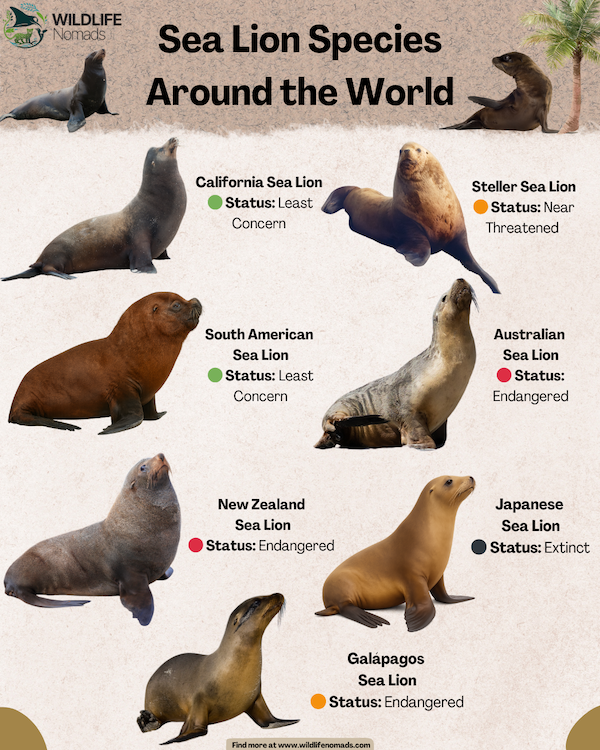
The 7 Sea Lion Species
1. California Sea Lions (Zalophus californianus)
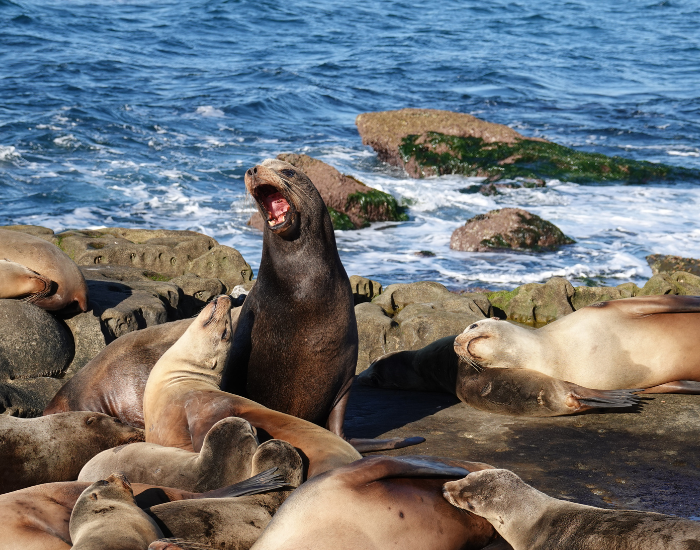
If you’ve ever visited Pier 39 in San Francisco, California, you’ve seen these sleek, noisy pinnipeds. California sea lions range from southeast Alaska to southern California and Baja California, often hauling out on piers, buoys, or beaches along the gulf and coastal areas. The California sea lion’s habitat extends from the southern tip of California to Baja California, and their breeding sites are found throughout this range.
Adult males can weigh up to 850 pounds, with distinctive raised foreheads as they mature. Females are smaller, golden brown, and lighter in build. Female California sea lions typically reach sexual maturity at around 4 to 5 years of age and display strong maternal behaviors, caring for their pups on breeding beaches. These sea lions are speed demons underwater, capable of chasing down fish like sardines, herring, and rockfish at remarkable speeds. During the breeding season, males compete with other males for territory and access to females, establishing dominance through vocalizations and displays.
Research and monitoring how that most California sea lion pups are born in early summer, with the majority arriving in June when food resources are abundant. The U.S. stock of California sea lions is currently estimated at about 238,000–241,000 individuals, and the overall population is considered healthy and still near carrying capacity under federal protection. Like California sea lions, some other pinnipeds have rebounded under conservation measures, though several species remain threatened or endangered.
2. Steller Sea Lions (Eumetopias jubatus)
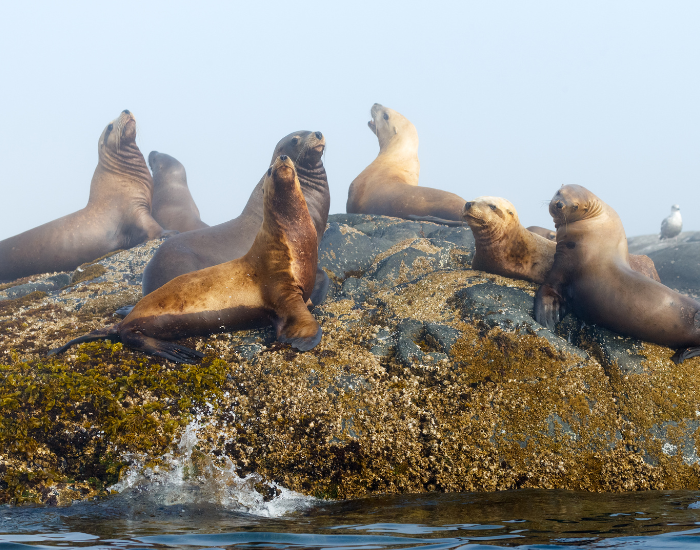
The Steller sea lion is the largest sea lion species. Adult males can weigh between 2,000 and 2,500 pounds. They inhabit the northern fur seal territory along the North Pacific Rim. Their range extends from northern California through British Columbia and Alaska, across to Russia and the Channel Islands.
Despite their impressive size, Steller sea lions have faced dramatic population declines. In Alaska, they are listed as endangered. Scientists point to multiple causes. Reduced prey availability from overfishing, climate change affecting ocean food webs, and predation pressure from orcas and sharks all contribute. Recent studies using satellite tracking have revealed that breeding females must now travel much farther to find adequate food resources.
Seeing one up close on the rugged Alaskan coast, I was struck by their sheer power, but also by the fragility of their numbers. They represent a critical reminder that even the mightiest marine mammals depend on healthy ocean ecosystems.
3. South American Sea Lions (Otaria flavescens)
In Argentina, locals call them lobo marino or “sea wolf.” When you observe the males with massive manes and booming roars during breeding season, the name makes perfect sense. These sea lions inhabit both the Pacific and Atlantic coasts of South America. Their range extends from Peru and Chile to Uruguay and Argentina.
Large groups can number in the thousands, and breeding rookeries become incredibly noisy barking competitions. The Valdés Peninsula region is also famous for orcas that patrol these beaches, sometimes snatching sea lions directly from the shore, a dramatic demonstration of predator-prey dynamics in marine ecosystems.
Research published in Marine Mammal Science has shown that South American sea lions exhibit remarkable site fidelity, with females returning to the same coastal areas year after year for breeding.
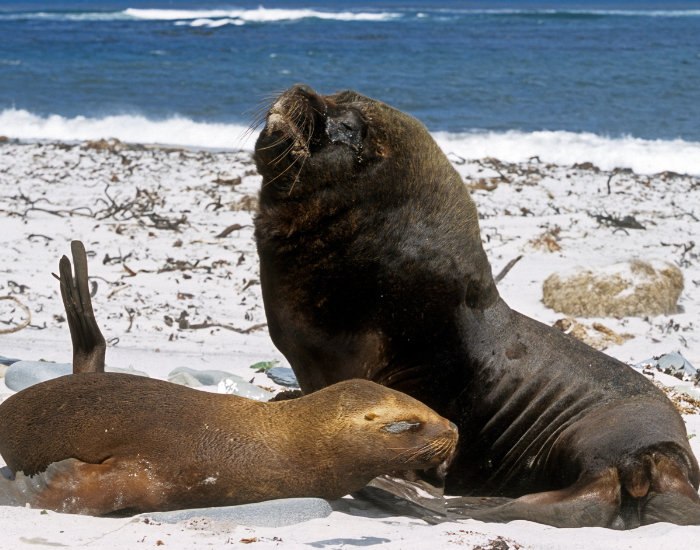
4. Australian Sea Lions (Neophoca cinerea)
Endemic to southern and western Australia, this is one of the world’s rarest sea lion species, with fewer than 12,000 individuals remaining. Unlike most sea lions, Australian sea lions have an unusual 18-month long breeding cycle, the longest of any pinniped, meaning fewer pups are produced each breeding season.
This extended breeding cycle makes them particularly vulnerable to population decline. Reports shown that many pups drown or die from starvation during harsh weather conditions, and human threats like fishing gear entanglement and boat strikes further strain these already fragile populations. Australian conservationists work tirelessly to monitor colonies, protect critical breeding areas, and reduce bycatch in fishing operations.
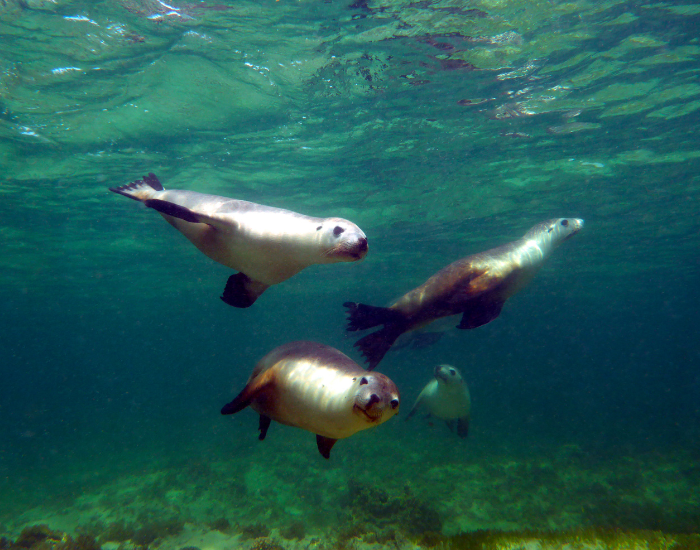
5. New Zealand Sea Lions (Phocarctos hookeri)
Also known as Hooker’s sea lions, this species is found mainly on New Zealand’s sub-Antarctic islands, including the Auckland and Campbell Islands. They’re considered national treasures by New Zealanders, but they’re also among the rarest sea lions in the world, with populations continuing to decline.
Disease outbreaks, including bacterial infections, combined with limited breeding grounds, have contributed to population reductions.
If you are interested in Nez Zealand animals, have a loot at the article “Unique Animals of New Zealand“.
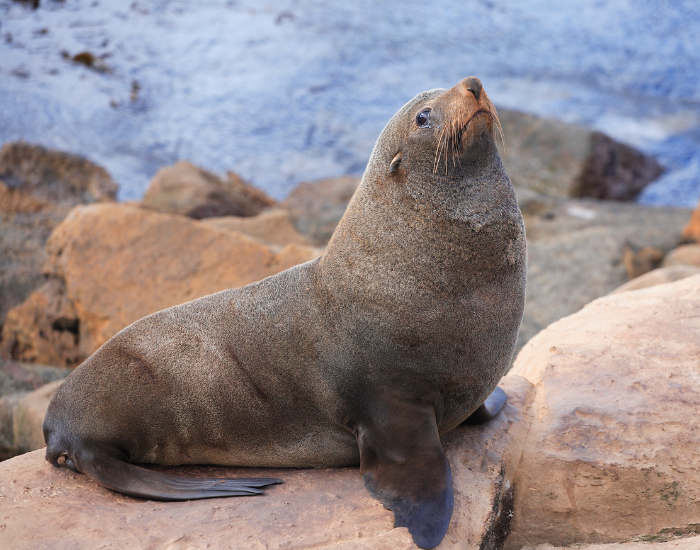
6. Japanese Sea Lions (Zalophus japonicus) – A Cautionary Tale
Once abundant throughout the Sea of Japan, Korean Peninsula, and parts of the eastern North Pacific Ocean, this species is now considered extinct. Overhunting for oil production and fur, combined with pressure from expanding fisheries, completely eliminated populations by the mid-20th century.
The extinction of Japanese sea lions serves as a stark reminder of why marine mammal protection acts matter. Without comprehensive legal protections and public support, more sea lion species could face the same tragic fate. Japanese museums still house preserved specimens, but no viable wild populations exist today, making this a permanent loss to marine biodiversity.
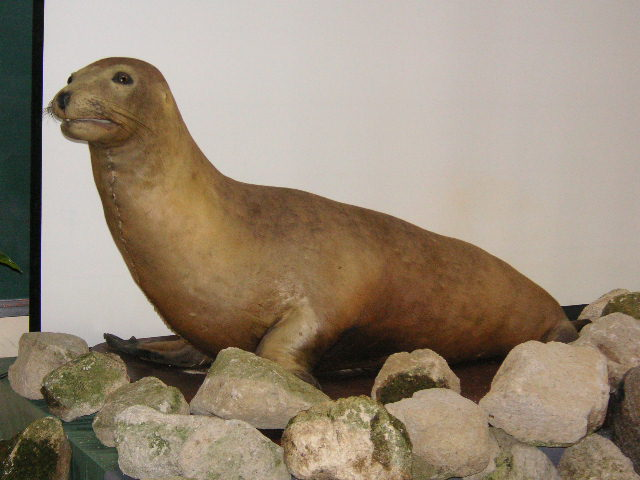
7. Galápagos Sea Lions (Zalophus wollebaeki)
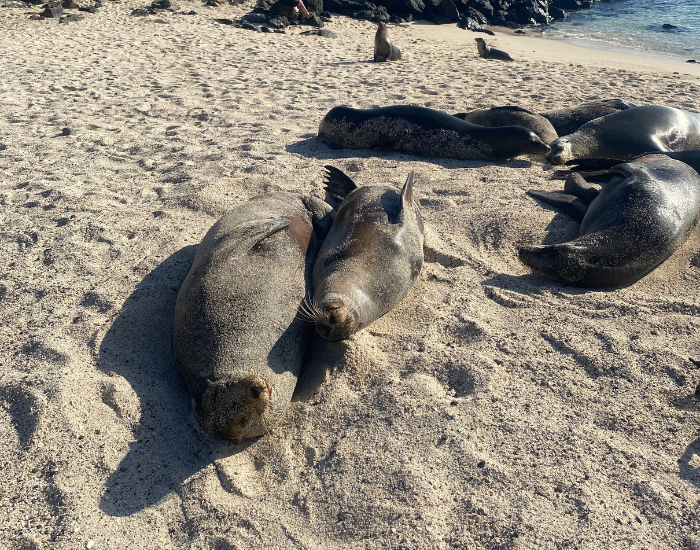
These smaller, remarkably playful sea lions are endemic to the Galápagos Islands. They’ve become iconic symbols of the archipelago’s unique wildlife. Anyone who has snorkeled in these waters knows they’re impossible to miss. They sleep on park benches, block wooden boardwalks, or swim curiously alongside visitors in coastal areas.
However, their survival depends entirely on stable ocean conditions around the Galápagos. During El Niño events, warmer sea temperatures reduce fish availability dramatically, leading to high pup mortality rates and reduced breeding success. Conservation groups monitor their numbers closely, as they play an integral role in the Galápagos marine ecosystem.
Diet and Foraging Strategies
Sea lions are highly opportunistic predators, adapting their hunting strategies based on seasonal availability and local abundance. Their diverse diet includes:
- Squid – A primary food source, particularly for deep dives
- Rockfish – Abundant in rocky coastal habitats
- Herring – Schooling fish caught during surface feeding
- Sardines – High-energy prey especially important for nursing females
- Octopus – Hunted along rocky sea floors
Sea lions are exceptional divers. They regularly plunge into nutrient-rich upwelling areas where cold, deep water brings abundant prey. Their highly sensitive whiskers (vibrissae) detect minute water vibrations. This allows them to hunt effectively in murky water or at night.
This adaptability sometimes creates human-wildlife conflicts. At fish passage facilities designed for salmon migration, sea lions ambush returning fish. This frustrates both fishery managers and sport fishing enthusiasts. In coastal towns, they occasionally raid fish markets and harbors. They earn admiration for intelligence but also frustration from local humans.
Conservation Efforts: The Marine Mammal Center and Beyond
In Sausalito, California, the Marine Mammal Center serves as a frontline facility for sea lion conservation and rescue operations. The center rescues hundreds of stranded or sick animals annually, many suffering from domoic acid poisoning caused by toxic algal blooms that have become more frequent with changing ocean conditions. Under the Marine Mammal Protection Act, sea lions are protected along with all other pinnipeds in U.S. waters, ensuring their safety through legal safeguards and public guidelines. Many sea lions are rescued each year due to entanglement, illness, or injury, often as a result of human activities.
Their comprehensive conservation work includes:
- Rehabilitation of sick and injured sea lions, from abandoned pups to adult males
- Research programs studying diseases, toxins, and population health
- Public education initiatives to promote coexistence between humans and marine mammals
- Veterinary care for animals affected by entanglement in commercial fishing gear
The center’s efforts exemplify how dedicated conservation work, combined with strong legal protections, can make a real difference for sea lion populations. Their research has been instrumental in understanding how climate change affects marine mammal health and behavior. Human actions, such as pollution and fishing, can significantly impact a sea lion’s health and behavior, highlighting the ongoing need for conservation efforts.
FAQs About Sea Lions
No, there are important differences. True seals lack external ear flaps and move awkwardly on land, sliding on their bellies. Sea lions have visible ear flaps and can rotate their hind flippers forward to “walk” on land. Both are pinnipeds, but they belong to different families.
Sea lions are generally not dangerous to humans and rarely show aggressive behavior toward people. However, they are large, powerful wild animals that can bite if they feel threatened or cornered. Adult males during breeding season can be particularly territorial and should be given extra space.
In specific locations like the Galápagos Islands, swimming near sea lions can be done safely. This is possible when following responsible wildlife viewing guidelines. Always maintain appropriate distance and never attempt to feed them. Follow local regulations designed to protect both humans and sea lions.
In specific locations like the Galápagos Islands, swimming near sea lions can be done safely. This is possible when following responsible wildlife viewing guidelines. Always maintain appropriate distance and never attempt to feed them. Follow local regulations designed to protect both humans and sea lions.
The name comes from the resemblance of adult males to terrestrial lions. Male sea lions develop prominent manes of coarse hair around their necks, and their loud roaring vocalizations during breeding season reminded early observers of lions, leading to the common name that stuck.
While both are eared seals, fur seals typically have much denser, softer fur and are generally smaller than sea lions. The distinction can sometimes be confusing, as some “fur seals” are more closely related to sea lions than to other fur seals, highlighting the complex evolutionary relationships within pinnipeds.
Protecting the Barkers of the Sea
From the rocky coasts of California to the Galápagos, sea lions represent resilience and adaptation. They embody the intricate connections that bind marine ecosystems together.
I’ve been privileged to encounter these animals across different continents and ocean systems. Each encounter reinforced how closely their fate is tied to the health of our oceans.
Protecting sea lions means protecting the entire marine environment they rely on.
This includes upwelling areas that provide food and coastal zones where they breed and raise young. Whether it’s supporting organizations like the Marine Mammal Center or choosing sustainably-caught seafood, actions matter.
Reducing plastic pollution or giving these animals respectful space also strengthens conservation efforts.
Sea lions are more than charismatic residents of the coast. They serve as ambassadors for ocean health and indicators of ecosystem stability.nTheir continued survival depends not only on legal protections but also on ongoing commitment.
Further Reading
Do You Want to See Sea Lions in the Wild? Find a Tour Here
This blog is reader-supported. When you buy experiences through links listed on this site, we may earn an affiliate commission.