There is a specific kind of magic that happens when you’re treading water in the open ocean and the whistle-clicks start. You don’t just hear them — you feel them in your chest.
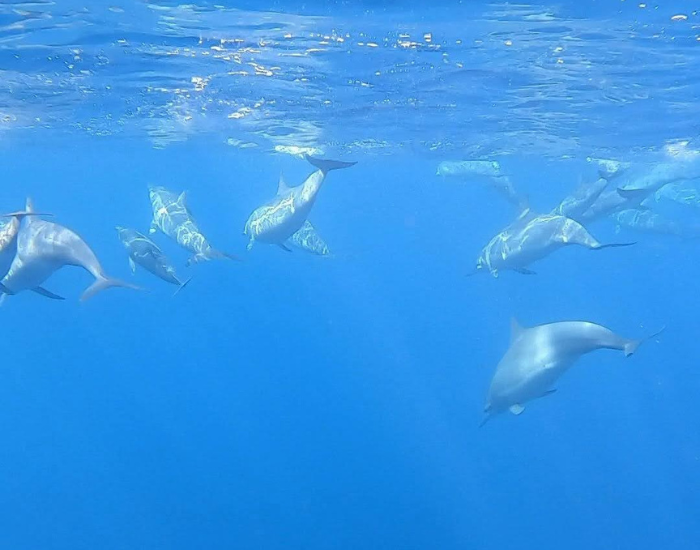
Recently, while diving in Amed, Bali, I found myself surrounded by a pod of nearly 50 dolphins. It was one of those rare moments where the boundary between “scientist” and “stunned human” dissolves completely.
I’ve encountered dolphin species all over the world — from the East Coast of Australia to the numerous pods of Oaxaca, Mexico. However, even for me, the question often arises: which dolphin is that? In 2024, off the coast of Mexico, a guide pointed out three different dolphin species. I could only identify one of them. The other two looked nearly identical.
This guide is born from that curiosity. Whether you’re a fellow diver or simply someone who loves the ocean, let’s break down the world of dolphins — blending hard science with real field experience.
How Many Dolphin Species Are There?
Most people underestimate the answer. Currently, scientists recognise around 40–42 dolphin species worldwide, depending on which taxonomic authority you follow, such as the World Register of Marine Species. However, that number continues to evolve as genetic research reshapes how scientists define species boundaries.
Importantly, dolphins are not “breeds.” Humans create breeds through artificial selection, like Labradors or Poodles. In contrast, dolphins evolved naturally over millions of years, branching into distinct species as they adapted to radically different environments.
Taxonomically, all dolphins belong to the order Cetacea. Most species fall within the family Delphinidae, which includes the oceanic dolphins. However, several river dolphin lineages split from their ocean relatives long ago and now occupy entirely separate families.
Ultimately, dolphins represent not one animal but an entire radiation of highly intelligent, highly adaptable marine — and freshwater — predators.
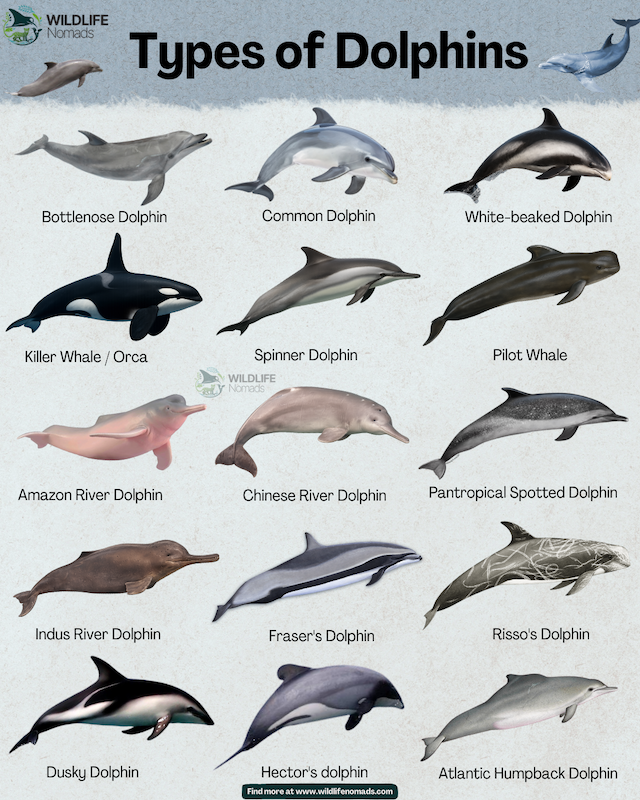
Oceanic vs. River Dolphins: The Primary Split
All dolphin species fall into two broad habitat categories.
Oceanic dolphins (Delphinidae) are what most people picture — bottlenose, spinners, orcas. They live in saltwater, from the surf zone to the deep blue, and represent around 38 known species within the oceanic dolphin family. They are members of the toothed whales group (parvorder Odontoceti), which separates them from baleen whales entirely.
River dolphins are the specialists. They inhabit freshwater systems like the Amazon or the Ganges. They typically have long, needle-like snouts and reduced eyesight, because in murky river water, sonar is everything. There are currently four surviving river dolphin families recognised by scientists.
Dolphins are marine mammals belonging to the infraorder Cetacea, which also includes whales and the porpoise family. The porpoise family is a distinct group within Cetacea, with species like the vaquita, and is separate from dolphins and whales. There are many species of dolphins, each adapted to different habitats and ecological niches, contributing to the diversity of cetaceans found in various regions.

Oceanic Dolphin Species: The Main Players
This is the largest group — and the most likely dolphins you’ve encountered on any ocean trip. Many oceanic dolphin species inhabit temperate waters, including the North Atlantic Ocean. Some oceanic dolphins are considered large dolphins, with distinctive appearances and behaviors.
1. Common Bottlenose Dolphin (Tursiops truncatus)
The “face” of the family. The common bottlenose dolphin is incredibly social and intelligent. In my experience working along the Australian coast, they were a near-daily companion. They live in pods and use individual “signature whistles” that function like names — a remarkable form of animal communication.
Range: Global, temperate and tropical waters.
ID tip: Look for the short, distinct beak and tall, curved dorsal fin.

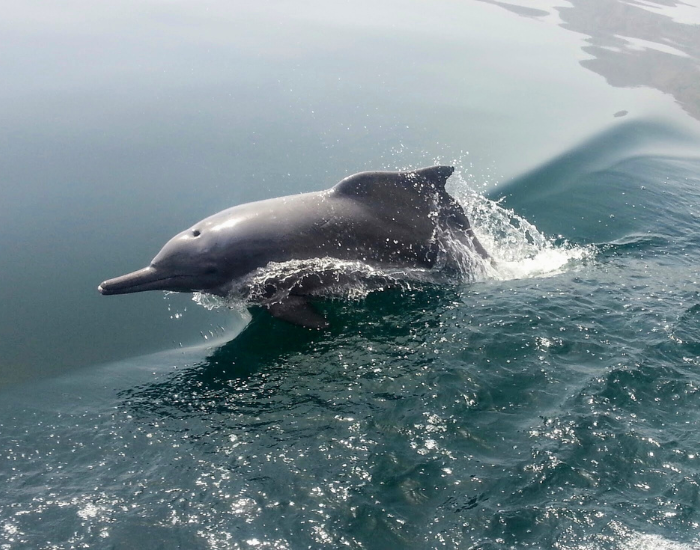
2. Indo-Pacific Bottlenose Dolphin (Tursiops aduncus)
The indo-pacific bottlenose dolphin is smaller than its common cousin, with a more slender beak and spotted belly. It’s often found in coastal bays and shallow reefs across Southeast Asia and northern Australia — a subtle distinction that trips up even experienced observers.
Range: Indo-Pacific coastal waters, from East Africa to Australia.
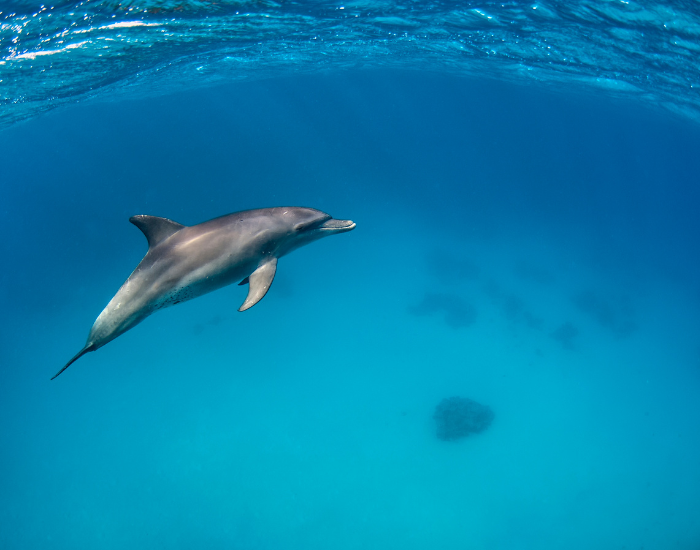
3. Common Dolphin (Delphinus delphis)
The common dolphin is one of the most abundant dolphin species on Earth, yet it’s frequently overlooked in guidebooks. It comes in two forms — the short-beaked and long-beaked — and forms some of the largest pods ever recorded, sometimes in the thousands. Its vivid hourglass pattern of yellow and grey on the flanks is the key field marker.
Range: Temperate and tropical waters worldwide.
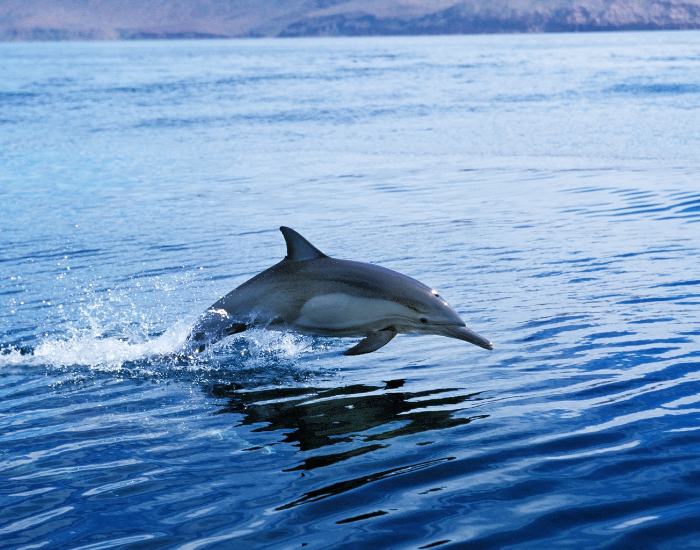
4. Spinner Dolphin (Stenella longirostris)
These are the acrobats. If you see a dolphin leaping and rotating up to seven times in a single jump, it’s a spinner dolphin. They are nocturnal hunters, often resting in shallow bays during the day — which is why you’ll frequently see them near tourist boats in Bali or Hawaii.
Range: Tropical waters globally. Extremely common in the Indo-Pacific.
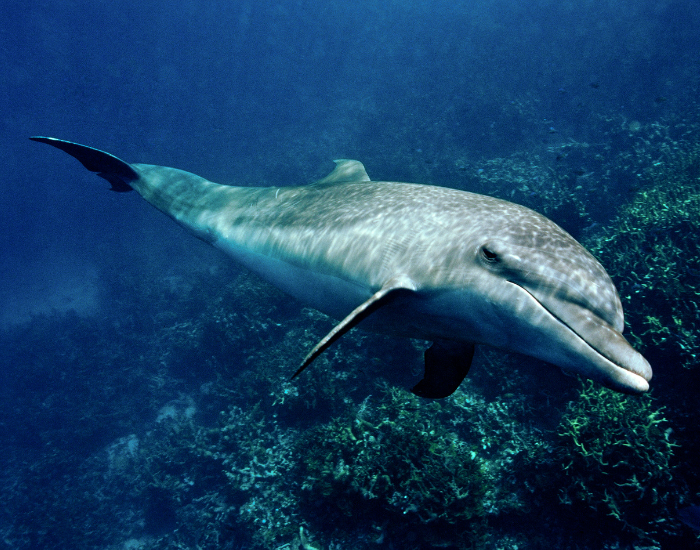
5. Pantropical Spotted Dolphin (Stenella attenuata)
This is likely what I saw off the coast of Oaxaca. The pantropical spotted dolphin is born without spots and becomes increasingly “freckled” with age. They are found across tropical and subtropical waters and are among the most abundant dolphin species in the Pacific.
Range: Pantropical — found across all tropical ocean basins.
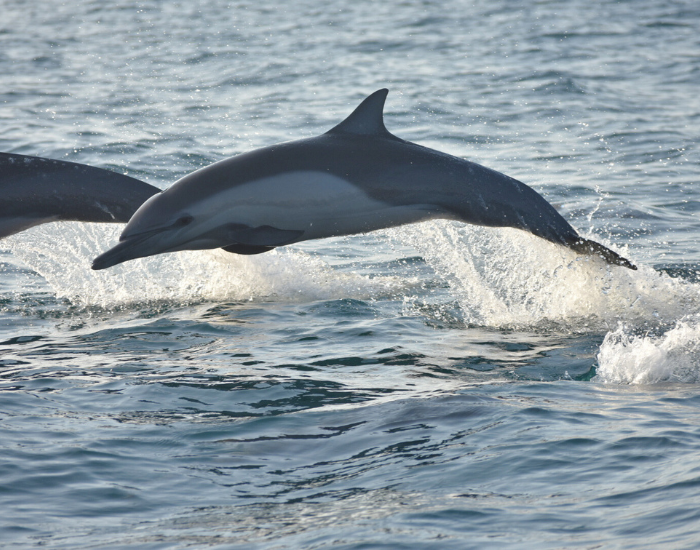
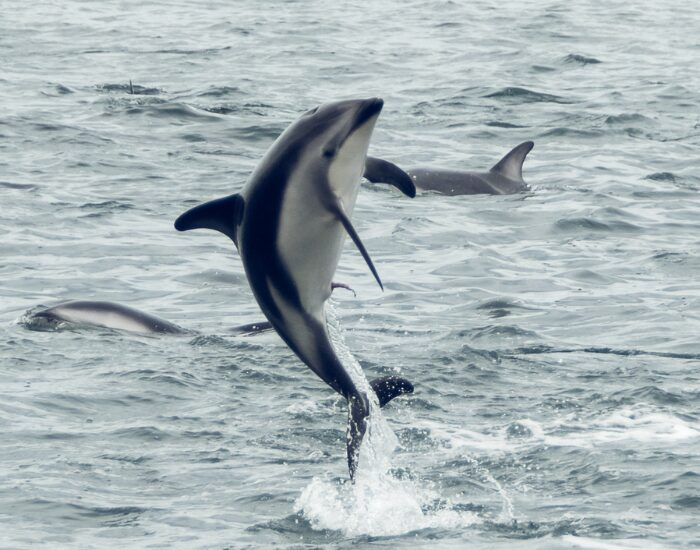
6. Pacific White-Sided Dolphin (Lagenorhynchus obliquidens)
These are the “punks” of the North Pacific. They sport bold black, grey, and white markings and are known for bow-riding boats for miles. Their dorsal fin is uniquely two-toned — dark on the leading edge, lighter on the rear — making them easier to identify at sea.
Range: Cool-temperate North Pacific Ocean.
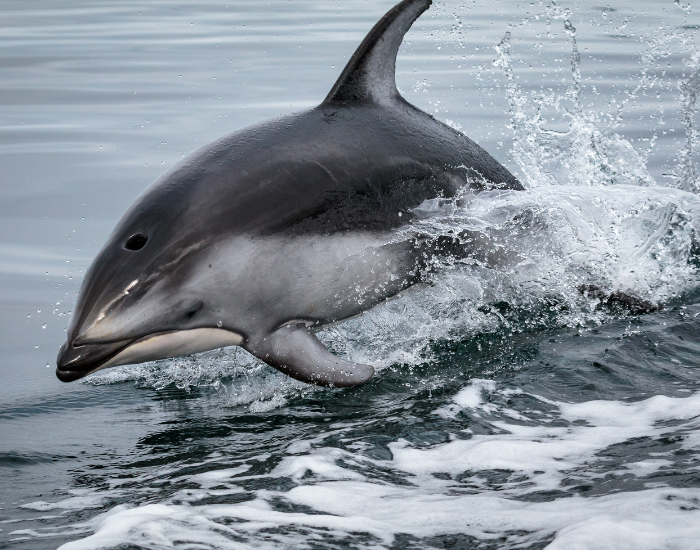
7. White-Beaked Dolphin (Lagenorhynchus albirostris)
The white beaked dolphin is the North Atlantic’s answer to the Pacific white-sided dolphin — bold, stocky, and built for cold water. As the name suggests, it sports a distinctive short white or pale grey beak, along with striking patches of white and grey across its flanks. Its dorsal fin is tall, curved, and dark — easy to spot when it breaks the surface at speed.
These dolphins favour the cold temperate waters of the North Atlantic Ocean, from New England up through Iceland, Norway, and the UK. They’re frequently seen bow-riding and are known to associate with humpback whales during feeding events — a behaviour that makes them particularly exciting to encounter on whale-watching trips.
Range: North Atlantic Ocean, from sub-Arctic to temperate waters. ID tip: Short white beak + stocky body. Far chunkier than the similar Pacific white-sided dolphin.
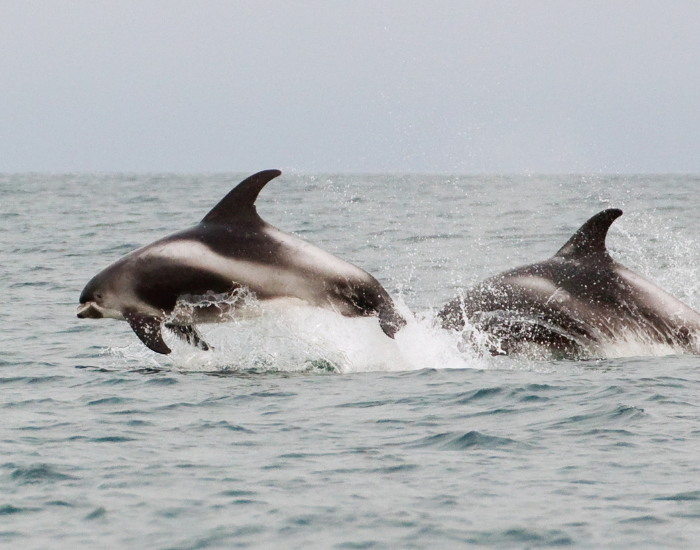
8. Risso’s Dolphin (Grampus griseus)
One of the most visually striking dolphin species, Risso’s dolphins are covered in white scars from birth. These aren’t predator wounds — they are battle scars from their favourite prey: squid. As they age, they become almost entirely white. They prefer deep-water canyons and offshore slopes.
Range: Deep oceanic waters, temperate to tropical globally.
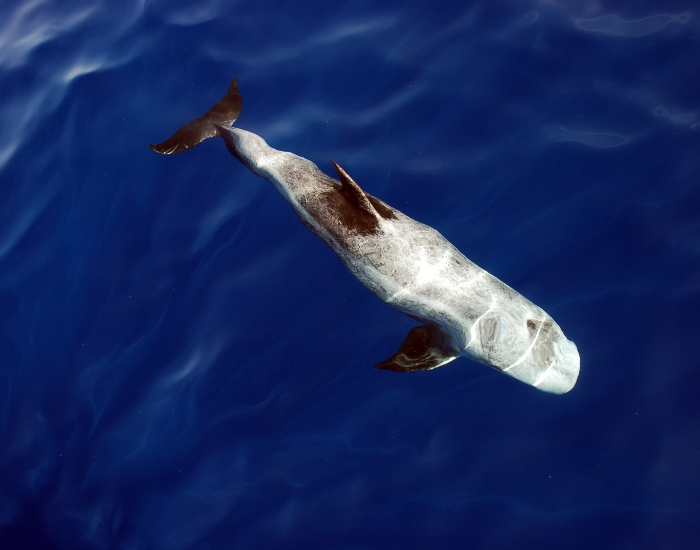
9. Humpback Dolphin (Sousa spp.)
The humpback dolphin is less famous than its oceanic relatives, but it deserves far more attention. Named for the distinctive hump beneath their small dorsal fin, these dolphins hug coastlines and estuaries across the Indo-Pacific and Atlantic. The Australian humpback dolphin (Sousa sahulensis) was only recognised as a separate species in 2014.
Range: Coastal tropical and subtropical waters from West Africa to Australia.
10. Hector’s Dolphin & Māui Dolphin (Cephalorhynchus hectori)
The Hector’s dolphin is one of the smallest and rarest dolphin species in the world, endemic to the coastal waters of New Zealand. It’s instantly recognisable by its rounded, Mickey Mouse-ear shaped dorsal fin — unlike any other dolphin species. The Māui dolphin is the North Island subspecies of Hector’s, and it holds the devastating title of the world’s rarest marine dolphin. Fewer than 55 individuals are estimated to remain as of 2026 (NZ Department of Conservation).
The primary threat to both subspecies is bycatch in gillnets and trawl fishing. Therefore, New Zealand has established several marine mammal sanctuaries along the West Coast to protect remaining populations.
Range: Coastal waters of New Zealand only. ID tip: Look for the rounded, black dorsal fin — it looks nothing like a typical curved dolphin fin.
The “Whale” Dolphins: When Names Deceive
Several dolphin species carry “whale” in their name. However, they are genetically 100% dolphin. In fact, all dolphins are technically whales, as they belong to the parvorder Odontoceti—a group of cetaceans known as toothed whales, which also includes sperm whales and other whale species.
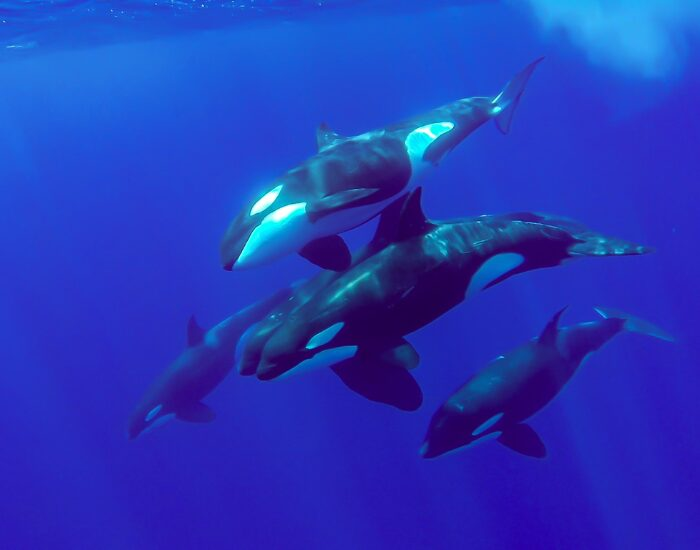
11. Killer Whale / Orca (Orcinus orca)
Yes — the orca is technically the world’s largest dolphin species. It is the apex member of the Delphinidae family. Orcas have distinct cultures and vocal dialects that vary between pods. Therefore, researchers treat different orca populations almost like separate cultures, not just animals.
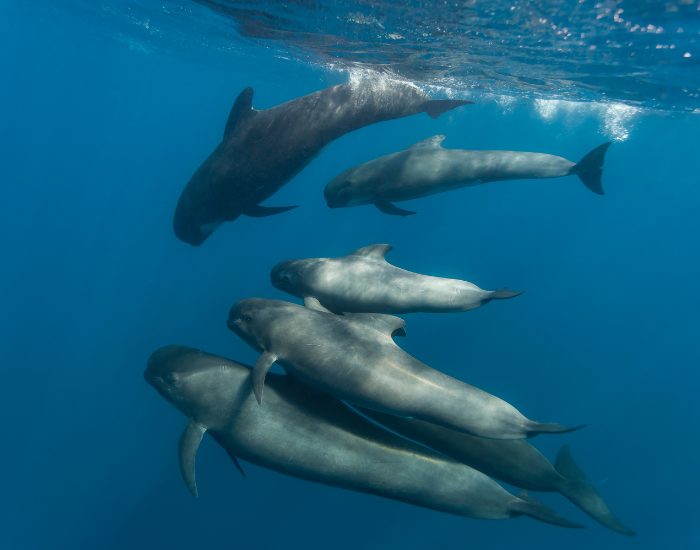
12. Pilot Whales (Globicephala spp.)
Whale dolphins like the pilot whale are known for their bulbous heads and extraordinarily tight-knit social structures. There are two species: the long-finned pilot whale and the short-finned pilot whale. The long-finned pilot whale is distinguished by its long, sickle-shaped pectoral fins and is typically found in temperate and sub-polar regions. They are among the most socially complex animals in the ocean.
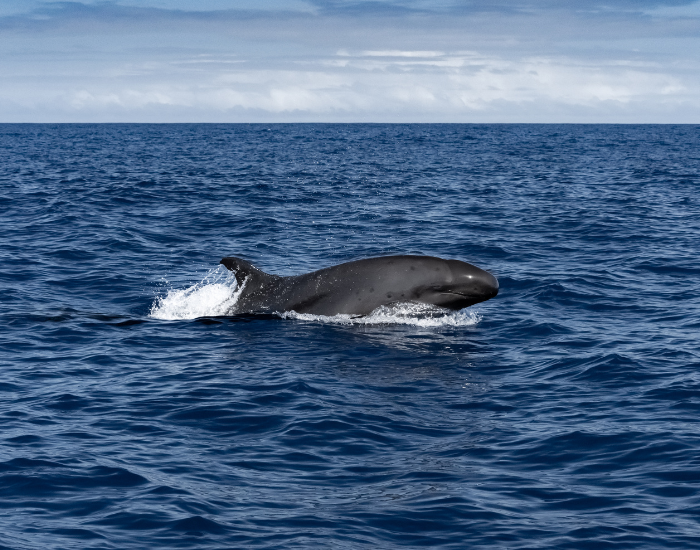
13. False Killer Whale (Pseudorca crassidens)
Often confused with orcas or pilot whales, false killer whales are large, slender, dark dolphins with a highly social nature. They are one of the few non-human species documented to share food with members of other species — including humans on fishing boats.
River Dolphin Species: The Freshwater Enigmas
River dolphins are some of the most specialised mammals on Earth — and some of the most endangered.
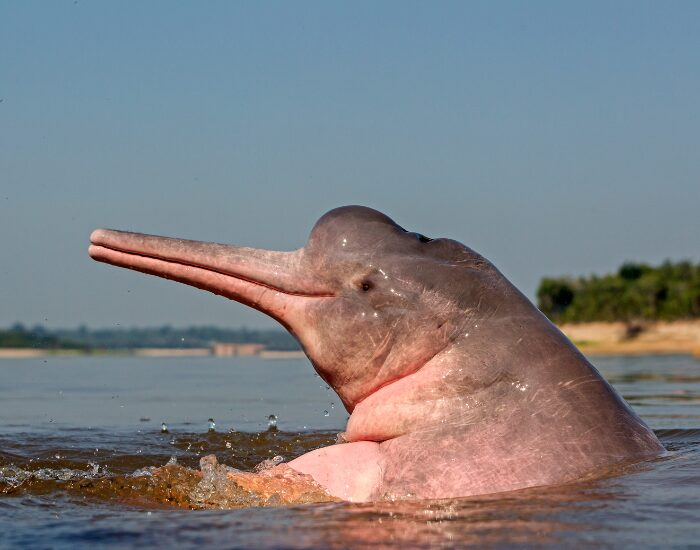
14. Amazon River Dolphin / Boto (Inia geoffrensis)
Famous for its pink colour, the Amazon river dolphin is the largest freshwater dolphin species. Its neck vertebrae are not fused, which allows it to turn its head 90 degrees to navigate through flooded forests during Amazon wet seasons — a unique adaptation among dolphins.
Conservation status: Endangered (IUCN).
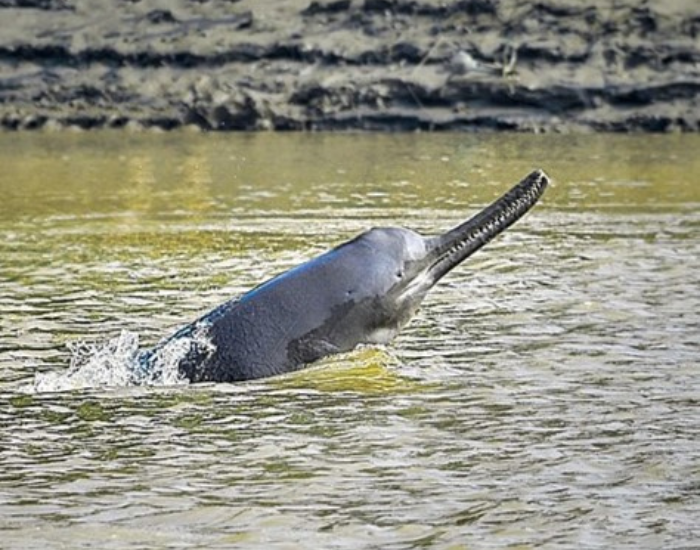
15. Ganges River Dolphin (Platanista gangetica)
The Ganges river dolphin is functionally blind — it navigates entirely by echolocation in the murky rivers of the Indian subcontinent. It is listed as Endangered by the IUCN, primarily threatened by pollution, dam construction, and bycatch.
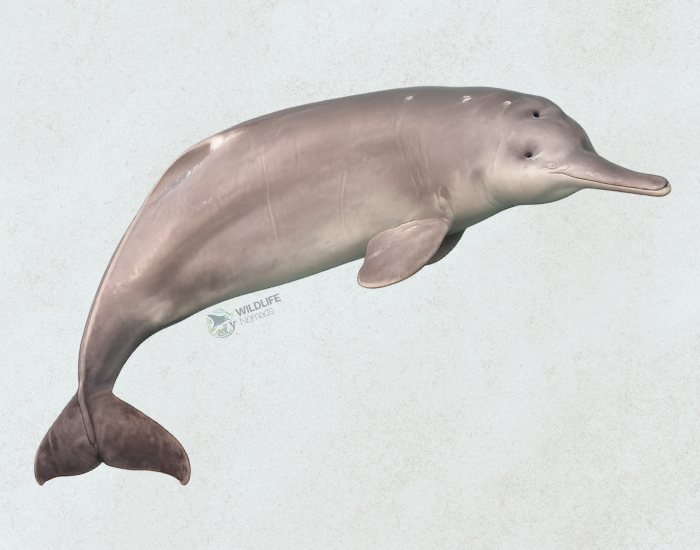
16. Chinese River Dolphin / Baiji (Lipotes vexillifer)
The Chinese river dolphin, also known as the Yangtze river dolphin or Baiji, was native to the Yangtze River. Despite a major search expedition in 2006, none were found. It is now considered functionally extinct — a sobering reminder of what happens when we ignore specialised freshwater habitats. The IUCN Cetacean Specialist Group confirmed this assessment following the failed expedition.
The Chinese river dolphin is one of the almost extinct sea animas, alongside the vaquita in Mexico. Both are some of the most endangered animals on Earth and is listed as endangered under the Endangered Species Act.
FAQs about Dolphins!
There are 42 to 49 recognized species of dolphins, categorized primarily into oceanic and river families. Taxonomic revisions, such as splitting the common dolphin into long-beaked and short-beaked forms, can shift this number slightly.
The Māui dolphin, a subspecies of Hector’s dolphin found only in New Zealand, is currently the rarest. It is the only species/subspecies of its kind in its range, with fewer than 55 individuals remaining.
Yes. Orcas are the largest member of the Delphinidae (oceanic dolphin family) and are technically a dolphin species — not a whale.
Dolphins have conical teeth, a distinct beak, and a curved dorsal fin. Porpoises have spade-shaped teeth, a blunt snout, and a triangular dorsal fin. They belong to the separate porpoise family (Phocoenidae), which is distinct from dolphins.
The indo-pacific bottlenose dolphin, spinner dolphin, humpback dolphin, and irrawaddy dolphin are all common across Indo-Pacific coastal and tropical waters.
Dolphins are highly social animals and often associate with other dolphin species, enhancing their social interactions and forming complex mixed groups in shared habitats.
Why Dolphins Still Surprise Us
From the crystal-clear waters of the Red Sea to the muddy currents of the Amazon, dolphin species represent one of nature’s most extraordinary evolutionary experiments — land mammals that returned to the sea and thrived. My time surrounded by a pod in Bali reminded me that no matter how much science I know, the experience of being inside their world is something only nature can provide.
Next time you’re on the water, watch the dorsal fin. Count the seconds between breaths. You might just realise you’re looking at a species you’ve never noticed before.
Where to Swim with Dolpins?
As I mentioned before, I have personally swam with dolphins in both North Lovina, in Bali, and Puerto Escondido, Mexico. Here is a list of 6 wildlife tours where you can see dolphins in the wild. As a biologist, I only recommend tours that follow strict ethical guidelines to ensure we don’t disturb wildlife. These are the three tours/ partners I trust most based on their conservation records:
This blog is reader-supported. When you buy experiences through links listed on this site, we may earn an affiliate commission.