
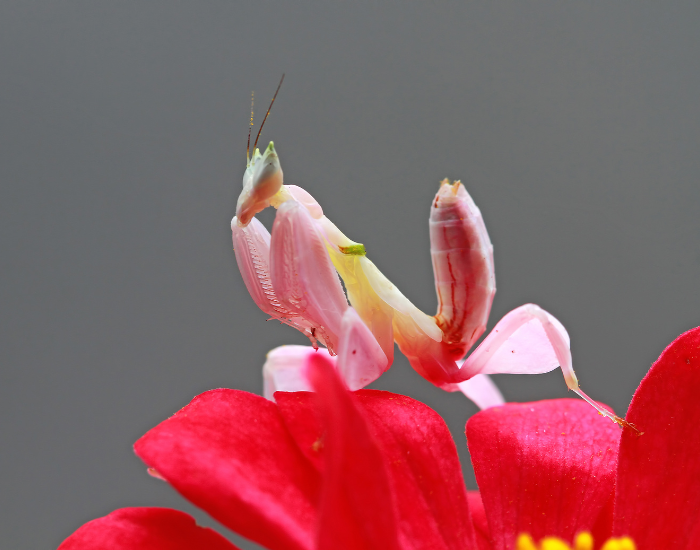
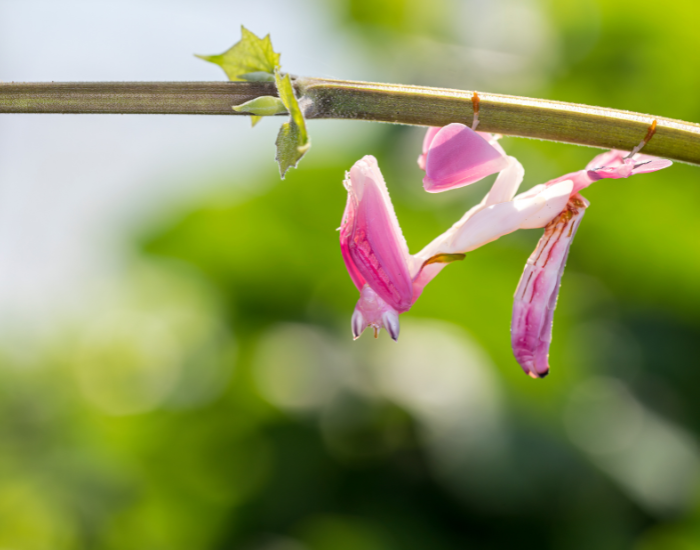
At first glance, you could mistake it for a flower. Delicate pink and white petals, a body shaped like a bloom, and a gentle swaying motion that looks just like a blossom in the breeze. But this is no orchid. it’s a predator waiting silently among the flowers of Southeast Asia’s steamy rainforests. The orchid praying mantis is one of several species of flower mantises that closely resemble flowers, particularly many orchid blooms, as a strategy for both hunting and camouflage.
This predator is so perfectly disguised that pollinating insects mistake it for food. Picture an insect with legs shaped like petals, a body that shifts between pink and white depending on its surroundings, and hunting success rates that shame most other predators. That’s the orchid praying mantis, a creature so bizarrely beautiful that even trained entomologists do double-takes when spotting one. This mimicry not only lures prey but also deceives potential predators by making the mantis appear as part of the surrounding flowers.
Every field biologist maintains a list of elusive species that captivate them. Species that embody evolutionary innovation so complete, so alien to our expectations, that finding one in person would feel like discovering a secret nature has been keeping for millions of years. For me, encountering an orchid mantis swaying among actual flowers in a Malaysian rainforest remains one of those unrealized dreams. Until that day comes, I’ll share what science and field observation have revealed about this living flower, a masterpiece of predatory deception that proves evolution’s creative power has no limits. The orchid praying mantis is considered a rare insect and is highly sought after by insect breeders due to its unique appearance.
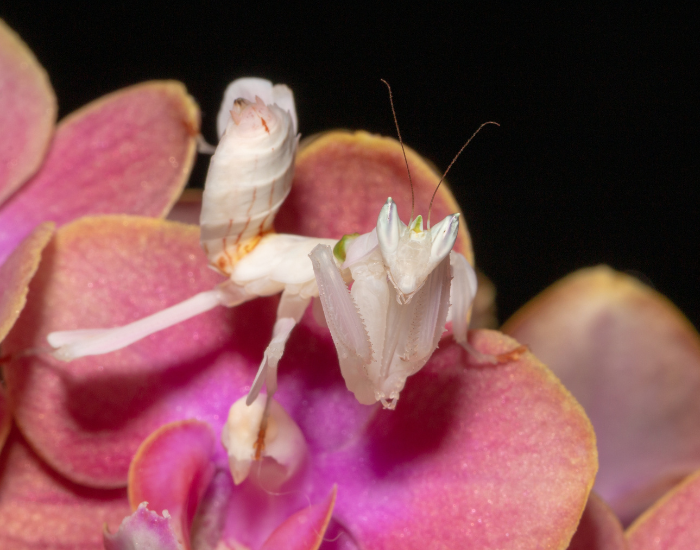
1. The Orchid Praying Mantis Uses Aggressive Mimicry to Hunt Prey
The orchid praying mantis (Hymenopus coronatus) is nature’s ultimate deception artist. This remarkable insect employs aggressive mimicry, a predatory strategy where the predator imitates harmless or attractive species to lure prey directly into its grasp. The orchid mantis’s ability to mimic orchid flowers allows it to catch insect prey with specialized hunting techniques, using its appearance and behavior to ambush unsuspecting victims.
Unlike camouflaged species that simply blend in to avoid detection, the orchid mantis actively seduces prey. Pollinating insects mistake the walking flower mantis for actual flowers and approach willingly. Orchid mantises catch their prey using rapid strikes and ambush tactics, quickly grabbing insects that come too close. This aggressive mimicry strategy makes the orchid mantis one of the most effective predators in rainforest ecosystems. The orchid praying mantis essentially hijacks the ancient behavioral programming that guides pollinators to flowers.
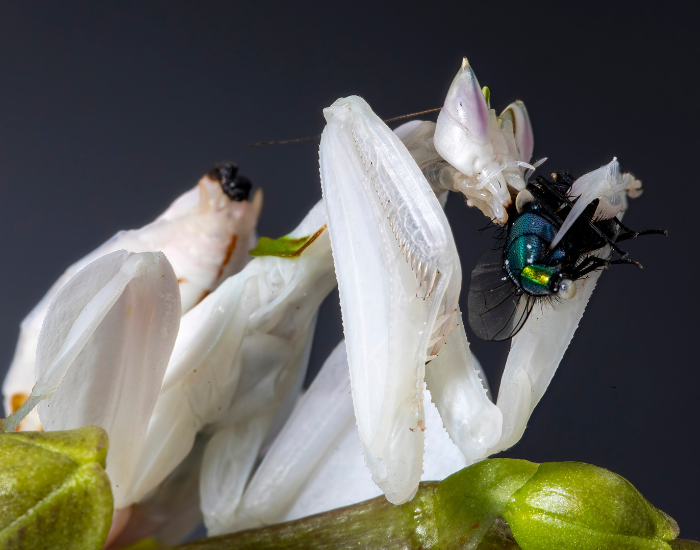
2. Orchid Mantises Attract More Pollinators Than Real Flowers
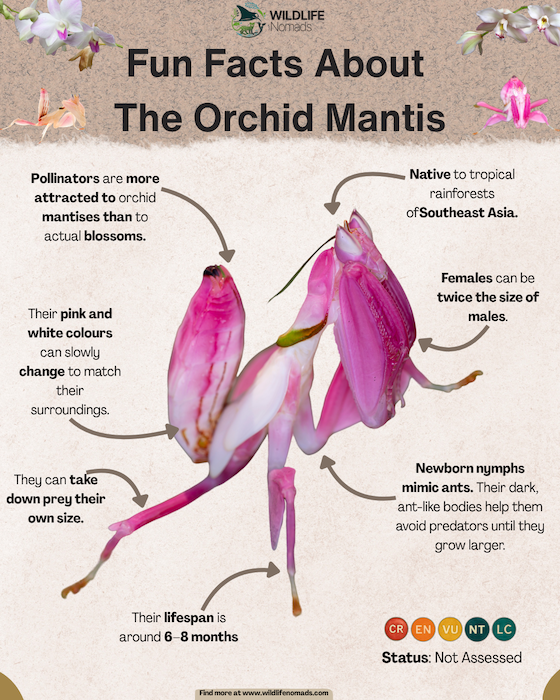
Research shows something extraordinary: orchid mantises attract nearly twice as many pollinators as nearby actual flowers. This finding demonstrates how perfectly the orchid praying mantis mimics floral signals. Their mimicry is so effective that it attracts natural pollinators, such as bees and butterflies, which are drawn to orchid blooms.
The walking flower mantis has essentially evolved to become a superstimulus, a fake flower more attractive than real flowers. Bees, butterflies, fruit flies, and miniature wasps approach the orchid blossom mantis more readily than genuine blooms. This aggressive mimics strategy represents an evolutionary arms race where predatory deception outpaces natural prey-attracting mechanisms refined over millions of years.
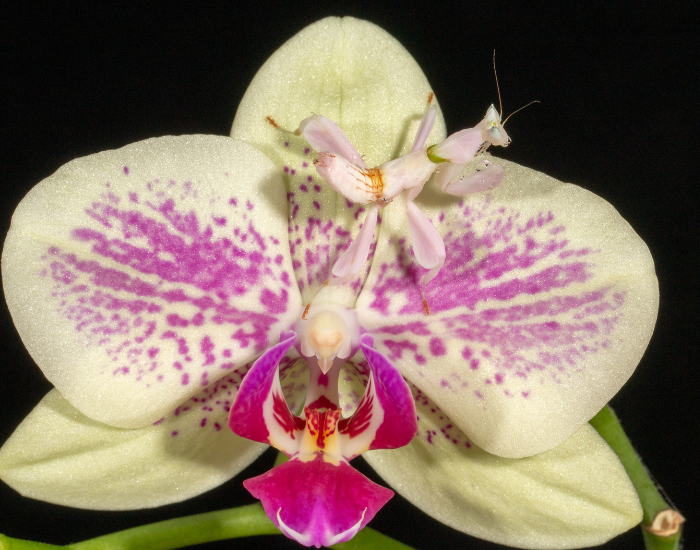
3. Orchid Mantises Reflect Ultraviolet Light Like Real Flowers
The orchid praying mantis doesn’t just look like a flower, it broadcasts floral ultraviolet signatures. Pollinators rely on ultraviolet vision to locate nectar sources, and the orchid mantis produces ultraviolet reflectance patterns nearly identical to actual flowers. Its special alluring coloration, including shades that mimic the pink orchid, further enhances its ability to attract prey and deceive both pollinators and predators.
This ultraviolet deception allows the orchid mantis to trigger pollinator approach behaviors at the sensory level. Flying insects cannot distinguish between the walking flower mantis and genuine flower ultraviolet signatures. This pollinator deception represents convergent evolution where an insect body plan evolved to mirror plant optical properties. The orchid praying mantis essentially evolved to appear as the most irresistible flower in the forest.
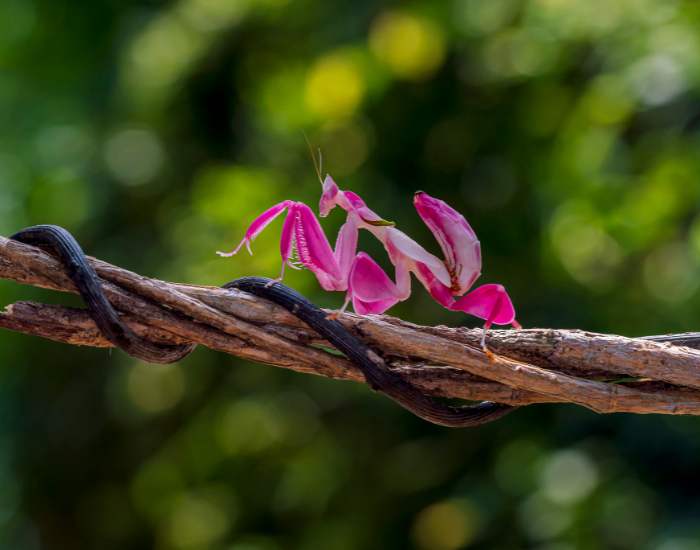
4. Female Orchid Mantises Exhibit Extreme Sexual Size Dimorphism
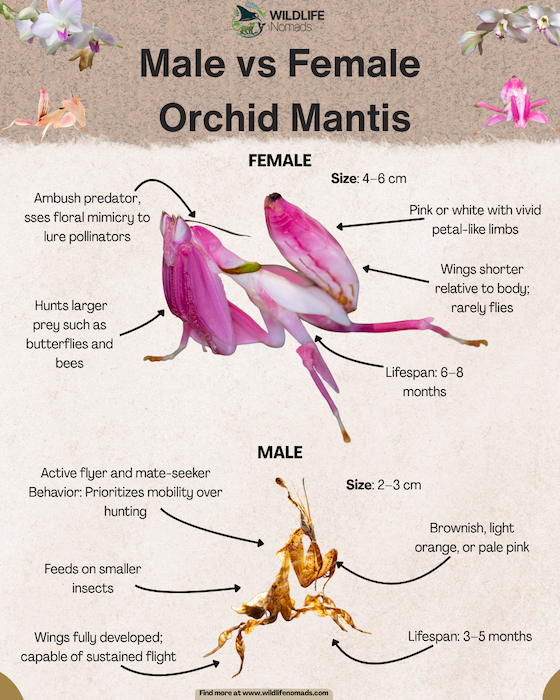
The orchid praying mantis displays extreme sexual size dimorphism unmatched among most insect species. Female orchid mantises reach 4–6 centimeters in length, creating robust, wide-bodied predators. Male orchid mantises are dramatically smaller, often only half the female’s size or less.
This extreme sexual size dimorphism reflects fundamentally different ecological roles. Female orchid mantises function as stationary ambush predators, using their larger bodies and powerful forelegs for hunting. Male orchid mantises prioritize agility and speed, spending their brief lives seeking mates rather than hunting extensively. This sexual size dimorphism allows the species to occupy different ecological niches within rainforest habitats. Female predatory selection has driven the evolution of larger adult females, enabling the adult female orchid mantis to ambush and capture larger prey. Adult females exhibit unique mimicry and predatory behaviors that distinguish them from males and other species.
5. Female Orchid Mantises Possess Vivid Pink and White Coloration
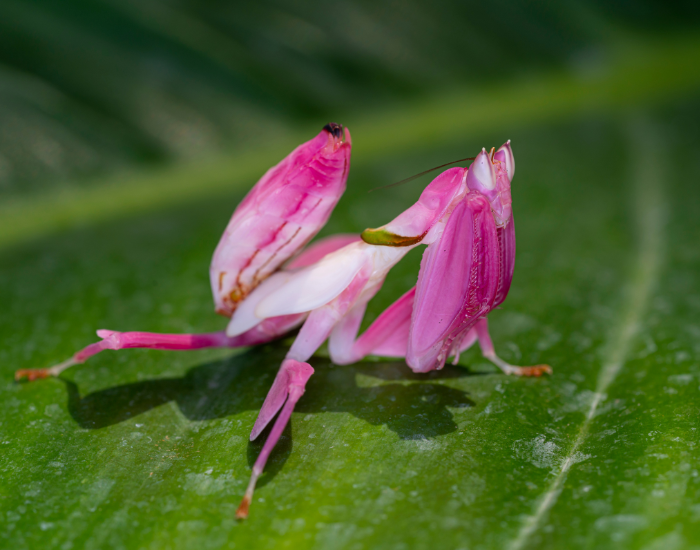
Female orchid mantises display vibrant white and pink flowers coloration that perfectly mirrors blooming orchids. The pink flowers coloration shifts depending on temperature, light exposure, and surrounding vegetation. Female mantis specimens can gradually adjust between pure white to soft pink to deeper pink shades. The mantis’s legs closely resemble flower petals, and this species mimics parts of the orchid flower to enhance its camouflage.
The apparent petals on female orchid mantises create visual illusions so convincing that even trained observers struggle spotting them. This white and pink flowers pattern provides ideal camouflage among actual flowering plants. The orchid praying mantis essentially performs the same visual function as real flowers, attracting pollinating insects while appearing completely harmless to potential predators.
6. Male Orchid Mantises Lack Ornamental Features
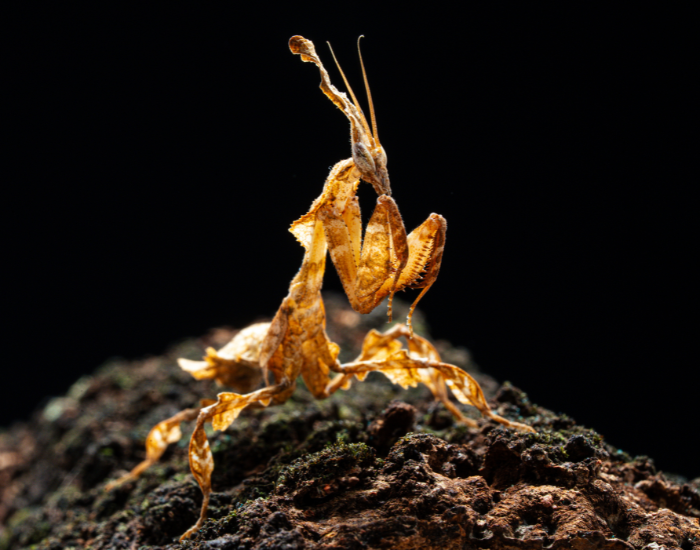
Compared to females as seen on the previous fact, male orchid mantises display brown or pale pink coloration rather than the vivid white and pink flowers pattern of females.
Unlike female orchid mantises, males lack the prominent petal-like leg lobes that create the flower-like shape. Male orchid mantises rely on agility and speed for survival rather than the aggressive mimics strategy employed by females. This sexual dimorphism creates distinct hunting and survival strategies within a single species. Male orchid mantises spend their brief adult lives primarily seeking mates rather than developing elaborate camouflage.
7. Orchid Mantises Can Adjust Their Color Polymorphism Gradually
The orchid praying mantis possesses the remarkable ability to deliberately change coloration over several days. This color polymorphism allows individual orchid mantises to adapt to different floral environments. An orchid mantis living among white flowers gradually lightens, while those among pink flowers develop deeper pink coloration.
This color change isn’t instantaneous like chameleons possess. Rather, the orchid mantis undergoes slow physiological processes involving pigment adjustment. Temperature, light intensity, diet, and environmental surroundings all influence the pink colour shift rate. This gradual color adaptation increases hunting success by improving camouflage effectiveness in varying Southeast Asia rainforest microhabitats.
8. The Orchid Praying Mantis Hunts Using Ambush Predation
The orchid praying mantis employs pure ambush predation as its primary hunting strategy. The mantis perches motionless among flowers, sometimes for hours, waiting patiently for suitable prey to approach. This hunting and camouflaging strategy relies on patience combined with explosive speed.
When prey approaches believing it’s found a flower, the orchid mantis strikes within 50 milliseconds. This grasping prey mechanism uses barbed raptorial forelegs that prevent escape. The orchid praying mantis lands directly on prey with remarkable accuracy, demonstrating predatory precision refined through millions of years of evolution. They are known to ambush foraging butterflies and can hunt fairly large prey like pollinating insects, such as butterflies and bees, that are attracted to its floral disguise, and small insects, including smaller stinging insects such as bees and miniature wasps, as well as the common house fly. This ambush predation technique gives the orchid mantis a hunting success rate around 50%, far exceeding most other feline and insect predators.

9. Orchid Mantises Possess Flower-Like Leg Lobes and Flattened Limbs
The orchid praying mantis possesses flattened limbs that function as elaborate petal-like structures. These leg lobes create the distinctive flower-like shape characteristic of the species. In addition to the leg lobes, the orchid praying mantis is known for possessing flattened limbs that enhance its flower-like appearance. Female orchid mantises display particularly prominent petal-like lobes that enhance the orchid flower illusion dramatically.
These flattened limbs aren’t mere aesthetic features—they serve critical predatory functions. The apparent petals increase the mantis’s visual complexity, making it even more difficult for prey to distinguish from actual flowers. The mantis’s abdomen often features markings that mimic flower parts or even resemble insects, further aiding in its predatory strategy. The orchid praying mantis body structure represents convergent evolution where an insect evolved plant-like characteristics. Genetic studies reveal these petal-like appendages evolved through gradual modifications of standard mantis leg structures, each intermediate step presumably providing selective advantages.
10. Orchid Mantises Are Native to Southeast Asia Rainforests
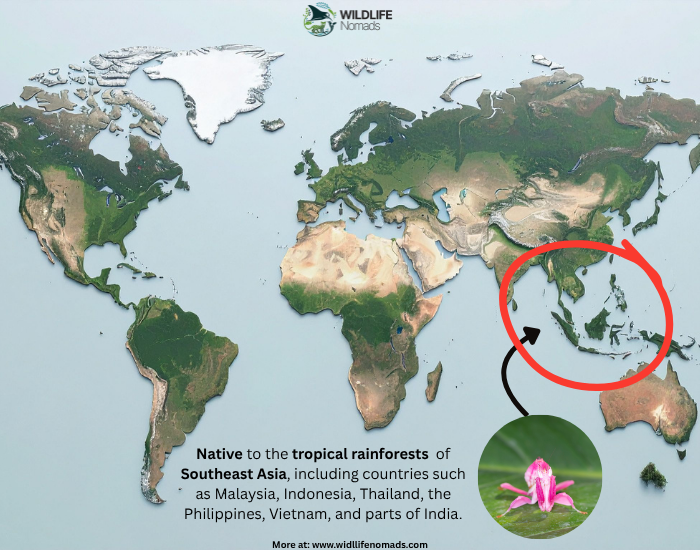
The orchid praying mantis is native exclusively to tropical rainforests across Southeast Asia. Primary distribution includes Malaysia, Indonesia, and Thailand. The walking flower mantis also occurs in Myanmar, the Philippines, and parts of India, though populations remain fragmented. The Indian mantis is a related species found in the region, and sightings of the Thailand adult male Hymenopus coronatus are particularly notable among enthusiasts.
These geographic regions share critical characteristics: high humidity, warm temperatures between 25–35°C, and dense flowering vegetation. Orchid mantises thrive near wetlands including reed beds, marshes, and areas with abundant flowering plants. Unlike species adapted to arid habitats, the orchid mantis absolutely depends on moist rainforest conditions. Southeast Asia provides the specific environmental parameters these specialized predators require for survival.
The orchid praying mantis is considered a mantis rare in the wild, which contributes to its desirability among collectors.
11. Female Orchid Mantises Live Significantly Longer Than Males
Female orchid mantises can live up to eight months, while male orchid mantises typically survive only three to five months. This lifespan difference directly reflects females’ critical reproductive role. Female mantis specimens produce multiple egg cases throughout their lifespans, ensuring population persistence despite high juvenile mortality rates.
Fecundity from the females (the species’ reproductive capacity) depends entirely on female survival and reproductive investment. Female orchid mantises lay eggs in protective foamy cases called oothecae that attach to vegetation. Multiple egg cases represent the species’ evolutionary strategy for population maintenance in environments where juvenile survival rates remain consistently low. Female orchid mantises essentially bear the burden of species survival through their extended lifespans and multiple reproductive cycles.
12. The Orchid Praying Mantis Life Cycle Involves Dramatic Morphological Changes
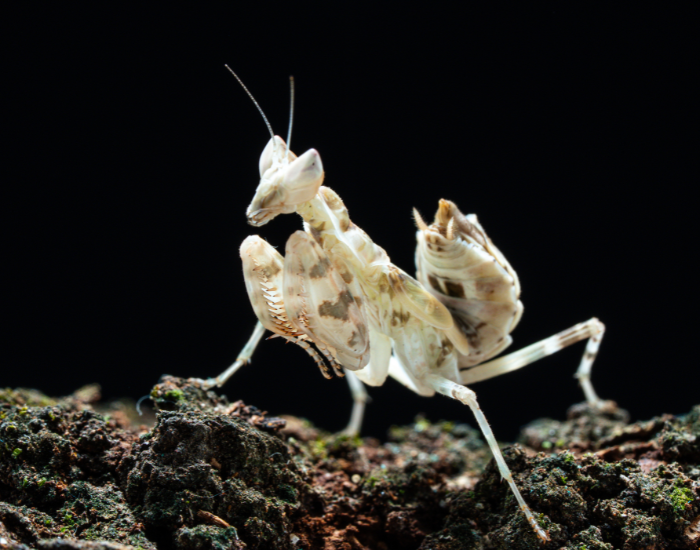
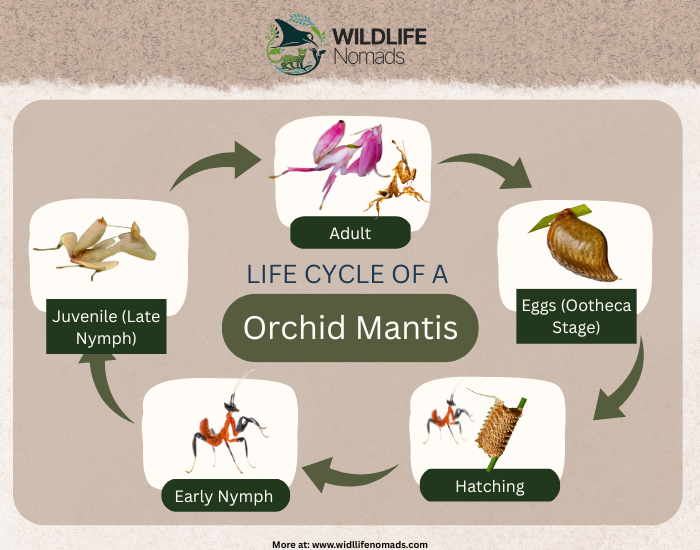
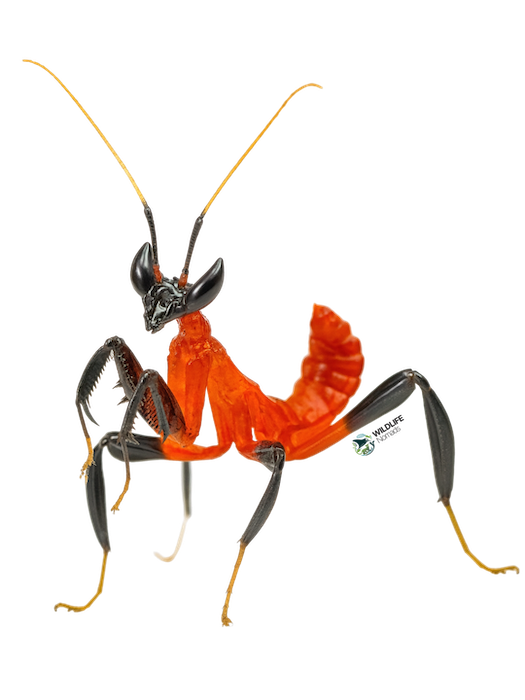
The orchid praying mantis undergoes incomplete metamorphosis, passing through three distinct life stages: egg, nymph, and adult. Newly hatched first-instar nymphs are dark, wingless, and highly mobile, resembling miniature assassin bugs (Reduviidae) with striking red-orange and black coloration. This Reduviidae mimicry provides protection through warning coloration, as predators learn to avoid these foul-tasting, biting insects.
As nymphs develop through approximately six molt cycles (instars), they gradually acquire their characteristic flower-like form. By the second instar, the dramatic color shift begins—the dark warning colors fade and are replaced by the white, pink, and yellow hues of their adult flower mimicry. This developmental progression from bug-like nymph to flower-like predator represents a complete shift in predatory strategy. Juveniles hide through species mimicry of dangerous insects; adults hide through flower mimicry.
Female orchid mantises can live up to eight or nine months compared to males’ five to six month lifespan, reflecting the extended development required for larger body size and reproductive readiness.
13. Orchid Mantises Face Threats From Habitat Loss and the Exotic Pet Trade
Although not officially listed as globally endangered, the orchid praying mantis faces increasing conservation pressures. Habitat loss through tropical forest destruction, wetland drainage, and agricultural expansion eliminates the flowering vegetation these predators depend upon. Deforestation across Malaysia, Indonesia, and Thailand fragments orchid mantis populations into isolated groups.
The illegal exotic pet trade compounds these conservation concerns significantly. The orchid praying mantis commands premium prices among collectors due to its striking appearance. Exact number is unknown, but highly likely that many individuals of wild-caught specimens are exported annually despite legal protections in many jurisdictions. Captive breeding programs have emerged to reduce wild collection pressure, but unsustainable demand continues. Preserving intact rainforest habitats remains the most effective conservation strategy for protecting wild orchid mantis populations and the thousands of pollinating insect species sharing these threatened ecosystems.
Praying Mantids as Pets
Praying mantises, including the beautiful orchid praying mantis, are sometimes kept by insect enthusiasts in bioactive enclosures with live plants and microfauna. While these setups can recreate natural conditions, keeping wild mantises as pets is strongly discouraged.
The orchid mantis is a delicate rainforest species that belongs in its native ecosystem, not in captivity. Collecting them from the wild contributes to population pressure and habitat decline. Instead of owning one, the best way to appreciate this remarkable insect is by supporting habitat conservation and protecting them in the wild, not possessing them.
FAQs about Orchid Mantis
Aggressive mimicry is a predatory strategy where predators imitate harmless or attractive species to lure prey. The orchid mantis Hymenopus coronatus mimics flowers so convincingly that pollinators approach them willingly, flying directly into a predatory strike.
Through multiple deceptive channels: visual appearance mimics flower shape, coloration mimics floral colors, and ultraviolet reflectance mimics floral UV signatures. Pollinators cannot distinguish between real flowers and orchid mantises.
Extreme sexual size dimorphism reflects different ecological roles. Females are larger ambush predators with elaborate camouflage. Males are smaller, more mobile, and prioritize finding mates over hunting. The female mantis continues to grow and develop predatory adaptations throughout her life, enhancing her hunting abilities.
Yes, but slowly. Individual orchid mantises gradually adjust between white and pink over several days, based on temperature, light exposure, and surrounding vegetation.
Orchid mantises are specialized carnivorous insectivores that feed almost exclusively on flying insects: bees, butterflies, fruit flies, miniature wasps, and small moths.
The Living Flower That Fooled the World
The orchid praying mantis represents one of nature’s most sophisticated examples of predatory evolution. Through aggressive mimicry, ultraviolet deception, and behavioral adaptation, this remarkable insect achieves hunting success rates unmatched among its peers. The extreme sexual size dimorphism, color polymorphism, and dramatic life cycle changes showcase the complexity of evolutionary refinement.
As tropical rainforests continue fragmenting, preserving orchid mantis populations becomes increasingly critical. These predators depend on intact wetland ecosystems and flowering vegetation found nowhere else on Earth. The orchid praying mantis awaits protection, a living testament to evolution’s creative power and nature’s vulnerability to human destruction.