Last week, somewhere between Aswan and Abu Simbel, our driver pulled over at a roadside rest stop so battered by sun and sand that it looked half-abandoned. I am currently in Egypt for a month, and the coffee was non-negotiable. While my partner peered into a toilet we ultimately refused to enter (the kind of facility that sends you back into the desert with full dignity intact) I noticed a slender, pale-bodied snake threading itself between the cinder blocks of the back wall. As a biologist trained in the Americas and Australia, my eyes are tuned to entirely different ecosystems; here, I was the student. Our local guide squinted, smiled, and said it was probably an Egyptian Sand Snake. Not venomous, he assured me, though he kept his sandals well clear. By the time I reached for my camera, the animal was already gone.
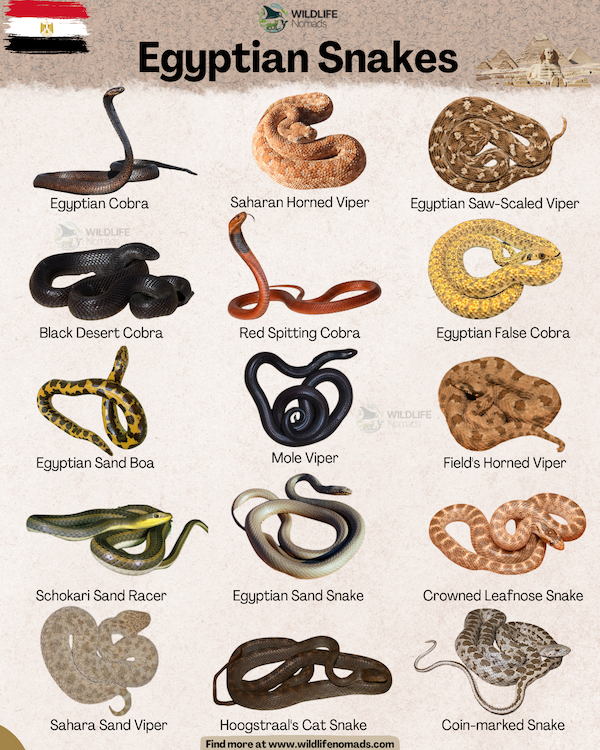
That single, sun-bleached encounter is what sparked this guide. Egypt is home to roughly 36 snake species, and most travelers I meet here can name exactly one of them: cobra. So this is a working field list of 15 Egyptian snakes—venomous, harmless, and historically loaded—covering identification, habitat, and what to do if you actually meet one.
Egypt’s Snakes at a Glance
Egypt is home to about 36 snake species, divided between highly venomous species and harmless or mildly venomous species. The dangerous ones belong to two families: Elapidae (the cobras) and Viperidae (the vipers and saw-scaled vipers). Together they account for nearly every serious bite recorded in the country.
Snakes in Egypt are not enemies. They control populations of rodents and other small animals, often entering human habitations in search of prey such as domestic chickens. Recognizing the most important Egyptian snakes by their physical traits, preferred habitats, and warning behaviors is the single best safety habit you can build in this country.
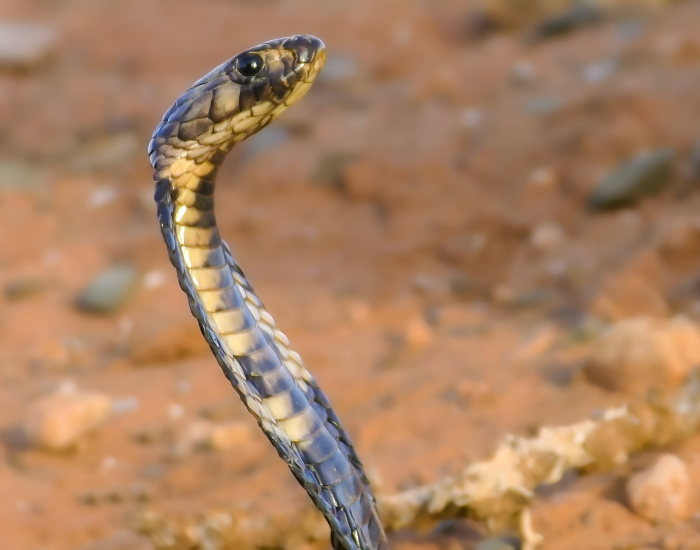
1. Egyptian Cobra (Naja haje)
This is the snake of Cleopatra, of the uraeus crown, and of half the temple paintings in Luxor. The Egyptian cobra is one of the largest cobra species, typically growing to around five feet long, with some individuals recorded at over eight feet. It inhabits a wide variety of habitats including steppes, dry to moist savannas, arid semi-desert regions, and agricultural fields, often found near water sources.
It is primarily nocturnal and crepuscular, showing a preference for a permanent home base in abandoned animal burrows, termite mounds, or rock outcrops. The venom consists mainly of neurotoxins and cytotoxins, with an average venom yield of 175 to 300 mg in a single bite and a murine subcutaneous LD50 of 0.96 – 1.24 mg/kg. That is potent enough to cause death by complete respiratory failure, because the venom stops nerve signals to the muscles, heart, and lungs.
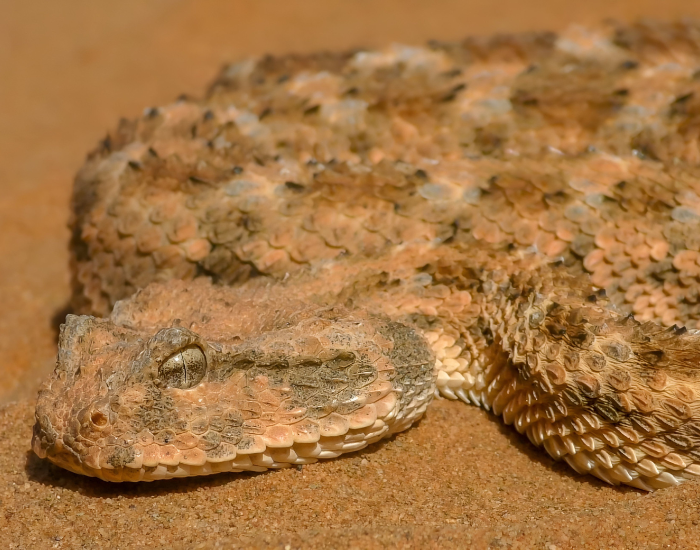
2. Saharan Horned Viper (Cerastes cerastes)
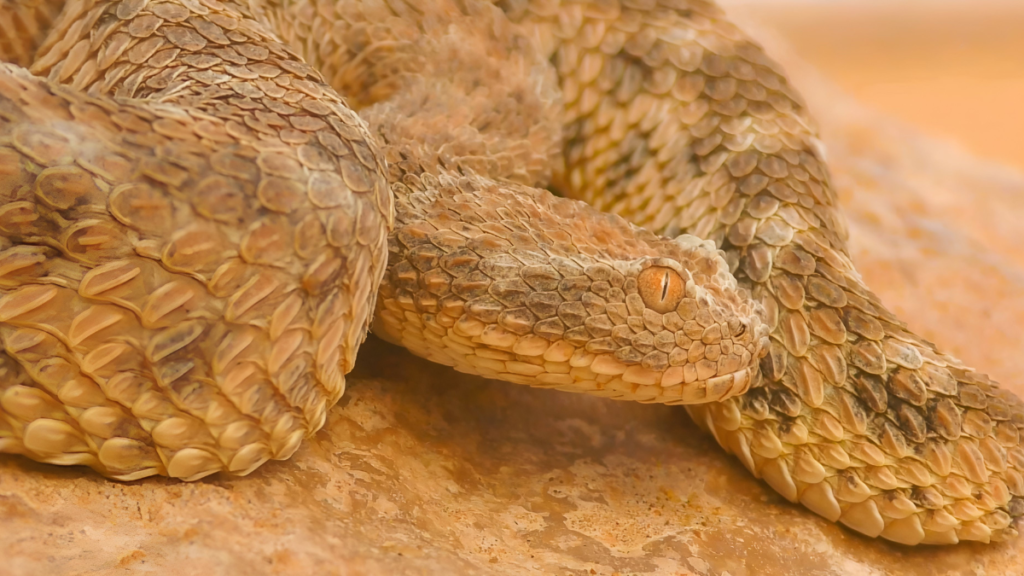
You spot this one from the small “horns” perched above each eye like punctuation marks. The Saharan horned viper is known for its distinctive horns above its eyes and can grow to a maximum length of three feet. It lives across the Western Desert and into Sudan, ambushing prey by burying its body in loose sand until only its eyes and horns protrude.
When threatened, it sidewinds away and produces a dry rasping sound by rubbing its rough scales together. Bites are rarely fatal to a healthy adult who reaches treatment quickly, but the hemotoxic venom causes serious tissue damage.
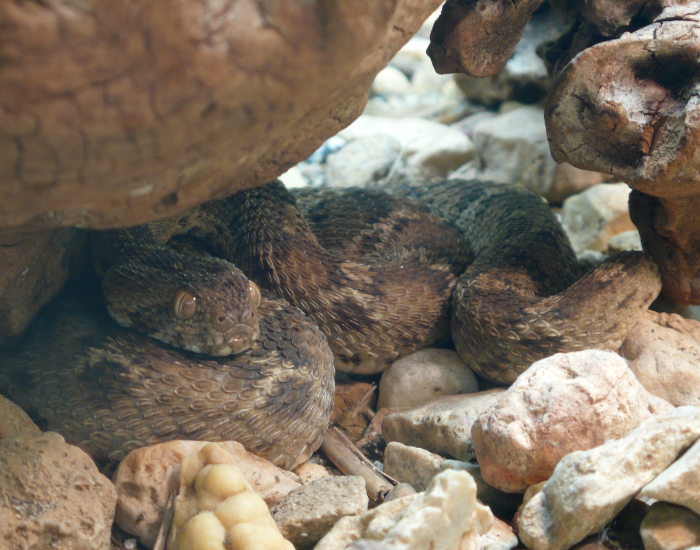
3. Egyptian Saw-Scaled Viper (Echis pyramidum)
Small, irritable, and disproportionately dangerous. The Egyptian Saw-Scaled Viper produces a warning sound by rubbing its scales together when threatened, an unmistakable rasping hiss you will remember for the rest of your life. Egyptian saw-scaled vipers are known to be aggressive and have highly toxic venom, with bites that can cause fatalities in humans.
The venom is highly toxic and can disrupt blood clotting, which is exactly what makes it so dangerous in rural areas without easy antivenom access. Globally, the genus Echis kills more people than any other snake group. In Egypt it lives in dry rocky scrub and on desert margins, where farmers and shepherds cross paths with it after dark.
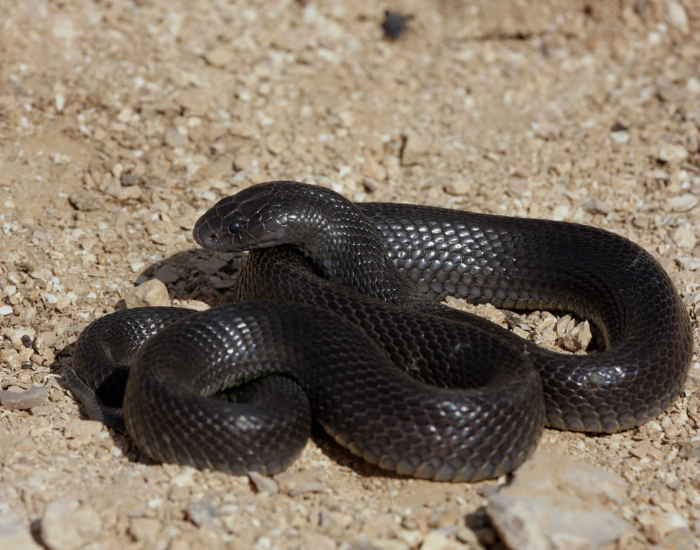
4. Black Desert Cobra (Walterinnesia aegyptia)
If you ever see a snake in Egypt that is uniformly jet black with a metallic sheen, give it room. The black desert cobra can reach lengths of nearly six feet and is known for its entirely black coloration and shiny scales. It has potent neurotoxic venom and is considered one of the deadliest snakes in Egypt, often found near human settlements.
Despite the name, it does not flare a true hood like the Egyptian cobra. Researchers consider it among the most medically significant elapids in North Africa. Sightings are uncommon, but its preference for irrigated land near villages means farmers occasionally meet one inside a chicken coop.
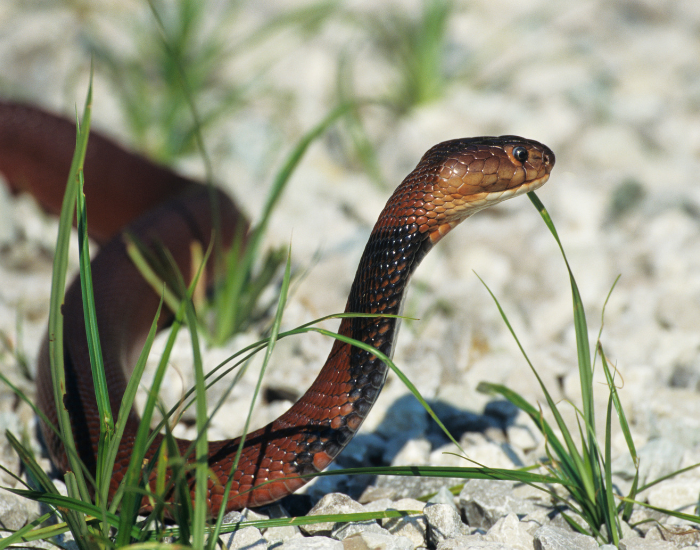
5. Red Spitting Cobra (Naja pallida)
This species pushes into southern Egypt from the Sudanese border, and it is a master of long-range defense. The red spitting cobra can accurately spit venom up to eight feet away, and that venom can cause extreme pain and permanent loss of eyesight if it gets into the eyes. The animal aims for the face.
If you encounter one, do not crouch for a photo. Sunglasses are working eye protection in the southern desert, not just a fashion choice. A bite, by contrast, is treated similarly to other elapid envenomations and is medically less common than the spit-to-the-eyes scenario.
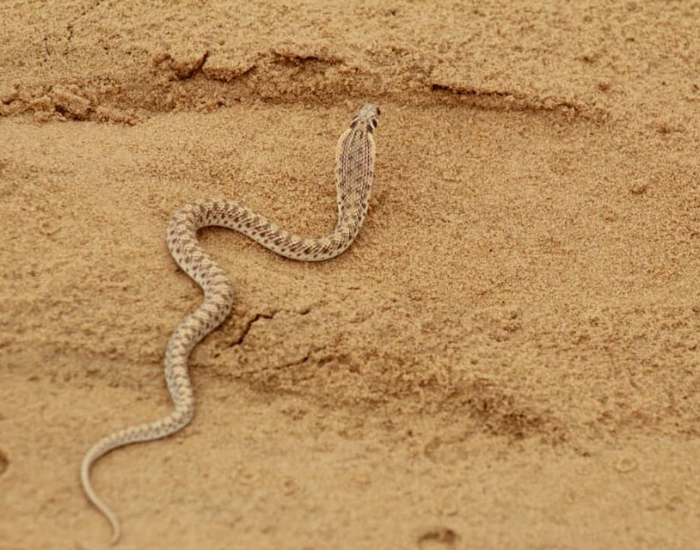
6. Egyptian False Cobra (Rhagerhis moilensis)
One of the more theatrical species on this list. The Egyptian False Cobra mimics true cobras to intimidate predators, although its bite is not dangerous to humans. When threatened it flattens its neck into a convincing hood and rears up in a near-perfect impression of a Naja.
Behind the bluff is a mildly venomous rear-fanged colubrid that mostly eats lizards. I think it is a beautiful example of evolutionary mimicry, a snake that learned that simply looking like the most feared animal in the desert was enough to keep predators away.
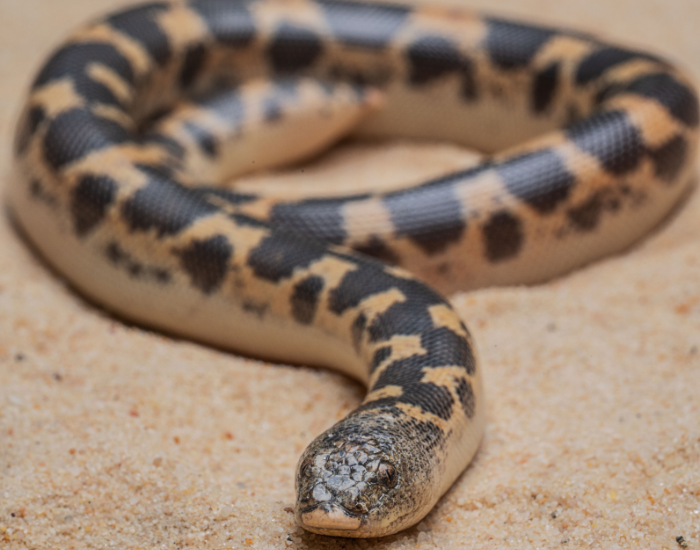
7. Egyptian Sand Boa (Eryx colubrinus)
Egyptian sand boas, also known as Kenyan sand boas, are among the shortest snakes in Egypt, with females growing up to two feet long and males rarely exceeding 15 inches. They are stout, blunt-tailed, and engineered for life inside loose sand. They burrow up to their eyes and ambush small rodents passing overhead.
This is one of the most popular snakes in the global pet trade, partly because they are non-venomous and partly because they are calm. In the wild, they are nocturnal and almost never seen unless you flip exactly the right rock at dusk.
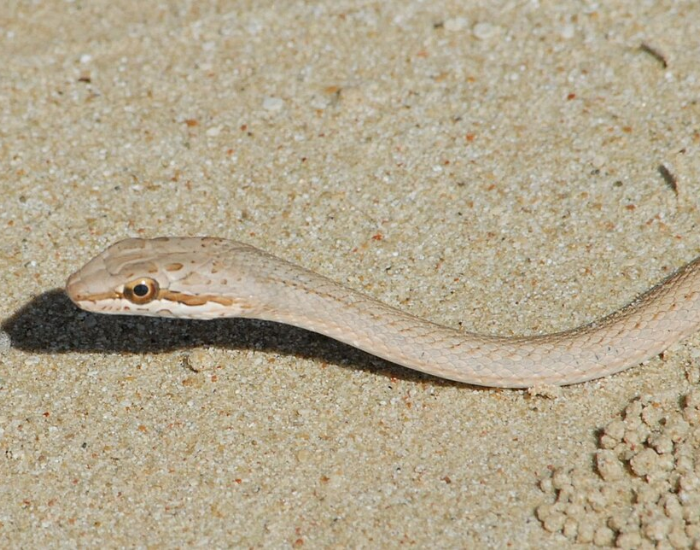
8. Egyptian Sand Snake (Psammophis aegyptius)
This is the species I saw on the road to Abu Simbel, slender, pale tan, and absurdly fast. Egyptian sand snakes are diurnal hunters of lizards and small mammals. They are mildly venomous rear-fanged colubrids, but the venom is harmless to humans and bites are not considered medically significant.
What they have instead is speed. A startled Psammophis disappears faster than you can refocus a camera. My guide was right that day at the rest stop, it was not the snake we needed to worry about. The toilet, however, remained an active threat.
9. Sahara Sand Viper (Cerastes vipera)
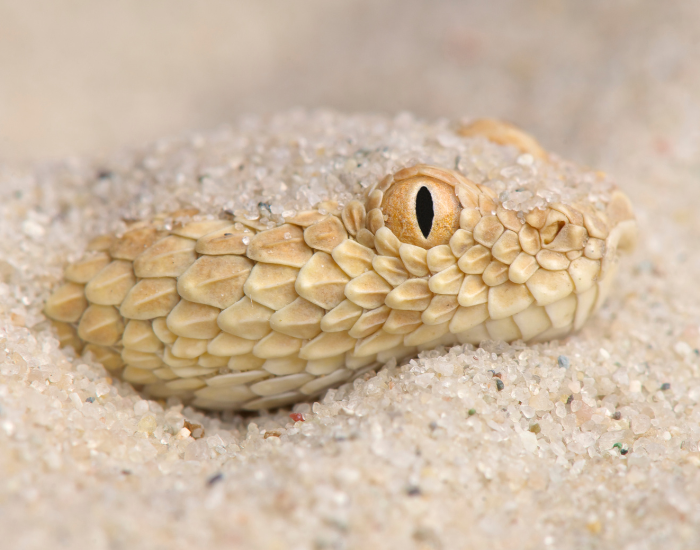
The smaller, hornless cousin of the Saharan horned viper. The Sahara sand viper rarely exceeds 14 inches and spends almost its entire life buried in sand, with only its eyes above the surface. It hunts geckos and small lizards that wander too close.
Its venom is hemotoxic but, given the small body and modest venom yield, bites are seldom fatal. The bigger danger is simply not seeing it. Shake out your boots and look before you put your hand on rock or sand in the deep desert.
10. Diadem Snake (Spalerosophis diadema)
A handsome, slender colubrid common across Egyptian agricultural land. The diadem snake gets its name from the dark crown-like marking on its head. It reaches about four feet and is completely non-venomous to humans.
I think of it as one of the great unsung heroes of Egyptian farming villages. A single diadem snake works through a remarkable number of rodents in a season. The next time someone in a village shouts about a snake in the wheat, it is far more likely to be this species than a cobra.
11. Hoogstraal’s Cat Snake (Telescopus dhara)
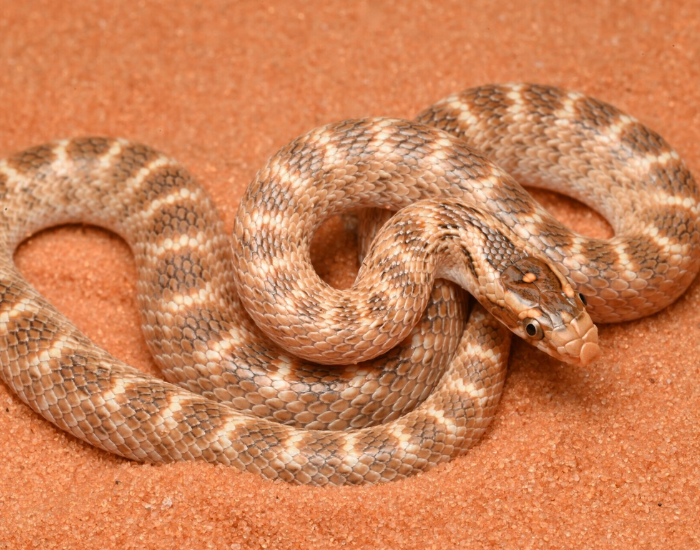
A nocturnal, large-eyed, rear-fanged species named for the legendary American parasitologist Harry Hoogstraal, who spent decades working in Egypt. The cat snake reaches about three feet and feeds on lizards and small mammals it ambushes at night.
Its mild venom is designed for small reptile prey and poses no real threat to humans. It is widespread in rocky outcrops and old stone walls. If you camp in the Eastern Desert, you may meet one wandering through your campsite after sunset.
12. Coin-marked Snake (Hemorrhois nummifer)
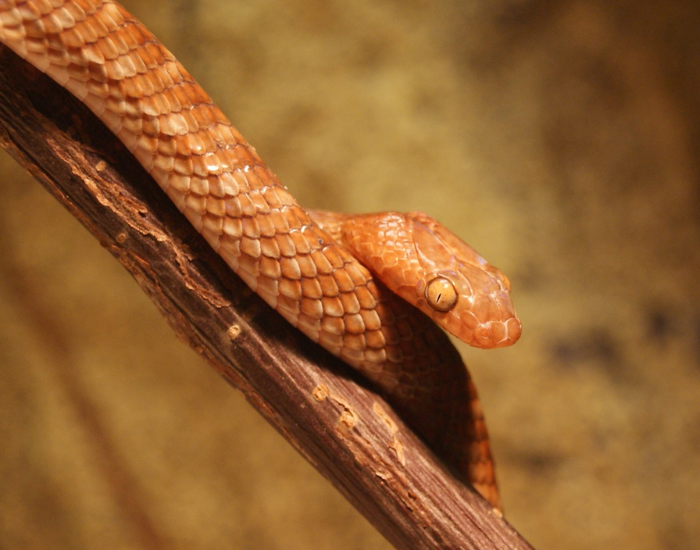
A handsome, fast-moving colubrid named for the dark, coin-shaped blotches running down its back. Coin-marked snakes reach five feet and are widespread across rocky Mediterranean habitats along the northern Egyptian coast and into Sinai.
They are non-venomous to humans and will bluff aggressively when cornered, hissing and striking with closed mouths. Beautiful animals to watch, and excellent rodent control wherever they live.
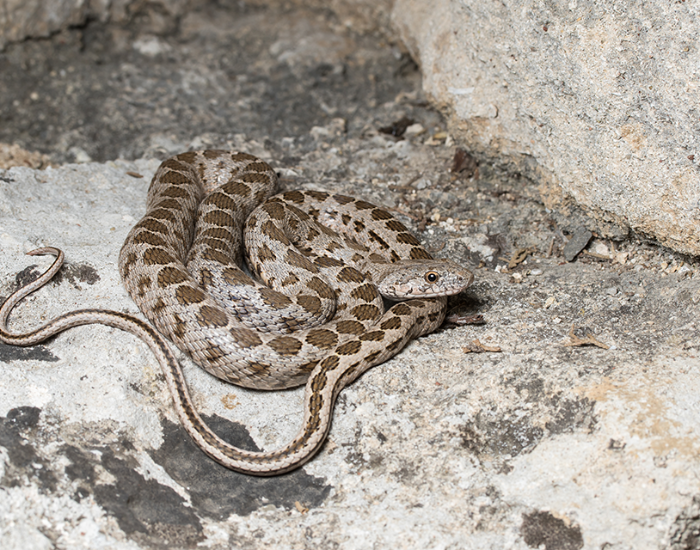
13. Crowned Leafnose Snake (Lytorhynchus diadema)
A tiny, pale, sand-dwelling colubrid with an upturned snout built for digging. The crowned leafnose snake rarely exceeds 16 inches and is strictly nocturnal, surfacing to hunt small lizards under starlight.
It is harmless, beautiful, and probably a favorite of Egyptian herpetologists because of how perfectly camouflaged it is against pale sand. You almost certainly will not see one unless you are out at night with a strong flashlight.
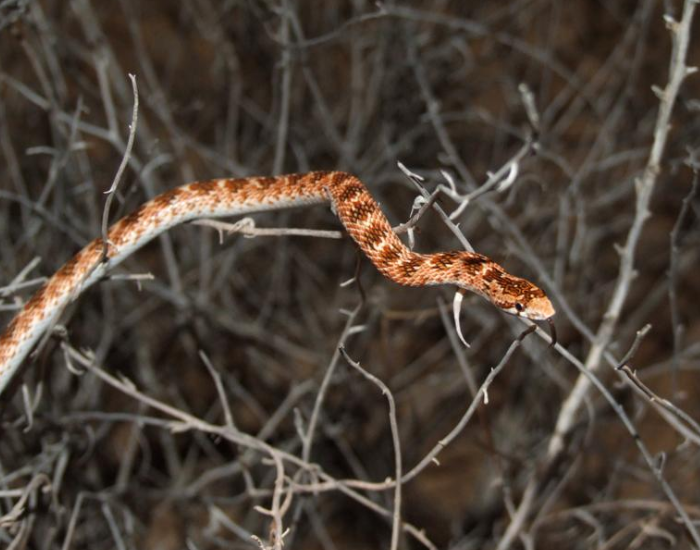
14. Schokari Sand Racer (Psammophis schokari)
Another whip-thin, fast diurnal hunter that thrives in dry scrub and wadis throughout Egypt. The Schokari sand racer reaches about three feet and is one of the most widespread snakes in the country. Rear-fanged and mildly venomous, but no risk to people.
Watch for it sunning on warm rocks in the morning. If it sees you first, you will see only a tan streak vanishing across the gravel.
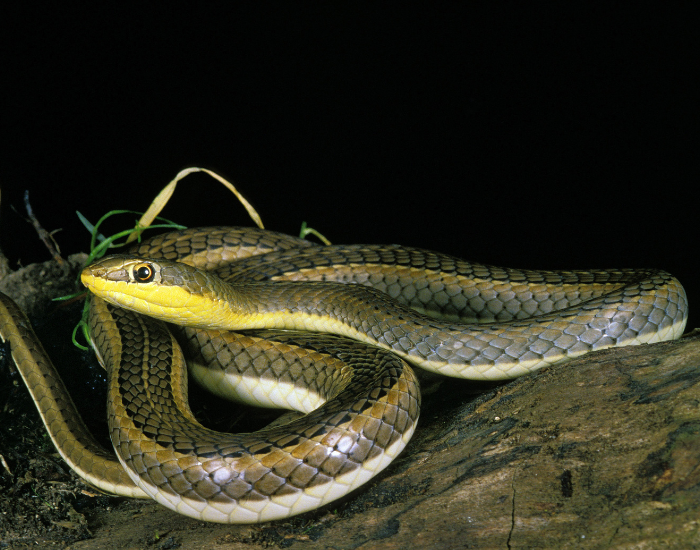
15. Painted Saw-Scaled Viper (Echis coloratus)
Sometimes confused with the more common saw-scaled viper, this species lives mostly in rocky Sinai and the Eastern Desert. It is just as dangerous, with potent venom that can disrupt blood clotting, and it produces the same characteristic scale-rubbing warning sound when threatened.
If you are hiking in the wadis of South Sinai, this is the species to know. Step carefully around boulder fields and never put your hand on a ledge you have not already inspected.
FAQ
Egypt is home to around 36 distinct species of snakes, categorized into venomous and non-venomous species. The most common venomous snakes in Egypt include the Egyptian Cobra, the Saharan Horned Viper, and the Egyptian Saw-Scaled Viper. Most other species, including the diadem snake and the Egyptian sand snake, are harmless to humans.
The Arabic word for snake is thu’ban (ثعبان), and cobras specifically are often referred to as naja, which is also the Latin genus name. Ancient Egyptians used the word iaret for the sacred cobra image displayed on the pharaohs’ crowns. Different regions of Egypt also use local Bedouin names for desert species.
The Egyptian snake with three letters is the asp, a historical English term that referred specifically to the Egyptian cobra (Naja haje). Cleopatra is said to have used the venom of the Egyptian cobra for her suicide, as it was believed to be a painless method of death—which is why the asp carries such cultural weight even today.
Yes, largely. The Egyptian cobra was represented in Egyptian mythology by the cobra-headed goddess Meretseger, symbolizing protection and sovereignty. The stylized Egyptian cobra, known as the uraeus, was a symbol of sovereignty for the Pharaohs and was incorporated into their diadems, representing divine authority. The same species still lives in Egypt today, though urbanization has shrunk its range in the Delta.
Tough Survivors
The snake near the Abu Simbel rest stop did not bite anyone. It barely paused. It slid behind a cinder block and was gone in seconds—uninterested in coffee, in tourists, in the abandoned toilet, in any of us. That has always been my experience of Egyptian snakes: they want nothing to do with people, and the more we learn to recognize them, the safer we both become.
If you are heading into the desert, pack a flashlight, shake out your boots, and watch where you put your hands. And if you want more field stories from a biologist on the move, take a look at my guide to types of eagles or my breakdown of the 10 lizards of Texas. Leave a comment below and tell me which snake on this list surprised you most—or which one you would most like to see in the wild.
References:
Baha El Din, S. (2006). A Guide to the Reptiles and Amphibians of Egypt. The American University in Cairo Press.
Casewell, N. R., Jackson, T. N. W., Laustsen, A. H., & Sunagar, K. (2020). Causes and consequences of snake venom variation. Trends in Pharmacological Sciences, 41(8), 570–581. https://doi.org/10.1016/j.tips.2020.05.006
IUCN. (2023). The IUCN Red List of Threatened Species: Naja haje. International Union for Conservation of Nature. https://www.iucnredlist.org/species/184071/1748178
Pook, C. E., Joger, U., Stümpel, N., & Wüster, W. (2009). When continents collide: Phylogeny, historical biogeography and systematics of the medically important viper genus Echis (Squamata: Serpentes: Viperidae). Molecular Phylogenetics and Evolution, 53(3), 792–807. https://doi.org/10.1016/j.ympev.2009.08.002
Salama, W. H., Shaheen, M. N. F., & Shahein, Y. E. (2022). Egyptian cobra (Naja haje haje) venom phospholipase A2: a promising antiviral agent with potent virucidal activity against simian rotavirus and bovine coronavirus. Archives of microbiology, 204(8), 526. https://doi.org/10.1007/s00203-022-03139-7
Warrell, D. A. (2019). Snakebites in Africa and the Middle East: A serious neglected public-health problem.