Most birds of prey follow predictable patterns. The bald eagle hunts fish with precision. The crested caracara scavenges opportunistically across open plains. Even other vultures stick to the same playbook: circle, descend, and compete for rotting flesh. But the lammergeier? It rewrites the entire rulebook.
Unlike other vultures that circle over carcasses, the lammergeier waits patiently. This solitary bird has evolved a unique survival strategy that sets it apart from every other bird in the world. While griffon vultures and black vulture species feast on soft tissue, the bearded vulture (gypaetus barbatus) claims what others leave behind: bones.
Picture this: a feeding frenzy ends. The griffon vultures lift off, bellies full. The black vultures scatter. And then, from a distant cliff, the lammergeier descends. No competition. No fighting. Just one bird and a skeleton picked clean. This is where its story truly begins.
Today, we’re diving deep into the world of this bone-breaking specialist, one of the most remarkable birds of prey to soar through mountainous regions. Let’s uncover what makes the bearded vulture one of nature’s most fascinating survivors.
1. What is a Lammergeier? (And Why the Name?)
The word “Lammergeier” comes from the German Lämmergeier, which translates to “lamb vulture.” For centuries, shepherds in western Europe and central Asia believed these birds carried off live lambs and even small children.
I can tell you: that’s pure myth. While they are massive birds of prey, their feet are surprisingly weak compared to eagles (like the powerful legs of the harpy eagle). They aren’t built to kill tortoises or snatch up struggling prey. Instead, they are nature’s ultimate recyclers, built to clean up what everyone else leaves behind.
Their scientific name, Gypaetus barbatus, is far more accurate. It literally means “bearded vulture-eagle.” In addition, many cultures call them “bone breakers” due to their feeding technique.
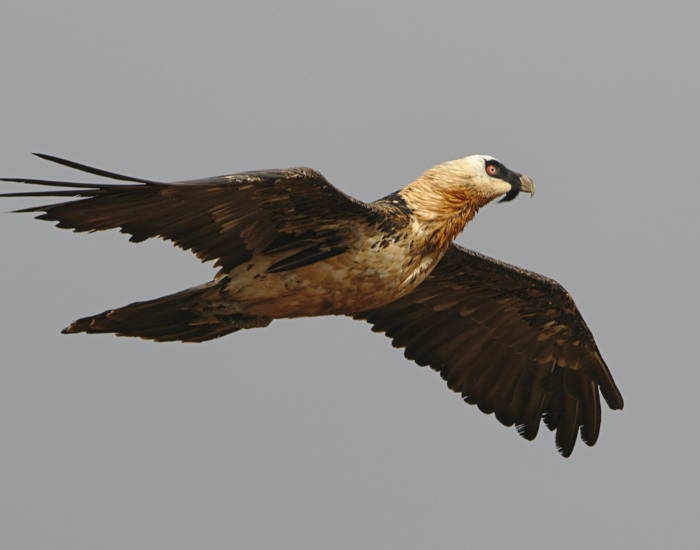
2. The Only Vulture That Lives on a Diet of Bones
Most world vultures fight over rotting meat from dead animals. However, the lammergeier bird waits for the frenzy to end. Once the black vulture and griffon vultures have stripped the carcass, the lammergeier moves in for the large bones.
Their diet and food preferences are extraordinary: roughly 70% to 90% bone marrow and bone. They are the only vulture species, and the only bird in the world, to specialize in this. Therefore, they occupy a brilliant evolutionary niche with virtually no competition for their food source.
This unique diet means lammergeiers can thrive in isolated populations where other vultures might struggle. In southern Africa and eastern Africa, they feed on bones from medium-sized ungulates. In central Asia, they consume bones from wild bearded vultures’ prey, including mountain goats and sheep.
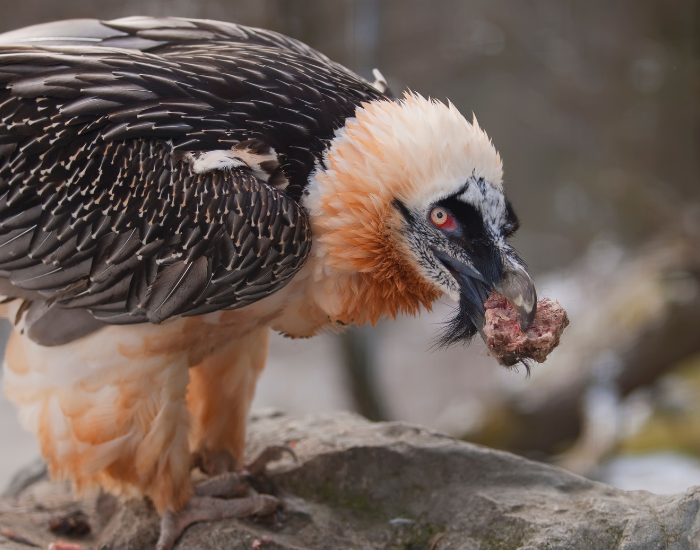
3. The “Bone Breaker” Technique
You might wonder: how do bearded vultures consume bones that other animals can’t? While they are large, they can’t swallow a whole cow leg. Instead, they use a “bone-breaking” technique that’s unique among birds.
The bird carries a bone to a specific height, usually 50 to 100 meters, and drops bones onto flat rocky surfaces called ossuaries. This shatters the bone into digestible pieces. Having witnessed this in the wild, I can tell you the precision is incredible.
They aren’t just dropping things randomly. These birds select the same nest site and the same rocky surfaces repeatedly. Young birds learn this behavior from breeding pair adults, watching how to identify the perfect dropping zones.

4. An Incredible Bearded Vulture Wingspan
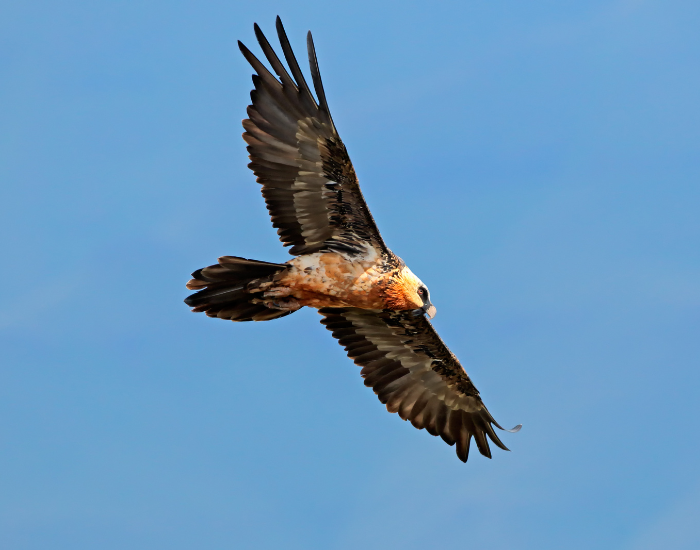
When you see a lammergeier bearded vulture in flight, the first thing you notice is the size. The bearded vulture size is intimidating, with a body length of up to 4 feet. However, the bearded vulture wingspan is the real showstopper.
Their wings reach between 7.5 to 9.5 feet (2.3 to 2.9 meters). This massive surface area allows them to soar over mountainous regions for hours with barely a flap. In alpine mountain ranges, they use thermal currents to carry heavy bones aloft.
Compared to other vultures, the bearded vulture population exhibits slightly larger dimensions than most vultures. Only the largest old world vultures come close in wingspan. For example, the turkey vulture, a new world species, has a much smaller wingspan and different flight pattern.
5. Why is the Bearded Vulture Orange? (The “Blood” Myth)
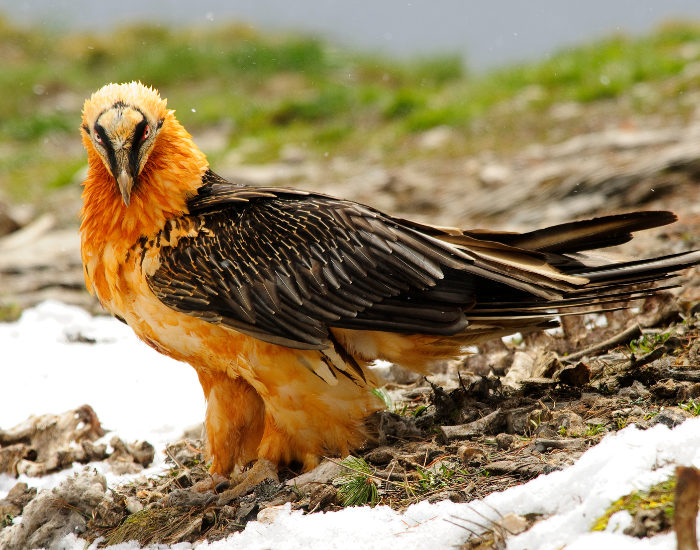
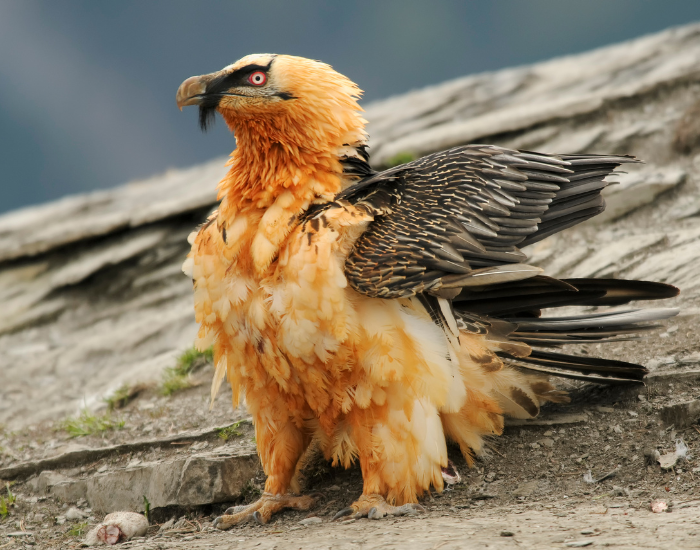
One of the most persistent questions I get is: “What bird covers itself in blood?” It’s a trick of the eye! In the wild, you’ll see many adults with a vibrant rusty orange or deep red underbelly. For a long time, people thought this was blood from their prey.
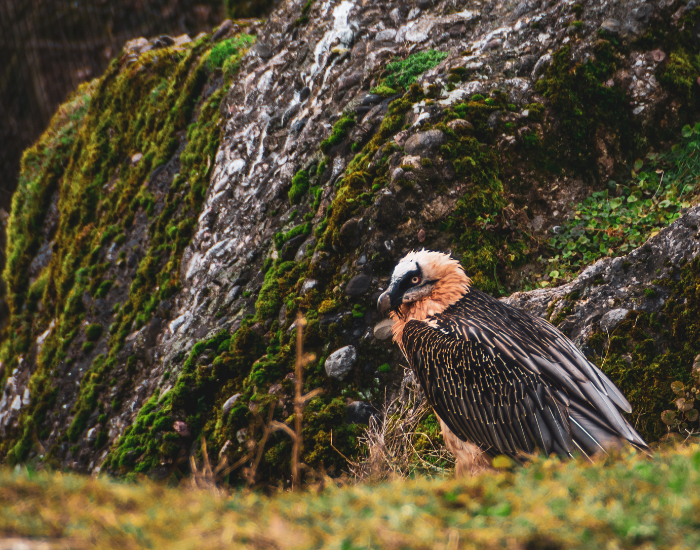
In reality, it’s a cosmetic choice. Lammergeiers seek out iron-rich mud and iron oxide deposits in the rocks to bathe in. This stains their predominantly dark brown and white feathers orange. Research suggests this might be a status symbol within the bearded vulture population.
Furthermore, scientists believe the iron oxide might protect their feathers from bacteria. This behavior is most common in wild bearded vultures during the breeding period, suggesting it may play a role in courtship or territorial displays.
6. Where Does the Bearded Vulture Live?
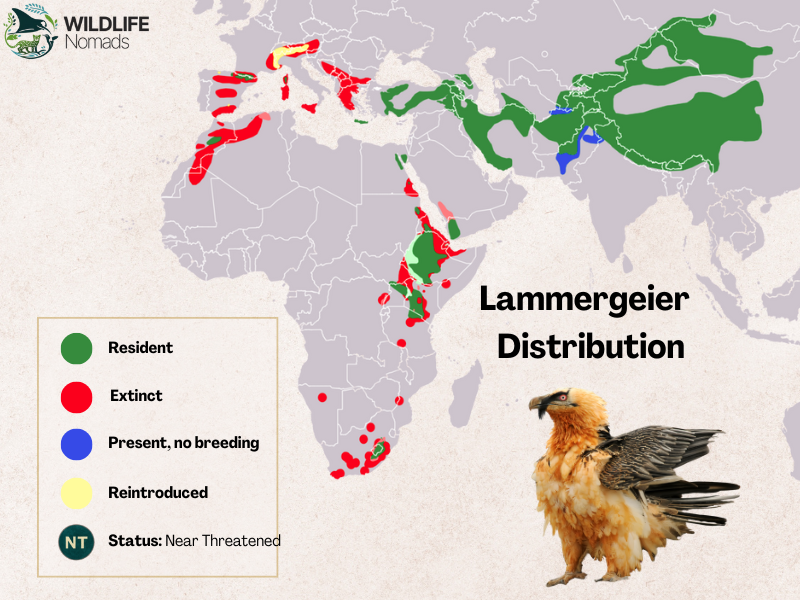
The bearded vulture range is vast but fragmented. They are strictly high-altitude specialists found in specific mountain ranges worldwide.
Southern Europe: The Pyrenees, the Alps, and small populations in the eastern Pyrenees. Conservation efforts have helped reintroduced population numbers grow steadily.
Africa: Isolated populations exist in eastern Africa (Ethiopia) and southern Africa, particularly the Drakensberg mountains. These African populations face different threats than their European cousins.
Asia: The Himalayas and central Asia host the largest populations. These high mountains provide ideal habitat, with fewer threats from human persecution.
Former Range: Historically, bearded vultures lived across northern Africa and other mountain ranges throughout the Mediterranean. However, habitat loss and poisoning eliminated many small populations.
They love alpine mountain ranges where steep cliffs provide perfect nest site selection opportunities. In addition, these mountainous regions offer the thermal currents essential for carrying bones to sufficient heights.
7. A Unique Breeding Biology
The breeding biology of the lammergeier is a lesson in patience. Unlike small birds that mature quickly, lammergeiers reach sexual maturity late, around 7 years. A breeding pair usually produces only one young bird per breeding season.
While a breeding pair might hatch two eggs, a behavior called “cainism” usually occurs. The older sibling outcompetes the younger for food and attention. In the wild, only one chick typically survives. Captive birds in breeding programs sometimes raise both chicks successfully.
This slow reproduction rate is why the total population is so sensitive to human persecution. Furthermore, the breeding period requires specific conditions. They nest in winter, laying eggs between December and February. The young birds fledge in summer but depend on parents for months afterward.
Breeding success depends heavily on food availability near the nest site. Therefore, conservation efforts often include supplemental feeding stations near active breeding pair territories.
8. The “Beard” Isn’t Just for Show
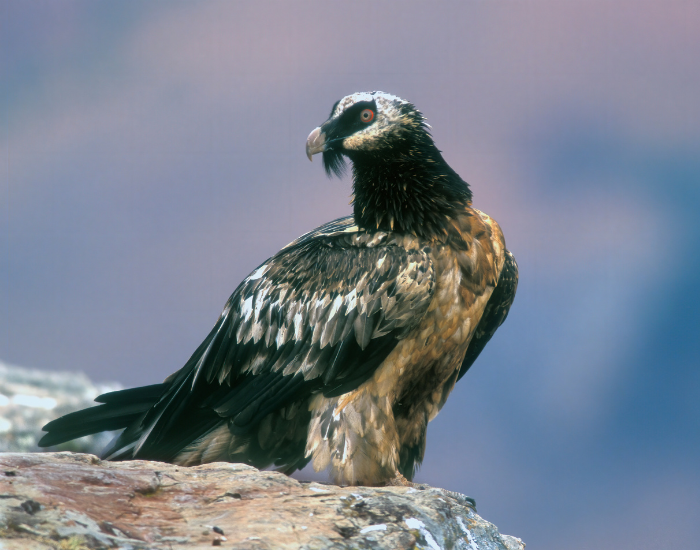
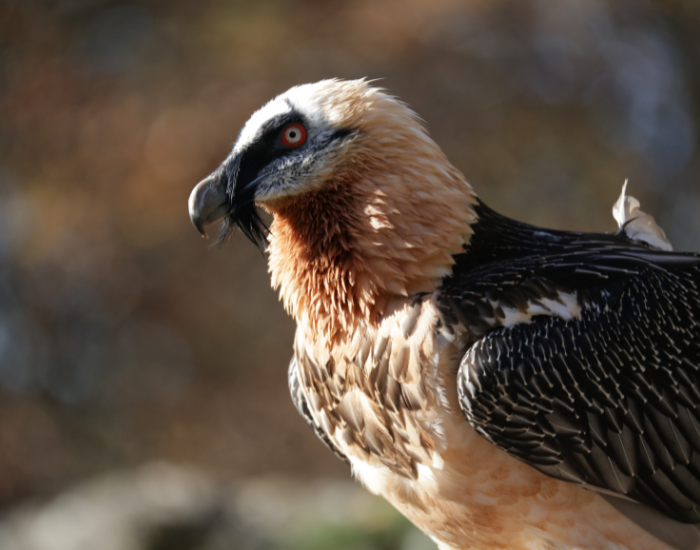
The “beard” that gives the bearded vulture its name consists of stiff bristles (vibrissae) located at the base of the beak. This wedge-shaped tail of feathers extends from the lower mandible, creating the distinctive appearance.
While we aren’t 100% sure of its biological function, many scientists believe it helps the bird sense its surroundings. When its bald head (actually, feathered head, unlike other vultures) is tucked into a carcass, these bristles may protect its eyes while feeding.
However, the beard may also serve as a visual signal. During the breeding period, the beard becomes more prominent, suggesting it plays a role in courtship or dominance displays among wild bearded vultures.
9. They Face Significant Threats
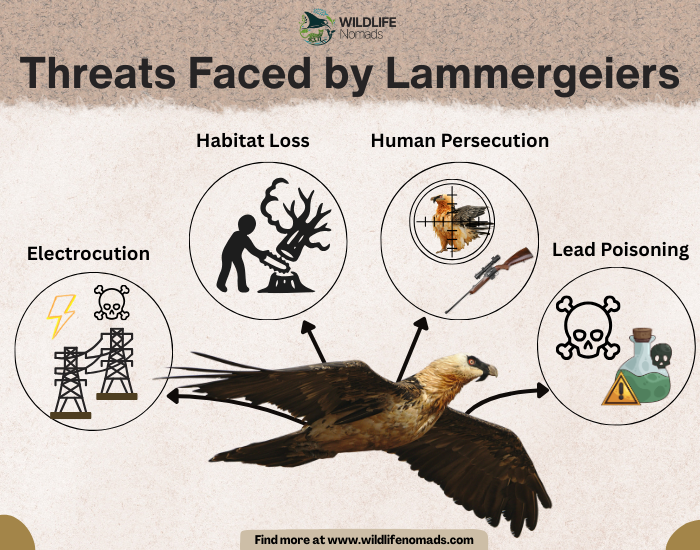
Despite being a “bone breaker,” this bird is fragile. The lammergeier is a threatened species in many parts of its range. Several factors contribute to their decline.
Poisoning: The primary threat comes from eating carcasses laced with poison meant for wolves or foxes. Even small populations can be devastated by a single poisoning event. This remains a critical issue in western Europe and northern Africa.
Habitat Loss: Encroachment into mountainous regions reduces available territory. As human development reaches higher altitudes, suitable nest sites become scarcer.
Human Persecution: Misguided fears persist that they kill tortoises, live prey, or even live animals. In reality, lammergeiers almost never hunt live prey. They are scavengers, not predators.
Lead Poisoning: Hunting ammunition leaves lead fragments in carcasses. When lammergeiers consume these contaminated bones, lead poisoning can occur.
Electrocution: Power lines in mountain ranges pose collision risks, particularly for young birds learning to navigate.
10. A Conservation Success Story
There is hope! The Vulture Conservation Foundation and Bird Conservation International have done incredible work. In the Alps, where the bird was once extinct, a reintroduced population is now thriving.
During my time working with conservationists in western Spain, I saw firsthand how supplemental feeding stations, essentially “bone restaurants”, can help isolated populations recover. These stations provide clean bones from dead animals, free from poison or lead contamination.
Today, the total population ranges from roughly 2,000 to 10,000 individuals globally. However, they remain rare in Europe, with only a few hundred breeding pairs. In contrast, central Asia and the Himalayas support more robust populations.
Conservation programs now include:
- Captive breeding programs that release young birds into the wild
- Monitoring of breeding pairs using GPS tracking
- Education programs to reduce human persecution
- Regulations on poison use in livestock areas
- Safe feeding stations in critical habitats
The last bearded vulture in some regions disappeared decades ago. However, successful reintroduction programs in southern Europe demonstrate that recovery is possible. In addition, collaboration between countries has created connected populations that enhance genetic diversity.
Comparison: Old World vs. New World Vultures
Understanding how the lammergeier differs from other vultures helps explain its unique niche.
| Feature | Lammergeier (Old World) | Turkey Vulture (New World) |
|---|---|---|
| Diet | 80% Bone / Marrow | Soft Tissue / Carrion |
| Head | Fully Feathered | Bald Head |
| Technique | Drops bones to break them | Uses keen sense of smell |
| Habitat | High mountains | Forests, plains, and deserts |
| Size | Slightly larger wingspan | Medium-sized wingspan |
| Color | Rusty orange, dark brown | Predominantly dark brown |
Old world vultures like the bearded vulture gypaetus barbatus rely on vision to locate food. In contrast, the turkey vulture and other new world species use smell. This fundamental difference shapes their entire ecological strategy.
Furthermore, most vultures have a bald head that helps keep them clean while feeding on rotting carcasses. The bearded vulture’s feathered head reflects its cleaner diet of bones rather than decaying flesh.

FAQ: Everything You Need to Know About the Lammergeier
Bones are highly nutritious and, once broken, provide access to bone marrow, which is rich in fat. Since other scavengers can’t eat them, the lammergeier has a constant food source. In addition, this diet and food preferences mean they don’t compete with black vulture or griffon vultures for resources.
They are considered “Near Threatened” globally as threatened species. In Europe, they are very rare, with only a few hundred breeding pairs in the wild. However, the bearded vulture population in Asia remains more stable, particularly in the Himalayas.
It means “lamb vulture” (Lämmer = lambs, Geier = vulture). This name reflects the old belief that these birds preyed on live prey like lambs, which we now know is false.
In the wild, bearded vultures can live 20-30 years. However, captive birds in breeding programs have lived beyond 40 years. Their long lifespan, combined with late sexual maturity, makes population recovery slow.
The best places to observe wild bearded vultures include the Pyrenees (Spain and France), the Alps (particularly Switzerland and Austria), the Drakensberg mountains in southern Africa, and various locations in the Himalayas. Some zoos with birds of prey collections also house lammergeiers.

Why We Must Protect the Bone-Breaker
The lammergeier bird is more than just a scavenger. It’s an essential cleaner of our highest peaks. From its rusty orange feathers to its incredible 9-foot wingspan, it is a testament to nature’s ability to find a niche in the harshest environments.
As a former field biologist, I’ve seen what happens when these “cleaners” disappear. Ecosystems become unbalanced, and the beauty of the high mountains loses a bit of its soul. Protecting the bearded vulture population isn’t just about saving one bird. It’s about preserving the wild integrity of our planet’s greatest ranges.
The Vulture Conservation Foundation continues to lead efforts across Europe and beyond. Meanwhile, Bird Conservation International works to protect critical habitats in Asia and Africa. However, these organizations need continued support to ensure the last bearded vulture doesn’t become just a memory.
Therefore, whether through supporting conservation efforts, spreading awareness, or simply appreciating these magnificent birds of prey, we all have a role to play. The bearded vulture gypaetus barbatus has survived for millions of years. With our help, it can soar over mountainous regions for millions more.