Have you asked yourself how well our planet’s species are truly protected (or if they’re even being protected at all) you’ll want to hear about the Species Protection Report. This 2024 publication reveals how much progress countries and regions have made in safeguarding terrestrial and marine life. It also highlights where conservation efforts still fall short, unveiling a global picture of what’s working, what isn’t, and how we might do better. Here, we’ll walk through the key findings of the Species Protection Report, clarify concepts like the Species Protection Index (SPI) and species-level conservation, and answer pressing questions people often ask about protecting the world’s biodiversity.
“We should preserve every scrap of biodiversity as priceless while we learn to use it and come to understand what it means to humanity”

Understanding the Species Protection Report
What Is the 2024 Species Protection Report?
The Species Protection Report is an annual assessment designed to track progress toward global biodiversity goals, specifically referencing Target 3 (also known as the “30 x 30” goal) of the Kunming-Montreal Global Biodiversity Framework (GBF). Released during major UN Biodiversity Conferences, like the 2024 meeting in Cali, Colombia, this report evaluates whether national and regional networks of protected areas actually represent the species they aim to safeguard.
Key Takeaways
-
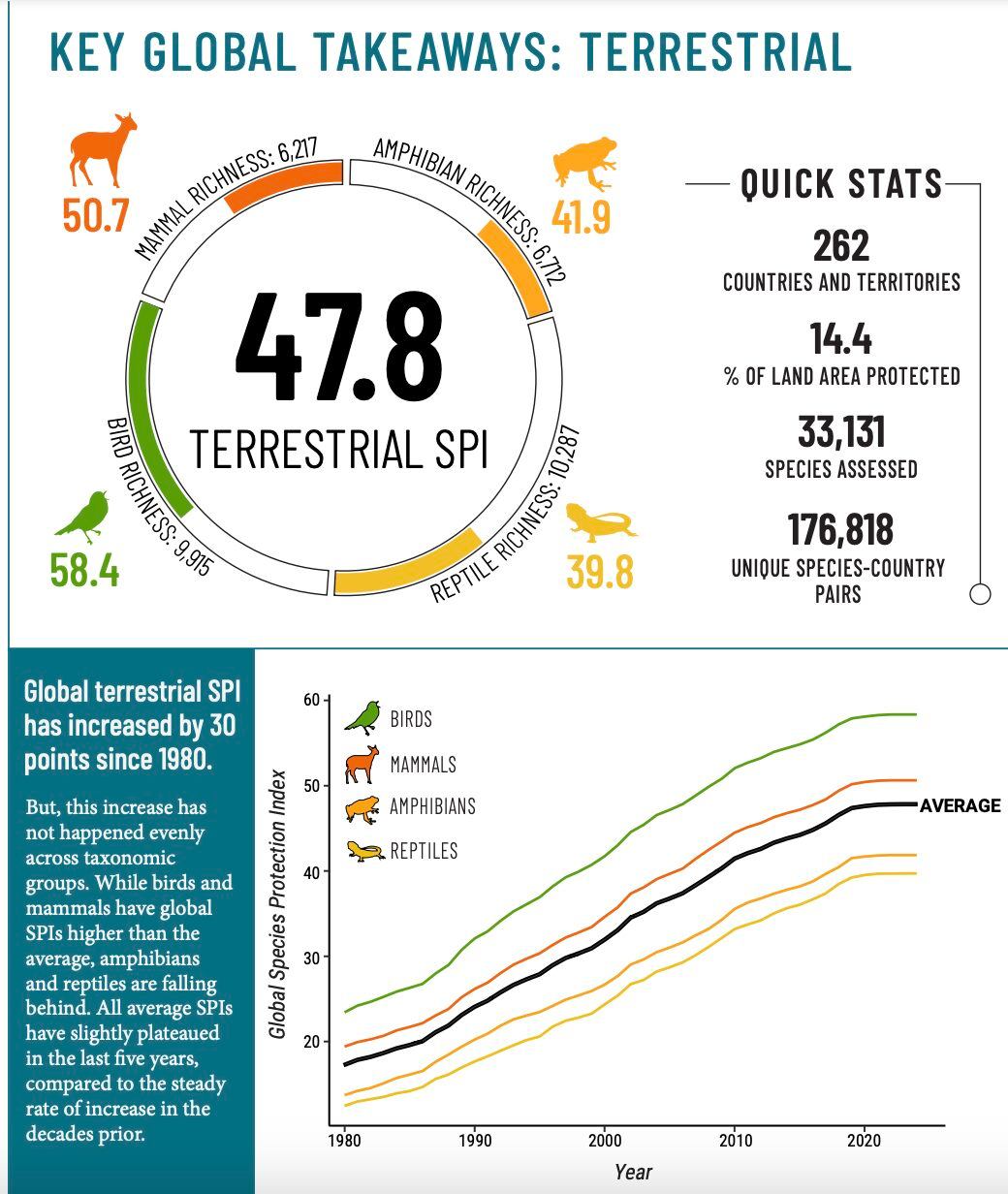
Global Terrestrial SPI: 48 out of 100, meaning that on average, the terrestrial species assessed have met only about half of their protection goals.
-
Global Marine SPI: 60 out of 100, indicating marine species generally fare better under current protection measures.
-
Protected Areas Coverage: 14.4% of the world’s land area and 6.7% of oceans are currently protected, though coverage does not always correlate perfectly with species success.
(Source: Map of Life, E.O. Wilson Biodiversity Foundation)
What Is Species-Level Conservation?
Species-level conservation focuses on ensuring the survival and recovery of individual species, often through tailored interventions like habitat preservation, breeding programs, and legal protections. Unlike broad ecosystem-level initiatives, species-level approaches zero in on the specific needs and threats facing a single species or closely related group of species. The species-level its important cause:
-
Prevents Extinctions: By identifying which species need the most help, resources can be efficiently allocated.
-
Ecosystem Indicators: Many species serve as “canaries in the coal mine,” indicating wider environmental health.
-
Genetic Diversity: Protecting unique species preserves genetic resources that can be pivotal for research and resilience to climate change.
(Related Reading: National Geographic: Why Species Matter)
What Is the Protection of Species?
Conservation vs. Protection
While “conservation” sometimes focuses broadly on managing resources sustainably, “protection” generally implies a legal or physical buffer preventing exploitation or harm. Typical protective measures include:
-
Protected areas (PAs) like national parks or nature reserves.
-
OECMs (Other Effective Area-Based Conservation Measures) refer to regionally managed lands that deliver conservation outcomes, like indigenous territories.
Species Protection Index (SPI)
The Species Protection Report uses the SPI to measure how well current protected areas cover the habitats of target species. For each species, scientists set a specific “protection goal”, for example, ensuring that a certain percentage of its habitat lies within well-managed reserves. The SPI combines these individual scores to reveal how effectively each country or region protects its wildlife.
(Learn more at IUCN’s Protected Planet)
Ok.. and What Is the Species Habitat Index (SHI)?
Habitat Focus
Although the Species Habitat Index (SHI) isn’t the primary metric in the 2024 report, it’s closely related. SHI tracks changes in the extent and quality of habitats needed by specific species over time. While the SPI gauges the coverage of protected areas, the SHI examines whether suitable habitats are actually increasing or shrinking.
By correlating SHI with SPI, scientists can tell if protected areas are effectively preserving the key habitats species require. If SHI continues to drop despite rising SPI scores, that suggests protected areas might not be in the right places or effectively managed.
What About the GEO BON Species Protection Index?
GEO BON (Group on Earth Observations Biodiversity Observation Network) supports global biodiversity monitoring. The GEO BON Species Protection Index is part of this mission, integrating tens of thousands of spatial species datasets to produce a country-level or regional score that indicates how well protected areas align with species habitats.
Main Findings from the 2024 Species Protection Report
-
Progress in Marine Realms
Despite starting from a lower baseline, marine conservation advanced more rapidly. But only 6.7% of oceans are safeguarded, indicating massive potential for growth. -
Stalled Terrestrial Gains
Land coverage rose modestly, boosting terrestrial SPI by just 4 points. With 14.4% of global land under protection, many species remain underrepresented. -
Regional Disparities
Some regions—like parts of Latin America—are inching closer to robust biodiversity goals, while others lag significantly, particularly in Asia and Eastern Europe. -
The Next Challenge
Expanding coverage alone won’t save species if PAs don’t address specific needs or are poorly managed. Future expansions must be targeted to crucial habitats.
Actionable Steps for Better Species Protection
-
Data-Driven Conservation: Encourage governments to use SPI and SHI to identify high-priority habitats.
-
Collaboration & Funding: NGOs, private sector, and local communities should co-manage new or expanded PAs.
-
Adaptive Management: Continually monitor PAs to ensure they actually benefit target species.
-
Public Engagement: Engage citizens via education campaigns, citizen science, and local stewardship programs to build broad support for conservation.
(Example: Esri’s Collaboration on SPI Tools)
Achieving 30 x 30 Through Meaningful Species Protection
The Species Protection Report underscores that meeting the 30 x 30 target isn’t merely about designating 30% of land and sea under some form of protection. It’s about ensuring those protected areas align with the habitats of species that need them the most, boosting survival odds across the board. While the global SPI’s modest improvements show promise, they also reveal we have a long journey ahead to safeguard the thousands of plants and animals currently overlooked.
As new data emerges, like the planned inclusion of plants and invertebrates in future SPI iterations, our understanding of global biodiversity gaps will sharpen. And that’s precisely the point: with each annual edition of the Species Protection Report, we can measure progress, celebrate breakthroughs, and recalibrate strategies to protect life on Earth.
Each of us can advocate for policy changes, support local conservation, and champion transparent, data-driven approaches to protecting species. By doing so, we help ensure that future updates to the Species Protection Index reflect genuine, sustainable improvements in global biodiversity.